

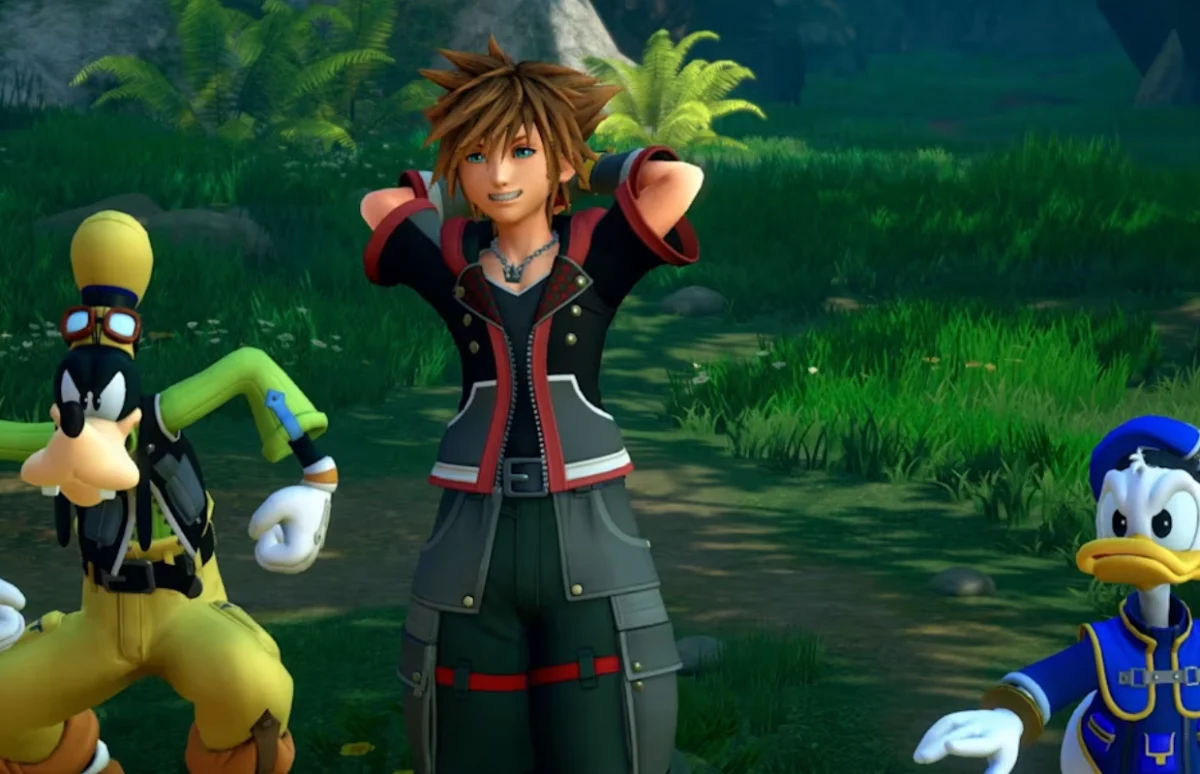
The gaming landscape is shifting as Square Enix prepares to bring one of the most beloved action-RPG franchises to a new generation of hardware. Following the latest Nintendo Direct, the publisher surprised fans by releasing a playable demo of Kingdom Hearts III + Re Mind DLC for the upcoming Nintendo Switch 2. For veterans of the series who have experienced Sora’s journey across nearly every available platform—from the original PlayStation 4 release to the high-fidelity PC port on Steam Deck—this native release represents a significant milestone.
However, early impressions of the demo suggest that while the title showcases the technical potential of Nintendo’s next-generation hardware, the current state of optimization leaves much to be desired. As we look toward the October 8th global release, it is time to dissect how this version holds up against its predecessors.
The Evolution of Kingdom Hearts III: A Technical Chronology
Kingdom Hearts III has lived a long life since its initial 2019 launch. Originally released on the PlayStation 4 and Xbox One, the game struggled to find a consistent footing on base consoles. The PlayStation 4 Pro version was often criticized for its sub-1440p resolution and inconsistent frame pacing, while the Xbox One X version offered a more stable, albeit still capped, experience.
When played via backward compatibility on PlayStation 5 and Xbox Series X, the title finally achieved the locked 60fps performance that the developers originally envisioned. For years, the gold standard for console play was the Xbox One version running on an Xbox Series X—offering a perfect 60fps and sharper image quality than its Sony counterpart.
The announcement of a native Switch 2 version, arriving alongside native PlayStation 5 and Xbox Series X iterations, suggests that Square Enix is aiming to unify the franchise’s availability. Yet, because the Switch 2 demo is currently the only way to sample the game on "current-gen" hardware, it has become the focal point of intense technical scrutiny.
Comparative Analysis: Switch 2 vs. Established Platforms
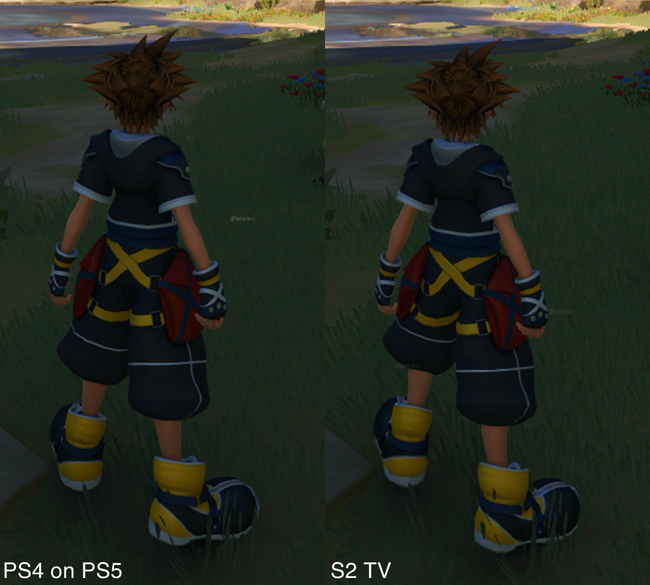
To understand where the Switch 2 version sits in the hierarchy of performance, we conducted a side-by-side analysis of the opening hours across the PS4 version (running on PS5), the PC version (via Steam Deck), and the Switch 2 demo in both docked and handheld modes.
Visual Fidelity and Resolution
In terms of raw image quality, the Switch 2 demo is a mixed bag. When docked, the game utilizes a dynamic resolution scaler that, in our testing, fluctuated between 1080p and 1296p. This puts it squarely in the territory of the PlayStation 4 Pro rather than the Xbox One X. While the image is sufficiently sharp for a handheld-hybrid console, it does not quite reach the crystalline clarity one might expect from a "current-gen" leap.
The Performance Dilemma
The most pressing issue remains the frame rate. Currently, the Switch 2 build features an uncapped frame rate that bounces inconsistently between 30fps and 60fps. While less demanding areas of the game—or moments where the player is simply staring at a wall—can touch the 60fps mark, actual combat encounters frequently result in stuttering and fluctuating performance that disrupts the flow of the game.
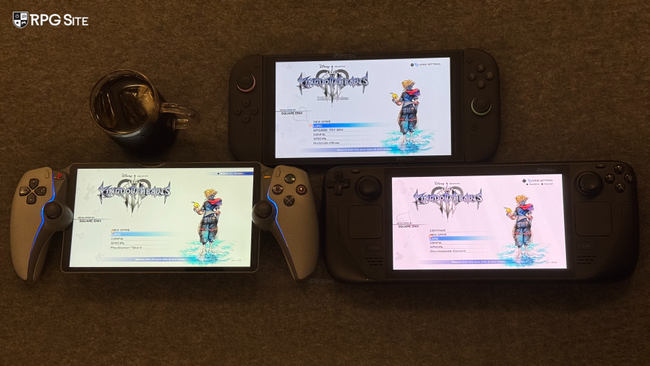
For a fast-paced action RPG like Kingdom Hearts III, consistency is paramount. An uncapped, variable frame rate feels jarring compared to the locked 60fps experience available on even entry-level PC hardware. We strongly hope to see an optional 30fps or 40fps cap implemented in the final build to provide a more stable visual experience for players.
Handheld Experience: Switch 2 vs. Steam Deck
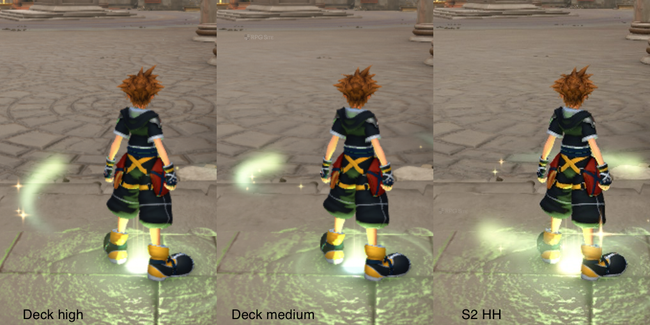
For many, the appeal of the Switch 2 lies in its portability. When tested handheld, the Switch 2 demo maintains a dynamic resolution that drops as low as 720p, with peaks around 900p. Despite these drops, the game looks remarkably crisp on the smaller screen.
However, the Steam Deck offers a more stable alternative. When playing Kingdom Hearts III on Valve’s handheld, we were able to achieve a locked 45fps on the OLED model using medium settings. The Steam Deck’s ability to offer a stable, predictable performance profile makes it a superior "portable" experience at this moment. While the Switch 2 is capable of higher peaks, the lack of stability makes it feel like an unpolished port rather than a refined mobile experience.
Data-Driven Performance: A Look at Load Times
Perhaps the most impressive aspect of the Switch 2 demo is its storage optimization. We conducted a series of load-time tests across various platforms to see how the Switch 2’s architecture handles the game’s assets.
| Platform | Dashboard to Title (Sec) | Loading Save (Sec) |
|---|---|---|
| Switch 2 Demo | 32 | 23 |
| PS4 Pro | 45 | 38 |
| PS4 on PS5 (HDD) | 34 | 32 |
| PS4 on PS5 (SSD) | 31-34 | 24-26 |
| PS4 on PS5 Pro (SSD) | 32 | 25-26 |
| Steam Deck | 40 | 26 |
The results are striking: the Switch 2 loads save files faster than even the PS4 version running on an SSD, and it manages the title screen as efficiently as the most powerful current-gen consoles. This indicates that the asset streaming and storage management on the Switch 2 are highly efficient, which is a promising sign for the full release.
Official Responses and Developer Expectations
Square Enix has remained relatively quiet regarding the specific technical hurdles of the Switch 2 port. However, industry observers point to the recent release of Final Fantasy VII Rebirth as a potential blueprint. Rebirth saw significant performance improvements between its initial reveal and its final release through targeted patches and optimization passes.
The existence of a public demo is often a signal that developers are gathering telemetry data from thousands of users. By analyzing frame time data, crash logs, and hardware utilization, Square Enix has a window of opportunity to implement a day-one patch that could stabilize the frame rate. Fans should remain optimistic, as the foundational technology—as evidenced by the rapid load times—is clearly present.
Implications for the Future of the Franchise
The arrival of Kingdom Hearts III on the Switch 2 platform has massive implications for the future of the series. If Square Enix can successfully optimize this title, it opens the door for the rest of the Kingdom Hearts catalog to reach a wider audience on Nintendo’s hardware.
However, the implications are also a warning: modern audiences have high expectations for performance. In an era where Steam Deck users are accustomed to capping their frame rates for a consistent, "console-like" experience, a game that fluctuates wildly between 30 and 60fps is difficult to recommend, regardless of its visual fidelity.
Recommendations for the Final Launch
To ensure the Switch 2 version of Kingdom Hearts III meets the quality standard synonymous with the franchise, Square Enix should prioritize the following:
- Frame Rate Capping: Introduce a toggle for 30fps or 40fps limits to eliminate screen tearing and variable frame pacing.
- Performance Modes: Implement a "Quality Mode" (targeting 1440p/30fps) and a "Performance Mode" (targeting 1080p/60fps) to give players control over their experience.
- Handheld Optimization: Focus on maintaining a locked 40fps in handheld mode, which would provide a significant boost to the perceived fluidity of the game.
Conclusion
The Kingdom Hearts III demo for the Nintendo Switch 2 is a testament to the console’s potential. It proves that the hardware can handle the game’s assets with incredible speed, outpacing legacy consoles in load-time performance. Yet, it also serves as a reminder that raw power is nothing without optimization.
As we look toward the official launch on October 8th, the ball is firmly in Square Enix’s court. With a few targeted optimizations, this could be the definitive way to play Kingdom Hearts on the go. Without them, it risks being a technical curiosity rather than a must-own port. For now, we wait to see if the final build can harness the full potential of the Switch 2, or if it will remain a compromise of what the hardware is truly capable of achieving.

