

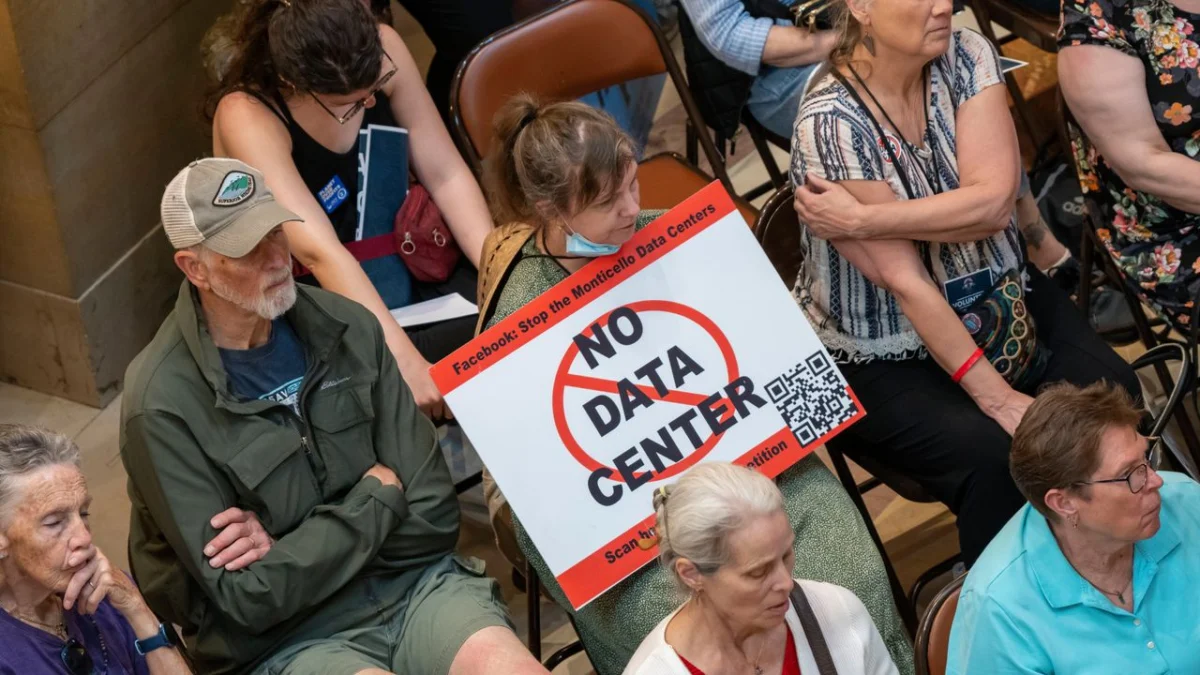
Nationwide, a burgeoning tide of community opposition is dramatically slowing the relentless march of data center expansion, creating significant ripples across the tech industry and national strategic priorities. Projects valued at an astonishing $130 billion have been blocked or delayed across the United States in the first quarter of 2026 alone, a figure that mirrors the total number of stalled developments throughout the entirety of 2025. This unprecedented slowdown underscores a profound shift in public sentiment, as citizens increasingly prioritize local environmental and lifestyle concerns over the insatiable demand for digital infrastructure.
The data, compiled by Data Center Watch, a specialized research firm, paints a stark picture of escalating resistance. What began as localized grievances has rapidly coalesced into a nationwide movement, prompting moratoriums, outright bans, and a reevaluation of the unchecked growth of these digital behemoths. The implications are far-reaching, impacting everything from the global race for artificial intelligence supremacy to the very fabric of local community life.
Main Facts: The Stalled Engine of Digital Growth
The United States, a global leader in technological innovation, finds itself at a critical juncture. The demand for data centers, the physical backbone of the internet, cloud computing, and the rapidly expanding field of artificial intelligence, has exploded. Tech giants like Microsoft, Amazon, Google, and emerging AI powerhouses such as Anthropic, require ever-increasing computational power to fuel their operations, develop new services, and maintain competitive advantages. This demand has traditionally led to a relentless construction boom, with developers seeking out locations with cheap land, robust power grids, and access to cooling resources.
However, this growth trajectory has hit an unexpected and formidable obstacle: organized public opposition. According to Data Center Watch, a boutique research firm meticulously tracking data center development, the first quarter of 2026 alone witnessed the blocking or significant delay of at least 75 data center projects nationwide. These projects collectively represent an investment of approximately $130 billion. To put this into perspective, this single quarter’s impediment matches the total number of projects halted or postponed throughout the entire preceding year of 2025, signaling an alarming acceleration of resistance.
This significant metric is a direct reflection of a rapidly intensifying sentiment against the proliferation of data centers. Citizens, once largely unaware or indifferent to these facilities, are now keenly aware of their substantial footprint and potential impacts. The digital economy, once an abstract concept, is increasingly manifesting as tangible, large-scale industrial complexes in communities, leading to a direct confrontation between technological progress and local quality of life. This growing chasm between the imperatives of digital expansion and community well-being is forcing a national reckoning, demanding that policymakers, developers, and tech companies alike address the multifaceted concerns that have brought this critical infrastructure development to a grinding halt.
Chronology of Resistance: From Local Grievances to National Standoff
The current wave of opposition is not an overnight phenomenon but rather the culmination of steadily mounting concerns that have evolved from scattered local protests into a powerful, unified voice.
Early Signs of Discontent
The initial tremors of widespread public apprehension began to register in late 2025. An Ipsos survey conducted during this period revealed that nearly half of all Americans (47%) expressed a distinct reluctance to have a new data center project constructed in their immediate vicinity. At this stage, concerns were often nascent, focusing on general uneasiness about large industrial facilities appearing in residential or semi-rural areas, potential traffic increases, and initial questions about land use. Activist groups, often formed organically by concerned residents, began to emerge in specific locales where projects were proposed, laying the groundwork for more organized resistance. These early skirmishes, though localized, served as a crucial learning ground for communities, demonstrating the power of collective action and providing templates for future opposition efforts.
Escalation and Broadening Concerns
Just a few months later, the landscape of public opinion shifted dramatically. A subsequent survey indicated a significant jump, with 70% of Americans now opposing data centers near their homes. This marked increase signified a critical turning point, indicating that the initial concerns had not only deepened but also broadened to encompass a wider array of issues, making data centers even less popular than previously controversial facilities like nuclear power plants. This escalation was fueled by a growing body of evidence and direct community experiences highlighting the tangible negative impacts of these facilities.
The core reasons for this intensified resistance are multifaceted and often intersect, creating a potent cocktail of grievances:
- Massive Electricity Price Hikes and Grid Strain: Data centers are colossal energy consumers, running 24/7 to power and cool thousands of servers. Reports have emerged detailing how the arrival of new data centers in some regions has triggered massive, irreversible electricity price spikes, some as high as 76% in the largest U.S. regions. This burden disproportionately affects residents and small businesses, who find their utility bills skyrocketing to subsidize the energy demands of tech giants. Furthermore, the sheer scale of energy required puts immense strain on existing power grids, often necessitating costly infrastructure upgrades that are ultimately borne by taxpayers or ratepayers. A federal watchdog has even demanded that tech giants contribute directly to the power infrastructure their operations necessitate, highlighting the systemic nature of this issue.
- Egregious Water Consumption: Beyond electricity, data centers are also prodigious users of water, primarily for their cooling systems. In regions already grappling with drought or water scarcity, this demand becomes a flashpoint. A highly publicized incident involved a Meta data center in Georgia, which was allegedly responsible for muddling a local town’s drinking water. An investigation by the EPA was promised after a Congresswoman dramatically presented jars of dirty water during a hearing, illustrating the direct and unacceptable impact on vital community resources. The constant need for vast quantities of water not only depletes local supplies but can also strain municipal water treatment facilities.
- Noise and Aesthetic Pollution: The constant operation of cooling systems, generators, and other machinery within data centers generates significant noise. While some of this noise, particularly low-frequency sounds known as infrasound, may not register on standard decibel meters, residents living nearby report persistent irritation, sleep disturbances, and a general degradation of their quality of life. The very nature of these facilities—large, windowless, often imposing structures surrounded by high fences and security—also contributes to aesthetic blight, altering the character of neighborhoods and rural landscapes.
- Environmental Degradation Beyond Energy and Water: Beyond the direct impacts on utilities, concerns extend to other environmental aspects. The carbon footprint of data centers, even with efforts towards renewable energy, remains substantial. Local ecosystems can be disrupted during construction, and the heat generated can create localized "heat islands."
Adding a layer of geopolitical complexity to these domestic concerns, there have been credible reports of foreign influence. Specifically, Chinese users have reportedly been identified amplifying these issues online while posing as concerned Americans. This raises questions about potential state-sponsored efforts to sow discord and hinder critical infrastructure development in the U.S., adding a national security dimension to what might otherwise be purely local disputes.
The Regulatory Wave: Moratoriums and Bans Multiply
The intensified public outcry has translated directly into tangible policy changes at the local and state levels. Jurisdictions across the nation have begun enacting moratoriums and, in some cases, outright bans on new data center developments. As of May 2026, at least 69 local government units have passed such measures, with four explicitly making their bans permanent. This regulatory wave signifies a proactive approach by local leaders to address constituent concerns and gain time to study the complex impacts of these facilities.
One of the most significant jurisdictions to take action is Seattle, Washington, a global hub for tech giants like Microsoft and Amazon. The city council moved to pass a one-year moratorium on new AI data center projects, a decision that directly impacts five proposed developments. This pause is intended to allow the city to thoroughly study the community impact of AI buildouts and formulate comprehensive policies that balance technological growth with urban planning and environmental stewardship.
The resistance has even reached the state level. Maine, for instance, came remarkably close to enacting a statewide ban on large new data center projects until October 2027. The bill, which reflected widespread concern over energy and water usage, was ultimately vetoed by the governor. However, the veto was not a rejection of the underlying concerns but rather a surgical intervention aimed at exempting one specific, well-supported data center project that the governor deemed beneficial. This incident highlights the delicate balance politicians face between community sentiment and economic development interests. The near-passage of a statewide ban, even if ultimately modified, demonstrates the powerful political momentum behind the movement.
Supporting Data and Case Studies: The Cost of Stalled Progress
The quantitative data from Data Center Watch provides a stark illustration of the financial and developmental impact of this resistance. The blocking or delaying of 75 projects worth approximately $130 billion in a single quarter of 2026 represents a massive impediment to infrastructure growth. This figure is not merely a statistic; it signifies delayed job creation, deferred tax revenues, and, crucially, a bottleneck in the expansion of critical compute capacity needed for everything from scientific research to everyday cloud services.
Economic vs. Environmental Trade-offs
Data centers are often pitched to communities as sources of high-paying jobs and significant tax revenue. While these benefits are real, the escalating opposition suggests that for many communities, these economic incentives no longer outweigh the perceived environmental and social costs. The promise of a few hundred jobs might be overshadowed by the prospect of drastically higher electricity bills for thousands of residents, or the depletion of precious water resources. The debate often boils down to a fundamental question: what kind of development truly serves the long-term interests of a community?
Specific Local Battles and Their Impact
While the original article highlights Seattle and Maine, the broader trend is observable in countless smaller communities across the nation. For example:
- Rural Virginia: Long a hotspot for data center development due to its proximity to Washington D.C. and robust fiber optic networks, rural counties in Virginia have become battlegrounds. Local citizen groups, often composed of landowners and environmental advocates, have successfully rallied against projects, citing concerns over massive power line construction, visual blight in scenic areas, and increased demand on already strained local infrastructure like roads and emergency services. These groups have learned to navigate complex zoning laws and leverage public hearings to their advantage, often resulting in developers withdrawing proposals or seeking significantly altered plans.
- Desert Southwest: In arid regions, water consumption is the paramount concern. Communities in states like Arizona and Nevada have pushed back aggressively against proposals that would draw heavily from already limited water supplies, fearing the long-term ecological impact and potential for water rationing for residents. Developers are increasingly forced to invest in advanced, more water-efficient cooling technologies or explore alternative water sources, adding significant cost and complexity to projects.
- Suburban Outskirts: Even in more developed suburban areas, noise pollution and the sheer scale of data center complexes are key issues. Residents often complain about the constant hum of cooling towers, especially at night, and the imposing presence of large, industrial-looking buildings that contrast sharply with residential aesthetics. These concerns have spurred local ordinances on noise levels and architectural design requirements, making it more challenging for developers to secure permits.
These localized battles, though unique in their specifics, collectively contribute to the national slowdown. Each successful challenge by a community empowers others, creating a powerful ripple effect that complicates the traditional data center development model.
Industry Perspectives
From the perspective of data center developers and tech companies, these delays represent significant challenges. Project timelines are extended, costs escalate due to prolonged permitting processes and legal fees, and the overall capacity for innovation is threatened. Companies like Anthropic, a leading AI research firm, openly struggle to gain access to sufficient compute power, a direct consequence of these infrastructure bottlenecks. The industry is being forced to confront its social license to operate, prompting some to invest more in community engagement, explore more sustainable designs, and consider more remote locations, though these solutions often come with their own set of logistical and cost hurdles.
Official Responses and Policy Landscape: A Bipartisan Conundrum
The escalating opposition has created a complex political landscape, forcing officials at all levels of government to re-evaluate their approaches to data center development. The issue has transcended traditional partisan lines, generating pushback from both sides of the aisle.
Federal Government’s Stance
At the federal level, the imperative to maintain America’s technological edge, particularly in artificial intelligence, is a driving force. President Donald Trump, for instance, has been a vocal proponent of accelerating AI development in the U.S., viewing it as a critical component of national security and economic competitiveness against rivals like China. From this perspective, widespread data center delays are seen as a direct threat to the nation’s strategic goals, potentially hindering the rapid expansion of compute capabilities necessary to win the "AI race."
Federal agencies and policymakers are grappling with how to reconcile this national imperative with growing local concerns. There’s an underlying concern that if the U.S. cannot build the necessary infrastructure, it risks falling behind nations that face fewer internal obstacles. This could lead to discussions about potential federal incentives for "green" data centers, investments in more robust national power grids, or even the designation of specific zones for data center development with streamlined permitting, although such moves would likely face their own set of political challenges.
State and Local Government’s Dilemma
The most immediate and impactful responses have come from state and local governments, which are directly accountable to the communities experiencing the impacts of data center development. The "bipartisan pushback" mentioned in the original article is crucial here. While a few politicians may continue to advocate for data center development due to perceived economic benefits, a far greater number are actively listening to their constituents.
Local politicians, from county supervisors to city council members, are in a precarious position. They are often keen to attract investment, create jobs, and expand the tax base that data centers can provide. However, they are also directly confronted by residents’ complaints about rising utility costs, environmental degradation, and changes to their quality of life. This direct feedback loop means that ignoring community opposition is politically perilous. Consequently, many officials are choosing to:
- Enact Moratoriums: As seen in Seattle and numerous other jurisdictions, temporary bans are a common tool. These pauses allow local governments to conduct comprehensive impact studies, assess the cumulative effects of multiple data centers, and develop more stringent zoning ordinances, environmental regulations, and infrastructure requirements.
- Strengthen Regulations: Beyond moratoriums, there’s a trend towards implementing stricter rules regarding noise levels, water usage, energy efficiency, and aesthetic integration into the landscape. Some jurisdictions are exploring requirements for developers to contribute more significantly to local infrastructure upgrades (e.g., power grid reinforcement, water treatment capacity) or to invest in local renewable energy projects.
- Prioritize Community Engagement: There’s a growing recognition that early and transparent community engagement is vital. Developers and local governments are being pushed to involve residents in the planning process from the outset, rather than presenting them with a fait accompli.
The case of Maine’s governor vetoing a statewide ban, not to reject the principle but to protect a "well-supported" specific project, perfectly illustrates the complexity. It highlights that while there’s widespread concern, there’s also a nuanced consideration of individual projects’ merits and local support.
Industry Lobbying and Adaptation
The tech industry and data center developers are not passive observers. They are actively lobbying at all levels of government, arguing for the necessity of these facilities for economic growth, technological innovation, and national competitiveness. Companies like Microsoft and Amazon, deeply invested in cloud infrastructure, and emerging players like Anthropic, are particularly impacted.
In response to the growing opposition, the industry is also being forced to adapt. This includes:
- Seeking Alternative Locations: Developers are increasingly looking for more remote areas with ample power and water, though these often come with higher land and transmission costs.
- Investing in Sustainability: There’s a heightened focus on developing more energy-efficient designs, utilizing renewable energy sources, and implementing advanced cooling technologies that reduce water consumption (e.g., air-cooled systems, liquid immersion cooling). However, these technologies are often more expensive and not always universally applicable.
- Improving Community Relations: Some developers are trying to engage more proactively with communities, offering benefits packages, transparently addressing concerns, and even modifying project designs to be more palatable.
Implications for the Future: A New Era for Digital Infrastructure
The unprecedented delays and widespread opposition to data center projects herald a new and challenging era for digital infrastructure development in the United States. The current trajectory is unsustainable, necessitating a fundamental re-evaluation of how these critical facilities are planned, built, and integrated into society.
The "AI Race" and National Security
The most immediate and pressing concern for the federal government is the potential impact on the "AI race" against strategic competitors like China. Artificial intelligence is not merely a technological advancement; it’s a geopolitical tool, a driver of economic power, and a cornerstone of future national defense. Hindered data center expansion directly translates to a bottleneck in compute power, which is the oxygen for AI development. If U.S. tech companies and researchers cannot readily access the necessary infrastructure, the nation risks losing its competitive edge, potentially yielding ground to rivals who may face fewer internal constraints on development. This national security dimension adds significant urgency to finding viable solutions.
Economic Impact and Innovation
For the tech industry, the implications are equally profound. Companies like Anthropic, already struggling to secure sufficient compute, face higher costs and slower innovation cycles. This can trickle down to increased prices for cloud services, impacting businesses of all sizes that rely on remote computing power. Delayed projects mean delayed job creation in construction and operations, and a slowdown in the ancillary economic benefits often associated with large-scale tech investments. The disruption could also force companies to look internationally for development, potentially shifting jobs and intellectual property outside the U.S.
Environmental and Social Sustainability: The Unavoidable Imperative
At the heart of the conflict is the tension between technological advancement and environmental and social sustainability. The public’s clear message—that they would rather do without these developments if they damage the environment and local lifestyle—cannot be ignored. This necessitates a paradigm shift in how data centers are conceived. The era of building massive, resource-intensive facilities without comprehensive consideration of their ecological and community footprint is drawing to a close.
Moving forward, data center development must become inherently more sustainable. This isn’t just about PR; it’s about fundamental design and operational changes.
The Path Forward: A Call for Integrated Solutions
Addressing this complex challenge will require a multi-pronged approach involving all stakeholders:
- Transparent Impact Assessments: Mandating rigorous, independent environmental and social impact assessments before project approval, with findings openly shared and discussed with communities.
- Stricter Environmental Regulations: Implementing national and local standards for energy efficiency, renewable energy integration, and water conservation that go beyond current industry practices. This could include requirements for data centers to source a high percentage of their power from local renewables or to utilize closed-loop water cooling systems.
- Innovative Technologies and Design: Incentivizing research and deployment of cutting-edge cooling technologies that drastically reduce water usage and energy consumption. Encouraging architectural designs that blend more harmoniously with local landscapes, rather than creating imposing industrial structures.
- Strategic Siting and Infrastructure Planning: A more coordinated national strategy for data center siting, perhaps identifying areas with existing robust infrastructure, ample renewable energy potential, and lower population density, while ensuring equitable distribution of benefits and burdens. This could involve federal-level infrastructure investments to support such strategic locations.
- Enhanced Public Engagement and Benefit Sharing: Developers must move beyond token public relations efforts to genuine engagement, offering tangible community benefits that directly address local concerns (e.g., funding for local schools, investment in local green infrastructure, job training programs for residents).
- Accountability for Externalities: Holding tech giants more accountable for the external costs of their operations, such as contributing directly to power grid upgrades or local water infrastructure improvements, rather than offloading these onto ratepayers.
The current standoff is not merely a temporary inconvenience; it is a fundamental challenge to the traditional model of digital expansion. The future of AI and the broader digital economy in the U.S. hinges on finding innovative, equitable, and sustainable ways to build the infrastructure that powers our connected world, ensuring that technological progress serves, rather than compromises, the well-being of its citizens and the planet. The dialogue has shifted from "can we build it?" to "should we build it, and if so, how?" The answers to these questions will define the next chapter of America’s digital landscape.

