

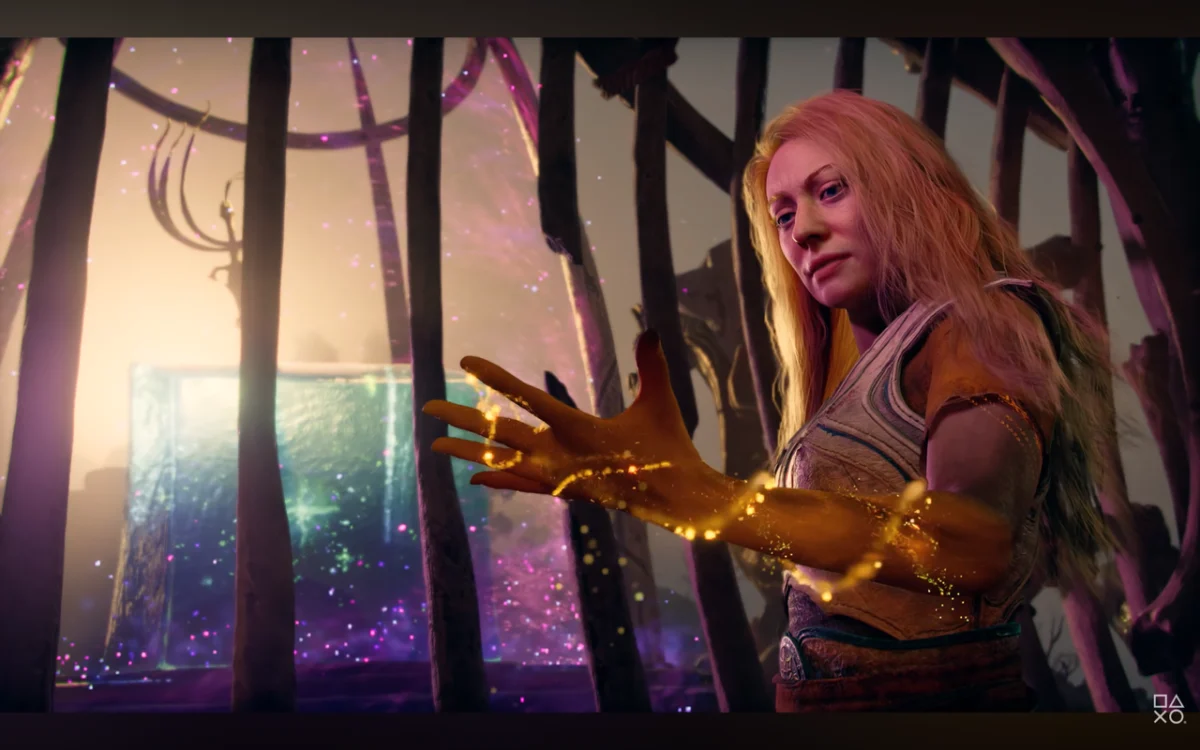
The God of War franchise stands as one of the most significant pillars in gaming history, having successfully navigated a transition that few series survive: a total tonal and mechanical reinvention. From the high-octane, combo-heavy carnage of the Greek era to the somber, over-the-shoulder intimacy of the Norse saga, the series has mastered two distinct identities. Now, Sony Santa Monica is looking to bridge that divide with its latest project, God of War Laufey.
At the heart of this ambitious endeavor is a new protagonist: Faye, also known as Laufey the Just. In a recent deep dive with game director and long-time Santa Monica developer Ariel Lawrence, it was revealed that God of War Laufey is not merely a prequel, but a mechanical synthesis designed to honor the series’ past while pushing its future. By centering the narrative on the legendary Jotun warrior, the studio intends to merge the "chocolate and peanut butter" of the franchise’s two most iconic eras.
Main Facts: The Evolution of a Legend
The announcement of God of War Laufey marks a significant departure for the series, as it represents the first time a standalone title moves away from Kratos as the primary playable character. Faye has long been a foundational, albeit invisible, figure in the Norse games. Her death was the catalyst for the 2018 reboot, and her legacy defined the stakes of God of War Ragnarok.
According to Ariel Lawrence, the decision to elevate Faye to protagonist status was driven by a desire to explore a specific type of gameplay that Kratos’ current character arc no longer supports. While the older, more contemplative Kratos is defined by a "grounded and visceral" combat style, Faye offers a return to the "agility and flexibility" that defined the original PlayStation 2 and PlayStation 3 entries.
Key features of the upcoming title include:
- A Hybrid Combat System: A blend of the aerial juggling and high-speed combos of the Greek era with the tactical, close-quarters intensity of the Norse games.
- Protagonist Depth: An exploration of Faye’s life before meeting Kratos, focusing on her rebellion against the Aesir gods and her role as a protector of Jotunheim.
- Lore Expansion: New insights into the forging of the Leviathan Axe and Faye’s complex relationship with the giants and the gods of Asgard.
Chronology: From Sparta to Midgard and Beyond
To understand why God of War Laufey is such a pivotal moment for the studio, one must look at the timeline of the franchise’s development.
The Greek Era (2005–2013)
The original trilogy and its spin-offs were defined by their scale and their "pick up and play" accessibility. Kratos was a whirlwind of blades, capable of launching dozens of enemies into the air and maintaining long, uninterrupted chains of violence. Ariel Lawrence, who "cut her teeth" on these early titles, recalls the joy of this mechanical freedom. The camera was fixed, the action was cinematic, and the movement was unrestricted by the laws of physics.
The Norse Transition (2018–2022)
When the series returned in 2018, everything changed. The camera moved to a tight, over-the-shoulder perspective. The combat became "heavy," focusing on the impact of every hit and the tactical use of the Leviathan Axe. This era was defined by emotional maturity and a "one-shot" camera technique that grounded the player in Kratos’ perspective. While it was a critical and commercial triumph, it necessitated a slower, more deliberate pace.
The Conception of ‘Laufey’ (Present)
As the Norse saga concluded with Ragnarok, the developers at Sony Santa Monica found themselves at a crossroads. Fans clamored for more Norse lore, but Kratos’ story had reached a natural point of peace. The solution lay in Faye. By moving backward in time, the studio found the perfect vessel to reintroduce the "mobile and aerial" combat of the old games without sacrificing the narrative weight of the new ones.
Supporting Data: The "Chocolate and Peanut Butter" Philosophy
The core challenge of God of War Laufey is maintaining tonal consistency while radically shifting the gameplay feel. Lawrence uses a culinary metaphor to describe this balance: "Can I have chocolate and peanut butter together?"
Mechanical Synthesis
Data from playtests and development logs suggest that Faye’s move set is significantly more vertical than Kratos’. While Kratos relies on brutal strength and parries, Faye utilizes her Jotun heritage to manipulate the environment and engage in "juggling" mechanics—a hallmark of the original games.
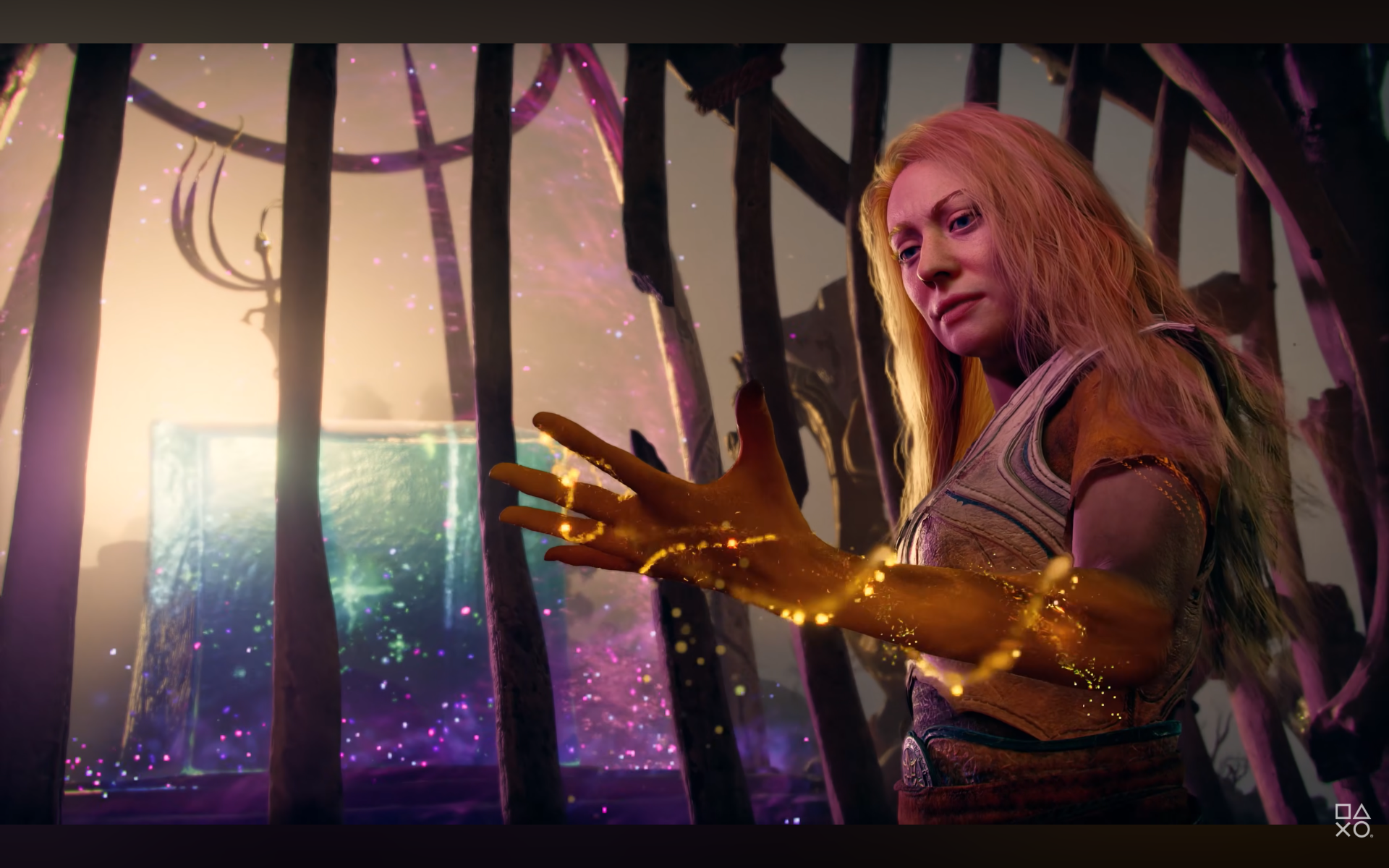
- Aerial Combat: Faye can initiate combos in the air, a feature that was largely phased out in the 2018 reboot.
- Speed Metrics: Internal benchmarks indicate that Faye’s movement speed and attack animations are approximately 15-20% faster than Kratos’ in Ragnarok, allowing for the "stylish" playstyle favored by veteran fans.
Narrative Weight
Despite the faster gameplay, Lawrence emphasizes that the "serious tone" of the modern games remains intact. This is supported by the writing team’s focus on Faye’s internal conflict. Unlike the young Kratos, who was driven by blind rage, Faye is driven by a sense of justice and the heavy burden of prophecy. This ensures that the high-speed combat feels earned rather than arcade-like.
Official Responses: Ariel Lawrence on the Studio’s Vision
Ariel Lawrence’s role as director is a testament to the studio’s commitment to its roots. Having been with the franchise since its inception, her perspective bridges the generational gap within the development team.
"I definitely cut my teeth on the first God of War," Lawrence told GamesRadar+. "I loved the pick-up-and-play aspect—juggling enemies, chaining combos, and having those dynamic movement options. It was always something that I loved doing."
However, Lawrence is equally enamored with the direction the series took under Cory Barlog and Eric Williams. "I like both of those things. I’m a fan of the more grounded, visceral, up-close combat of the recent games. The question for us was: What does it look like for those things to come together? Who can do that the best for us and stand toe-to-toe with the gods?"
Lawrence’s answer was Faye. By selecting a protagonist who is canonically a peer to Thor in combat, the studio avoids the "power creep" issue while allowing for a more nimble combat system. Furthermore, Lawrence teased the "long-term potential" of Faye encountering "the many gods that Kratos has butchered." While she remained cryptic, this suggests that God of War Laufey might utilize the series’ mythology to explore the afterlife or the echoes of Kratos’ past actions in the Greek realm.
Implications: The Future of the God of War Brand
The release of God of War Laufey carries significant implications for the future of Sony’s first-party strategy and the evolution of action-adventure games.
1. The "Anthology" Model
By moving the focus to Faye, Sony Santa Monica is signaling that God of War is no longer just "The Kratos Story." It is becoming a broader mythological universe. This opens the door for future titles focusing on Atreus’ journey to find the remaining Giants, or perhaps even prequels focusing on Tyr’s travels to other pantheons.
2. Refining the PS5 Hardware Capabilities
With the power of the PlayStation 5, God of War Laufey is expected to push technical boundaries. The increased mobility of Faye requires a more robust physics engine and faster asset streaming to maintain the "one-shot" camera style during high-speed aerial maneuvers. This title could serve as a technical benchmark for how the console handles complex, high-velocity character movement in a dense, semi-open world.
3. Reconciling the Fanbase
The God of War community has occasionally been divided between "Old School" fans who miss the hack-and-slash roots and "New School" fans who prefer the cinematic RPG elements. Laufey represents a peace treaty between these two factions. If successful, it will prove that a franchise can retain its soul while oscillating between different genres of action.
4. A New Female Icon in Gaming
Faye’s transition from a background figure to a playable lead is a major step for representation within Sony’s flagship titles. Following in the footsteps of Aloy (Horizon) and Ellie (The Last of Us), Faye provides a different archetype: the seasoned warrior-mother and revolutionary. Her story adds a layer of maternal and political complexity that enriches the overarching narrative of the series.
In conclusion, God of War Laufey is more than a simple spin-off. It is a calculated, artistic effort to synthesize two decades of game design. By blending the frantic, gravity-defying combat of the Greek era with the emotional and technical sophistication of the Norse saga, Ariel Lawrence and her team are attempting to create the definitive God of War experience—one that proves the series’ best days may still lie ahead in the untold stories of its past.

