

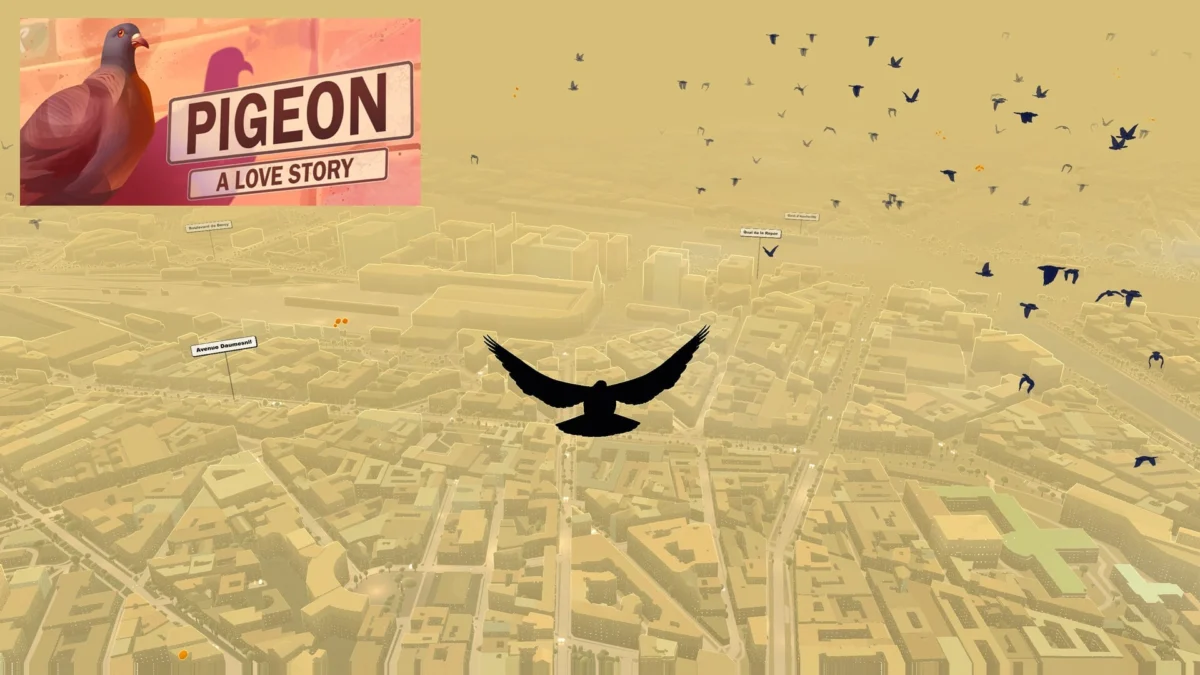
In an era of high-octane battle royales and frenetic competitive shooters, a new title is emerging to offer a stark, meditative alternative. Publisher Tiny Dragon Games and London-based developer Wristwork have unveiled Pigeon: A Love Story, a genre-defying "needle-in-a-haystack" simulator that tasks players with finding a soulmate among millions of autonomous birds within hyper-realistic, 1:1 scale recreations of the world’s most iconic cities. As the gaming industry pivots toward increasingly complex social simulations, Pigeon: A Love Story stands out as a bizarre, experimental, and deeply poetic exploration of loneliness in the modern urban landscape.
Main Facts: The Anatomy of a Digital Avian Life
Pigeon: A Love Story is far more than a simple animal simulator. It is a massive-scale environmental project that leverages OpenStreetMap data to generate authentic urban topographies. Players step into the plumage of a lonely pigeon, tasked with navigating sprawling metropolises—including London, Paris, New York, Amsterdam, and Tokyo—to locate a single, specific "one-in-a-million" soulmate.
The core mechanics revolve around the developer’s proprietary "Pigeon-Sim" technology. This engine manages hundreds of thousands of autonomous pigeon NPCs, each operating with its own behavioral patterns. The objective is not to win, conquer, or level up, but rather to exist. Players must call out across the vast urban sprawl, listening for the specific response that signifies their destined partner.
For those looking for a less goal-oriented experience, the game features a "Passive Mode," which strips away the objective-driven gameplay to transform the title into an interactive, real-time screensaver. It is a slow-burn experience designed for players looking to disconnect from the frantic pace of typical digital entertainment.
A Chronological Development: From Concept to Next Fest
The journey of Pigeon: A Love Story marks a significant milestone for Wristwork. As the studio’s sophomore project, it represents a bold departure from their previous catalog, signaling a move toward atmospheric and experimental software.
- Early Concept & Prototyping: Wristwork began the project with a focus on procedural generation and map integration. The team sought to bridge the gap between geographic data and emergent gameplay.
- The Announcement: Following months of clandestine development, the studio officially revealed the project, showcasing the technical prowess of the Pigeon-Sim engine.
- The Steam Next Fest Debut: The title is scheduled to headline the upcoming Steam Next Fest. This demo version offers players their first opportunity to traverse the skies of London, refined with new lighting and atmospheric effects.
- The "Speak to Coo" Update: In a whimsical twist, the developers recently introduced a microphone-integrated feature. Players can now physically coo into their real-world microphones to trigger their in-game mating call, bridging the physical and digital divide in a remarkably tactile way.
- Future Roadmap: With a full release slated for later this year, the team is currently refining the mobile versions for the Google Play Store, ensuring the cross-platform experience maintains the same level of environmental fidelity as the PC version.
Supporting Data: The Scale of the Simulation
The technical backbone of Pigeon: A Love Story is arguably its most impressive feat. By utilizing OpenStreetMap data, the developers have ensured that the geography of the in-game world matches reality with startling precision.
The Pigeon-Sim Engine
The "Pigeon-Sim" technology is the heart of the game. Unlike traditional NPCs that follow scripted paths, the thousands of pigeons in the game operate on a system of autonomous decision-making. They react to weather, light, and player presence. This creates a living, breathing urban ecosystem where the player is just one small part of a much larger, chaotic whole.
Audio and Atmosphere
The auditory experience is designed to complement the visual scale. The original soundtrack is composed to induce a meditative state, focusing on ambient textures rather than traditional melodic structures. When combined with the "Speak to Coo" feature, the game forces the player to engage with the environment through sound, emphasizing the isolation inherent in the urban pigeon experience.
Visual Fidelity
The latest update for the London map has brought significant graphical enhancements. These include:
- Atmospheric Shadows: Dynamic lighting that shifts as the sun moves across the London skyline.
- Realistic Sunshine Rendering: Sophisticated light-scattering techniques that mimic the hazy, gray-to-gold transition of London weather.
- Procedural Graffiti: An urban-mapping system that places graffiti in realistic locations, adding a layer of gritty, lived-in texture to the city streets.
Official Perspectives: The Philosophy of the "Coo-op"
In recent developer diaries and communications, the team at Wristwork has described the game as a "slow game built for fast times." They argue that the gaming industry has spent too long focusing on player agency and "doing," and not enough on "being."
"The goal isn’t to solve the city," says a spokesperson for Wristwork. "The goal is to find connection within a space that is designed to make you feel small. By making the search for a partner statistically difficult—a true needle in a haystack—we are forcing the player to confront the reality of the urban sprawl. You aren’t a hero; you are just a bird looking for a companion."
The introduction of multiplayer, affectionately dubbed "Coo-op," was a response to community feedback requesting shared experiences. Players can now navigate the skyline alongside friends, turning the lonely search into a social endeavor. The developers emphasize that this does not change the core mission, but rather provides a layer of comfort to the overwhelming scale of the simulated cities.
Implications: The Future of "Slow" Simulation
Pigeon: A Love Story exists in a unique space within the modern software market. It is an "anti-game" in many respects, rejecting the dopamine loops of modern design in favor of atmosphere, patience, and scale.
The Rise of Passive Gaming
The inclusion of "Passive Mode" suggests a growing trend in the industry: the rise of games that are meant to be watched or lived in rather than "played." By allowing the simulation to run as a screensaver, Wristwork is acknowledging that players want their digital devices to serve as windows into other worlds, even when they aren’t actively participating.
Geographic Integration
The use of OpenStreetMap data is a growing trend that could define the next generation of open-world simulation. As computing power increases, the ability to turn the entire world into a game board—or in this case, a massive avian aviary—is becoming more feasible. If Pigeon: A Love Story succeeds, it could pave the way for other developers to utilize real-world data to build more immersive, hyper-local experiences.
A New Genre?
Could this be the start of a "Sim-Experimental" genre? By stripping away combat, complex resource management, and traditional narratives, the game forces players to rely on their own internal monologue. It turns the act of exploring a virtual city into a piece of digital performance art.
As the Steam Next Fest approaches, the gaming community will have its first true look at whether the ambition of Wristwork can match the reality of the player experience. Whether it becomes a cult classic or a passing curiosity, Pigeon: A Love Story represents a brave, strange step forward in the evolution of simulation technology. For those tired of the noise, the promise of a quiet, cooing flight over a digital London may be exactly what the doctor ordered.
For more information on the project and to track the upcoming release, enthusiasts can visit the official Steam store page. While the mobile version remains in the final stages of development, the PC demo serves as a compelling proof-of-concept for one of the most eccentric titles currently in production.

