

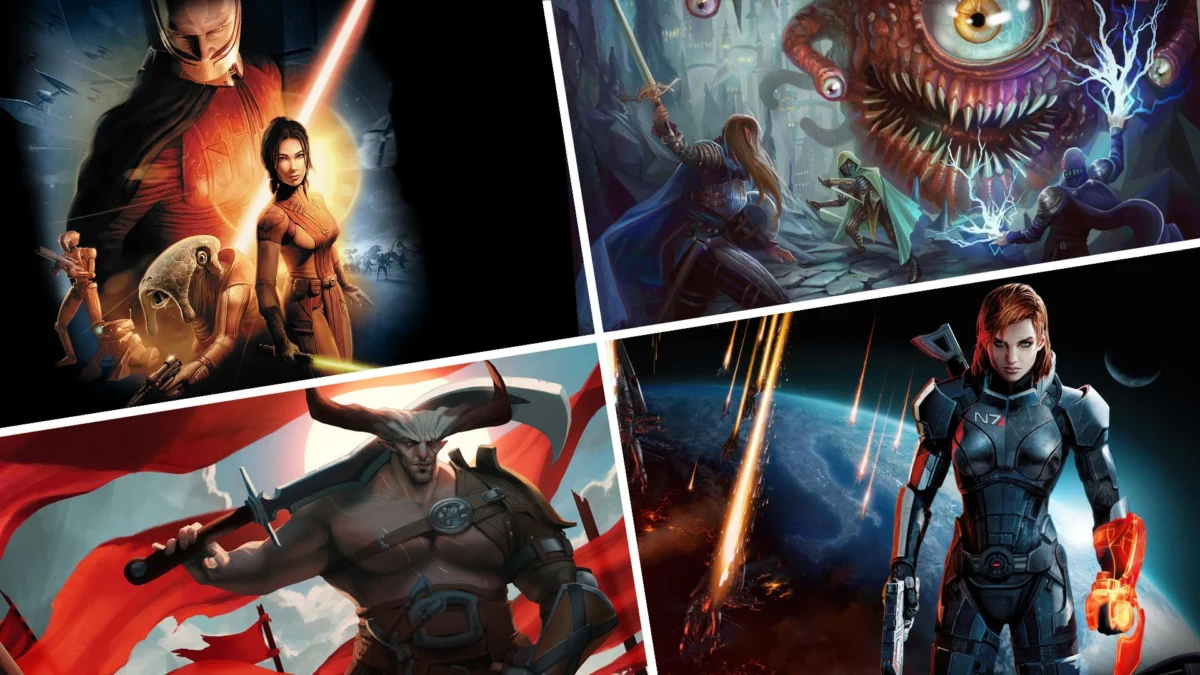
Main Facts: The End of an Era
The global gaming landscape suffered a profound cultural loss with the formal closure and restructuring of BioWare, the legendary studio that once defined the gold standard for role-playing games (RPGs). For decades, the Edmonton-based developer was synonymous with rich storytelling, branching narratives, choices that genuinely mattered, and deeply realized companion characters who felt like friends.
From industry monoliths like CD Projekt Red to pioneering immersive sim creators like Warren Spector, tributes have poured in from across the entertainment sector. Yet, the mourning is not limited to video game developers alone. High-profile literary figures, including award-winning science fiction and fantasy author N.K. Jemisin, have stepped forward to lament the studio’s passing.
Jemisin took to Bluesky to share her grief, writing, "RIP Bioware. The Mass Effect and Dragon Age games were a literal inspiration, and I can’t count how many times I’ve replayed my faves." She highlighted lifelong bonds formed in Mass Effect 3 multiplayer, while praising writer Jennifer Hepler and voice actress Jennifer Hale as the pinnacle of their respective crafts.
The closure of BioWare marks a bitter milestone in a broader, systemic crisis currently plaguing the interactive entertainment industry. Amid waves of corporate consolidation, skyrocketing development budgets, and relentless pressure from publishers for infinite financial growth, the studio responsible for shaping modern narrative-driven gaming has fallen victim to the very economic machinery it helped sustain.
Chronology: A History of Brilliance and Acquisition
To understand the magnitude of BioWare’s closure, one must trace the studio’s meteoric rise, its golden age, and the slow creep of corporate restructuring that ultimately altered its DNA.
1995–2003: The Foundation and Early Masterpieces
Founded in 1995 by medical doctors Ray Muzyka, Greg Zeschuk, and Augustine Yip in Edmonton, Alberta, BioWare initially cut its teeth on mech combat with Shattered Steel. However, the studio quickly found its true calling in fantasy and science-fiction tabletop-inspired RPGs.
Partnering with Interplay Entertainment and Wizards of the Coast, BioWare released Baldur’s Gate (1998). The game was a critical and commercial phenomenon that single-handedly revitalized the computer RPG (CRPG) market. It established BioWare’s signature engine architecture and set a new benchmark for party-based tactical combat.
Following this success, the studio pushed boundaries further with Neverwinter Nights (2002) and arguably one of the greatest Star Wars games ever made: Star Wars: Knights of the Old Republic (2003). KOTOR proved that mature, character-driven storytelling could thrive within a massive, globally recognized intellectual property, laying the thematic groundwork for everything BioWare would create afterward.
2003–2009: The Golden Age and the EA Acquisition
The mid-2000s saw BioWare cement its legacy with entirely original intellectual properties. Jade Empire (2005) explored martial arts fantasy, but it was Mass Effect (2007) and Dragon Age: Origins (2009) that catapulted the studio into the stratosphere of cultural relevance. Mass Effect blended cinematic space opera with third-person shooter mechanics, while Dragon Age delivered a dark, gritty, high-fantasy epic steeped in political intrigue and lore.
However, this golden era coincided with a major corporate shift. In October 2007, Electronic Arts (EA) acquired BioWare’s parent company, Pandemic Studios, for a staggering $625 million to $860 million in stock and cash. While the acquisition initially provided BioWare with massive budgets, global distribution, and production scale, it also planted the seeds for future friction between creative ambitions and corporate metrics.
2010–2024: Franchise Fatigue and Corporate Restructuring
The 2010s were marked by incredible highs and unprecedented lows. Mass Effect 2 (2010) is frequently cited as one of the finest video games ever made, but the controversial ending of Mass Effect 3 (2012) sparked intense fan backlash and signaled the beginning of growing pains.
Subsequent projects faced severe development hurdles. Dragon Age: Inquisition (2014) won Game of the Year at The Game Awards, yet it struggled with open-world design bloat driven by industry trends. Mass Effect: Andromeda (2017) and Anthem (2019) suffered from notoriously troubled, disjointed development cycles—often referred to internally as "BioWare magic," where teams relied on crunch time to pull games together at the eleventh hour.

Though Dragon Age: The Veilguard (2024) attempted to recapture the studio’s classic single-player magic, ongoing industry contraction, shifting publisher strategies, and repeated executive restructuring sealed the studio’s fate.
Supporting Data: The Economics of Modern Game Development
The demise of BioWare does not happen in a vacuum; it is part of a systemic hemorrhage affecting the entire interactive entertainment sector. Understanding why a studio of BioWare’s pedigree could collapse requires examining the sobering economic realities of modern game production.
- Escalating Development Costs: In the late 1990s, a major RPG could be developed by a team of 30 to 50 people over two or three years with a budget of a few million dollars. Today, AAA titles like those produced by BioWare routinely demand development teams numbering in the hundreds, spanning multiple international studios, with budgets easily exceeding $100 million to $300 million.
- The "Blockbuster" Trap: Because AAA budgets are so astronomical, publishers like EA cannot afford for a game to simply be "profitable"—it must be a runaway blockbuster that breaks sales records to justify the investment. If a game takes five to eight years to build and fails to meet hyper-inflated sales projections, the financial blowback falls squarely on the development talent.
- Industry-Wide Layoffs: Over the past four years, tens of thousands of video game developers worldwide have lost their jobs due to post-pandemic market corrections, studio closures, and cancelled projects. According to industry tracking data, 2023 and 2024 saw historic levels of layoffs, despite the gaming industry generating billions of dollars in annual revenue globally.
- The Executive-Developer Disconnect: A glaring metric in modern corporate gaming is the disparity between executive compensation and frontline stability. While creative leads, programmers, writers, and QA testers face sudden unemployment during studio shutdowns, corporate executives frequently depart with multimillion-dollar severance packages and stock payouts, sparking fierce criticism from both industry veterans and consumers.
Official Responses and Industry Tributes
The closure of BioWare triggered an overwhelming wave of emotional testimony from across the creative arts, highlighting how deeply the studio’s work penetrated the cultural consciousness.
CD Projekt Red, the Polish powerhouse behind The Witcher series and Cyberpunk 2077, publically acknowledged BioWare’s foundational role in their own corporate history. Executives noted that BioWare served as a critical guiding light and technical touchstone twenty years ago when CD Projekt Red was striving to adapt Andrzej Sapkowski’s novels into video games.
Warren Spector, legendary game designer and creator of Deus Ex, didn’t mince words regarding the industry conditions that led to the studio’s closure, publicly expressing his frustration over the systemic mismanagement and short-sightedness driving corporate decisions in the modern gaming landscape.
Meanwhile, literary icon N.K. Jemisin emphasized the unique structural impact BioWare had on writers and world-builders outside of the gaming medium. By crafting branching narratives where players actively participated in political maneuvering, interpersonal romance, and moral dilemmas, BioWare proved that video games could rival literature in emotional depth and thematic complexity.
Jemisin specifically singled out writer Jennifer Hepler—celebrated for architecting the intricate cultural history and origin stories of the dwarves in Dragon Age: Origins—and voice actress Jennifer Hale, whose portrayal of Commander Shepard and Bastila Shan set the gold standard for performance capture and vocal delivery in interactive media.
Implications: What BioWare’s Death Means for the Future of RPGs
The death of BioWare carries profound implications for the future of narrative-driven role-playing games and the broader creative ecosystem of digital entertainment.
1. The Erasure of Mid-Sized Innovation
For years, BioWare operated in a sweet spot: creating massive, story-driven epics with cinematic production values. As AAA budgets balloon to unsustainable heights, the financial risk of building sprawling, choice-driven RPGs becomes prohibitive for major publishers. We are entering an era of extreme polarization: hyper-expensive live-service games designed to extract perpetual revenue, and modest indie titles. The prestigious, high-budget narrative RPG space is shrinking rapidly.
2. The Loss of Institutional Knowledge
When a studio like BioWare is dismantled, centuries of collective institutional knowledge are scattered to the wind. The specific workflows, writing methodologies, engine optimizations, and narrative structures that took decades to refine are disrupted. While veteran developers often form independent studios or join smaller teams, the sheer synergy required to produce games on the scale of Mass Effect or Dragon Age becomes exceptionally difficult to replicate.
3. A Warning to Corporate Publishers
N.K. Jemisin’s poignant observation that the gaming industry was "the goose that laid the golden eggs" and that "all you had to do was not kill it" serves as a stark indictment of modern corporate governance. When short-term quarterly profit motives override long-term creative stewardship, iconic studios with unmatched cultural equity are treated as disposable commodities.
As fans, creators, and industry observers mourn BioWare, the ultimate lesson is a cautionary one. The magic of video games relies on human talent, creative freedom, and sustainable working conditions. If publishers continue to squeeze the life out of the studios that build their empires, the very foundations of interactive storytelling risk collapsing under the weight of corporate greed.

