

By [Author Name]
Published in association with PC Gamer
The video game industry is reeling following the sudden, catastrophic closure of BioWare, one of the most legendary role-playing game (RPG) developers in history. The studio behind cinematic masterpieces such as Baldur’s Gate, Star Wars: Knights of the Old Republic, Dragon Age, and the Mass Effect trilogy has officially been shuttered.
The closure is part of a massive corporate restructuring at Electronic Arts (EA) following its recent acquisition by Saudi Arabia’s Public Investment Fund (PIF) alongside two minority investment firms. With over 400 developers laid off and its single-player RPG pipeline effectively decimated, EA is pivoting hard toward a safer, more commercially predictable portfolio centered around live-service shooters and sports franchises.
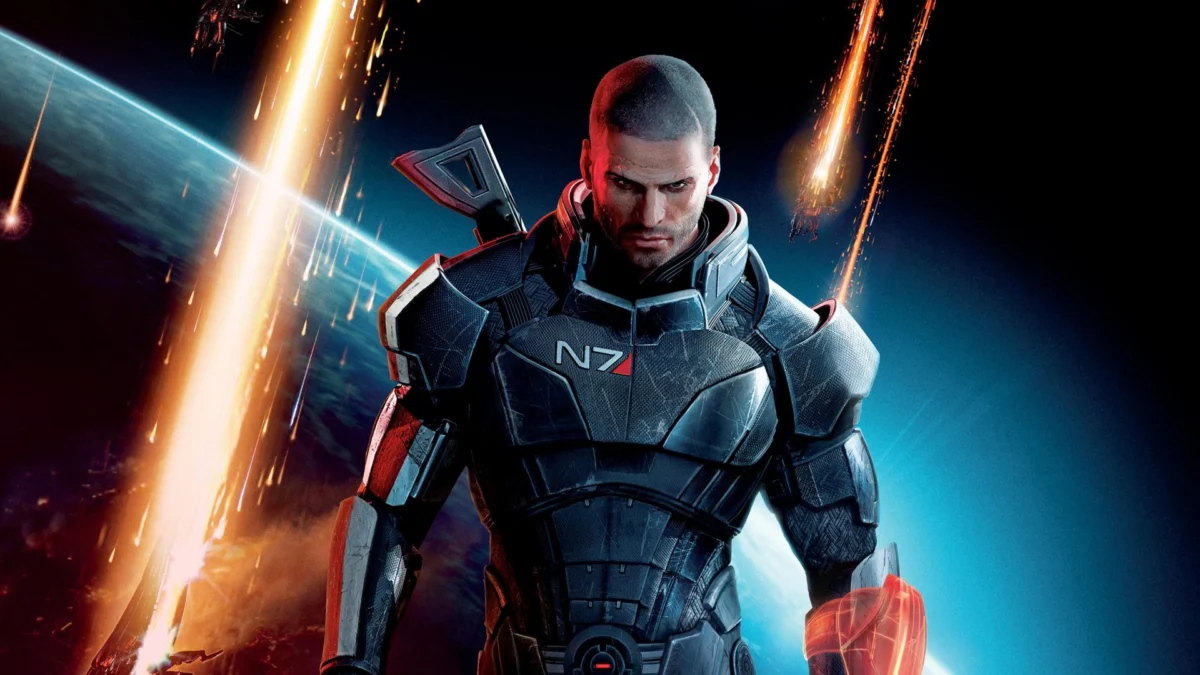
Amid the wreckage, fresh details have emerged regarding what could have been. Tony de Waal, a veteran cinematic supervisor who spent nearly three decades with BioWare, has opened up about the studio’s final, ambitious project: Mass Effect 4. De Waal’s revelations paint a picture of a small, hyper-talented team attempting to push the boundaries of narrative autonomy before the plug was abruptly pulled.
Main Facts: The End of an Era at BioWare
The closure of BioWare marks a profound cultural loss for the interactive entertainment landscape. For over thirty years, the Edmonton-based studio defined the modern cinematic RPG, championing branching narratives, complex character relationships, and player choice that shaped entire generations of gamers.
Key developments in the wake of the closure include:
- The Death of Mass Effect 4: A core team of roughly 50 developers was actively prototyping and conceptualizing the next installment in the Mass Effect franchise following the completion of Dragon Age: The Veilguard.
- Mass Layoffs: More than 400 employees have lost their jobs as part of EA’s sweeping corporate realignment.
- Strategic Pivot: EA’s leadership has signaled a move away from costly, narrative-driven single-player epics, doubling down instead on live-service infrastructure, first-person shooters, and annualized sports titles.
- Insider Revelations: Veteran developer Tony de Waal took to LinkedIn to share intimate details about the technological hurdles of Dragon Age: The Veilguard and the high ambitions the team held for the canceled Mass Effect sequel.
Chronology: From *The Veilguard* to the Studio’s Demise
To understand how BioWare arrived at this grim juncture, it is necessary to examine the studio’s final years, defined by grueling production cycles, engine constraints, and shifting corporate priorities.
The Frostbite Struggle
Following the tumultuous development of Mass Effect: Andromeda and Anthem, BioWare found itself heavily reliant on EA and DICE’s proprietary Frostbite engine. While Frostbite delivered stunning visual fidelity, it was fundamentally built for first-person shooters, making it notoriously difficult to adapt to complex, narrative-heavy RPGs with branching dialogue and sprawling character customizers.
Tony de Waal reflected candidly on the immense technical hurdles the team overcame during the production of Dragon Age: The Veilguard. Describing the effort as "herculean," de Waal noted that the project tested the limits of even seasoned industry veterans.
"It was a herculean effort that tested the limits of even my workaholic mindset, and I’m proud of the level of polish we were able to pull off in the Frostbite engine," de Waal wrote. "Seriously, you have no idea the craziness going on under the hood of that game to make a variable player character work across 3+ hours of cinematics, and the number of conditions to account for in the scenes towards the end of the game."
Transitioning to Mass Effect 4
Despite the burnout surrounding The Veilguard, a core group of approximately 50 developers immediately pivoted to pre-production on Mass Effect 4. Having weathered the storm of Frostbite and observed shifting industry standards, the team was energized to modernize the franchise while honoring its roots.
According to de Waal, the team was deeply inspired by recent critical darlings in the RPG space. They looked closely at what studios like Larian Studios (Baldur’s Gate 3) and CD Projekt Red (Cyberpunk 2077, The Witcher) were achieving and sought to elevate Mass Effect to unprecedented heights.

“I was one of the lucky ones who stayed with BioWare to start on the next Mass Effect [after The Veilguard], where I believe we were making something special: a level of autonomy and choice that no other game has been able to match,” de Waal stated. “We saw what Larian and CD Projekt were bringing to the table with their latest offerings, and started down a path to bring Mass Effect to the next level while remaining true to the Trilogy.”
The AXE Fall: EA’s Acquisition and Restructuring
The momentum behind Mass Effect 4 came to a screeching halt following EA’s buyout by Saudi Arabia’s PIF and partner investment firms. Seeking immediate cost reductions and predictable revenue streams, the parent company initiated a massive corporate restructuring. BioWare—once the crown jewel of EA’s RPG division—was deemed surplus to requirements in a corporate landscape that increasingly favors low-risk, high-margin multiplayer live-service titles.
Supporting Data: The Human Cost of Corporate Realignment
The closure of BioWare is not merely a loss of intellectual property; it is a human tragedy for the hundreds of developers who poured their lives into creating immersive digital worlds.
- The Workforce: Over 400 individuals were abruptly thrown into an already volatile job market.
- Team Scale: The Mass Effect 4 team was operating leanly with a dedicated core of roughly 50 developers—a stark contrast to the bloated multi-studio pipelines typical of modern AAA development. These developers were universally praised by their peers for "punching above their weight."
- Industry Fallout: De Waal’s public plea highlights the precarious reality facing veteran talent. With nearly three decades of experience spanning cinematic production, tool development, and narrative integration, even industry titans are now forced to navigate an oversaturated job market.
“I’m sad you won’t ever get to see what we were cooking, and sad for the small, talented group of devs who were all punching above their weight to make something special,” de Waal shared. “Please consider those who stayed with BioWare until the very end. They are truly some of the most talented people I’ve had the pleasure of working with throughout my career.”
Official Responses and Industry Reactions
As news of the closure spread across social media and industry forums, an outpouring of grief and anger erupted from fans, former BioWare employees, and independent developers alike.
EA’s corporate communications have framed the restructuring as a necessary evolution to align with modern market demands. In post-acquisition briefings, corporate leadership laid out a clear roadmap for the future: multi-platform live-service shooters, sports franchises, and massive monetization engines will take precedence. High-budget, single-player RPGs that require five-to-seven-year development cycles without guaranteed ongoing revenue streams are, for all practical purposes, dead under the new corporate regime.
Competitors and industry analysts have also weighed in, noting that BioWare’s closure signals the end of an era in which major publishers were willing to fund prestigious, story-driven cinematic experiences that valued artistic expression over rapid monetization. The industry has increasingly bifurcated into two extremes: microtransaction-heavy live-service juggernauts backed by massive publishers, and nimble independent studios carrying the torch for traditional single-player gaming.
Implications: What BioWare’s Closure Means for the Future of RPGs
The death of BioWare carries profound implications for the future of the video game industry, particularly for fans of narrative-driven science fiction and fantasy role-playing games.
1. The Shrinking Space for AAA Single-Player Epics
BioWare’s demise proves that even historical prestige does not insulate a studio from the unforgiving calculus of modern corporate ownership. When publishers prioritize short-term shareholder returns and predictable live-service revenue over creative legacy, legendary studios are vulnerable. This closure leaves a massive vacuum in the AAA space for deep, choice-driven space operas.
2. The Rise of Independent and Mid-Budget Competitors
With major publishers pulling back from single-player RPG investments, the burden of innovation shifts entirely to independent developers and mid-sized studios. As de Waal noted, studios like Larian and CD Projekt Red have demonstrated that gamers crave rich, player-driven agency. However, replicating the cinematic scale and atmospheric world-building of a franchise like Mass Effect without the backing of a multi-billion-dollar publisher becomes exponentially harder.
3. A Precarious Labor Market
The layoff of 400+ BioWare developers adds to an already devastating trend of mass layoffs across the tech and gaming sectors. Highly specialized talent—such as cinematic directors, systems designers, and narrative scripters who spent decades mastering proprietary pipelines like Frostbite—now face difficult transitions into entirely new corporate environments or independent ventures.
Looking Forward
For fans who spent decades exploring the stars alongside Commander Shepard, the cancellation of Mass Effect 4 is a bitter pill to swallow. While the code for BioWare’s final project may never see the light of day, the legacy of the studio lives on through the countless players whose imaginations were captured by its worlds, and through the resilient developers who continue to fight for meaningful choice in interactive storytelling.

