


Ahead of NIS America’s worldwide launch of Village in the Shade next week following its earlier Japanese debut, early technical evaluations have arrived. While a full critical review from James is still forthcoming, testing across a broad spectrum of hardware—including the PlayStation 5, PlayStation 5 Pro, Nintendo Switch, Nintendo Switch 2, Steam Deck, ASUS ROG Ally, and various Intel-powered handhelds—reveals how the title scales.
With its striking art direction akin to titles like Hades, Village in the Shade approaches visual presentation by scaling source assets dynamically based on output resolution, capping out at a clean 1080p across nearly all platforms. However, performance metrics, load times, and hardware-specific quirks separate the experiences significantly.

Main Facts: Visuals and Performance Parity
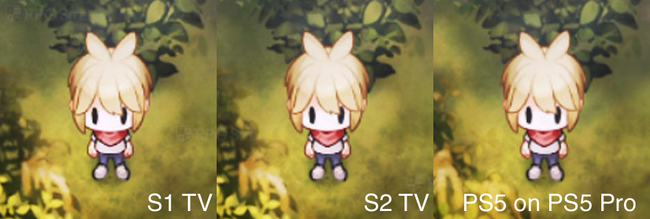
Because of how the game’s art assets are handled, visual fidelity remains remarkably consistent whether playing on a high-end PC, a PlayStation 5 Pro, or docked to a television via the Nintendo Switch. In 4K captured footage, differences between the PS5, PS5 Pro, Switch 1, and Switch 2 in docked mode are virtually imperceptible to the naked eye.
Where the platforms diverge is in frame rate stability, menu responsiveness, and hardware-specific optimizations.
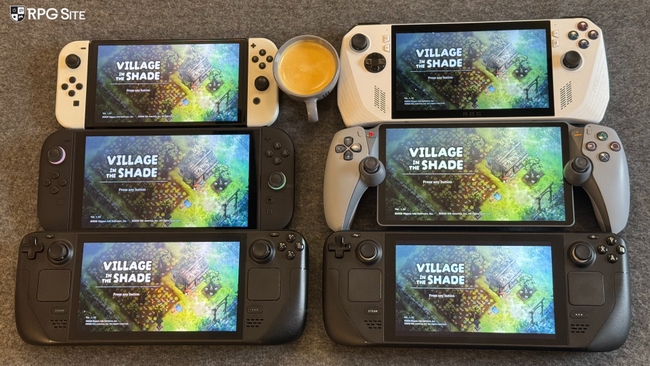
Console Performance Breakdown
- PlayStation 5 / PS5 Pro: Runs impeccably at a locked 60 FPS. However, testers noted surprise that the developers did not target 120 FPS on current-generation hardware given the game’s light resource demands. Load times are near-instantaneous.
- Nintendo Switch 2 (Native & BC): Delivers a rock-solid 60 FPS experience with zero noticeable hitching. Menu navigation, including opening the map, is instantaneous.
- Nintendo Switch 1: While it also targets 60 FPS, players running the game on original hardware will encounter minor hitching during opening sequences and a noticeable delay when bringing up maps or specific menus.
PC and Handheld Ecosystems
The PC version acts as the definitive performance baseline, supporting uncapped frame rates that scale well beyond 60 FPS. Handheld PCs and specialized portable devices deliver varying results depending on thermal envelopes and hardware configurations:
- Steam Deck: Delivers frame rates above 85 FPS consistently, though it stops short of a fully locked 90 FPS.
- ASUS ROG Ally (Z1 Extreme): Testing at 15W and 25W Turbo modes revealed that attempting a 120 FPS target at a 120Hz display setting introduces slight frame-time pacing issues. Locking the display and game to 60 FPS/60Hz yields the most stable experience.
- OneXPlayer 3 & MSI Claw 7 AI+: Both Intel-powered handhelds handle high refresh rates gracefully. The OneXPlayer 3 hits 144 FPS at 15W, though dropping below 15W triggers frametime spikes due to the G3 Extreme chip disabling Intel P-cores. The MSI Claw 7 AI+ maintains 90–120 FPS at 10W without spikes, or a steady 60 FPS at its minimum 7W draw.
Chronology of Release and Testing
The rollout of Village in the Shade follows a staggered international timeline:
- Early 2025: Initial console and Steam release in Japan (Steam version lacking native English language support).
- Weeks Prior to Worldwide Launch: Comprehensive multi-platform hardware analysis conducted across nine distinct platforms and handheld profiles.
- October 27, 2025: Official worldwide launch for PlayStation 5, Nintendo Switch 2, Nintendo Switch, and PC via Steam, bringing full English language integration to global audiences.
Supporting Data: Load Times Comparison
Storage optimization plays a critical role in how quickly players can dive into the world of Village in the Shade. Testing measured the time elapsed from the system dashboard to the title screen, as well as the transition time required to load an active save file.
| Platform | Dashboard to Title (Seconds) | Loading a Save (Seconds) |
|---|---|---|
| Switch 1 (Original Hardware) | 10 | 5 |
| Switch 1 Version on Switch 2 | 4–5 | 2–3 |
| Switch 2 (Native) | 4–5 | 2 |
| PS5 on PS5 Pro | 2 | <1 |
| PS5 (Standard) | 3 | <1 |
| Steam Deck | 10 | <1 |
| ROG Ally | 3 | 1 |
| OneXPlayer 3 | 5 | <1 |
While modern solid-state drives and high-speed flash storage make loading nearly instantaneous on most devices, original Switch hardware struggles significantly, nearly doubling or tripling wait times across the board.

Official Responses and Platform Nuances
While developers have not yet issued formal patch notes addressing the 120 FPS omissions on PS5 and Switch 2, hardware characteristics heavily influence user preference.
A notable differentiator highlighted during testing is controller haptics. Console versions—particularly on Nintendo platforms and the PlayStation 5—feature robust rumble profiles, including advanced HD rumble. Handheld PCs like the Steam Deck and ROG Ally lack equivalent native haptic feedback depth, prompting some testers to lean toward Nintendo Switch 2 as their preferred portable medium purely for the tactile immersion it provides.

Furthermore, the physical media debate has resurfaced. The game enjoys a traditional physical cartridge release on the original Nintendo Switch, whereas the Nintendo Switch 2 edition relies on a Game-Key Card format. Fortunately, testing confirms that running the Switch 1 physical cartridge on a Switch 2 via backwards compatibility incurs no significant penalties aside from a nominal increase in initial load times, making it a viable alternative for physical collectors.
Implications for Consumers and the Market
Village in the Shade stands out as one of NIS America’s most technically stable and visually scalable titles in recent years. Because the visual fidelity remains tightly clustered regardless of hardware horsepower, consumers face very few compromises no matter where they choose to purchase the game.
- For Handheld Enthusiasts: The Nintendo Switch 2 (or running the Switch 1 version on Switch 2 hardware) emerges as an exceptionally strong contender, balancing portable convenience, rapid load times, and superior haptic feedback.
- For Power Users: The PC version remains the undisputed heavyweight champion, offering uncapped frame rates, extensive input flexibility, and hardware-agnostic scalability.
- For Traditional Console Gamers: The PlayStation 5 version provides a flawless performance floor paired with lightning-fast SSD speeds and native trophy support.
As players prepare to experience one of NIS America’s standout releases next week, the technical consensus is clear: Village in the Shade is remarkably well-optimized, ensuring that whether played on a high-end desktop rig or an aging handheld, the core artistic vision remains entirely intact.

