

SAN FRANCISCO — Meta has announced a major expansion to its virtual reality subscription service, Meta Horizon+, introducing free in-game add-ons alongside a strong roster of monthly titles for October 2026. Designed to increase the ongoing value of the platform, the updated service now bridges the gap between curated game access and live-service perks, offering subscribers exclusive cosmetic items and in-game currency alongside its traditional rotating library of virtual reality experiences.
As the standalone VR market matures, subscription models have increasingly become a focal point for hardware manufacturers seeking to drive user engagement and software discovery. With this latest update, Meta is positioning Horizon+ not merely as a rental library for classic and indie titles, but as a comprehensive ecosystem hub for Quest users.
Main Facts: What’s New in Horizon+
The flagship addition to the Horizon+ service is the introduction of complimentary, subscriber-exclusive add-ons. Previously, the service focused strictly on monthly game drops, catalog access, and occasional store discounts.
The rollout of free add-ons kicks off with Orion Drift, the highly anticipated massively multiplayer online game developed by the creators of Gorilla Tag. Horizon+ subscribers will automatically unlock an exclusive bundle of in-game currency and rare cosmetics, giving them a head start in the social VR space.
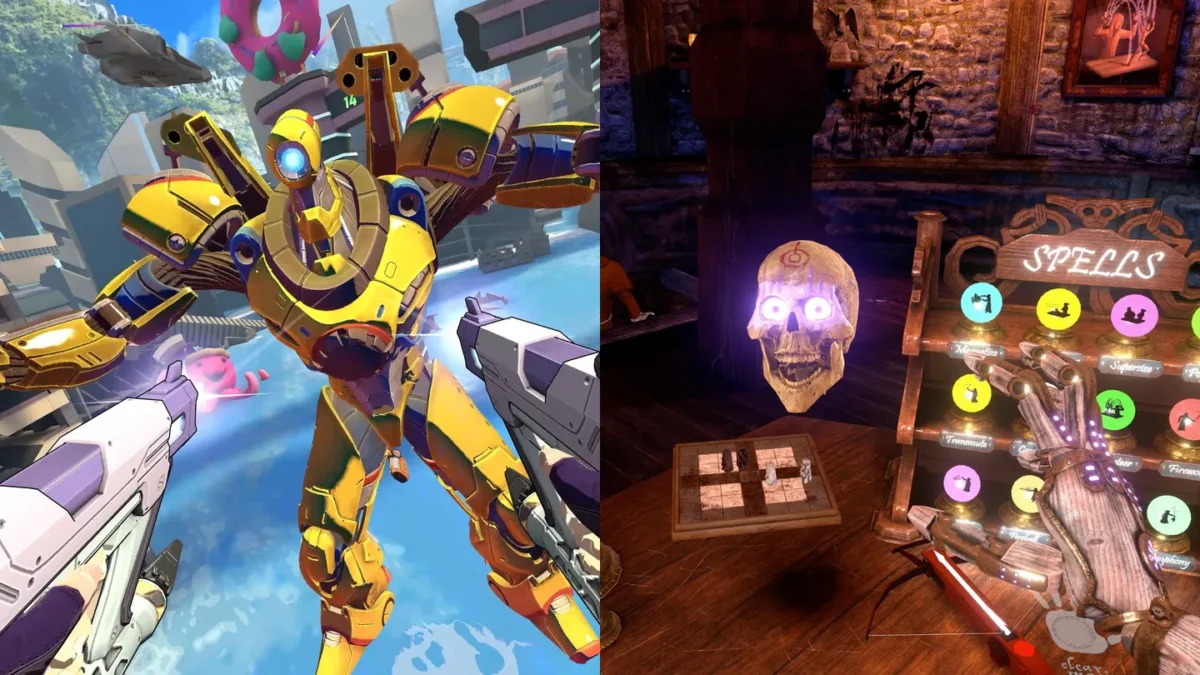
In addition to the add-on perks, the October 2026 headline monthly games have been confirmed as:
- Swarm 2: A frantic, high-speed roguelike shooter often summarized by critics as "Spider-Man with guns."
- Waltz of the Wizard: An immersive, highly reactive spellcasting simulator featuring advanced conversational NPC interactions.
Furthermore, the expansive Horizon+ Games Catalog and Indie Games Catalog have welcomed two notable additions this month: Demeo x Dungeons & Dragons: Battlemarked and Deadly Delivery.

Chronology: The Evolution of Meta Horizon+
To understand the significance of Meta’s latest announcement, it is helpful to trace the evolution of the Horizon+ subscription service within the Quest ecosystem:
- The Early Foundation: Meta initially introduced its VR subscription model (formerly operating under variations of Quest+ branding) to mirror traditional console subscription services like Xbox Game Pass and PlayStation Plus. The early iteration centered primarily on a rotating pair of monthly titles designed to populate new users’ libraries.
- Catalog Expansion: Recognizing that two games per month were insufficient to retain long-term subscribers, Meta expanded the service to include a permanent, rotating Games Catalog and Indie Games Catalog, housing over 100 titles collectively.
- Store Integration & Discounts: Meta integrated store-wide discounts into the subscription tier, offering members exclusive price cuts on some of the Quest platform’s premier graphical and gameplay showcases.
- October 2026 Live-Service Integration: With the introduction of free add-ons starting with Orion Drift, Meta has shifted the service from a purely software-lending model into a live-service perk ecosystem, rewarding players with microtransaction-adjacent assets (currency and cosmetics) at no extra cost.
Supporting Data: Pricing, Structure, and Game Breakdown
Meta Horizon+ remains competitively priced relative to traditional flat-screen gaming subscriptions, though it caters specifically to the standalone VR hardware market.
Pricing and Access Tiers
- Monthly Subscription: $7.99 USD per month.
- Annual Subscription: $59.99 USD per year (offering a substantial discount for committed users).
- Trial Offer: New users are eligible for a one-month free trial to sample the catalog before committing.
Detailed Breakdown of October 2026 Headliners
1. Swarm 2
Developed as a follow-up to the cult-classic original, Swarm 2 leans heavily into acrobatic movement physics. Players navigate expansive, floating arena battlefields using dual-wielded grappling hooks while simultaneously firing a diverse arsenal of weapons at incoming swarms of foes. The gameplay loop demands precise spatial awareness, lightning-fast reflexes, and rhythmic momentum management. Reviewers have consistently praised its ability to deliver intense physical exertion and adrenaline without triggering severe motion sickness, thanks to its refined locomotion design.
2. Waltz of the Wizard
Created by Aldin Dynamics, Waltz of the Wizard has long served as a technical showcase for virtual reality interaction. The experience transforms the player into a sorcerer inside a mystical tower, offering near-limitless sandbox potential. The standout feature of the current iteration is its integration of advanced conversational AI systems, allowing users to speak directly to non-player characters who respond contextually with thousands of dynamic vocal and physical reactions. Players can manipulate time, conjure elemental disasters, and reshape their environment with intuitive hand gestures.
3. Catalog Additions: Demeo x Dungeons & Dragons: Battlemarked & Deadly Delivery
- Demeo x Dungeons & Dragons: Battlemarked: This crossover event brings tactical tabletop roleplaying to life in virtual reality, combining the strategic depth of Dungeons & Dragons with Resolution Games’ acclaimed Demeo mechanics.
- Deadly Delivery: An independent title that tests players’ nerves and navigation skills as they transport high-risk cargo through hazardous, unpredictable environments.
Official Responses and Industry Context
While Meta has not issued a sprawling press conference statement regarding the update, the company’s product communications emphasize a continuous commitment to adding tangible utility to the Quest hardware ecosystem.
Industry analysts point out that as the installed base of Meta Quest 3 and Quest 3S headsets grows, software discovery becomes increasingly difficult due to the sheer volume of titles crowding the Meta Horizon Store. Subscription services like Horizon+ serve a dual purpose: they guarantee baseline recurring revenue for Meta while functioning as a curated discovery engine for independent and mid-tier developers who might otherwise struggle to find visibility against massive blockbusters.

Furthermore, the inclusion of free add-ons for multiplayer titles like Orion Drift indicates a strategic alignment with live-service developers. By subsidizing in-game currency and cosmetic distribution through the subscription fee, Meta helps maintain active player counts in multiplayer lobbies—a critical metric for the long-term health of social VR platforms.
Implications: What This Means for VR Gamers and Developers
The evolution of Meta Horizon+ carries several important implications for the future of standalone virtual reality gaming:
1. Shift Toward Value-Added Ecosystems
Hardware manufacturers are learning that a pure software rental model is no longer enough to maintain subscriber retention. By bundling live-service perks—such as currency, cosmetics, and cross-game promotional items—Meta is increasing the "stickiness" of the Horizon+ subscription. Users who might have previously paused their subscriptions during months where the monthly games didn’t appeal to them now have an incentive to stay subscribed for ongoing live-service rewards.
2. A Lifeline for Multiplayer Communities
Social and multiplayer VR titles live and die by their concurrent player counts. Games like Orion Drift rely on bustling servers to create an engaging atmosphere. By funneling Horizon+ subscribers directly into these ecosystems with free introductory currency and cosmetics, Meta is artificially bootstrapping initial community engagement, which can lead to higher organic player retention and healthier in-game economies.
3. Increased Discoverability for Developers
For indie studios and mid-sized publishers, having a title selected for the Horizon+ Games Catalog or featured alongside monthly drops translates into guaranteed exposure. While the exact financial arrangements between Meta and third-party developers remain proprietary, inclusion in the service typically involves upfront licensing agreements that can secure a studio’s financial footing.
3. Consumer Value Proposition
At roughly $8 a month (or less when opting for the annual $59.99 plan), Horizon+ continues to represent a cost-effective method for users to sample games they might otherwise bypass due to financial risk. With the addition of free add-ons, monthly games, ongoing catalog rotation, and exclusive store discounts, the service is steadily evolving into an essential utility for dedicated Quest headset owners heading into the final quarters of 2026.

