

In the ever-expanding landscape of Massive Multiplayer Online (MMO) gaming, few titles hold the cultural gravity of World of Warcraft. As Blizzard Entertainment prepares to launch its latest iteration, World of Warcraft: Forever, on November 4, the development team has signaled a strategic pivot that prioritizes long-term retention and community cohesion. At the heart of this shift is a concerted effort to encourage players to move beyond the "main character" archetype and embrace the utility, variety, and social benefits of creating multiple "alts."
Through a series of exclusive interviews with the developers behind this ambitious project, a clear picture emerges: World of Warcraft: Forever is not just a game about reaching the level cap—it is a game about the journey, the social web, and the incremental satisfaction of diverse progression paths.
The Strategic Pivot: Why "Forever" Favors Alts
For decades, the standard MMO experience has been defined by a singular, obsessive focus on reaching the endgame, gear optimization, and pushing high-level raid content. World of Warcraft: Forever seeks to disrupt this cycle by incentivizing the creation of secondary characters through a sophisticated "Legacy System."
The Legacy System functions as a horizontal progression layer, rewarding players with achievement-style points for significant milestones across their account. These points are not merely for show; they can be invested into talent-tree-style upgrades that offer tangible quality-of-life benefits. By tying these rewards to account-wide accomplishments, Blizzard is essentially gamifying the process of exploration and experimentation.
"There will be reasons to play alts and to unlock Legacy points, to have new journeys," explains Ion Hazzikostas, Vice President and Senior Game Director. The goal is to move away from the static, linear path of previous expansions and toward a modular experience where each new character feels like a distinct contribution to the player’s overall account power.
A Gateway for the Uninitiated
One of the most significant challenges for any legacy MMO is the barrier to entry. New players often feel overwhelmed by years of accumulated lore, mechanics, and a massive power gap between themselves and veteran players. Executive Producer Holly Longdale views Forever as the definitive answer to this problem.
"If you’re new, this is the one, right?" Longdale asserts. "This is the lowest barrier to entry that we have going."
By emphasizing an environment where lower-level gameplay is consistently supported and relevant, Blizzard is creating a "Goldilocks" zone for newcomers. Instead of feeling like they are "behind" the curve, new players enter a game ecosystem where their progress—no matter how incremental—is valued and rewarded. This is supported by a development philosophy that treats the leveling process not as a chore to be skipped, but as a core pillar of the game’s content lifecycle.
Chronology of Development: Planning for the Long Game
The design philosophy behind Forever did not manifest overnight. It was the result of extensive internal modeling, particularly by Principal Designer Kris Zierhut, who spent months analyzing how progression-minded players would interact with the new systems.
Zierhut’s approach involved creating elaborate spreadsheets to simulate player behavior. He identified that the most efficient way to maximize Legacy points wasn’t necessarily to grind the most difficult endgame challenges, but to engage in a variety of lower-level content across multiple characters.
"There’s less time investment," Zierhut explains. "One of the things I love about that is, now let’s say my brother wants to start playing the game. Normally I go, ‘I got my level 60 character. Sorry—I can try to boost you.’ Now I can say, ‘You know what? I’ve got this level 20 guy I’ve been leveling. You can get there pretty quick. Let’s group up and play together.’"
This shift in design represents a fundamental change in the developer’s mindset. By building the game to accommodate these smaller, social interactions, the team is effectively rebuilding the communal fabric of Azeroth, making the world feel alive and populated at every level, rather than just in the capital cities or the latest raid tier.
Supporting Data: Meaningful Progression for the Modern Player
Blizzard is acutely aware that their player base has evolved. Many of the original players who started in 2004 are now in different life stages, with career responsibilities and families. Lead Game Designer Tim Jones, who identifies as a father, notes that the design of Forever is uniquely suited to those with limited time.
"I can log in for 30 minutes or an hour," Jones says. "I can open my quest log, see I have a couple quests that will help me round out completing Elwynn Forest, or I can head up to the auction house, grab a couple materials and make a few incremental advancements in blacksmithing. That’s a form of meaningful progression."
This "sessionable" design is crucial. By releasing content across various level bands, the team ensures that players are not forced into a specific path. Whether a player wants to tackle a new dungeon, complete a niche quest chain, or master a profession, the game provides the tools to make that time feel productive.
The Role of Future Patches
To ensure this model remains sustainable, the technical team is committed to a steady stream of updates. Lead Software Engineer Michael Nuthals highlights that future patches will focus heavily on content that appeals to the "leveling enthusiast."
"When we think of future updates, we want to make sure we’re creating content that everyone who plays the game has something to look forward to," Nuthals says. "If I love leveling, I’ve got a new path or a new quest chain or a new dungeon I can do."
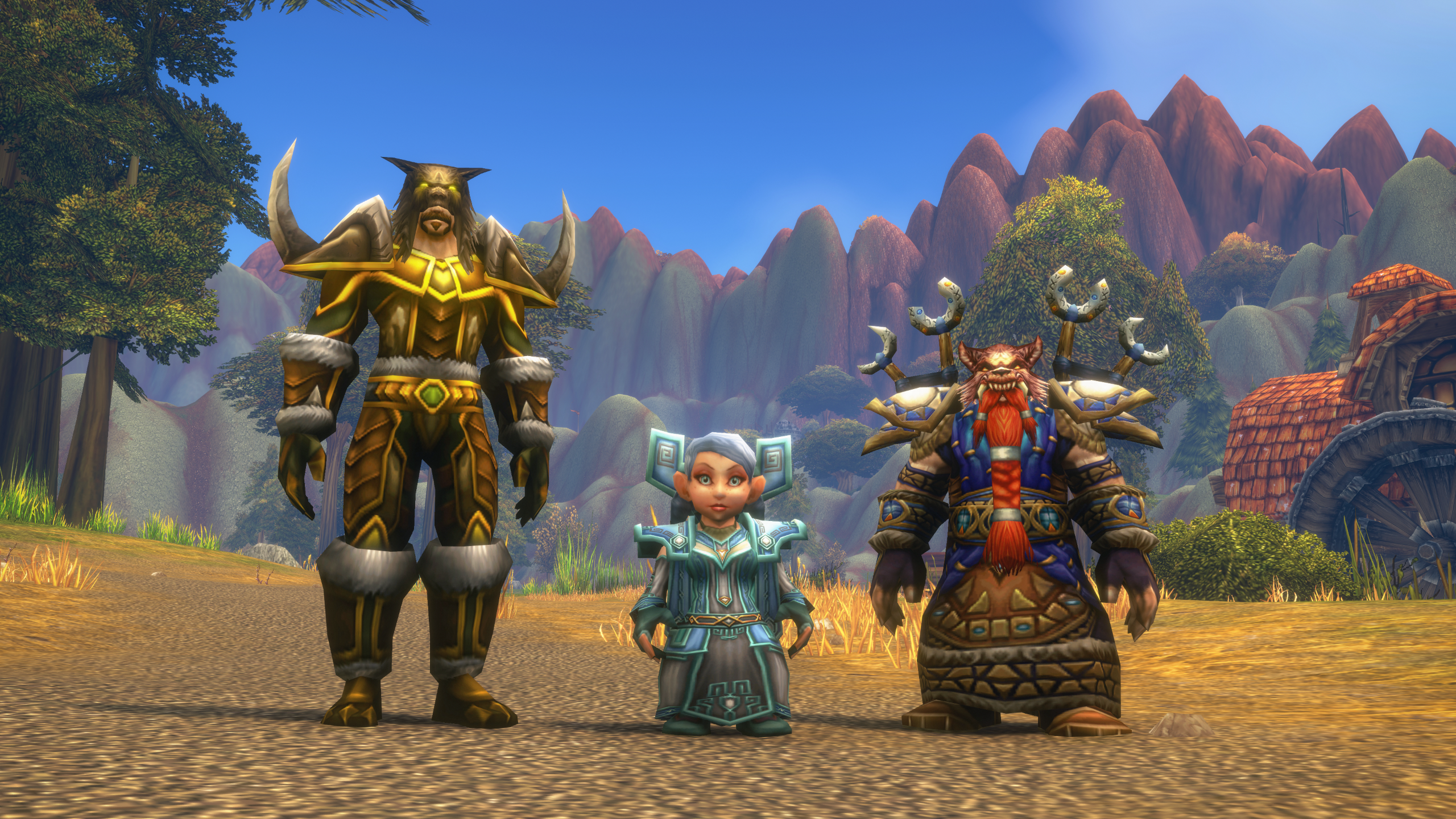
Lead Software Engineer Nora Mills echoes this sentiment, emphasizing that the team is dedicated to preventing stagnation. "Your journey is never identical to what it was," she notes. "We’re basically trying to entice players to want to create new characters, to roll an alt."
Official Responses and Future Implications
The shift toward an alt-friendly environment is not limited to player rewards; it extends to the very infrastructure of the game. Hazzikostas has confirmed that the team is looking at features from modern World of Warcraft to streamline the experience, specifically mentioning "warband-style" shared banks.
"Particularly with a Legacy system that encourages playing alts, taking out the extra couple of steps of having to mail items manually from your main to your alt—logging over, taking them out of the mail, I don’t know that’s in anyone’s interest," Hazzikostas admits. "An account-wide bank is something I could see adding in the not-too-distant future."
The "Forever" Impact
The implications of this strategy are profound. By moving away from the "all-or-nothing" endgame grind, World of Warcraft: Forever is positioning itself as a hobby-grade MMO—a space where players can dip in and out, experiment with different classes, and feel a constant sense of accomplishment without the pressure of a "race to the top."
As the November 4 launch approaches, the message from the development team is clear: they aren’t just selling a game; they are cultivating a living world. By making the journey as rewarding as the destination, and by ensuring that every character has a place in the story, Blizzard is betting that the longevity of World of Warcraft lies in the diversity of the experiences it offers, one alt at a time.
For veteran players, this is an invitation to see the world of Azeroth with fresh eyes. For new players, it is a low-pressure entry point into a legendary franchise. Ultimately, World of Warcraft: Forever promises a future where the player’s time is respected, their choices are meaningful, and their journey—no matter how many times they roll a new character—is never quite the same.

