

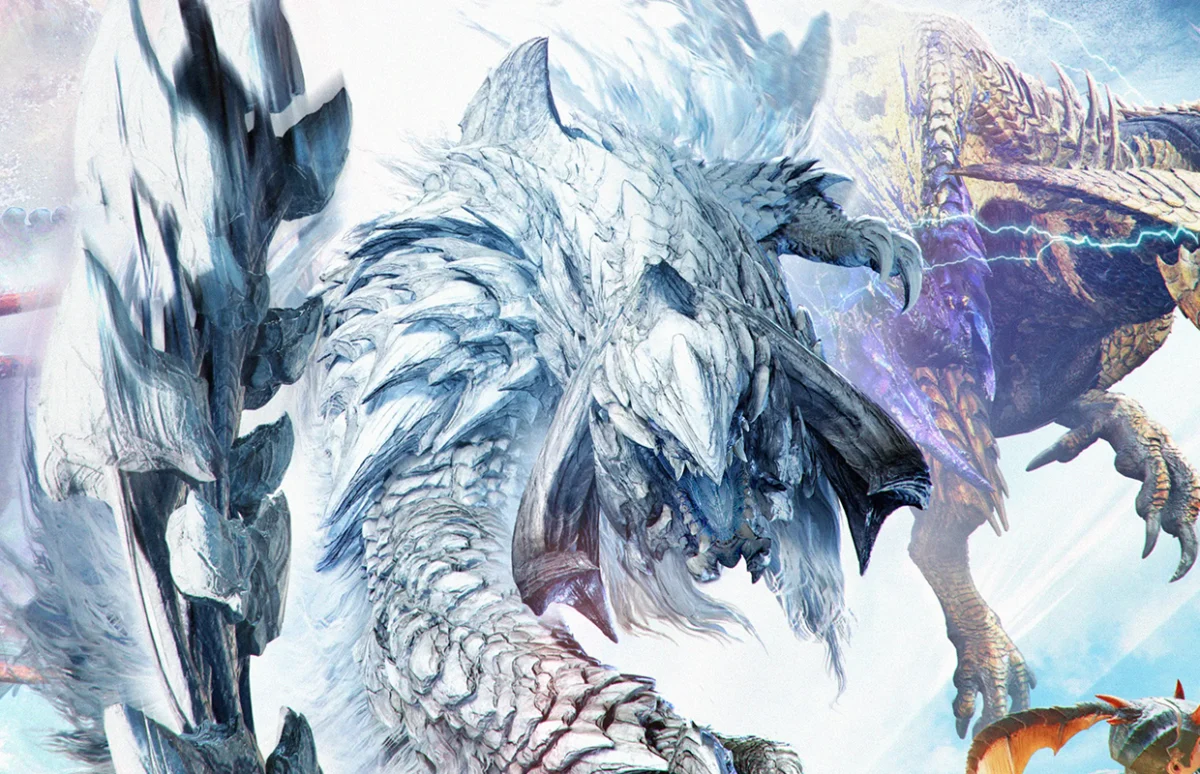
TOKYO — In an announcement that has sent ripples through the gaming community, Capcom has officially outlined the performance targets and output resolutions for the upcoming Nintendo Switch 2 iteration of Monster Hunter Wilds. As one of the most visually ambitious and technologically demanding entries in the long-running hunting franchise, bringing Monster Hunter Wilds to Nintendo’s heavily anticipated next-generation hardware represents a monumental technical achievement.
According to official specifications published by Capcom, the game will consistently target a 30 frames per second (fps) baseline across all operational modes on the successor console, affectionately and widely referred to in industry circles as the "Switch 2." While technical enthusiasts continue to dissect what this means for portable hardware running modern RE Engine spectacles, Capcom’s comprehensive comparison data provides a fascinating window into how the title scales from high-end Sony and Microsoft hardware down to Nintendo’s next-generation hybrid ecosystem.
Main Facts: Decoding the Switch 2 Specifications
The core revelation centers on how Monster Hunter Wilds will perform when the system is docked to a television versus when it is operated in handheld mode. Capcom has confirmed that the game will lock its sights on a uniform 30fps across the board on the Switch 2, though docked players will be granted a choice between two distinct operational profiles tailored for visual fidelity or clarity:
- Switch 2 TV Quality Mode: Outputs at a sharp 1260p resolution while targeting 30fps.
- Switch 2 TV Frame Rate Mode: Prioritizes stability and reduces output resolution to 1080p while maintaining a 30fps target.
- Switch 2 Handheld (HH) Mode: Outputs at an impressive 864p resolution while locked to a 30fps target.
To contextualize these numbers, Capcom has provided a side-by-side performance matrix comparing the Switch 2 variants against current-generation heavyweights, notably the PlayStation 5 and Microsoft’s Xbox Series S.
| Platform Mode | Output Resolution | FPS Target |
|---|---|---|
| PS5 Quality | 4K | 30 |
| PS5 Balanced | 4K | 40 |
| PS5 Premium Frame Rate | 4K | 60 |
| Switch 2 TV Quality | 1260p | 30 |
| Switch 2 TV Frame Rate | 1080p | 30 |
| Switch 2 Handheld (HH) | 864p | 30 |
| Xbox Series S | 1080p | 30 |
Industry analysts and technical analysts have been quick to point out a crucial distinction in Capcom’s data sheet: these figures represent output resolutions and frame rate targets, leaving the actual internal rendering resolutions—and the potential utilization of advanced upscaling technologies like Nvidia’s DLSS—open to speculation. Furthermore, the newly released chart does not currently detail whether un-capped frame rate options will be made available for players utilizing variable refresh rate (VRR) displays on the Switch 2, leaving future patches or disclosures as potential avenues for enhancement.
Chronology of Events: The Road to the Switch 2 Port
The journey of Monster Hunter Wilds to Nintendo’s next-generation platform has been marked by strategic rollouts, widespread critical acclaim, and meticulous community engagement. Understanding the timeline of these developments reveals how Capcom has managed the multi-platform lifecycle of its premier franchise entry.
The Initial Launch and Current Platforms
Monster Hunter Wilds originally debuted to immense commercial and critical success on PlayStation 5, Xbox Series X|S, and PC via Steam. Pushing the limits of current-generation hardware, the game showcased sprawling dynamic ecosystems, seamless transitions between hunting and exploration, and massive herd-based monsters that heavily taxed CPU and GPU architectures alike.
The Prologue Demo and Permanent Price Adjustments
As part of its ongoing live-service and community outreach strategy, Capcom recently deployed a major update introducing the Monster Hunter Wilds Prologue Demo. Available across existing launch platforms, this comprehensive demo allows prospective players to experience all available weapon types and dive into the story content up to Chapter 1-3, titled "To the Forest." Crucially, Capcom confirmed that all save data accumulated during the demo period will carry over directly into the full retail game, incentivizing newcomers and veterans alike to jump in early.
Concurrently, Capcom implemented a permanent price drop for Monster Hunter Wilds on existing platforms, paired with the rollout of brand-new downloadable content (DLC) bundles designed to maintain player momentum.
The Switch 2 Announcement Date
Nintendo enthusiasts received the news they had been waiting for when Capcom officially slated Monster Hunter Wilds for a December 4 release on the Nintendo Switch 2. This announcement bridged a significant gap in the platform’s early third-party software lineup, confirming that Nintendo’s successor would possess the horsepower necessary to handle Capcom’s premier RE Engine blockbusters—albeit with targeted optimizations.
Supporting Data: Comparative Analysis with PS5 and Xbox Series S
When examining hardware scalability, the metrics provided by Capcom offer an invaluable lesson in modern game optimization. The original Monster Hunter Wilds experience on the PlayStation 5 scales up to native or checkerboard 4K outputs, offering granular choices between a cinematic 30fps Quality mode, a balanced 40fps option for 120Hz displays, and a buttery-smooth 60fps Frame Rate mode.
By comparison, Microsoft’s Xbox Series S targets a standard 1080p resolution at 30fps. The fact that the Switch 2—when docked in TV Quality mode—can push an output resolution of 1260p at 30fps (and a native-matching 1080p in its alternative TV mode) speaks volumes about the hardware headroom present in Nintendo’s next-generation console. Even in portable handheld mode, maintaining an 864p output at a locked 30fps demonstrates a remarkably efficient translation of a game originally built for high-end stationary consoles and powerful gaming rigs.
That said, frame rate purists have noted that sticking strictly to a 30fps target across all Switch 2 profiles highlights the heavy computational demands placed on the system by the game’s complex physics simulations, dynamic weather systems, and massive monster AI routines.
Official Responses and Industry Reception
Reaction from the gaming community and industry pundits has been largely pragmatic, balancing excitement over the game’s portability with realistic expectations regarding hardware limitations.
Capcom’s engineering teams have repeatedly emphasized their commitment to making the RE Engine scale gracefully across diverse hardware profiles. In previous developer roundtables, Capcom noted that Monster Hunter Wilds was conceptualized from the ground up to test the boundaries of scale and immersion. Adapting that vision for a hybrid platform required innovative memory management and asset streaming techniques.
Retailers and analysts have responded positively to the scheduling of the Switch 2 port. Releasing on December 4 places the game squarely in the lucrative holiday shopping window, giving early adopters of Nintendo’s new hardware an essential, core-gamer title that showcases the system’s generational leap over its predecessor. Early feedback from community forums and media outlets underscores a collective eagerness to see how the game feels in practice, particularly regarding input latency and visual clarity during chaotic, multi-monster hunts on a smaller screen.
Implications: What This Means for Nintendo’s Successor and the Industry
The confirmation of Monster Hunter Wilds targeting 30fps on the Switch 2 carries profound implications for the broader video game industry and the positioning of Nintendo’s upcoming console.
1. Setting a Technical Baseline for Third-Party AAA Ports
For years, the original Nintendo Switch struggled to receive contemporaneous ports of massive, current-generation third-party blockbusters without severe visual downgrades or reliance on cloud-streaming solutions. Capcom’s targets for the Switch 2 indicate that Nintendo’s new hardware is comfortably capable of running native versions of demanding RE Engine titles. By securing a stable 30fps at resolutions scaling from 864p (handheld) up to 1260p (docked), Capcom has established a viable technical blueprint for other major publishers looking to bring their prestige titles to the platform.
2. The Persistence of the 30fps Standard in Portable Gaming
While PC and current-gen console players increasingly view 60fps as the gold standard for action-oriented titles—particularly fast-paced hunting games where frame data dictates evasion windows—the reality of mobile and hybrid hardware continues to necessitate compromises. Capcom’s decision to lock Monster Hunter Wilds to 30fps on Switch 2 ensures visual integrity and thermal stability, preventing erratic frame drops during intense combat encounters involving particle-heavy elemental attacks and sprawling environments.
3. Boosting Ecosystem Momentum
For Nintendo, landing a blockbuster multiplatform title like Monster Hunter—a franchise with historic cultural dominance in Japan and a massive global following—is a major victory. The synergy between the game’s permanent price drops, ongoing content updates, demo carry-over incentives, and the upcoming December 4 Switch 2 launch creates a powerful consumer funnel.
As players continue to dive into the Monster Hunter Wilds Prologue Demo on current platforms and prepare their gear for the hunt ahead, all eyes now turn to Nintendo and Capcom as they finalize the hardware rollout. Whether you are scaling the dunes of the Windward Plains on a high-end PC, lounging with a PS5 controller in hand, or preparing to take the hunt on the go with the Nintendo Switch 2, Capcom’s dedication to bringing this generational epic to every possible player base marks a defining moment for the franchise’s enduring legacy.
For more information, guides, and up-to-the-minute coverage on Monster Hunter Wilds across all platforms, be sure to check out the comprehensive resources available on RPG Site.

