

Main Facts
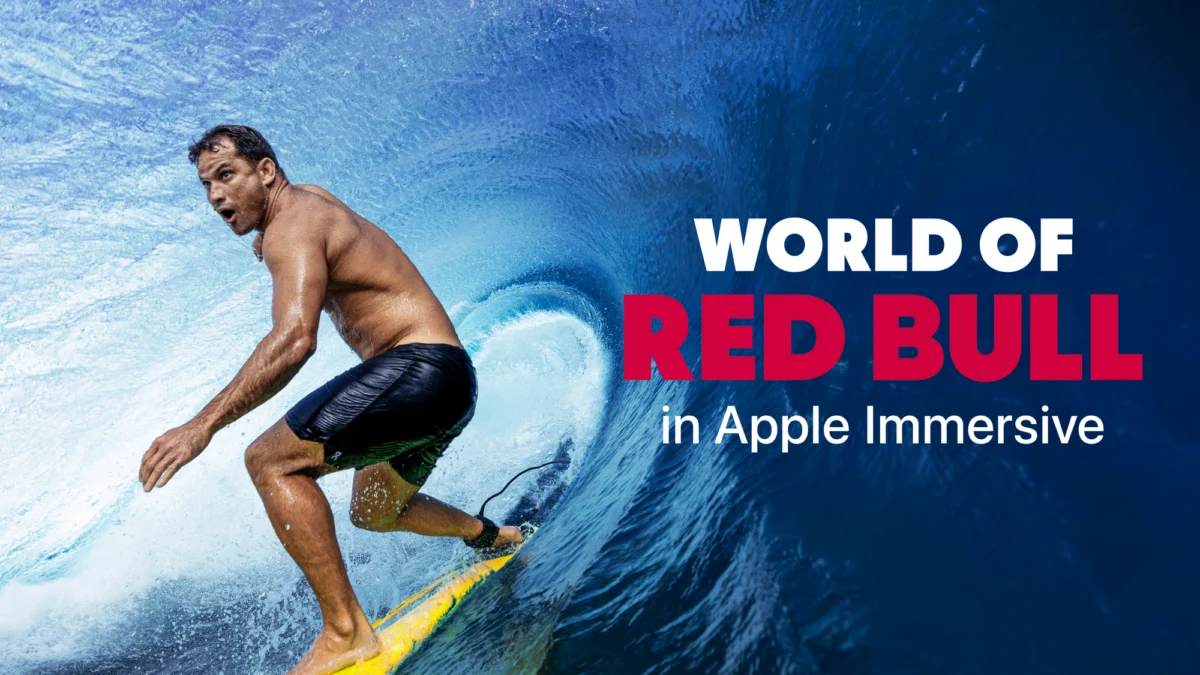
The boundaries between spectator and participant have officially blurred. Red Bull, a brand long synonymous with pushing the absolute limits of human endurance and extreme sports, has partnered with Apple to release a groundbreaking immersive experience: The World of Red Bull: Big Wave Surfing.
Launching on October 1 at 6:00 PM PT, the eight-minute special episode drops viewers directly into the liquid cathedral of Teahupo’o, Tahiti—widely regarded as home to some of the heaviest, most punishing, and most mesmerizing waves on the planet. Designed exclusively for the Apple Vision Pro on Apple TV, the production utilizes advanced 180-degree spatial video technology to achieve a level of realism that defies its flat-capture limitations. Rather than feeling like a passive viewing session, the piece weaponizes crisp spatial audio, expertly choreographed camera perspectives, and a dynamic range of vantage points to convince the human brain that it is treading water inches away from twenty-foot walls of cascading seawater.
The project features a powerhouse roster of global surf icons, including Olympic Gold Medalist Italo Ferreira, World Champion Molly Picklum, and Tahitian local hero Michel Bourez. Despite the video format technically capping out at 180 degrees rather than full 360-degree virtual reality, the precision of the direction, the seamless blending of underwater and aerial perspectives, and the hardware’s processing capabilities culminate in what critics are already calling a new gold standard for spatial sports storytelling.
Chronology
The genesis of The World of Red Bull: Big Wave Surfing represents a multi-year convergence of high-end sports broadcasting technology and spatial computing hardware development.
- Pre-Production & Conceptualization: Red Bull Media House, renowned for its cinematic documentation of extreme athletics, identified the Apple Vision Pro as a viable canvas for capturing big-wave surfing shortly after the spatial computer’s hardware specifications and spatial video capabilities matured. The production team targeted Teahupo’o due to its dramatic geographical contrasts—juxtaposing serene, crystal-clear Polynesian lagoons with violent, reef-shredding marine hydraulics.
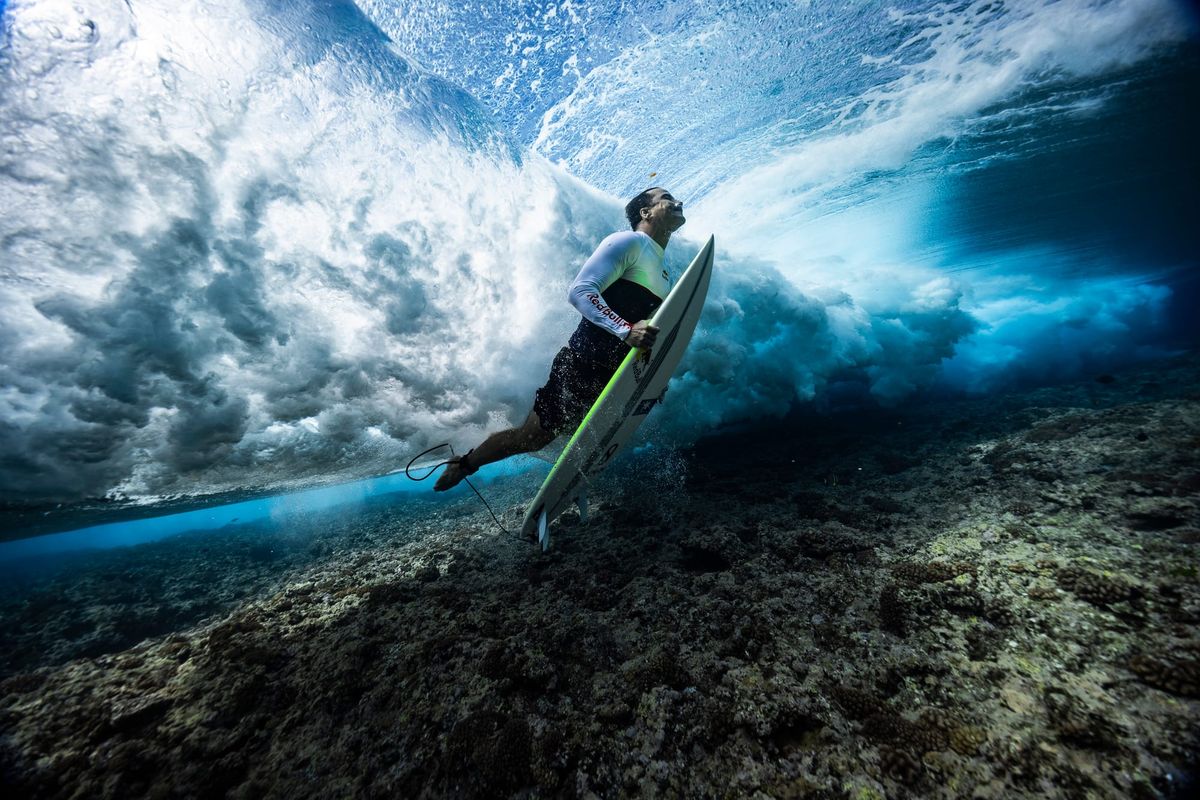
- Principal Photography: Filming required a complex logistical ballet. Directors and camera operators coordinated with elite surfers, boat pilots, and water safety teams during prime swell windows in French Polynesia. Capturing audio-visual elements meant positioning cameras underwater near coral reefs, tracking alongside speeding watercraft, mounting units directly onto surf vessels, and deploying aerial drones to capture the sprawling scale of the South Pacific swells.
- Post-Production & Spatial Optimization: Editing an immersive spatial film requires hyper-careful pacing. Unlike traditional flat editing, where rapid cuts build tension, spatial video cuts run the risk of causing disorientation or "simulator sickness" if executed too aggressively. The production team meticulously choreographed an eight-minute runtime, ensuring that transitions between perspectives felt natural, unforced, and paced in rhythm with the forming and breaking of the waves.
- Release: The completed experience officially drops on Apple TV for Apple Vision Pro users worldwide on October 1 at 6:00 PM PT, opening up a new frontier for how athletic achievements are archived and consumed.
Supporting Data & Technical Breakdown
To understand why The World of Red Bull: Big Wave Surfing succeeds where many early virtual reality experiments failed, one must examine the specific sensory data and production techniques leveraged by the creators.
- Format Specifications: The experience is formatted in 180-degree spatial video. While purists sometimes lobby for full 360-degree capture, technical directors note that 180 degrees allows for significantly higher pixel density per degree of field of view, preventing the blurry, stretched artifacts often found in lower-tier 360 video loops. On the Apple Vision Pro’s Micro-OLED displays, this translates to lifelike clarity.
- Spatial Audio Integration: Sound design forms roughly half of the immersive illusion. The experience dynamically shifts acoustic profiles based on the virtual camera’s position. When the perspective drops beneath the surface, high frequencies are muted, and the low-end rumble of distant ocean movement creates an eerie, calming underwater silence. Conversely, surface-level shots capture the sharp slap of spray, the roar of collapsing lips, and the ambient hum of spectator boats.
- Runtime Efficiency: At exactly eight minutes, the runtime is strategically engineered to maximize engagement without inducing visual fatigue. Psychologically, it offers enough pacing to shift from tranquil reef exploration to adrenaline-fueled drops, while keeping the viewer on the edge of their perceptual seat.
- Cast & Cameos: The production leans heavily on authentic athletic pedigree, starring:
- Italo Ferreira: Brazilian professional surfer and Olympic Gold Medalist known for his explosive aerial maneuvers and relentless energy.
- Molly Picklum: World Surf League powerhouse known for charging heavy waves with technical precision.
- Michel Bourez: The "Spartan" of Tahitian surfing, whose local knowledge of Teahupo’o’s razor-sharp reef provides vital authenticity to the project.
Official Responses and Industry Reception
The initial rollout of the Apple Vision Pro created immense anticipation for spatial documentary formats, but early sports content often leaned toward novelty rather than cinematic depth. Industry analysts and early media reviewers note that Red Bull’s latest venture has successfully bridged that gap.
Representatives from media circles reviewing the advance screening have highlighted the restraint shown in the project’s storytelling structure. Unlike conventional branded entertainment, which frequently relies on overt product placement or disruptive talking-head interviews to push a narrative, The World of Red Bull: Big Wave Surfing lets the environment speak for itself. Narration is kept sparse, functioning strictly as an informational compass rather than an intrusive guide. Viewers are given brief, foundational context about the physical demands and geographical hazards of Teahupo’o, followed by uninterrupted blocks of sensory immersion.
Furthermore, the brand integration within the film is organic. Red Bull logos appear naturally on athlete rash guards, equipment, and support watercraft, honoring the brand’s financial and logistical support of extreme sports without turning the eight-minute feature into a veiled, long-form commercial advertisement.
Reviewers have noted specific, visceral reactions to the content—such as instinctively ducking when a wall of crystal-clear water appears to splash toward the viewer’s face, or reaching out a hand to touch the sunlight refracting through a breaking crest. These subconscious physiological responses are being cited by tech journalists as definitive proof that the hardware-software synergy between Apple and Red Bull has hit a remarkable milestone.
Implications
The launch of The World of Red Bull: Big Wave Surfing carries broad implications for the future of sports broadcasting, experiential media, and digital tourism.
1. The New Paradigm for Sports Broadcasting
For decades, fans have relied on television broadcasts, standard-definition live streams, and flat highlight reels to experience extreme sports. While these formats capture the action, they sanitize the danger and flatten the scale. Spatial computing changes the value proposition of sports media. By allowing fans to stand virtually on the reef, ride alongside an Olympic champion, or hover above a life-threatening barrel, media companies can monetize proximity in ways previously reserved for the ultra-wealthy elite who can afford to travel to remote locations like the end-of-the-road peninsula in Tahiti.
2. Redefining Brand Sponsorship in Spatial Media
As augmented and virtual reality platforms grow, brands face a steep learning curve regarding how to advertise without breaking user immersion. Red Bull’s approach in this project offers a masterclass in modern native integration. By bankrolling ultra-premium, high-art athletic documentation that users want to pay to experience, Red Bull elevates its brand equity organically. The message is clear: the brand doesn’t need to shout its name because the quality of the adventure speaks volumes about its core identity.
3. The Catalytic Effect on Spatial Computing Hardware
Content is the ultimate driver of hardware adoption. For niche, high-priced hardware ecosystems like the Apple Vision Pro—which caters to prosumers, tech enthusiasts, and early adopters—compelling, exclusive media content is vital to justify hardware investment. Projects like Big Wave Surfing provide the "killer app" emotional resonance that turns a gadget from a productivity toy into an essential portal for extraordinary human experiences.
As more production houses and sports leagues look toward spatial video capture, the bar has officially been raised. Teahupo’o may be thousands of miles away from the living rooms, offices, and bedrooms of everyday viewers, but starting October 1, the thunderous roar of the Tahitian reef is closer—and more terrifyingly real—than ever before.

