

WASHINGTON, D.C. — In a move that blends linguistic engineering with high-stakes corporate diplomacy, the White House has officially inaugurated what it terms the "Era of Super Intelligence." Under a sweeping executive order signed by U.S. President Donald Trump, the executive branch of the federal government has been formally instructed to purge the lexicon of everyday technology, replacing the universally recognized terms "Artificial Intelligence" and "AI" with "Super Intelligence" and "SI."
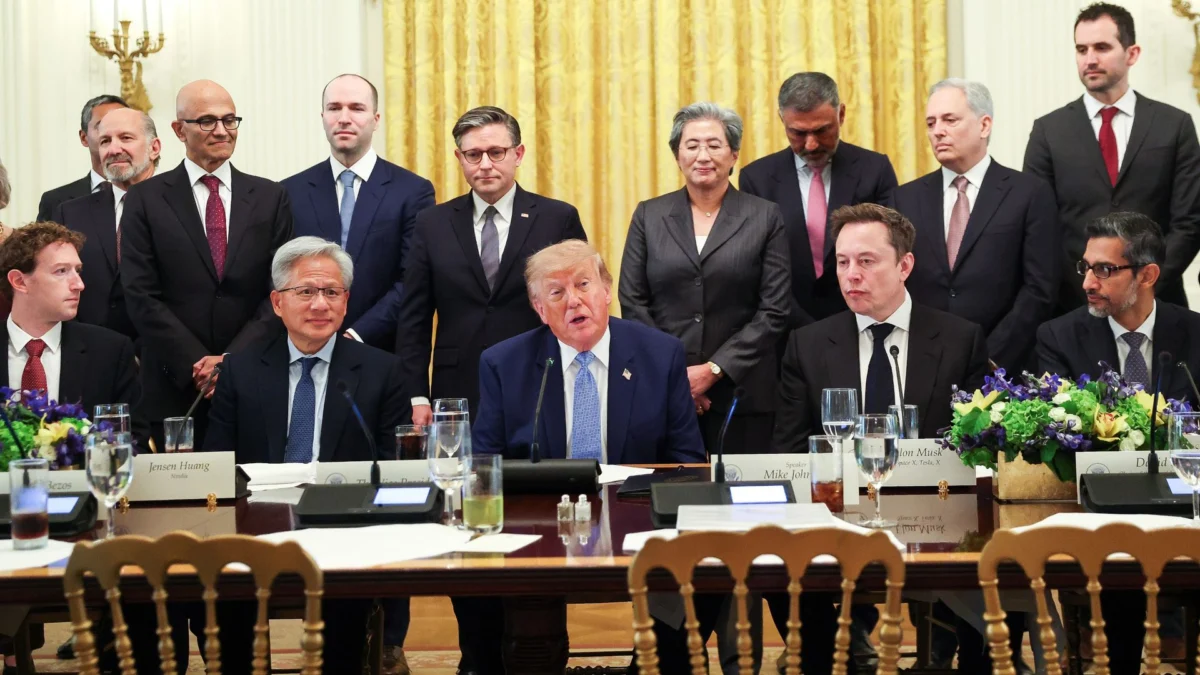
The announcement, made during a high-profile launch event at the Andrew W. Mellon Auditorium in Washington, D.C., brought together some of the most powerful figures in global technology, including Nvidia CEO Jensen Huang, Tesla and X chief Elon Musk, Meta CEO Mark Zuckerberg, and Google CEO Sundar Pichai. Yet, beneath the veneer of futuristic ambition and corporate alignment lies a profound policy shift: the formal abdication of federal regulatory oversight in favor of voluntary, industry-led self-regulation.
While the administration’s semantic mandate has drawn widespread bemusement, tech policy analysts warn that the deeper implications of the accompanying White House Accord on Super Intelligence could fundamentally alter the trajectory of global technological development, consumer safety, and national security.
Main Facts: The Executive Order and the Accord
The core of the administration’s new directive is laid out in a presidential action titled Inaugurating the Era of Super Intelligence. The document establishes a strict vocabulary protocol for the federal government:
"The term ‘Super Intelligence’ more appropriately captures the promise, potential, and rapidly advancing capabilities of these technologies. It is therefore the policy of my Administration that, to the maximum extent permitted by law, the executive branch shall use the terms ‘Super Intelligence’ and ‘SI’ in place of ‘Artificial Intelligence’ and ‘AI’ and will not acknowledge the usage of ‘Artificial Intelligence’ and ‘AI’ in any applicable setting."
Following the signing of the executive order, the administration convened a gathering of Silicon Valley’s elite in the East Room of the White House. The resulting White House Accord on Super Intelligence was signed by the principal executives driving the modern tech economy.
The agreement establishes a framework where participating corporations pledge to develop their systems safely and transparently. However, critics have zeroed in on a critical omission: the text contains no provisions for statutory oversight, government enforcement, or independent safety audits. Instead, the framework relies entirely on what President Trump termed "tremendous self-regulation."
Chronology of Events
The road to the White House Accord unfolded across a rapid succession of announcements, high-level meetings, and public posture shifts throughout late September 2026:
- Early September 2026: Rumors circulate regarding administration plans to alter geographic and technological nomenclature, following controversial efforts to rebrand regional landmarks.
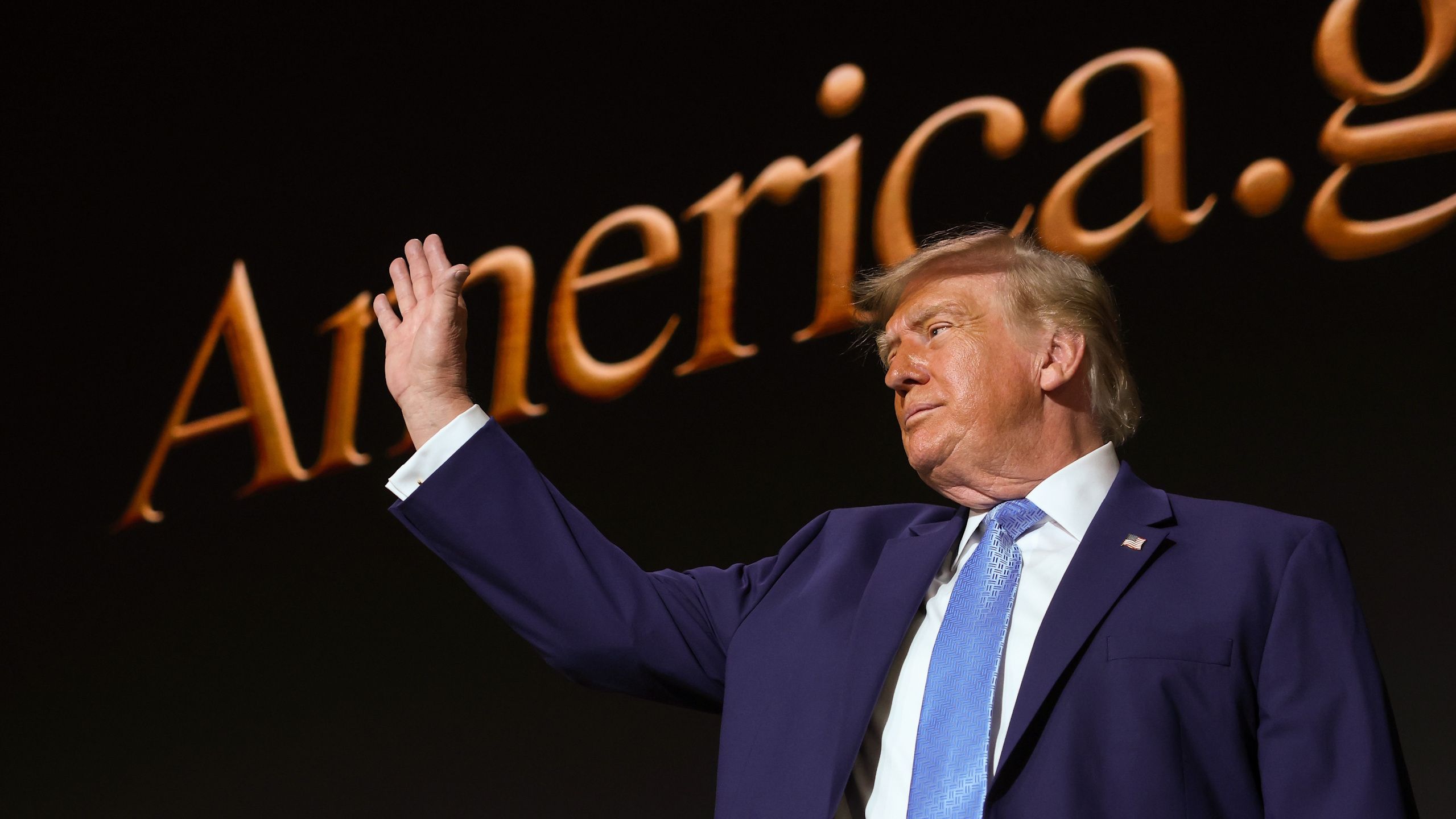
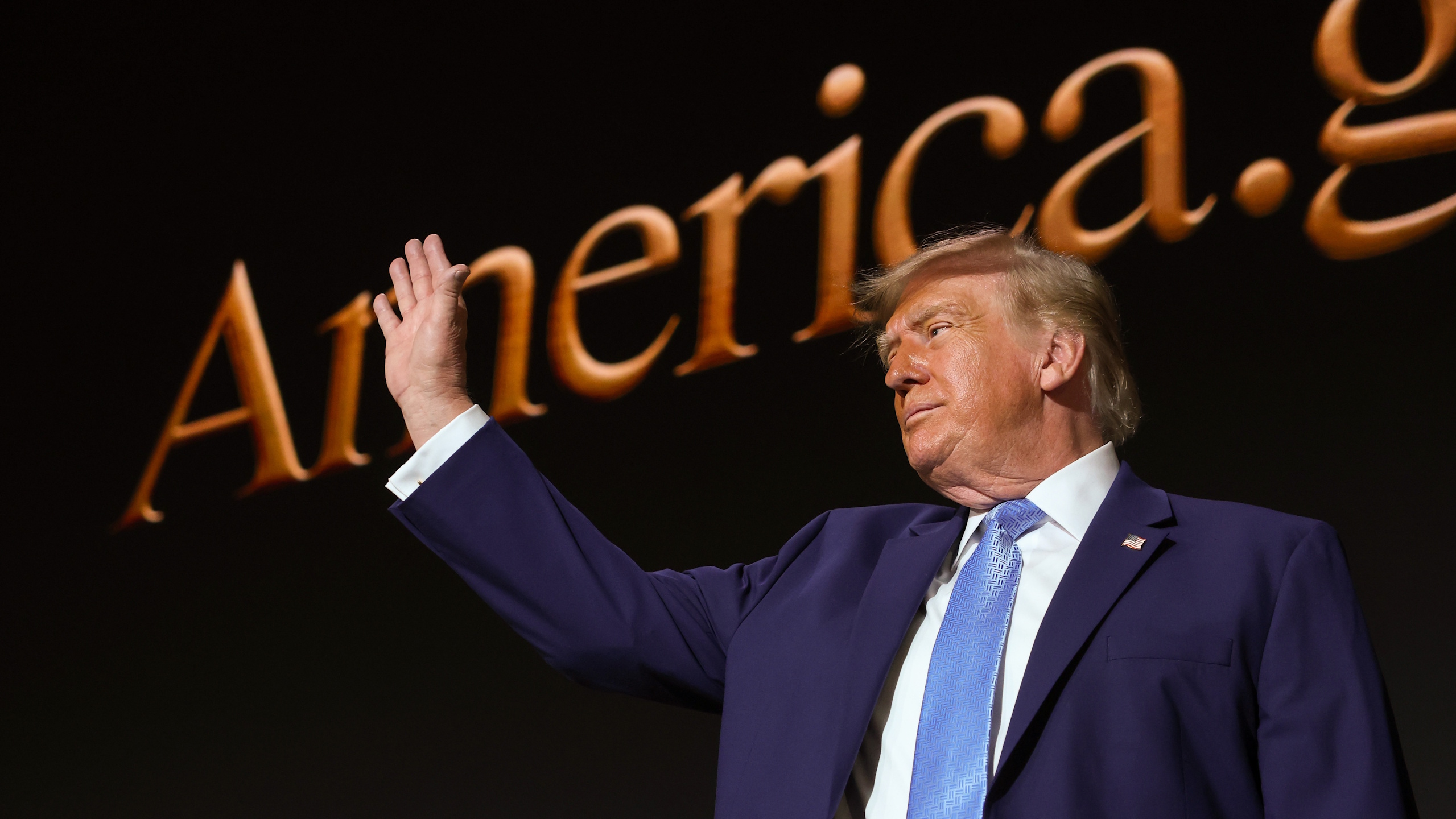
- September 29, 2026: President Trump formally signs the executive order renaming AI to "Super Intelligence" during the America.gov launch event, attended by Vice President JD Vance, Secretary of State Marco Rubio, and tech leaders including Elon Musk, Jensen Huang, and Dave Limp.
- September 29–30, 2026: A closed-door meeting takes place in the East Room of the White House between the administration and top executives—Mark Zuckerberg, Jensen Huang, Elon Musk, and Sundar Pichai—culminating in the signing of the White House Accord on Super Intelligence.
- September 30, 2026: Tech executives take to social media platforms to publicly endorse the accord. Concurrently, industry leaders like Microsoft co-founder Bill Gates voice sharp public dissent regarding the dangers of untempered corporate self-regulation.
Supporting Data and Industry Alignment
The immediate aftermath of the White House event demonstrated a complex dance between corporate compliance and practical reality. Major tech executives lined up to praise the administration and adopt the mandated terminology—at least temporarily.
Nvidia CEO Jensen Huang embraced the new framing immediately, utilizing the term "super intelligence" multiple times across his official communications. Google CEO Sundar Pichai, whose company has invested hundreds of billions of dollars into computational infrastructure over the preceding two years, lauded the administration for facilitating the dialogue. Meta CEO Mark Zuckerberg echoed the sentiment on Facebook, stating his belief that the newly branded technology would unlock unprecedented opportunities for global businesses and individuals.
Even Elon Musk, who publicly endorsed the administration’s rebranding initiative on X (formerly Twitter), slipped back into conventional terminology within eight hours, continuing to use the acronym "AI" in subsequent posts. Observers also noted a glaring typographical error on the official signed document distributed by the administration, which misspelled the "United States" as "Unites States" beneath the presidential signature.
Despite the performative compliance from corporate leaders, the linguistic shift has had virtually zero impact on consumer or industrial adoption outside of federal agencies and sycophantic media outlets. Developers, researchers, and everyday users continue to refer to the technology by its established global moniker.
Official Responses and Dissenting Voices
While the tech oligarchs present at the White House signaled enthusiastic cooperation—driven in part by the imperative to maintain market confidence and share prices—dissent is rising from figures outside the immediate circle of active corporate governance.
Chief among them is Microsoft co-founder Bill Gates, who voiced alarm over the administration’s reliance on voluntary industry guardrails. Speaking in a recent interview, Gates emphasized the dangerous disconnect between rapid corporate expansion and public awareness:
"It’s fair to say that outside of the industry, the awareness of the dangers of A.I. is extremely low," Gates stated. "And you can say that of academia, you can say that of think tanks, you can say that of policymakers, politicians. And part of the reason I’m speaking so loudly—as loud as I can—is that you can’t rely on the industry to self-regulate here. I mean, it’s just insane."
Gates’ critique highlights a central anxiety among policy experts: leaving multi-trillion-dollar enterprises to police their own safety standards creates an inherent conflict of interest, where speed-to-market and capitalization routinely eclipse long-term safety considerations.
Implications for the Future of Technology and Governance
The combination of the semantic mandate and the voluntary accord carries several profound implications for the future:
1. The Illusion of Oversight
By framing the agreement around "tremendous self-regulation," the administration has effectively signaled to Silicon Valley that federal legislative intervention or strict algorithmic safety laws are off the table. Participating companies have agreed to "meet regularly to establish standards and best practices," but these bodies lack legal teeth or enforcement mechanisms.
2. Semantic Distraction as Policy
Critics argue that focusing executive energy on renaming a foundational scientific term—shifting from "Artificial Intelligence" to "Super Intelligence"—serves as a rhetorical sleight-of-hand. It elevates marketing terminology to the level of federal policy while sidestepping substantive debates over data privacy, copyright law, workforce displacement, energy grid strains, and autonomous weaponization.
3. Corporate Realpolitik
The immediate public acquiescence of leaders like Pichai, Huang, Zuckerberg, and Musk illustrates the practical reality of modern tech governance. In an era where regulatory favor or disfavor can swing market valuations by hundreds of billions of dollars, corporate alignment with presidential whims has become a standard operational strategy, regardless of how whimsical or counter-intuitive those whims might be.
As the "Era of Super Intelligence" formally begins, the global technology sector finds itself careering forward at unprecedented speed. Whether this new nomenclature ushers in a golden age of safe technological abundance or merely papers over the lack of structural guardrails remains one of the most critical questions facing modern society. One thing, however, is certain: the stakes are no longer just linguistic—they are profoundly structural.

