

By Tech & Logistics Desk
Published: October 2023
Main Facts
The relentless global boom in artificial intelligence infrastructure has created an unprecedented black-market demand for high-end computing hardware. As data centers expand globally to train increasingly complex large language models, the components powering them—most notably high-performance graphics processing units (GPUs) and specialized enterprise memory—have effectively become digital gold.
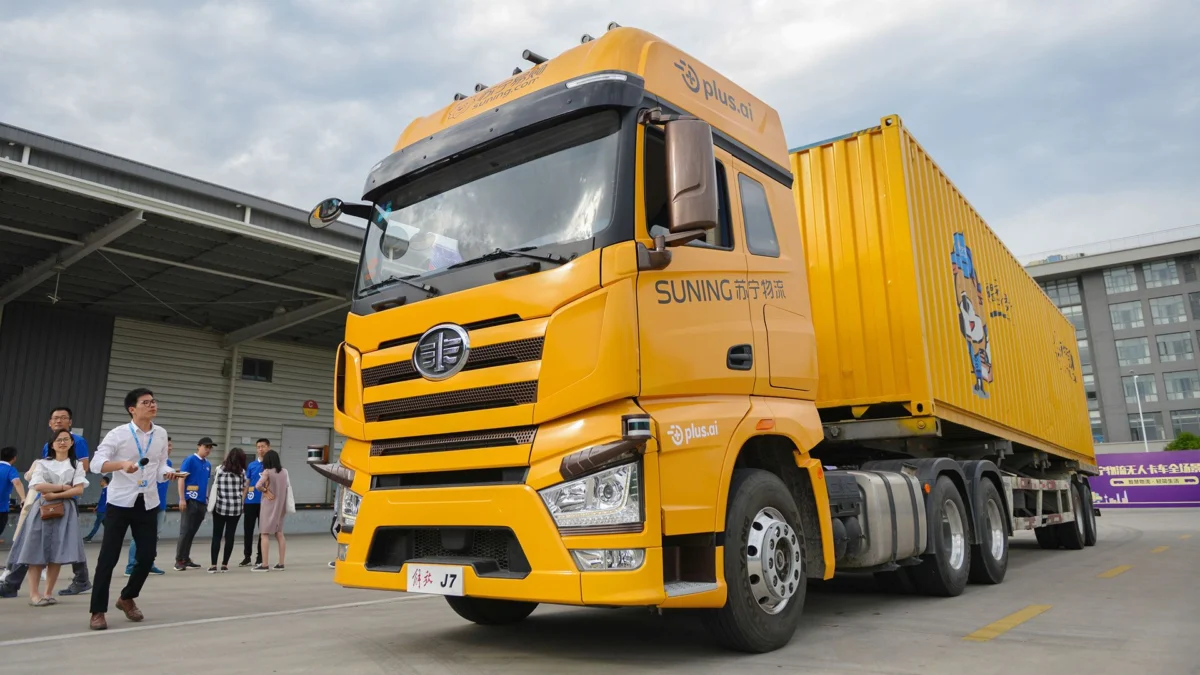
This high-stakes gold rush has turned technology supply chains into prime targets for sophisticated criminal rings. In one of the most ironic and illustrative incidents of this burgeoning criminal trend, autonomous trucking startup PlusAI recently found itself in the crosshairs of tech-minded cargo thieves. PlusAI, which collaborates closely with semiconductor giant Nvidia on autonomous driving systems, routinely operates tractor-trailers prominently emblazoned with the logos of both companies.
Anticipating a massive payday of high-value AI chips, opportunistic thieves targeted and successfully stole two of the startup’s branded trailers, relocating them to an undisclosed drop site. However, the criminals’ celebration was short-lived. Upon breaching the cargo containers, the thieves discovered no multimillion-dollar caches of advanced silicon. Instead, they found themselves the proud owners of 40,000 pounds of plain, unadorned sand—20,000 pounds packed tightly into each trailer.
While the incident has provided the tech industry with a much-needed moment of levity, it underscores a grim and escalating reality: the physical security of AI hardware has become a critical vulnerability in the modern technology landscape. From brazen highway carjackings to multi-million-dollar cargo thefts of copper cabling and server racks, organized crime syndicates are increasingly focusing their efforts on the physical infrastructure underpinning the AI revolution.
Chronology of an Escalating Threat
To understand how a startup transporting ordinary sand became the victim of an AI-targeted heist, one must examine the rapid escalation of supply chain crimes targeting the tech sector over the past twenty-four months.
Phase 1: The Emergence of the AI Hardware Bottleneck (2022–Early 2023)
As generative artificial intelligence captured the global imagination following the widespread adoption of tools like OpenAI’s ChatGPT, the demand for specialized hardware skyrocketed. Nvidia’s H100 and A100 GPUs became the undisputed bedrock of AI development. Because manufacturing capacities struggled to keep pace with demand, lead times for these components stretched into many months, and street prices on secondary markets surged. Enterprises, academic institutions, and hyperscale cloud providers scrambled to secure hardware by any means necessary, creating an immediate, lucrative secondary black market.
Phase 2: Shift Toward Opportunistic and Targeted Logistics Theft (Mid–Late 2023)
With corporate networks heavily fortified against cyberattacks, criminal organizations pivoted their attention to the physical world. Warehouses, distribution centers, and transit routes became the paths of least resistance. Initially, this manifested as package thefts targeting individual component buyers, but it quickly escalated to industrial-scale logistics theft. Thieves began monitoring shipping routes associated with major tech firms and hardware manufacturers, looking for telltale signs of high-value cargo.
Phase 3: The PlusAI Incident (Recent)
It was against this backdrop of heightened vulnerability that the PlusAI incident occurred. PlusAI, utilizing trailers bearing high-profile co-branding with Nvidia, inadvertently projected a massive target onto its logistics fleet. Criminals tracking high-value shipments intercepted two of the startup’s trailers, likely assuming the branding was a sign of confidential, top-tier GPU transport.
Unbeknownst to the perpetrators, PlusAI routinely utilizes weighted ballast—frequently in the form of heavy, inert materials like sand—during testing phases for its autonomous driving systems. Autonomous trucks require specific axle-weight distributions to accurately simulate the physics, braking distances, and handling characteristics of fully loaded commercial freight. By stealing the trailers, the thieves successfully executed a textbook cargo hijacking, only to discover that their multi-thousand-dollar investment in planning and execution had yielded only aggregate masonry material.
Phase 4: Industrial-Scale Escalation (Present Day)
The PlusAI incident is far from an isolated anomaly. Recent months have witnessed increasingly violent and coordinated operations by cargo thieves targeting the AI supply chain. Notably, operations near major logistics hubs like Chicago and across California have demonstrated that criminal rings are willing to use extreme violence, vehicular ramming, and sophisticated surveillance to intercept hardware shipments mid-transit.
Supporting Data: The Anatomy of Tech Supply Chain Crime
The financial scale of the underground market for AI components has fundamentally altered the risk-reward calculus for criminal enterprises. Law enforcement and logistics security agencies have documented a staggering surge in hardware-related cargo thefts.
Key Metrics and Incident Reports:
- The $1.3 Million Chicago Heist: In a coordinated operation outside Chicago, criminal gangs targeted a primary logistics node supplying components for regional AI data center buildouts. The haul included over $300,000 worth of specialized industrial copper wire—essential for high-density data center power distribution—alongside millions in server hardware. Law enforcement eventually recovered approximately $1 million worth of the stolen equipment, but the incident exposed severe vulnerabilities in regional freight security.
- Aggressive Highway Interceptions in California: Moving beyond passive thefts of parked or unattended trailers, thieves in California have demonstrated high levels of tactical coordination. Security reports detail incidents where criminal syndicates utilized multiple vehicles to box in, run off the road, or aggressively ram private security escorts protecting high-value AI hardware shipments, successfully forcing transport trucks to pull over and surrender their cargo.
- Component-Level Petty and Package Theft: At the consumer and small-business end of the spectrum, the cost of cutting-edge components—such as enterprise-grade DDR5 RAM modules and high-end workstation GPUs—has driven a wave of porch piracy and courier-hub thefts. Builders and regional IT departments frequently report missing shipments, forcing companies to implement clandestine delivery protocols (such as unmarked packaging and requirement-of-signature mandates) just to secure basic inventory.
- The Cost of Silicon: With enterprise GPUs trading hands on secondary markets for tens of thousands of dollars per unit, a single standard semi-trailer packed legitimately with AI accelerators can easily carry cargo valued between $10 million and $50 million. Compared to traditional cargo targets like consumer electronics, apparel, or pharmaceuticals, AI hardware offers an exponentially higher value-to-weight ratio, making it the ultimate prize for modern cargo thieves.
Official Responses and Industry Reactions
The intersection of artificial intelligence, autonomous logistics, and organized crime has forced a rapid reassessment of security protocols among tech giants, logistics providers, and law enforcement agencies alike.
Corporate Posture and Operational Secrecy
Major hardware manufacturers, including Nvidia, AMD, and Intel, have systematically overhauled how they communicate and manage freight logistics. Companies are increasingly moving away from easily identifiable, co-branded marketing on shipping containers and transport trucks. High-value silicon shipments now routinely travel in unmarked, non-descript white box trailers managed by anonymous third-party logistics (3PL) providers to avoid drawing the attention of highway spotters.
Furthermore, supply chain security teams have implemented strict information-compartmentalization policies. Routes, delivery times, and manifest details are encrypted and shared on a strictly need-to-know basis, mitigating the risk of insider threats or digital interception of transport schedules.
Law Enforcement Adaptation
Federal and state law enforcement bodies—including the FBI and specialized state-level cargo theft task forces—have established dedicated units focused exclusively on high-tech supply chain crimes. Investigators are treating these incidents not as routine property crimes, but as sophisticated, organized criminal enterprises with international reach. Stolen hardware often moves quickly across international borders or is funneled into grey-market server farms operating in jurisdictions with lax regulatory oversight.
The Autonomous Trucking Response
For autonomous vehicle developers like PlusAI, the incident has highlighted the unique operational challenges of testing heavy commercial hardware in the public sphere. While ballast is an unavoidable operational necessity for validating autonomous driving algorithms under varied load conditions, companies are re-evaluating how they brand and secure their test fleets. The consensus moving forward is clear: transparency in vehicle technology partnerships should not translate into transparent vulnerabilities on public highways.
Implications for the Future of AI and Logistics
The bizarre case of the sand-filled PlusAI trailers serves as a cautionary tale, but the broader trends it represents carry profound implications for the future technology and logistics landscapes.
1. Escalating Security Overhead
As long as the global shortage of high-performance computing hardware persists, the cost of securing the supply chain will continue to rise. Technology companies and data center operators must now factor substantial security overhead—including armed escorts, real-time GPS tracking geofences, encrypted telemetry, and secure holding yards—into their capital expenditure budgets. This added friction inevitably trickles down, increasing the total cost of deploying enterprise AI infrastructure.
2. The Vulnerability of Physical AI Infrastructure
The narrative surrounding artificial intelligence often focuses exclusively on the digital realm: algorithms, data privacy, model training, and cybersecurity vectors like prompt injection or data poisoning. However, the PlusAI incident and the accompanying wave of physical heists brutally remind the industry that AI is anchored in physical reality. Without silicon, copper, and cooling systems, the digital expansion grinds to a halt. Securing the physical supply chain is now just as critical as fortifying cloud servers against malicious hackers.
3. The Irony of Autonomous Tech Outsmarting Itself
There is a poetic irony in an autonomous trucking startup—a pioneer in cutting-edge logistics automation—falling victim to primitive, high-wayman-style cargo theft, only to be saved by a few tons of low-tech sand. It illustrates that while artificial intelligence can optimize routes, predict traffic patterns, and pilot multi-ton vehicles down interstate highways, it cannot inherently protect physical cargo from determined human malice.
As the AI boom marches forward, the logistics industry must bridge the gap between advanced digital efficiency and robust physical defense. Until supply and demand for high-end silicon finally stabilize, every truck rolling down the highway carrying the promise of artificial intelligence will remain a prime target—whether it holds millions in advanced processors or simply a mountain of sand.

