

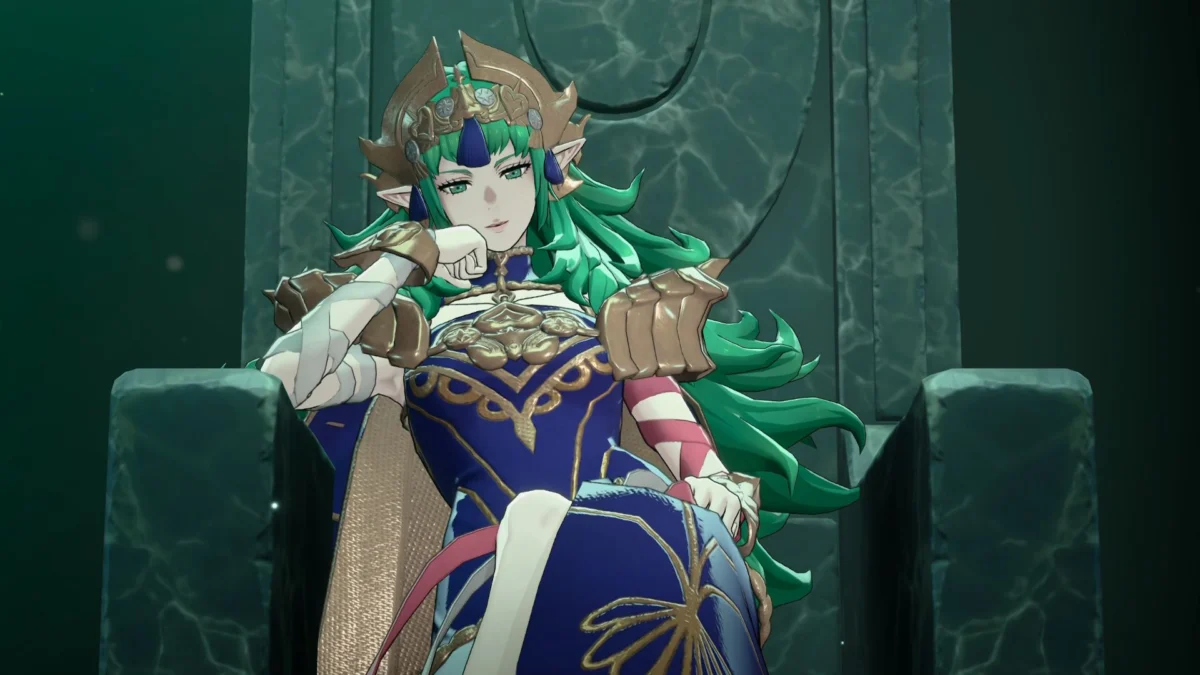
Since its release on September 17, Nintendo’s latest tactical tour-de-force, Fire Emblem: Fortune’s Weave, has firmly cemented itself as the new titan of the strategy RPG genre. However, as the initial launch window closes, a singular, pressing question remains on the minds of the community: just how long does it actually take to finish? Early anecdotal evidence suggests that the game is not merely a hobby—it is a lifestyle commitment.
The Mystery of the Infinite Campaign
In the modern era of gaming, websites like How Long To Beat act as the industry’s ledger, providing a standardized metric for how much time a player can expect to invest in a title. Yet, when it comes to Fortune’s Weave, that ledger is notably sparse. With only a handful of respondents logging their progress, the data remains statistically insignificant, oscillating between 74 and 99 hours for a completionist run.
The scarcity of these reports is telling. Unlike other titles released in the same window—such as Trails in the Sky 2nd Chapter, which has seen a steadier influx of player data—Fortune’s Weave seems to have swallowed its players whole. For those currently navigating its intricate maps and complex social systems, the game has become an all-consuming experience, one that defies the typical "beat it in a weekend" expectations of the modern console market.
Chronology: From Awakening to Fortune’s Weave
To understand the sheer scale of Fortune’s Weave, one must look at the historical trajectory of the Fire Emblem franchise. The series has long been defined by its "slow-burn" nature, where every unit death is permanent and every tactical decision carries weight.
- The Awakening Era (2012): Fire Emblem: Awakening served as the franchise’s global breakout hit. With an average completion time of approximately 44 hours, it set a baseline for what players expected: a substantial, rewarding tactical experience that could be tackled over a few weeks.
- The Three Houses Shift (2019): With the transition to the Nintendo Switch, the series underwent a radical transformation. Three Houses expanded the formula by adding a social simulation layer, forcing players to manage school life and interpersonal relationships. This increased the average runtime to over 75 hours, effectively doubling the series’ average investment.
- The Fortune’s Weave Expansion (2024): Now, with Fortune’s Weave, the series appears to have pushed the envelope even further. The game’s intricate narrative weaving, combined with an overhauled support system and expansive, multi-tiered maps, suggests that the "Three Houses" model was merely a foundation for this larger, more demanding epic.
Supporting Data: The Reddit "Haggard" Phenomenon
While official databases struggle to keep pace with the game’s length, the community discourse on platforms like Reddit provides a vivid, if somewhat exhausted, picture of the reality on the ground.
In a recent community thread dedicated to playtimes, the consensus is one of overwhelming scale. One user lamented, "Really feels like there’s just not enough time to play," while admitting to having logged 50 hours in a matter of days. Another comment—simple, blunt, and evocative—reads: "45 hours in, have to stop to go to sleep and go back to work."
These are not the testimonials of players who are bored; they are the reports of players who are captivated but physically and mentally taxed by the game’s depth. The "haggard" tone of these posts underscores a critical truth: Fortune’s Weave does not respect the constraints of a 9-to-5 life. It demands a level of focus that leaves little room for other titles—or, in some cases, other responsibilities.
Official Responses and Developer Intent
Nintendo has remained largely quiet regarding the specific "target" completion time, a deliberate silence that speaks volumes about the studio’s design philosophy. By refusing to provide a "speedrun" benchmark or an official hour count, the developers are signaling that Fortune’s Weave is intended to be an experience, not a task to be checked off a list.
The game’s design emphasizes the "Fortune" aspect—a system where the tactical outcome of a battle can be influenced by the relationships and "weaves" established between characters. This creates a branching narrative complexity that makes every player’s journey fundamentally different. Whether you rush the main objectives or spend 20 hours perfecting your battalion’s support levels, the game adapts to your pace, though it rarely offers an "easy out" for those looking to reach the credits quickly.
The Implications of "Bloated" RPG Design
The success of Fortune’s Weave raises a broader question about the future of the RPG genre: are we entering an era of diminishing returns for the player’s time?
On one hand, the "whale belly" of a game—as some critics have affectionately dubbed it—offers immense value for money. When a player pays $60 or $70 for a title, a 100-hour experience is often viewed as a superior product compared to a 10-hour cinematic adventure. The sheer density of Fortune’s Weave provides a sense of immersion that few other genres can replicate.
On the other hand, the implications for the average consumer are stark. As games become larger and more complex, they become increasingly inaccessible to those with limited free time. We are seeing a shift where a single "Game of the Week" can effectively lock a player out of the rest of the industry’s output for an entire month.
The Cultural Impact: A New Standard?
Fire Emblem: Fortune’s Weave is, by all accounts, a masterclass in tactical design. Its Metacritic score, which mirrors that of the acclaimed Three Houses, confirms that the expansion in scale has not come at the cost of quality. However, it also highlights that Nintendo is leaning into a "prestige" model of development—games that are massive, exhaustive, and designed to be the sole occupant of a player’s console for the foreseeable future.
For the series, this is a bold evolution. It is no longer just a strategy game; it is a repository of hundreds of hours of character development, strategic trial-and-error, and narrative branching. For the player, it is an invitation to lose oneself in a world that refuses to be rushed.
Final Thoughts: The Cost of the Crown
Whether it takes 75 hours or 120, Fire Emblem: Fortune’s Weave is destined to be a defining title for the Nintendo Switch era. It serves as a reminder that the most compelling experiences in gaming often require the greatest sacrifice.
As the weeks pass and the How Long To Beat data inevitably stabilizes, we will likely find that the average runtime is not merely a number, but a testament to the game’s depth. For now, the takeaway is clear: if you intend to start Fortune’s Weave, do not expect to finish it quickly. Clear your schedule, prepare your tactical maneuvers, and accept that for the next month, your life belongs to the goddess and the weave.
The game is, in every sense of the word, an investment. And for fans of the genre, it is an investment that appears to be paying dividends in the form of unparalleled tactical satisfaction. Just don’t forget to get some sleep.

