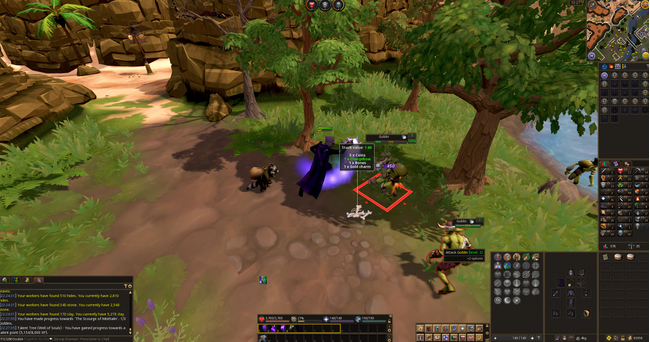
In an industry where multi-million-dollar live-service games can rise and fall within a matter of months, RuneScape remains an anomalous titan. Approaching nearly three decades of continuous operation, Jagex’s flagship Massively Multiplayer Online Role-Playing Game (MMORPG) has weathered tectonic shifts in internet culture, hardware capabilities, and game design philosophy.
What began in 2001 as a modest browser-based adventure programmed in Java has transformed into a cross-platform cultural institution. Its journey is defined by legendary blunders, passionate community governance, a fractured timeline, and an unprecedented resurgence driven by its 2013 offshoot, Old School RuneScape (OSRS).
To understand how a game built for low-end school desktops outlived entire technological eras—such as the meteoric rise and fall of the standalone MP3 player—requires looking back at its history and speaking directly with the architects steering its future. Recently, Jagex Creative Director Kieren Charles sat down to discuss the grueling, winding road from the early days of RuneScape 2 to the modern, player-driven era of OSRS.
Main Facts: The Dual Pillars of Gielinor
Today, the RuneScape intellectual property is split into two distinct, thriving entities, each catering to vastly different player psychological profiles:
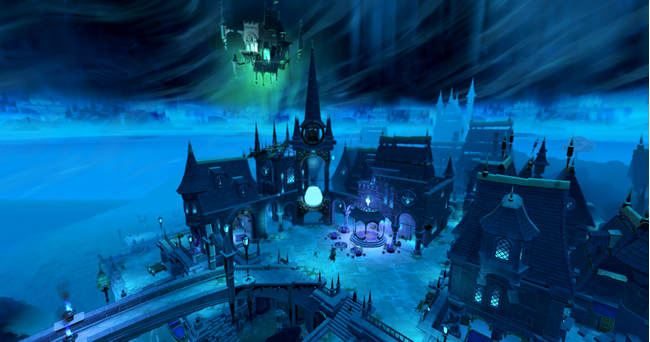
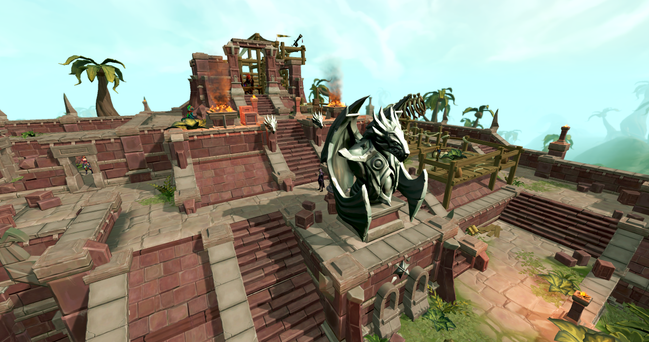
RuneScape (often referred to as RuneScape 3): The continuation of the main line, characterized by modern graphical fidelity, active-ability-based combat systems (introduced via the controversial Evolution of Combat update), continuous narrative progression, and a complex economic ecosystem.
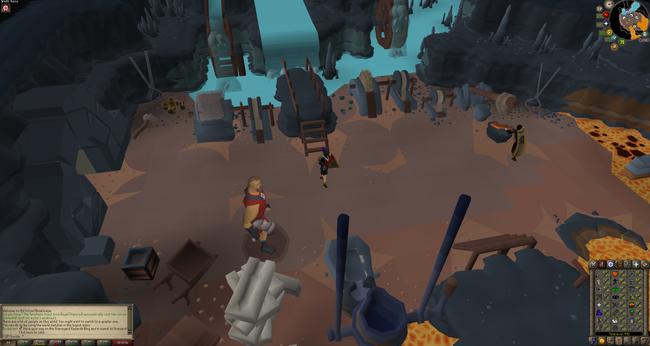
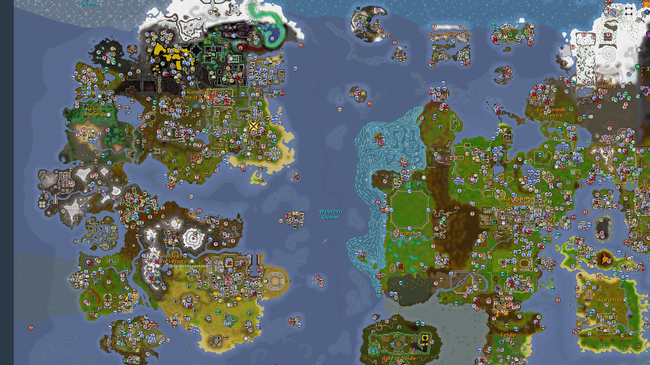
Old School RuneScape (OSRS): Launched in 2013 as a snapshot of the game’s 2007 build, OSRS has since evolved into an entirely separate entity. Guided strictly by democratic, community-driven polling where updates require a 70% supermajority to pass, OSRS now boasts a larger active player base than its modern counterpart, complete with bespoke expansions, new skills like Sailing, and unique areas like Varlamore.
Despite divergent paths, both games draw from the same foundational lore and nostalgic roots, proving that players are willing to engage deeply with a title that respects their long-term investment.
Chronology: A Quarter-Century of Triumphs and Traumas
To appreciate where RuneScape stands today, one must chart the milestones that shaped its community psyche over the past 25 years:
2001:RuneScape launches as a free-to-play browser game created by Andrew and Paul Gower.
2004: The release of RuneScape 2 transitions the engine to 3D graphics, establishing the classic aesthetic that millions of Millennials grew up with.
2007:
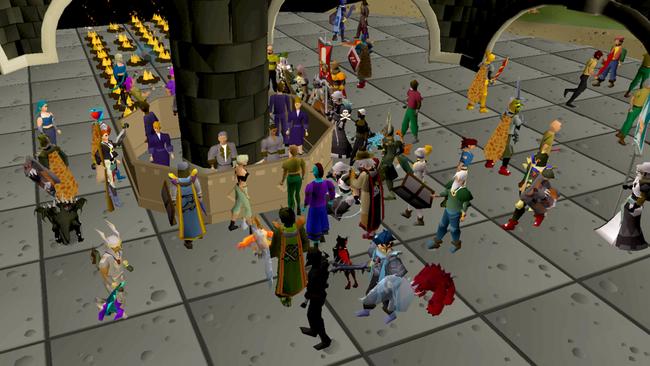
The Falador Massacre: A notorious glitch during a player’s house party allows non-player-killing (PvP) zones to become bloodbaths, cementing itself as MMORPG folklore.
The Grand Exchange: Jagex automates player-to-player commerce, replacing the chaotic shouting matches in Varrock West Bank with a centralized marketplace.
Late 2000s – Early 2010s: The introduction of aggressive monetization formats—beginning with the Squeal of Fortune and later Treasure Hunter—coupled with the sweeping Evolution of Combat (EoC) update in late 2012, alienates a massive segment of the purist player base.
2013: Responding to overwhelming community outcry, Jagex launches Old School RuneScape, initially intended as a static preservation project.
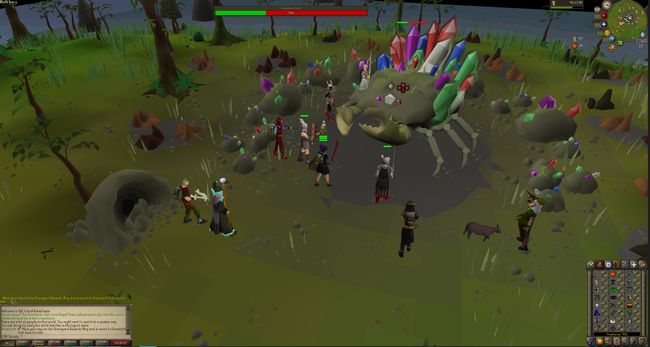
2014–Present:OSRS organically transitions from a nostalgia museum into an active development ecosystem, introducing Iron Man mode, the RuneLite plug-in partnership, major raids (CoX, ToB, ToA), and player-voted skills like Sailing.
Official Responses: Inside the Mind of Jagex with Creative Director Kieren Charles
Reflecting on the unexpected trajectory of Old School RuneScape, Creative Director Kieren Charles admits that even internal leadership drastically underestimated the appetite for the 2007 build.
"When Old School first launched, the team was maybe 3 or 4 people," Charles explains. "When I joined Jagex in 2015, it was around 10 people large… I don’t think anyone at Jagex truly believed Old School would be anywhere near the size and scale of where we are now."
The project began as an experiment born out of skepticism. Jagex challenged the community to secure 250,000 votes via a dedicated web petition to prove sustainable demand before assigning a permanent development team. While falling just short of the strict numerical goal, the sheer volume of engagement forced the studio’s hand.
The Philosophy of Nostalgia vs. Modernization
While nostalgia served as the initial catalyst for OSRS, Charles stresses that it could never sustain a game for over a decade on its own.
"Nostalgia is very important, but it doesn’t make a successful game that can last 13 years or more," Charles notes. "We all remember standing around and shouting glowing text to buy an Abyssal Whip. But when you play it for a year, you quickly realize you don’t really want to spend hour after hour just buying and selling items. You want to be killing monsters or training skills."
This pragmatic realization led to the implementation of features like the Grand Exchange, which passed a narrow community vote despite intense initial debate. By treating nostalgia as a starting point rather than a prison, Jagex allowed the game to forge a completely independent identity.
Approaching Combat and Systemic Changes
When asked whether OSRS would ever flirt with a systemic combat overhaul akin to RuneScape 3’s Evolution of Combat, Charles draws a hard line.
"The combat system in Old School has to remain familiar," he states. "I should be able to equip a weapon, click on a target, take my hands off, and watch my character fire attacks off. That is the core basic ingredient… we can’t, or won’t, fundamentally rip anything up or change it."
Instead of top-down system reworks, the OSRS team experiments horizontally—introducing elemental weaknesses, niche weapon behaviors, and challenging boss mechanics that diversify a player’s arsenal without breaking the foundational rhythm of 2007-era combat mechanics.
Supporting Data: Respecting the Player’s Time
Unlike contemporary MMORPGs that rely on cyclical "content treadmills," daily login incentives, and aggressive time-gating to force user retention, RuneScape operates on a radically different psychological contract.
Horizontal Progression: Updates prioritize utility and situational dominance over vertical power creep (e.g., introducing a weapon optimal for a specific raid boss rather than rendering all previous gear obsolete).
Permanent Achievements: Milestones achieved in OSRS—such as hitting level 99 in Agility or earning a Quest Cape—retain their utility indefinitely, shielding players from the anxiety of rendered-obsolete progress.
Community-Led Governance: Over 70% of proposed updates must pass a democratic poll before entering development, ensuring that toxic mechanics or unwanted microtransactions cannot infiltrate the ecosystem.
This design ethos has fostered a uniquely resilient community. Players frequently take extended breaks without fear of falling behind an arbitrary expansion level cap, only to return years later to find their progress intact and the game world richer.
Implications: The Rise of Unofficial Hardcore Playstyles and Cultural Longevity
The sheer open-endedness of Old School RuneScape has inadvertently birthed an entirely new subgenre of content creation. Because the game engine is so malleable and free of artificial narrative railroading, players have invented draconian, self-imposed rulesets that turn RuneScape into a psychological endurance test.
Creators like Settled popularized "OneChunkMan"—where an account is strictly locked to a single map tile until every conceivable task within that boundary is completed—while others enforce "Hardcore Ironman" rules, deleting accounts upon taking a single point of damage.
Charles views these extreme community challenges with a mix of awe and amusement:
"Playing RuneScape with only one hitpoint? That’s fascinating! I will never do it myself because that is extreme, but you’re damn right I’m gonna watch somebody else beat it."
These emergent playstyles validate Jagex’s hands-off philosophy regarding player freedom. By providing a vast, rule-agnostic sandbox, the developers have allowed the community to author its own engagement loops. Furthermore, the acceptance of community-built tools like the RuneLite client—complete with custom plug-ins like Quest Helpers—demonstrates an enlightened corporate humility: recognizing that if third-party developers can streamline user experience ethically, the game benefits as a whole.
Conclusion: Looking Toward RuneFest
As RuneScape looks ahead, the cultural impact of Jagex’s creation is undeniable. It has survived the death of Java in browsers, the fragmentation of the MMORPG market, and internal corporate missteps that would have sunk lesser studios.
With microtransactions actively being stripped away from modern RuneScape, and OSRS expanding into uncharted nautical frontiers with the Sailing skill, Gielinor has never felt more alive. For veterans returning from a 15-year hiatus or newcomers discovering the game through YouTube chronicles of tile-locked accounts, the message from Jagex is clear: the journey belongs to the player, and the road ahead is wide open.
Players looking to dive into the phenomenon can access RuneScape and Old School RuneScape for free across PC via Steam, mobile devices, or the official Jagex Launcher. Keep an eye on the upcoming RuneFest keynote in October for the next major roadmap reveals.