


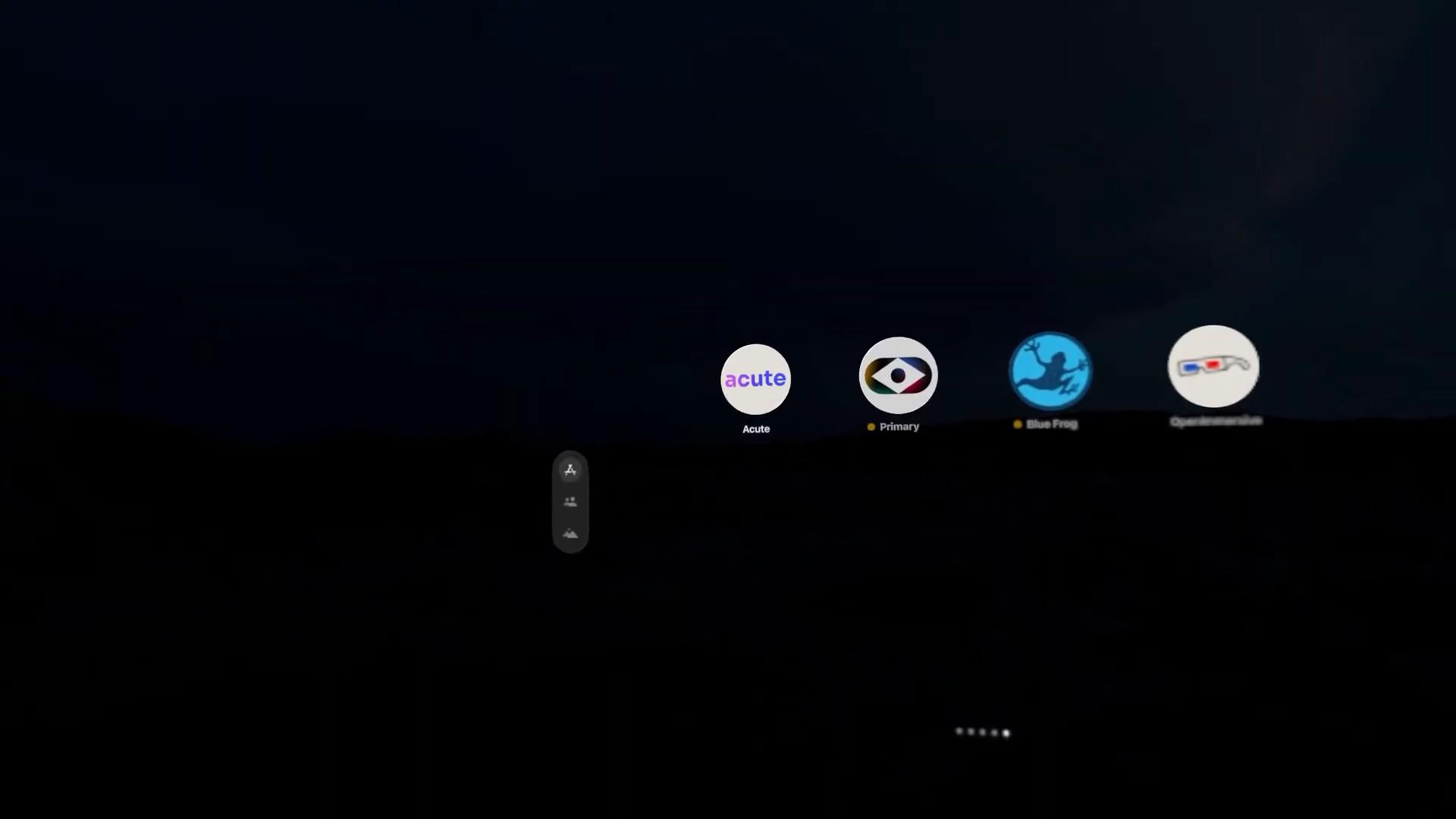
As the spatial computing landscape matures, content creators, entertainment studios, and lifestyle brands face a critical strategic crossroads: Where should they publish immersive video experiences to reach growing audiences on spatial headsets? While traditional aggregation platforms like Apple TV, Amplium, Fovii, Primary: News in Depth, and various specialized theater apps offer built-in visibility, they often come with restrictive curation guidelines, revenue-sharing models, and a lack of direct audience data.
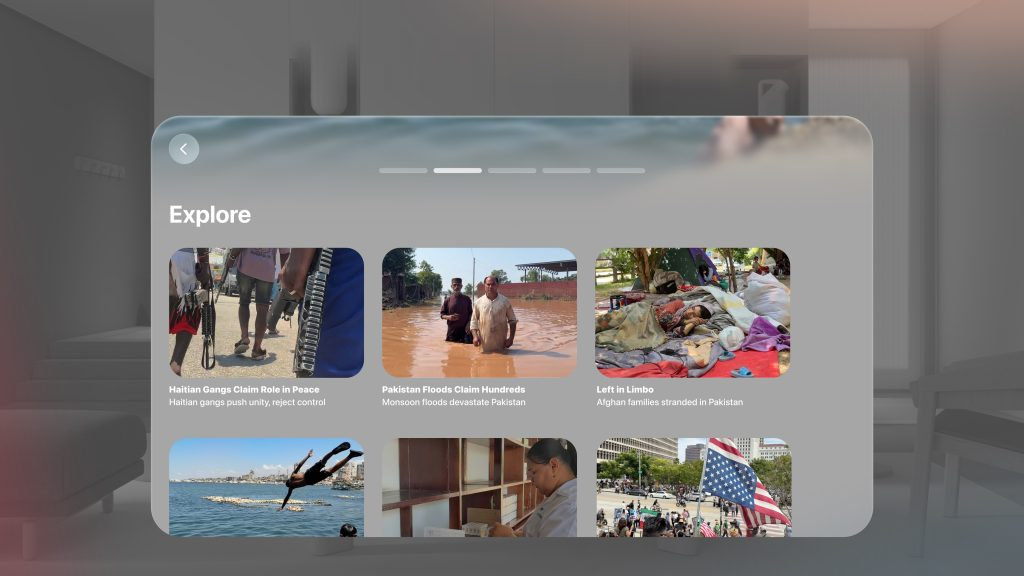
Enter Acute Immersive, a pioneering publishing platform empowering businesses to bypass traditional middlemen and launch their own dedicated, branded immersive video destinations. Since its launch, the company has rapidly cemented its reputation in the spatial computing sector by bringing high-profile projects to market—including the 2026 Apple Design Award winner for Social Impact, Primary: News in Depth, and immersive experiences from Blue Frog Immersive for the Apple Vision Pro.
Beyond consumer-facing applications, the company has also developed the Acute Pro app for private content reviews, streamlining internal workflows for creators. Looking ahead, Acute Immersive is gearing up for a major expansion of its cross-platform capabilities, with upcoming support for Android XR ecosystems, including high-end hardware like the XREAL Aura glasses.
Main Facts: The Anatomy of a White-Label Spatial Publishing Engine
At its core, Acute Immersive operates as a semi-custom, white-label app development and backend management platform tailored specifically for high-fidelity immersive media.
Rather than forcing creators to compete for algorithmic attention within an overcrowded third-party marketplace, Acute Immersive provides a turnkey infrastructure for companies to launch independent applications bearing their own branding, user interface, and monetization strategies.
Key technical and operational facts about the platform include:
- Comprehensive Format Support: While optimized heavily for next-generation content shot on Blackmagic’s advanced URSA Cine Immersive camera, the platform is remarkably versatile. It natively supports standard 16:9 video, traditional 3D movies, mono and stereo 180-degree and 360-degree video, and consumer Spatial Video shot natively on iPhones.
- Content Management Simplicity: The backend mimics modern content management systems (CMS), allowing users to upload, organize files into playlists, review content directly inside spatial headsets, and append metadata like titles and custom thumbnails. Crucially, publishers can push new content live instantly without needing to submit a new app build to Apple’s App Store or other storefronts.
- Granular Marketing and Analytics: The platform bridges the gap between technical video streaming and performance marketing. It offers end-to-end metrics, tracking everything from traditional video consumption habits down to advanced conversion data, deep-link traffic attribution, and thumbnail click-through rates.
- Flexible Monetization Models: Publishers retain absolute autonomy over how they generate revenue. The platform supports transactional video-on-demand (individual video purchases), content bundles, and recurring subscription models. For curators licensing third-party content, revenue splits and distribution deals can be managed independently.
Chronology: The Rapid Rise and Expansion of Acute Immersive
The trajectory of Acute Immersive mirrors the fast-paced evolution of the spatial computing market over recent years.
- The Foundation (Pre-Launch): Recognizing a bottleneck in spatial video distribution—where creators had phenomenal cameras like the Blackmagic URSA Cine Immersive but lacked direct-to-consumer software pipelines—founders set out to build a scalable white-label framework.
- Market Debut (Previous Year): Acute Immersive officially launches its platform, immediately capturing the attention of industry insiders by facilitating the Apple Vision Pro launch of Blue Frog Immersive.
- Critical Acclaim (2026): The platform hits a major milestone as Primary: News in Depth—an immersive journalism experience powered by Acute Immersive—wins the prestigious 2026 Apple Design Award for Social Impact. Around the same time, the company rolls out Acute Pro, a specialized app designed for secure, private in-headset content reviews among production teams.
- The Present Horizon: Acute Immersive refines its marketing and analytics suite, offering deep-link conversion tracking that links off-platform ad spend directly to headset playback.
- Future Roadmap (Upcoming): The company announces plans to expand beyond the Apple ecosystem, adding native support for Android XR devices and next-generation hardware such as XREAL Aura glasses, positioning itself as a cross-platform powerhouse for spatial media.
Supporting Data: The Economics of Self-Publishing vs. Aggregation
For modern studios, choosing a distribution model requires weighing the friction of user acquisition against the benefits of data ownership.
The Aggregator Dilemma
Publishing through large, established third-party applications offers an immediate advantage: a pre-built audience. When a user opens a major streaming hub, content discoverability is driven by platform-wide recommendations. However, this convenience comes with steep trade-offs:
- Loss of Brand Identity: Content is often submerged under the host platform’s user interface and branding.
- Opaque Analytics: Creators frequently receive generalized viewership reports rather than granular user behavior data.
- Pricing and Revenue Restrictions: Monetization structures are dictated by platform operators, often resulting in unfavorable revenue splits.
The Acute Immersive Alternative
By opting for a dedicated white-label app via Acute Immersive, brands trade the ease of a built-in audience for total operational control. The platform operates on a predictable B2B cost structure:
- Licensing and Bandwidth: Clients pay a recurring licensing fee for the platform software, with bandwidth costs billed separately based on consumption.
- Custom Development Services: For brands requiring bespoke interface elements or unique user flows, the Acute Immersive team provides custom development on a service-fee basis.
- Marketing Efficiency: Because publishers have direct access to user behavior data—such as push-notification engagement, deep-link attribution, and playlist completion rates—they can optimize their marketing spend with surgical precision. Marketers can measure the exact ROI of an external campaign, tracing a user from a social media ad click straight through to immersive video playback inside the headset.
Official Perspectives and Industry Insights
Industry analysts and digital marketers have increasingly pointed out the unique advantages of direct-to-consumer spatial applications. While consumer-facing apps require dedicated off-platform marketing efforts, the depth of engagement they foster is unparalleled.
"What excites me most as a marketer is the platform’s direct access to communicating with and learning about its audiences," notes spatial media strategist and marketer perspective. "App user notifications for things like new content uploads can be triggered. The audience behavior data available can help to support decisions about new content, through to how to improve app engagement."
This sentiment highlights a broader shift in the entertainment and lifestyle sectors. As cameras capable of capturing cinema-grade spatial video become more accessible, brands are no longer satisfied with merely testing the waters. They want direct relationships with their viewers.
Furthermore, Acute Immersive’s focus on professional production standards—highlighted by its specialized support for Blackmagic Design’s URSA Cine Immersive workflow—signals to Hollywood studios and high-end documentary filmmakers that the platform is built to handle heavy, professional-grade file sizes without compromising visual fidelity.
Implications: What This Means for the Future of Spatial Entertainment
The emergence of robust white-label publishing ecosystems like Acute Immersive carries profound implications for the trajectory of spatial computing, entertainment, and enterprise communication.
1. Enriching a Sparse Content Library
Despite technological leaps in hardware—such as the Apple Vision Pro and upcoming Android XR devices—the global library of high-quality immersive video remains relatively sparse. Producing spatial content requires specialized hardware, new editing paradigms, and distinct financial investments. By lowering the software barrier to entry, platforms that offer easy content organization, instant over-the-air updates, and built-in monetization could entice a massive wave of lifestyle brands, corporate trainers, and independent entertainment studios to enter the market.
2. The Rise of Branded Immersive Destinations
Just as companies long ago realized that relying solely on social media pages was insufficient—prompting the rise of branded mobile apps and dedicated streaming channels—creators of spatial content are discovering the necessity of owning their digital real estate. A museum, a global news organization, or a luxury automotive brand can now offer a bespoke spatial environment that reflects their exact corporate identity, free from the visual clutter of competitor content.
3. Cross-Platform Interoperability
By expanding beyond Apple Vision Pro to include Android XR and hardware like XREAL Aura glasses, Acute Immersive is validating a multi-platform future for spatial video. Creators will no longer need to rebuild apps from scratch for every new headset entering the market; instead, backend infrastructure can streamline distribution across a fragmented hardware ecosystem.
Conclusion
As the lines between physical reality and digital media continue to blur, content creators are faced with a definitive choice. They can surrender control to traditional aggregators for the sake of instant discoverability, or they can take the reins—utilizing platforms like Acute Immersive to build lasting, direct-to-consumer brands in the spatial computing era. For those willing to invest in audience-centric marketing and bespoke digital destinations, the rewards extend far beyond a single view: they represent the foundation of the next great media frontier.

