Video games have faced censorship, regulatory oversight, and public moral panics for as long as the medium has existed. Titles have been hauled before congressional hearings, banned in various retail markets, and—in the most infamous historical anecdote—dumped en masse into a New Mexico landfill. Yet, physical destruction prior to public distribution remains an extraordinary regulatory measure.
Enter Sex Vixens from Space, a rudimentary graphic adventure developed and published by Free Spirit Software in 1988. Released initially in the United States, the game was intended for international export, including a scheduled launch in the United Kingdom in 1989. However, the shipment never reached British store shelves. Instead, a consignment of 75 copies was intercepted and physically destroyed by UK Customs.
While historical records from late-1980s computer magazines point to the incident as an act of state-level suppression, the exact legal framework behind the seizure remains murky. Whether it constituted an official, blanket ban on the software or an aggressive border enforcement action against perceived obscene material, the outcome was the same: Sex Vixens from Space was forcibly eradicated from the legal British marketplace before it could even debut.
Chronology of a Controversial Export
To understand the lifecycle of Sex Vixens from Space, one must look back at the late 1980s microcomputer software boom, a period when distribution channels were far less centralized and digital storefronts were decades away.
1988: Free Spirit Software launches Sex Vixens from Space in the United States for popular home computer platforms of the era. The game utilizes text-parser commands and primitive graphics to tell a sci-fi satirical story involving adult themes.
January 1989: The US Commodore magazine .info breaks the news that a shipment of 75 copies bound for the UK has been seized and destroyed by British customs officials. The game is reportedly singled out from a larger cargo of mixed software titles.
February 1989: Game director Joe Hubbard responds publicly to the seizure in The Australian Commodore and Amiga Review, condemning the British authorities’ actions as draconian and censorious.
Decades Later: With the rise of digital preservation and abandonware websites, the title becomes easily accessible via web browsers, allowing modern gaming historians and journalists to evaluate the game for themselves.
Inside the Game: Premise and Execution
For decades, the mystique surrounding Sex Vixens from Space far outweighed its actual contents, largely because physical copies were so scarce in the UK market. Today, however, browser-based abandonware archives have demystified the title.
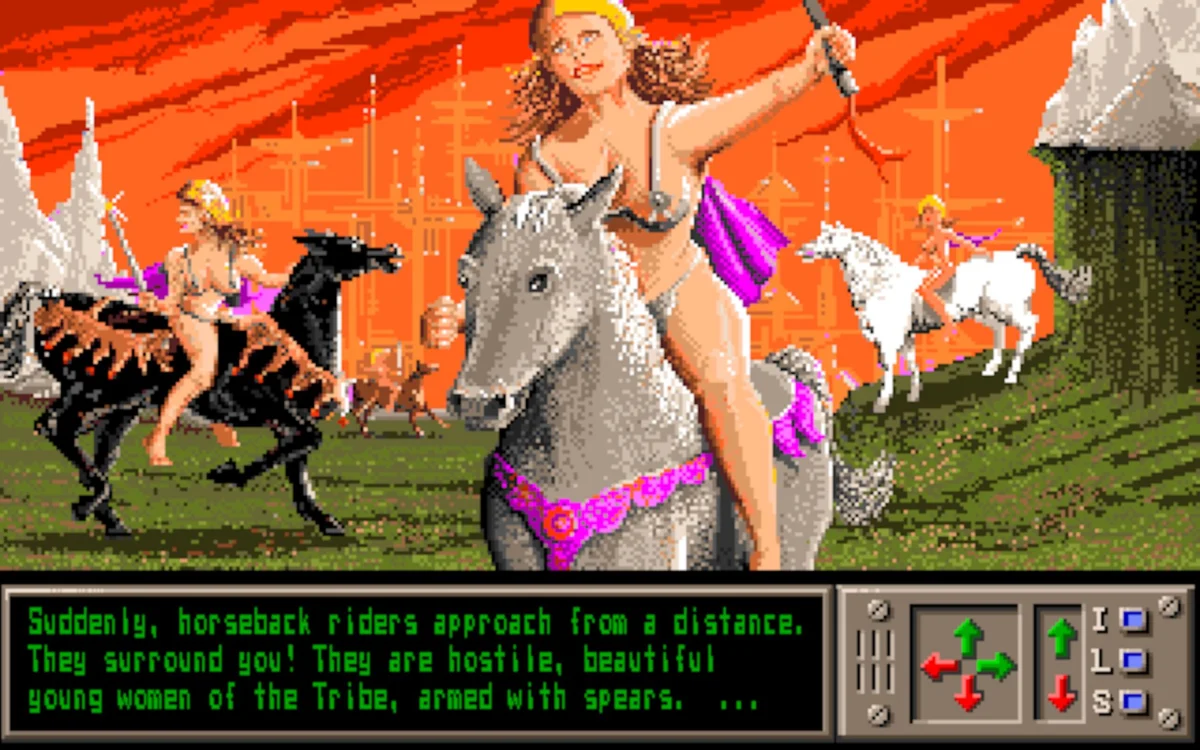
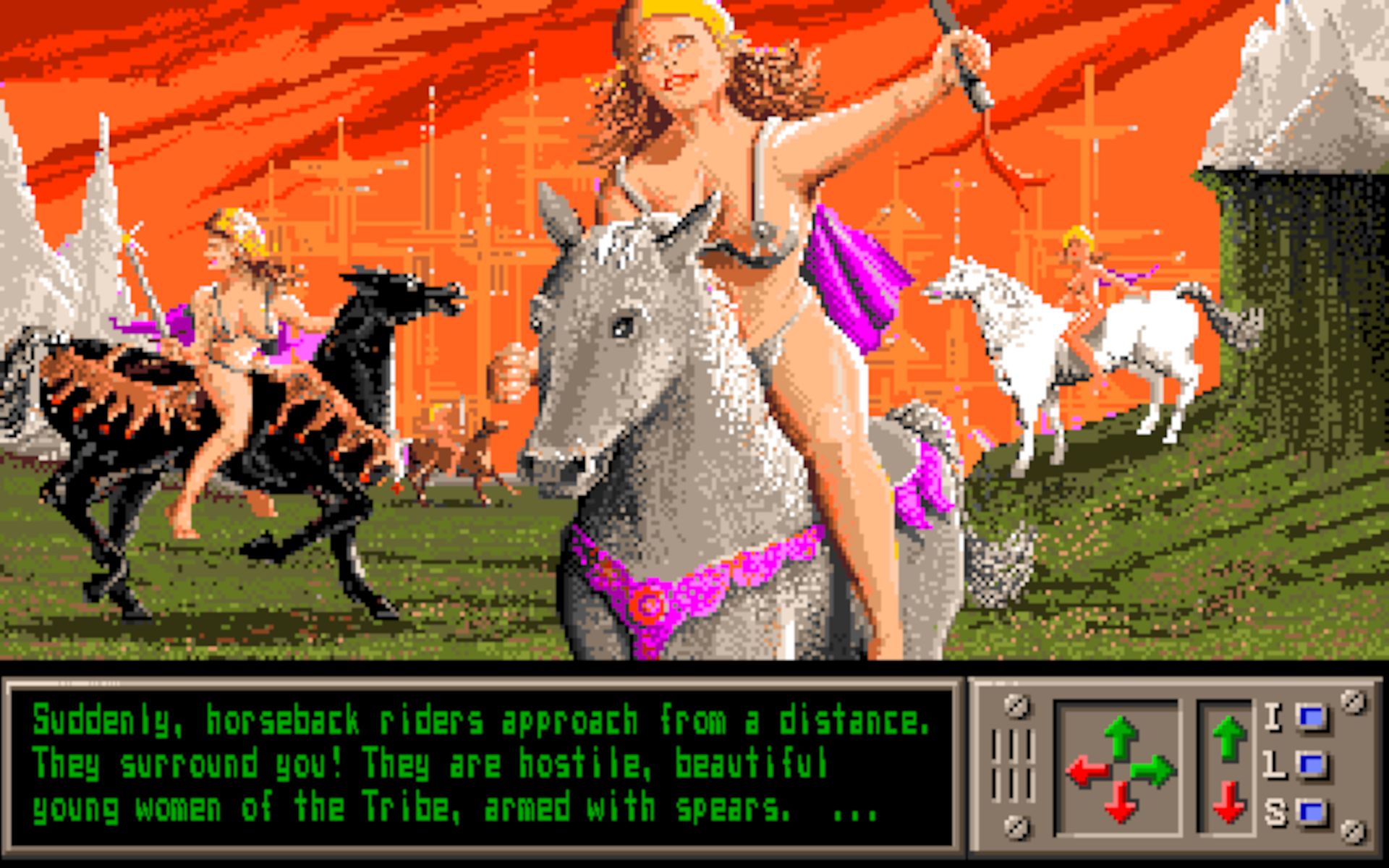
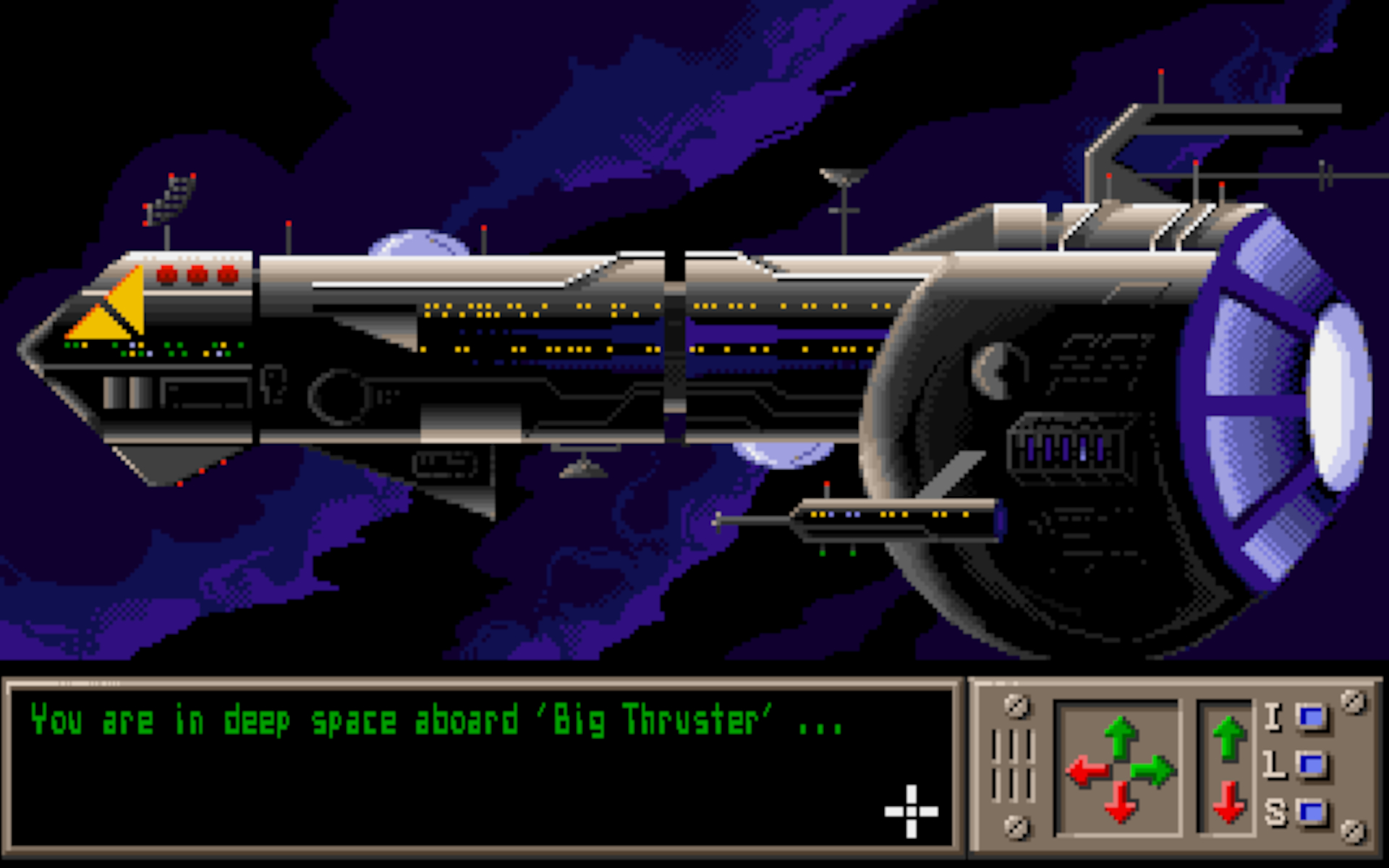
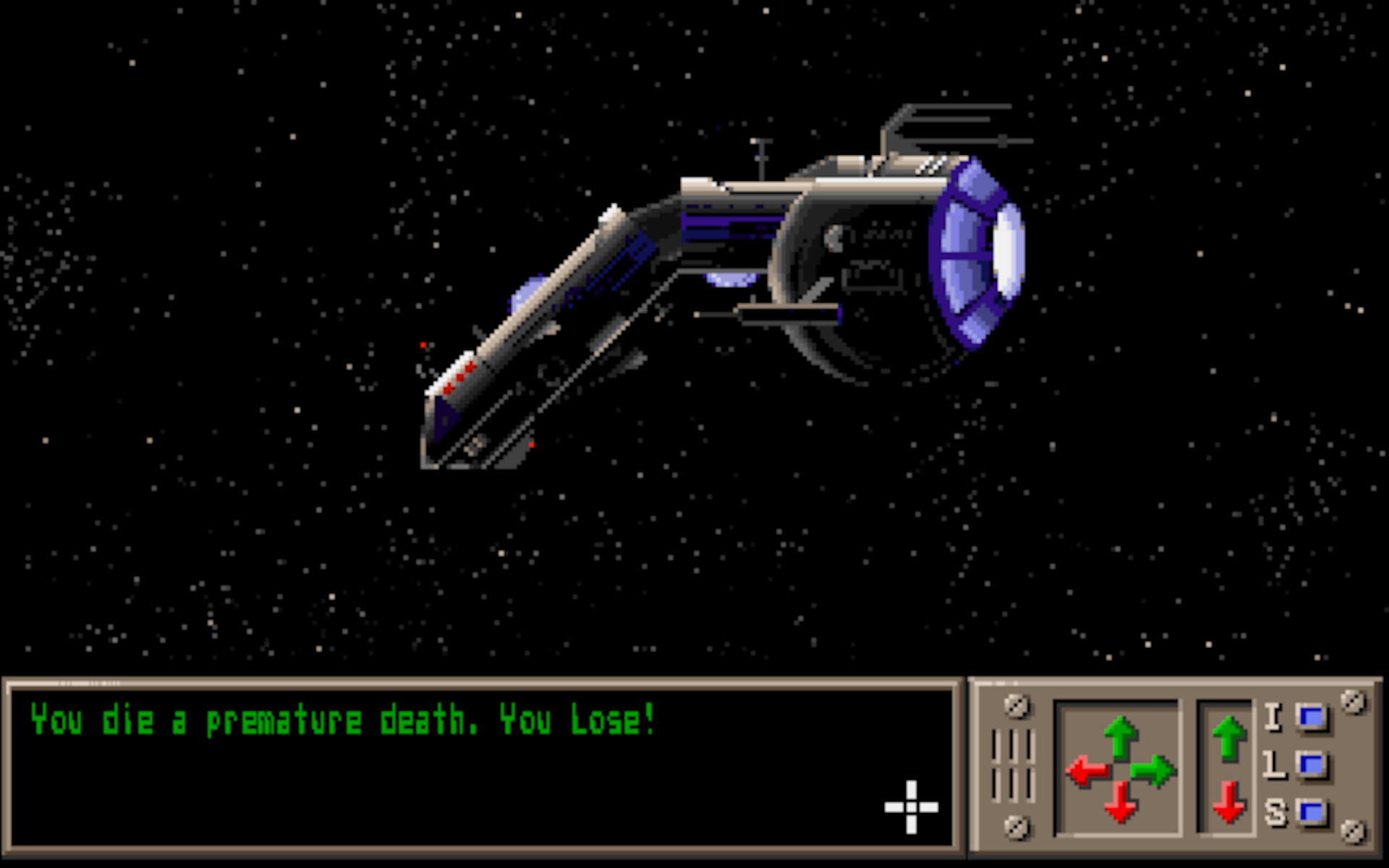
Players assume the role of Brad Stallion, the captain of a spaceship explicitly and unsubtly named the Big Thruster. Early in the game, players are introduced to the central premise: across the "Federated Government" space, rumors circulate regarding a rogue colony of "sex-starved women" known simply as "The Tribe." Armed with a "sex-ray gun," these space-faring Amazons allegedly raid male-dominated planetary systems, leaving local populations entirely incapacitated. Captain Stallion is tasked with tracking down and neutralizing this threat.
Structurally, Sex Vixens from Space is a standard, if extremely primitive, graphic adventure. Stallion’s interactions are limited to basic verbs: walking, talking, and engaging in romantic encounters. Yet, despite its adult aspirations, contemporary players note that the game is remarkably devoid of actual eroticism. Many rooms in the game are completely empty, populated by uninspired backgrounds or mundane interactive objects.
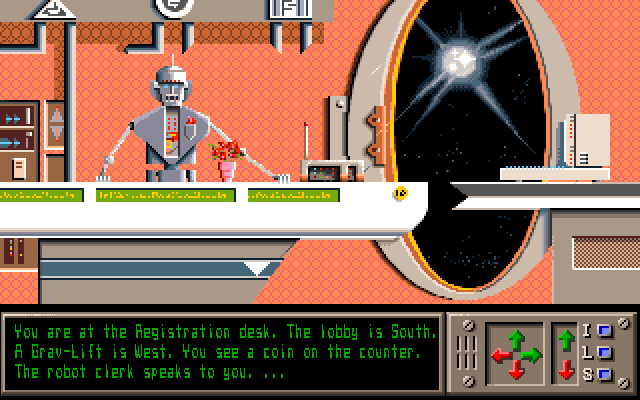
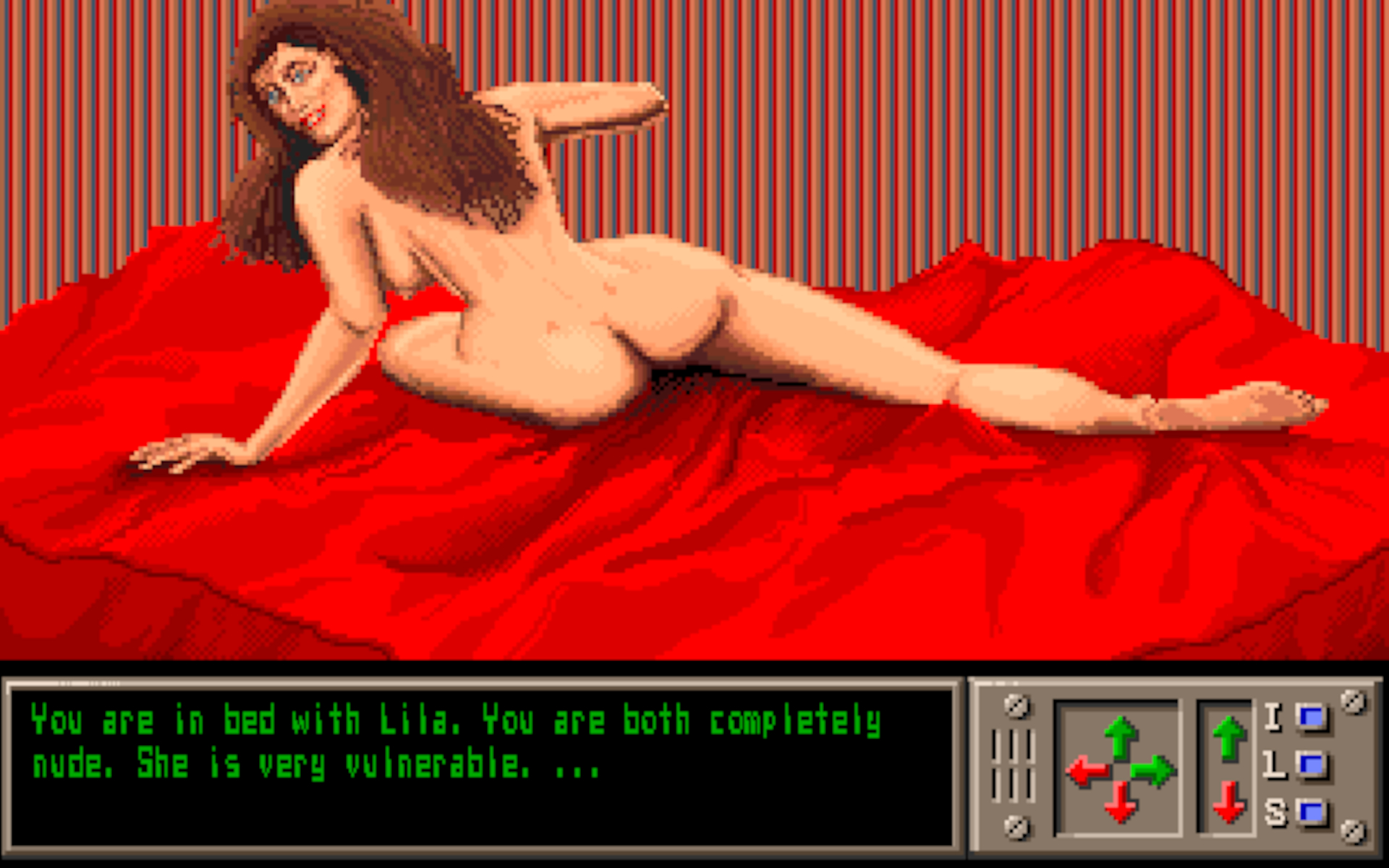
The narrative unfolds across a series of bizarre locations. Stallion visits the Pink Flamingo Hotel—where he meets a maid named Lila who directs him toward the elusive planet of Mondo—and later travels to the utterly un-sexy "Space Station X." Upon finally reaching Mondo, Stallion is captured, escapes via a hidden laboratory hatch, and eventually confronts the planet’s ruler, Queen La-Lust.
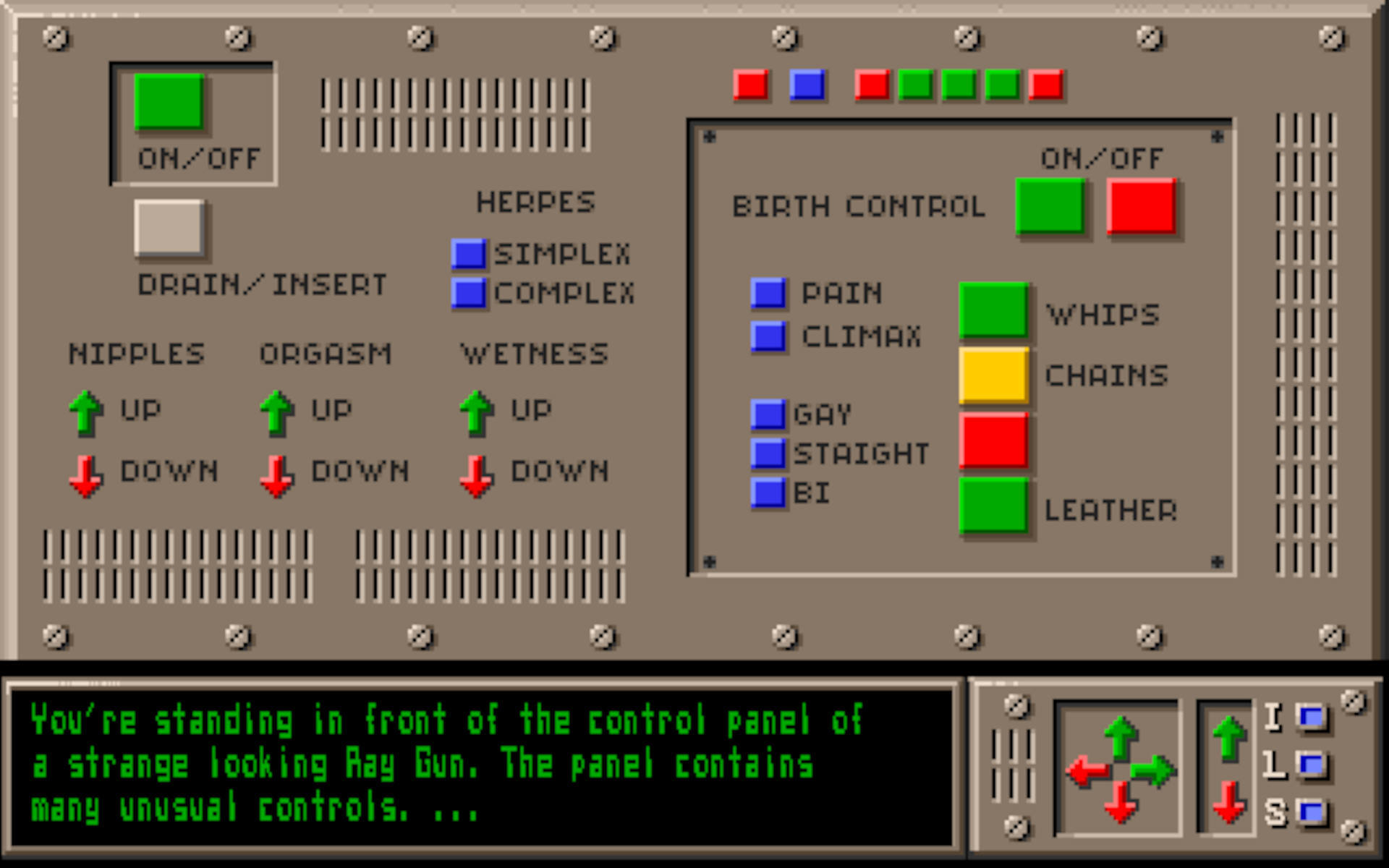
The climax of the game features the infamous "sex-ray gun"—an interface screen adorned with baffling controls, including buttons for multiple strains of herpes, arrow keys for adjusting pixelated nipples, and a mysterious "DRAIN/INSERT" toggle. Upon triggering the device, the palace self-destructs, and Stallion flees into space just as Mondo is completely obliterated, effectively ending the game via planetary genocide.
Official Responses and Industry Outrage
The physical destruction of software by border control agencies sparked sharp reactions from the development team at the time. Joe Hubbard, the director of Sex Vixens from Space, did not mince words when addressing the British authorities through the international gaming press.
In his February 1989 statement to The Australian Commodore and Amiga Review, Hubbard stated:
"While Sex Vixens from Space may be a bit racy, it is not pornographic. Apparently, the British authorities are either quite prudish or completely lacking a sense of humour. Regardless, freedom of artistic expression and the freedom to disseminate such are cornerstones of democracy. The act of seizing these game[s] is the act of a fascist government."
Free Spirit Software framed the seizure not merely as a disagreement over content standards, but as a direct assault on creative freedom. However, the exact legal justification used by UK Customs remains difficult to verify. While British customs laws historically empowered authorities to seize imported goods deemed indecent or obscene, the lack of a formal, transparent public trial or widespread media coverage left the software’s official legal status in a grey area—effectively banned by incineration rather than legislation.
Implications and Retrospective Analysis
The saga of Sex Vixens from Space raises lingering questions about censorship, cultural differences in content regulation, and the historical preservation of interactive media.
From a modern critical perspective, the game occupies an ironic space. Hubbard’s accusations of fascism against the British government contrast sharply with the internal politics of the game itself. Sex Vixens from Space relies heavily on a classic, reactionary trope: simultaneous lust for and deep-seated terror of autonomous, powerful women, culminating in their literal annihilation. While this subtext was almost certainly the result of amateurish writing rather than a cohesive political manifesto, the thematic undercurrent is unmistakable.
Ultimately, historical evaluation suggests that both sides of the 1989 conflict missed the mark. The actions of UK Customs were disproportionate; destroying a piece of software simply because it contained crude adult artwork was a heavy-handed and outdated regulatory response.
Conversely, Free Spirit Software produced a title that failed on nearly every metric. As both an adventure game and an adult title, Sex Vixens from Space is clunky, visually repulsive, and conceptually bankrupt. Nearly four decades later, history views the incident as a curious footnote in gaming lore—a reminder of an era when physical borders could still dictate the flow of digital culture, and proof that in the case of Sex Vixens from Space, UK Customs burned away a piece of gaming history, but ultimately, nothing of artistic value was lost.