

Main Facts
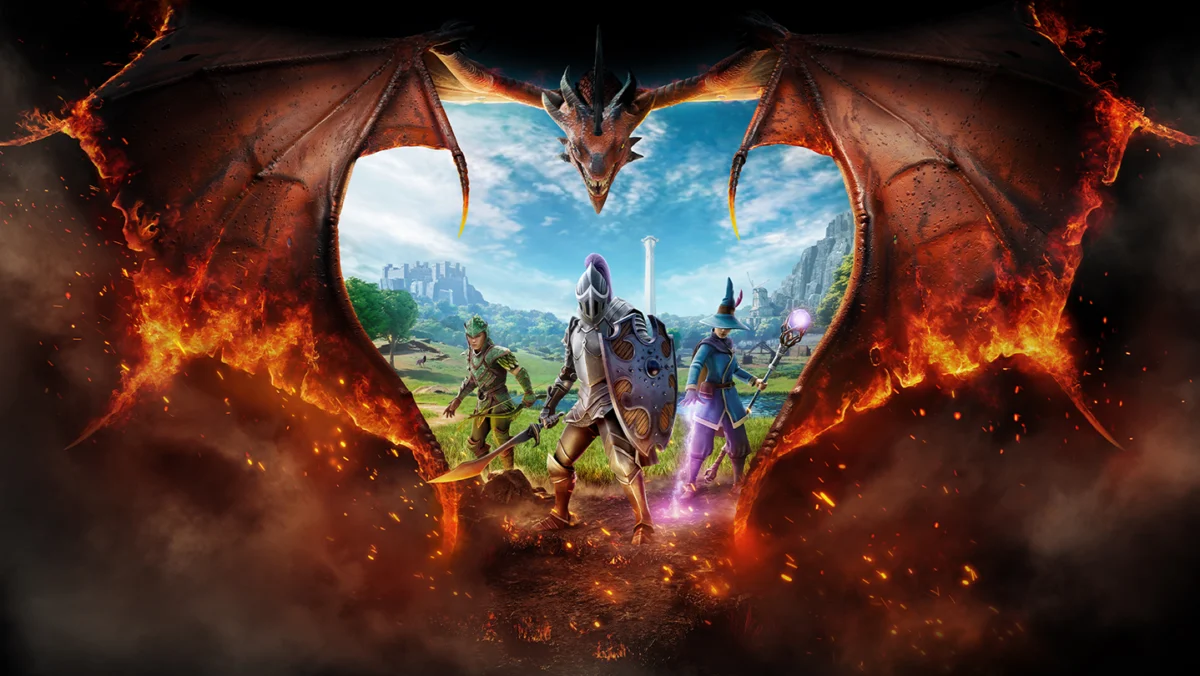
The long-awaited 1.0 release of RuneScape: Dragonwilds has officially arrived, marking a monumental shift for Jagex’s legendary fantasy franchise. Having previously spent an extensive and highly successful period in early access—during which it amassed over one million copies sold—the game has officially shed its preview status. Today, players on the PlayStation 5, Xbox Series X/S, and the newly launched Nintendo Switch 2 can dive into the complete, unbridled vision of the game. Simultaneously, the PC version has received the corresponding 1.0 patch, ensuring a unified cross-platform experience.
Priced competitively at $29.99 for the Standard Edition, with a feature-rich Deluxe Edition also available on digital storefronts, Dragonwilds represents a bold departure from traditional franchise norms. While the core RuneScape and Old School RuneScape experiences are deeply rooted in the MMORPG genre, Dragonwilds completely re-architects the formula. It transports players out of the traditional MMORPG framework and drops them into a dedicated, highly immersive survival-crafting and action-RPG paradigm.
Set within the rich lore of Gielinor’s universe, the game takes place on Ashenfall, an isolated, perilous, and untamed island entirely separate from the familiar continents of the mainline MMO. Here, players are tasked with gathering essential resources, engineering complex survival infrastructure, building fortified shelters, and unlocking the ancient secrets of a mysterious land. The ultimate narrative and mechanical destination of the journey is a climactic confrontation with the fearsome dragon queen.
Accompanying the digital launch is a robust content roadmap, which includes a comprehensive overhaul of the combat system, the introduction of the Scorned Wilderness raid, brand-new story chapters, and the coveted Rune armor set. While digital storefronts are live as of today, collectors will be pleased to know that physical editions for PlayStation 5 and Xbox Series X/S are officially scheduled to launch by the fourth quarter of 2026. At present, however, Jagex has not confirmed any physical release plans for the Nintendo Switch 2.
Chronology
To understand how RuneScape: Dragonwilds arrived at its landmark 1.0 state, it is essential to trace the developmental timeline that transformed a risky franchise pivot into a multi-platform commercial triumph.
The Genesis of a Survival Spin-off
For more than two decades, RuneScape has reigned as one of the defining pillars of the massive multiplayer online genre. However, as the gaming landscape evolved through the late 2010s and early 2020s, the appetite for survival-crafting games skyrocketed. Recognizing an opportunity to expand the intellectual property into uncharted territory, Jagex initiated development on Dragonwilds. The objective was clear: retain the rich lore, weapon tiers, magic systems, and aesthetic familiarity of the RuneScape universe, but reconstruct the gameplay loop around exploration, base-building, and tactical, action-oriented combat.
The Early Access Milestone
Dragonwilds first entered early access on PC, serving as a proving ground for developers and players alike. The early access phase was designed to test core survival loops, gather community feedback on balance, and stress-test the transition from MMO mechanics to single-player and cooperative survival mechanics.
The strategy paid off exponentially. Driven by word-of-mouth praise, dedicated RuneScape veterans, and survival-genre enthusiasts, the game quietly crossed the major milestone of one million copies sold during its early access incubation. This financial and community momentum not only validated the spin-off concept but also secured the funding and resources necessary to scale development upward for simultaneous console optimization.
The Porting and Next-Gen Optimization Phase
Following the commercial success of the PC early access build, Jagex shifted its focus toward console optimization. Bringing a resource-heavy survival-crafting game to hardware platforms like the PlayStation 5, Xbox Series X/S, and Nintendo’s successor hardware (the Nintendo Switch 2) required rigorous backend engineering. Developers had to ensure that procedural generation, base-building physics, and high-fidelity rendering could run smoothly across diverse hardware profiles while maintaining cross-play capabilities.
The 1.0 Launch Day
Today marks the culmination of years of iterative development. The 1.0 update goes live across all platforms simultaneously, wiping away the early access label and introducing a sweeping array of mechanical overhauls, high-end endgame content like the Scorned Wilderness raid, and complete cross-platform availability. Looking ahead, the timeline extends toward late 2026, when physical media collectors can expect boxed editions of the game on Sony and Microsoft consoles.
Supporting Data
The journey of RuneScape: Dragonwilds from concept to 1.0 multi-platform launch is underscored by impressive quantitative metrics and deep technical enhancements.
Sales and Distribution Metrics
- Early Access Milestone: Surpassed 1,000,000 copies sold globally during the early access phase on PC.
- Launch Pricing: Standard Edition available digitally at $29.99; Deluxe Edition tier pricing varies by storefront with additional cosmetic and utility bonuses.
- Supported Platforms: PC (Steam and client), PlayStation 5, Xbox Series X/S, and Nintendo Switch 2.
- Physical Release Window: Scheduled for Q4 2026 for PlayStation 5 and Xbox Series X/S (Nintendo Switch 2 physical status unconfirmed).
Combat System Overhaul (Version 1.0 Specifications)
The 1.0 update is far more than a simple port; it introduces a complete mechanical rework of the game’s combat engine. Key technical upgrades include:
- Special Attack Resource Return: A newly implemented mechanic that rewards skillful combat execution with faster resource regeneration for signature weapon abilities.
- Visceral Attacks: Triggered immediately following successfully timed parries, rewarding defensive mastery with devastating counter-attacks.
- Wand and Magic Rework: Wands have been updated to feature significantly faster, highly mobile spellcasting animations, allowing for hit-and-run mage builds.
- Window Expansion: Both blocking frames and animation-cancel windows have been broadened across weapon classes, resulting in more responsive, fluid, and forgiving melee combat.
Content Additions
- Carried Over Content: 100% of the biomes, zones, resources, and systems developed during early access remain intact and polished.
- The Scorned Wilderness Raid: A high-level endgame dungeon encounter designed to test cooperative group coordination, advanced gear builds, and player mechanics.
- Narrative Expansion: New story quests that deepen the lore of Ashenfall and pave the way toward the ultimate dragon queen encounter.
- Armor Progression: Introduction of the iconic Rune armor tier, offering high-end defensive statistics and distinct aesthetic customization.
Official Responses
The transition of RuneScape: Dragonwilds from an experimental early access title into a fully realized multi-platform release has prompted extensive commentary from development leads, community managers, and industry analysts.
Speaking on the design philosophy behind the spin-off, lead developers emphasized that Dragonwilds was never intended to replace the traditional MMORPG experience, but rather to complement it.
"We knew that asking RuneScape fans to step away from Gielinor’s classic MMO structure was a bold gamble," noted a senior production lead during a recent developer stream. "However, the lore of our universe is vast enough to support entirely different genres. Ashenfall gave us a blank canvas to explore what survival, isolation, and visceral action combat look like through a RuneScape lens. The fact that over a million players joined us during early access proved that our community was hungry for this kind of evolution."
Addressing the massive combat overhaul introduced in version 1.0, the design team highlighted player feedback as the primary catalyst for change.
"During early access, our community provided invaluable critique regarding the weight, responsiveness, and pacing of encounters," the lead combat designer stated in official patch notes. "With 1.0, we didn’t just port the game to consoles—we completely rebuilt the rhythm of combat. By broadening animation-cancel windows, introducing Visceral Attacks from parries, and empowering wand users with mobile spellcasting, we have transformed Dragonwilds into a tight, responsive action-RPG that feels incredible on a controller just as much as it does on a mouse and keyboard."
Console players have similarly flooded community forums and social media channels with positive reactions, particularly regarding the game’s performance stability on the PlayStation 5, Xbox Series X/S, and the impressive visual fidelity displayed on the Nintendo Switch 2 hardware. Jagex has confirmed that community feedback channels will remain wide open post-launch as the studio looks ahead to post-release content updates and the eventual physical release slate in late 2026.
Implications
The successful 1.0 launch of RuneScape: Dragonwilds carries profound implications not only for Jagex as a studio, but also for the broader gaming ecosystem, setting intriguing precedents for legacy intellectual properties, survival-crafting mechanics, and cross-platform publishing strategies.
1. Diversification of Legacy Intellectual Properties
For over twenty years, Jagex was inextricably linked to a single massive MMORPG framework. While Old School RuneScape and RuneScape 3 continue to generate stable, long-term revenue and maintain fiercely loyal player bases, relying on a singular style of game presented long-term growth limitations.
Dragonwilds proves that legacy franchises can successfully pivot into entirely different genres without alienating their core audience. By borrowing beloved thematic elements—such as skill progression, iconic armor sets like Rune, and magical archetypes—and applying them to a modern survival-crafting loop, Jagex has demonstrated how to modernize a classic IP. This success opens the door for future genre experiments within the Gielinor universe or even entirely new standalone titles.
2. The Maturation of the Survival-Crafting Genre
The survival-crafting genre has exploded over the past decade, moving from niche PC indie titles to mainstream blockbusters. However, the market has often suffered from early access fatigue, where games linger in unfinished states for years or fail to successfully transition to consoles.
By hitting the one-million-sales milestone during early access and successfully coordinating a simultaneous multi-platform launch—including day-one optimization for next-generation hardware like the Nintendo Switch 2—Dragonwilds sets a high operational standard for the genre. It illustrates that deep crafting loops, base-building mechanics, and raid-tier endgame content can be successfully packaged into a cohesive, polished product at a consumer-friendly price point ($29.99).
3. Cross-Platform Strategy and Hardware Integration
The technical achievement of bringing a complex survival game simultaneously to PC, PlayStation 5, Xbox Series X/S, and Nintendo Switch 2 highlights the evolving capabilities of modern game engines. Developers no longer have to stagger console releases years behind PC iterations.
Furthermore, the integration of Nintendo’s new hardware platform into day-one multi-platform releases signals strong developer confidence in the Switch 2 ecosystem. While the absence of a day-one physical release for Nintendo hardware (contrasting with the planned Q4 2026 physical boxes for PlayStation and Xbox) reflects ongoing manufacturing and distribution logistics, the digital availability ensures that Nintendo’s player base is not left behind.
4. Long-Term Community Retention and Roadmap Sustainability
With version 1.0 introducing major endgame pillars such as the Scorned Wilderness raid, brand-new story content, and high-tier armor progression, Jagex has signaled that Dragonwilds is built for long-term engagement. Unlike linear single-player survival games that players finish and put down, Dragonwilds adopts a hybrid model: the survival-crafting loop provides infinite sandbox replayability, while structured raids and narrative updates give cooperative groups recurring goals.
As Jagex monitors post-launch metrics and prepares for physical distributions down the road, RuneScape: Dragonwilds stands as a masterclass in how a veteran studio can reinvent its flagship universe for a modern, multi-platform audience.

