

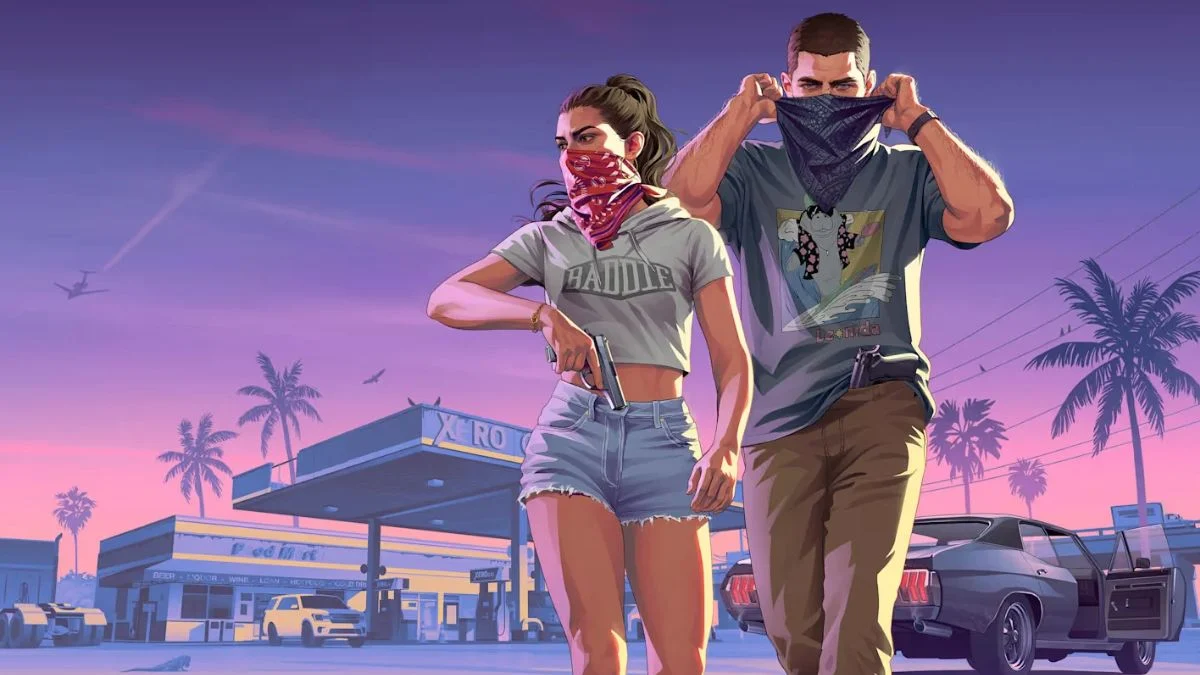
MIAMI, FLORIDA — As the gaming world counts down the days to one of the most anticipated entertainment launches in history, Rockstar Games has secured a groundbreaking, albeit unconventional, marketing coup. With Grand Theft Auto VI officially slated for release on November 19, 2026, the masterminds behind the multi-billion-dollar franchise have managed to bridge the gap between digital fiction and physical reality. Through a freshly approved $3 million partnership with municipal entities in Miami, Rockstar is bringing its neon-drenched fictional universe straight to the sun-soaked sands of South Florida.
However, executing a real-life Vice City promotion in the actual city that inspired it was no easy feat. Navigating Miami’s famously strict municipal advertising regulations required intense political maneuvering, a razor-thin city commission vote, and a clever strategy focused on subtlety rather than overt corporate branding.
Main Facts
The core of the initiative centers on a strategic marketing campaign scheduled to run across Miami beaches from October 15 through December 31, 2026. This window strategically brackets the game’s November 19 release date for PlayStation 5 and Xbox Series X|S, capturing both pre-launch hype and post-launch holiday momentum.
Rather than plastering traditional billboards or digital screens with the iconic Grand Theft Auto name, Rockstar Games and city officials agreed upon a far more discrete approach. The public-facing campaign will eschew the franchise’s formal title and the corporate Rockstar logo entirely. Instead, the real-world Miami beaches will feature subtle nods to the upcoming title through the fictional name "Vice City" and the Roman numeral "VI."
To sidestep stringent city laws regarding commercial advertising on public property, the campaign will be integrated directly onto private-public partnership assets. Specifically, the branding will appear on beach chairs and umbrellas managed by the Boucher Brothers, a premier hospitality and beach service operator in the region. This tactical workaround allows Rockstar to legally imprint its virtual world onto the physical coastline without violating municipal codes that protect iconic public spaces from aggressive commercialization.
Chronology of the Deal: From Proposal to Approval
The journey toward realizing a real-life Vice City marketing campaign began months behind closed doors, culminating in a dramatic public hearing that brought the intersection of video game culture and municipal governance into sharp focus.
- Early 2026: Preliminary discussions reportedly take place between representatives for Rockstar Games, municipal liaisons, and local hospitality operators like the Boucher Brothers to explore experiential marketing concepts along Miami’s coastline.
- September 10, 2026: The matter reaches the Miami City Commission. A formal proposal for a $3 million marketing collaboration is introduced for review and debate among city leaders.
- September 10, 2026 (The Vote): Following extensive public commentary and commissioner debate over commercializing public spaces, the Miami City Commission passes the marketing deal in a tense, nail-biting 4-3 vote.
- October 15, 2026 (Upcoming): The approved marketing campaign is scheduled to officially roll out across Miami beaches, introducing the "Vice City" and "VI" branding on beach equipment.
- November 19, 2026 (Upcoming): Grand Theft Auto VI is scheduled for its global launch on current-generation consoles (PlayStation 5 and Xbox Series X|S).
- December 31, 2026: The authorized beach promotion period concludes, wrapping up a two-and-a-half-month experiential marketing run.
Supporting Data and Context: Navigating Miami’s Strict Code
Securing a marketing exception in a major metropolitan area like Miami is historically difficult, making Rockstar’s achievement all the more notable. Municipalities across the United States enforce strict ordinances to prevent the visual pollution of public parks, beaches, and historical landmarks. In Miami, these protections are rigorously defended to preserve the natural aesthetic and tourist appeal of world-famous locations like South Beach.
The $3 million financial commitment approved by the commission reflects the immense scale and economic weight of the Grand Theft Auto IP. To put this in perspective, the gaming industry regularly rivals or exceeds the financial milestones of Hollywood blockbusters. Grand Theft Auto V, released in 2013, famously generated over $1 billion in its first three days alone, remaining one of the most lucrative entertainment properties in history.
Despite the substantial financial injection into local channels, the proposal faced fierce skepticism. A 4-3 vote highlights just how politically sensitive the agreement was. While proponents saw an opportunity to align the city with a monumental cultural touchstone, opponents expressed deep concerns over setting a precedent for corporate takeovers of public recreational spaces. Consequently, Rockstar’s initial ambitions for broader advertising campaigns across massive public infrastructure—such as municipal buses, transit stations, and iconic lifeguard towers—were ultimately rejected by the commission.
Official Responses and Political Debate
The public debate during the September 10 City Commission meeting laid bare the friction between modern digital pop culture and traditional municipal management. City Commissioner Laura Dominguez emerged as a key voice in explaining the compromise that ultimately saved the deal.
Addressing her fellow commissioners and the public, Dominguez emphasized the cultural and economic significance of the gaming sector while drawing a clear line regarding what was permissible on city-owned property.
"The gaming industry is massive globally," Dominguez noted during the hearing. "This is a video game; it is not real. From my conversations with the city manager, there won’t be any of their logos on our city property, meaning they won’t appear on lifeguard stands or in iconic public spaces."
By assuring residents that traditional civic landmarks would remain untouched, Dominguez helped ease fears of over-commercialization. She further clarified the exact mechanics of how the branding would be deployed through third-party operators:
"It will be advertised discretely with our partner, the Boucher Brothers, and we are working in conjunction with them; we are aligned with them. It’ll be on their chairs and their umbrellas."
This collaborative framework allowed the city to thread the needle: satisfying a major corporate stakeholder and securing significant municipal revenue while strictly maintaining the integrity and visual neutrality of Miami’s publicly owned beach infrastructure.
Implications for the Gaming Industry and Future Marketing
The approval of the Miami Beach GTA VI promotion carries significant implications for how video games will be marketed in the years to come. As interactive entertainment continues to eclipse traditional cinema and music in revenue and cultural penetration, the boundaries between virtual game worlds and real-world urban spaces are increasingly blurring.
1. The Rise of Experiential and Integrated Marketing
For decades, video game marketing relied heavily on trailers, television spots, billboards, and internet banner ads. However, as audiences tune out traditional advertising, publishers are turning to experiential marketing that transforms real-world environments. By bringing "Vice City" branding to the actual beaches that inspired the fictional setting, Rockstar is creating a symbiotic relationship between geography and fiction. Fans visiting Miami in late 2026 will effectively walk through a living, breathing cross-section of the game’s promotional universe.
2. A New Blueprint for Public-Private Partnerships
Rockstar’s strategy of utilizing private concessionaires—such as the Boucher Brothers—rather than direct municipal property leasing may serve as a blueprint for other entertainment giants. Cities are fiercely protective of their public spaces, but they are also constantly looking for ways to boost local economies and tourism. By partnering with private entities that already hold commercial rights on public land, brands can bypass rigid municipal advertising bans while still achieving high-visibility placements in tourist-heavy hotspots.
3. The Cultural Legitimacy of Gaming
The fact that city commissioners debated a video game’s marketing campaign with the same gravity usually reserved for major real estate developments or international sporting events underscores the cultural maturation of gaming. Video games are no longer viewed merely as niche products for younger demographics; they are recognized as massive economic drivers capable of shaping global tourism and popular culture.
A Glimpse Into the World of Grand Theft Auto VI
As the marketing campaign prepares to roll out this October, anticipation for the game itself has reached a fever pitch. Grand Theft Auto VI returns players to the fictional state of Leonida—Rockstar’s satirical, sun-drenched homage to Florida.
At the center of the narrative is a modern-day evolution of the neon-soaked streets originally introduced in the legendary 2002 title Grand Theft Auto: Vice City. For the first time in the modern era of the franchise, players will follow a criminal duo named Jason and Lucia. Their story promises a gritty, high-stakes exploration of crime, romance, and systemic corruption within a deeply detailed, living open world.
When players boot up the game on November 19, 2026, they will dive into a digital rendering of the very coastlines, waterways, and urban sprawls that real-world tourists and locals experience every day. And for those lounging on Miami’s actual shores between October and December, the sight of a "Vice City" umbrella will serve as a daily reminder that the line between fiction and reality is closer—and sunnier—than ever before.

