

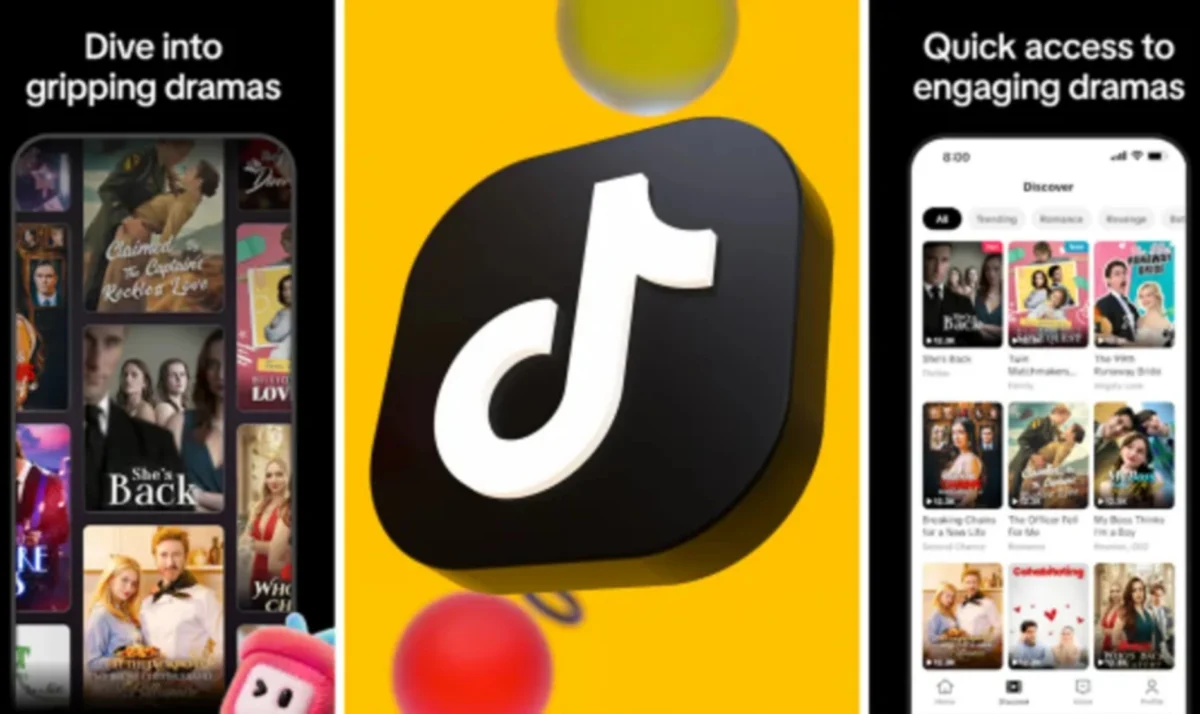
If you hear industry insiders whispering about "LimeShorts," they aren’t discussing a vibrant new fashion trend or a summer apparel collection. Instead, they are talking about the latest high-stakes maneuver by TikTok’s parent company, ByteDance, to secure its dominance in the burgeoning "microdrama" market. As the appetite for vertical, bite-sized episodic storytelling continues to skyrocket, TikTok is moving beyond its roots as a social discovery engine and transitioning into a direct-to-consumer subscription powerhouse.
With the launch and ongoing testing of LimeShorts—a standalone app dedicated to serialized, high-production-value vertical dramas—ByteDance is signaling that it intends to monetize the "doomscrolling" habits of millions. The question remains: Are American audiences, long accustomed to free, algorithmically served content, ready to open their wallets for scripted vertical entertainment?
The Mechanics of LimeShorts: A Pay-to-Play Model
According to recent reports, including data from Business Insider, TikTok has been quietly testing LimeShorts in the United States since March 2026. The app represents a fundamental shift in how ByteDance interacts with its content ecosystem.
Unlike the main TikTok app, which relies on a freemium ad-supported model, LimeShorts operates on a rigid gatekeeping structure. Users are invited to sample the first few episodes of a vertical series for free—a "hook" designed to drive addiction—before hitting a paywall. To view the remainder of a season, users must subscribe or pay per episode.
The pricing strategy is aggressive. Current testing suggests a subscription tier that costs $20 per week or $200 per year, granting users unlimited access to the app’s library. For those who prefer a lower barrier to entry, the app utilizes an in-app currency system, allowing users to unlock individual episodes on an à la carte basis. This model is designed to maximize revenue from "power users" who binge-watch content, mimicking the psychological "coin-drop" mechanisms used in mobile gaming to ensure consistent, micro-transaction-based income.
A Chronology of ByteDance’s Pivot into Narrative Media
To understand the strategic importance of LimeShorts, one must look at the evolution of ByteDance’s content portfolio. The app is not a sudden invention but the latest iteration in a long-standing strategy of pivoting existing assets toward the micro-entertainment trend.
- 2021: The Genesis of Mytopia. Before the microdrama boom, ByteDance invested in the digital reading space with the launch of Mytopia, a hub for web novels. It served as a testing ground for long-form narrative consumption on mobile devices.
- 2025: The Rise of the Vertical Drama. As consumer interest in the West shifted toward the "microdrama" genre—a phenomenon that had already achieved multi-billion-dollar status in China—ByteDance began retooling its infrastructure.
- January 2026: The Launch of PineDrama. ByteDance introduced PineDrama, a platform focused on ad-free, high-quality micro-series. This signaled the company’s intent to diversify its entertainment offerings beyond the standard TikTok feed.
- March 2026: LimeShorts Enters Testing. LimeShorts replaced the aging Mytopia infrastructure, signaling that ByteDance was moving from static text-based content to dynamic, video-first scripted series.
- Summer 2026: Integration and Scaling. TikTok began aggressively recruiting talent, including high-profile showrunners like Issa Rae, to build a library of proprietary, exclusive micro-dramas that serve as the "tentpole" content for the LimeShorts ecosystem.
Supporting Data: Why Micro-Dramas Matter
The push into micro-dramas is a response to undeniable consumer shifts. Since the beginning of 2026, the genre has seen a massive surge in engagement in Western markets. Data suggests that these short-form series—typically 60 to 90 seconds per episode—are outperforming traditional streaming service content in terms of daily retention rates.
The engagement metrics are clear: when audiences are given a story with a cliffhanger ending, the "completion rate" for these series is significantly higher than that of traditional 30-minute television episodes. This is particularly true among Gen Z and younger Millennial demographics, who have increasingly shorter attention spans and a preference for content that can be consumed in fragmented windows of time, such as a commute or a short break.
Celebrity involvement has further validated the format. Stars like Taye Diggs have begun producing "Microhouse" films, lending mainstream legitimacy to a medium that was once considered "low-brow" digital clutter. By securing big-name talent, ByteDance is attempting to elevate the genre, moving it from the realm of "Internet novelty" to "prestige television."
The Ghost of Quibi: Can TikTok Avoid the Pitfall?
The ambition behind LimeShorts is immense, but the industry remains cautious. The primary cautionary tale is that of Quibi, the $1.7 billion streaming service that shuttered just months after its 2020 launch. Quibi attempted to bridge the gap between Hollywood-level production and mobile consumption but failed to capture the cultural zeitgeist or find a sustainable pricing model.
Critics argue that ByteDance faces a similar hurdle: Can it convince users who have spent years consuming free content on TikTok to pay a monthly premium? TikTok is attempting to avoid the "Quibi trap" by leveraging its existing massive user base. Unlike Quibi, which had to acquire users from scratch, TikTok can funnel millions of viewers directly into LimeShorts via its main feed. By using the main app as a "marketing funnel," TikTok drastically lowers the customer acquisition cost that proved fatal to previous short-form experiments.
The Economic Implications for Creators
Perhaps the most significant aspect of LimeShorts is the potential for creator monetization. For years, creators on TikTok have struggled with the "creator fund" model, which often results in pennies for millions of views. LimeShorts, through its subscription-based and episode-unlock revenue, provides a clearer, more predictable path to profitability.
If the subscription model succeeds, it could turn micro-dramas into a stable revenue stream, allowing showrunners and independent filmmakers to move away from brand deals and toward a model where the audience pays for the content. This shift is vital for the health of the creator economy. If TikTok can successfully facilitate this transition, it could redefine the role of the platform from a "social network" to a "production studio," fundamentally changing the power dynamics of the entertainment industry.
Official Responses and Market Outlook
While TikTok has kept the specifics of its internal testing under wraps, the company has made it clear through its recent brand-marketing initiatives that it is betting heavily on the vertical drama format. TikTok has recently streamlined the process for brands to produce and distribute these series, essentially turning its platform into an end-to-end production house.
Industry analysts are watching the LimeShorts experiment with bated breath. As of mid-2026, sources close to the testing suggest that TikTok is still "experimenting with various pricing models." The $20 weekly subscription fee may be a ceiling, with lower-cost tiers and ad-supported, unlockable content likely to follow if user adoption proves sluggish.
Conclusion: The Final Verdict
The launch of LimeShorts is a defining moment for the digital content industry. It represents the maturation of the short-form video market—a transition from the chaotic, viral nature of the early TikTok years to a more structured, pay-gated ecosystem.
If ByteDance succeeds, it will effectively "own" the next generation of television. If it fails, LimeShorts will become another case study in the difficulty of monetizing the mobile-first audience. Regardless of the outcome, one thing is certain: the era of free, unlimited consumption on social platforms is under immense pressure. Whether we are entering a new golden age of micro-entertainment or a period of "subscription fatigue," TikTok is determined to be the one holding the keys to the kingdom.
For now, the app remains in its testing phase, a digital laboratory where the future of global entertainment is being written, one 60-second episode at a time. The industry waits to see if the American public will follow TikTok into this new, pay-to-play frontier.

