

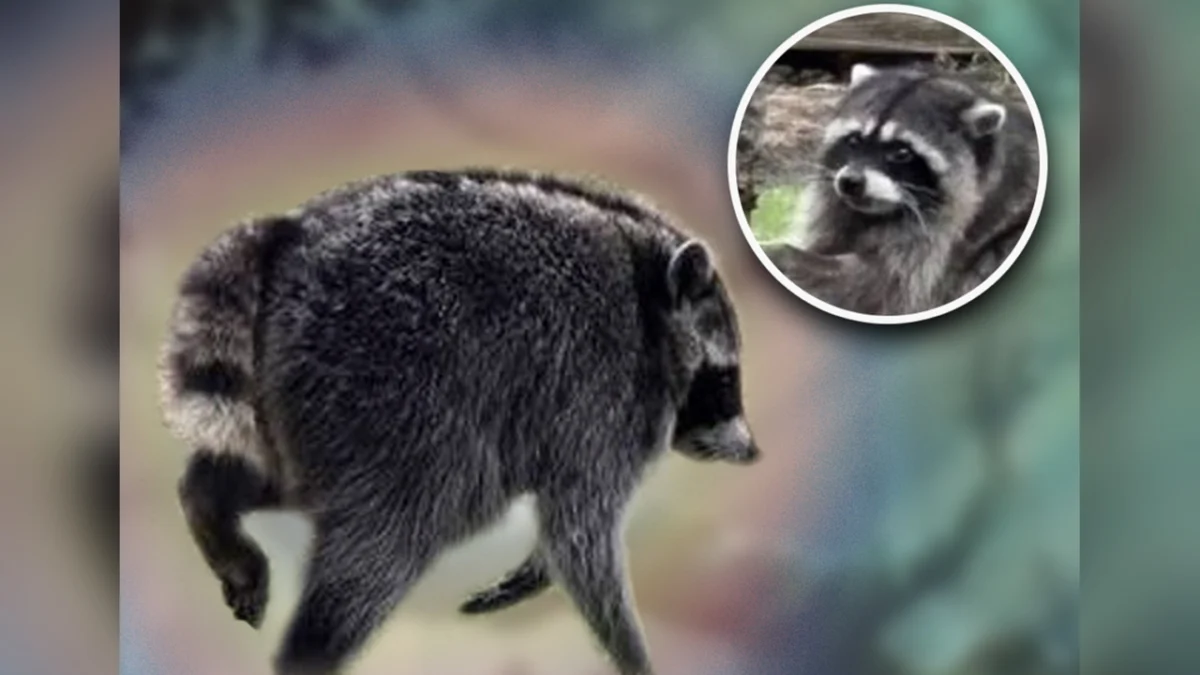
In the fleeting, often volatile ecosystem of internet fame, few figures have managed to transcend the barrier between viral social media post and industry-wide cultural icon as effectively as Jimothy. A raccoon from Seattle, recognized by his distinct, rotund physique and suspected short-spine syndrome, has become the unlikely mascot of the modern gaming zeitgeist. What began as a series of innocuous clips of a neighborhood scavenger frolicking in the Pacific Northwest has blossomed into a full-scale digital takeover, prompting major game developers and independent modders alike to cement Jimothy’s place in gaming history.
The Main Facts: A Viral Phenomenon
Jimothy’s rise to prominence is rooted in his physical uniqueness. The rare mutation that gives him his compact, long-legged silhouette has resonated deeply with internet users, turning him into a symbol of "beloved cryptid" status. Unlike many viral trends that dissipate within hours, Jimothy’s impact has shown remarkable staying power, largely due to his aesthetic appeal and the immediate affection he inspires.
This isn’t merely a case of internet voyeurism; it is a collaborative creative movement. Across the gaming industry, from indie developers operating out of home offices to massive corporations like Wizards of the Coast, there has been a collective, unprompted decision to treat Jimothy not as a fleeting meme, but as a legitimate character deserving of inclusion in their respective worlds.
A Chronology of the Takeover
The timeline of Jimothy’s integration into digital culture is a fascinating study of how communal internet humor translates into product development.
- Initial Discovery: The earliest clips of Jimothy appeared on social media, showcasing his unique gait and frame. The public response was instantaneous, with viewers comparing his "rotund" appearance to various video game character models.
- The Fan-Art Wave: Shortly after his initial virality, developers began to pay homage. Social media teams for titles including Cult of the Lamb, World of Warcraft, Old School Runescape, P.I. Mouse For Hire, Dead by Daylight, and Among Us released custom art. These images were not just "reposts"; they were bespoke renderings, placing Jimothy into the unique graphical languages of those specific games.
- The Modding Expansion: Following the digital art phase, the modding community took the lead. Modders recognized that Jimothy was essentially "content-ready." Skyrim and Stardew Valley became the first testing grounds, allowing players to physically encounter, interact with, and even raise the raccoon as livestock.
- Official Canonization: The most significant milestone occurred when Wizards of the Coast (WotC) officially recognized the creature. By publishing a formal Dungeons & Dragons stat block on D&D Beyond, WotC elevated Jimothy from a meme to an official, playable (or encounterable) entity within the D&D multiverse.
Supporting Data: The Modding Landscape
The transition of Jimothy from a viral video to a playable asset is best documented through the work of the modding community. This group serves as the bridge between "interest" and "implementation."
Interaction and Utility in Skyrim
Triptherift’s mod for The Elder Scrolls V: Skyrim is perhaps the most notable example of character integration. By inserting a high-fidelity model of Jimothy into the rugged, Nordic landscape of Skyrim, the mod allows players to treat the raccoon as an NPC. This modification proved that the community wasn’t just looking for a "skin" or a texture swap; they were looking for an experience—the ability to interact with the creature in a meaningful way.
Agricultural Integration in Stardew Valley
The Stardew Valley mods by Kirbysteaks and plurffle represent a different approach to the Jimothy phenomenon. By integrating him into the game’s livestock system, these modders turned Jimothy into an economic asset within the game’s logic. By requiring a "pet license" and allowing him to be purchased from Marnie, these mods provided a framework for players to "own" a piece of the internet zeitgeist. This suggests that the appeal of Jimothy is not just visual, but domestic; players want him in their virtual homes.
Official Responses and the "Beloved Cryptid" Stat Block
Perhaps the most surprising development in the Jimothy saga is the involvement of Wizards of the Coast. While many developers have flirted with the raccoon via social media fan art, WotC’s decision to create a formal D&D stat block on D&D Beyond is an unprecedented move of "officializing" a viral internet personality.
The stat block, which classifies Jimothy as a "Beloved Cryptid," is a masterpiece of game design humor. It highlights his specific physical traits as actual combat or utility mechanics:
- Compact Frame: A trait allowing him to bypass traditional dungeon geometry, specifically squeezing through gaps smaller than four inches.
- Hurl Garbage: A creative, albeit hazardous, ranged attack that manages to be both a physical bludgeoning strike and a poison-based debuff.
This move by Wizards of the Coast serves as a masterclass in community engagement. By giving the raccoon a mechanical identity, they have provided Dungeon Masters with the tools to introduce Jimothy into any campaign, effectively guaranteeing his survival in the tabletop space for years to come.
Implications: What Jimothy Means for the Industry
The "Jimothy Effect" carries significant implications for the gaming industry, particularly regarding how companies approach viral marketing and community relations.
The Death of the "Corporate Stiff" Marketing Model
The willingness of companies like the teams behind Among Us and Dead by Daylight to engage with a viral animal shows a shift toward more agile, culturally responsive marketing. When a brand participates in a meme, they often risk appearing "out of touch." However, by creating high-quality, custom assets, these studios demonstrated that they understand the pulse of their player base. This is no longer just about pushing a product; it is about participating in a shared cultural moment.
The Role of User-Generated Content
Jimothy is a testament to the power of the modding community. The fact that the most significant interactions occur in mods rather than official DLC suggests that developers should be looking toward their own communities for inspiration. When fans have the tools to create, they can turn a fleeting social media trend into a permanent part of a game’s ecosystem, thereby increasing the game’s longevity.
The Future of Crossovers
As Hasbro and Wizards of the Coast continue to explore crossover content, the case of Jimothy proves that the "crossover" does not always have to be a multi-million dollar deal between two intellectual properties. Sometimes, the most effective crossover is one that originates from the ground up. If a raccoon can become an official D&D monster, it opens the door for a future where community-led trends are folded into the formal canons of the world’s most popular games.
Conclusion: A Legacy in the Making
Jimothy may not yet have appeared in a high-budget, "official" AAA video game as a core plot point, but his presence is felt everywhere. He has successfully navigated the transition from a neighborhood raccoon to a digital deity, worshipped by players, modders, and corporate design teams alike.
As we look to the future, it is clear that Jimothy is more than just a viral moment. He represents the potential for the gaming community to dictate the terms of its own culture. By turning a simple, endearing creature into a piece of digital folklore, the gaming world has proven that it is capable of taking the most unlikely of subjects and giving them a seat at the table. Whether in the snowy peaks of Skyrim, the lush fields of Pelican Town, or the treacherous dungeons of a tabletop campaign, Jimothy is here to stay. And, if the current trend is any indication, he will likely be appearing in many more titles before his reign as the internet’s favorite cryptid comes to an end.

