

In the landscape of internet culture, true viral stardom is a volatile currency. Often lasting no longer than a single news cycle, memes typically burn bright before fading into the digital abyss. However, every so often, a figure emerges that captures the collective imagination of the gaming community with such force that it transcends the platform of its origin. Enter "Jimothy," a round, peculiarly shaped raccoon from Seattle whose recent internet debut has triggered an unexpected, industry-wide creative takeover.
What began as a simple observation of a local critter with a potentially unique physiological condition has spiraled into a cross-media marketing event, with major developers and intellectual property holders scrambling to integrate this newfound mascot into their own virtual worlds.
The Origins: A Seattle Scavenger Goes Global
The phenomenon of Jimothy began in July 2026, when images of the raccoon first surfaced on social media. Distinguishable by his exceptionally round frame and a gait that suggests a possible spinal condition, the animal was quickly dubbed "Jimothy" by onlookers.
While the raccoon’s health has been a subject of concern and fascination for local wildlife enthusiasts, the internet—true to form—immediately pivoted toward anthropomorphizing the creature. Within 48 hours of his first major social media appearance, the hashtag #Jimothy began trending. The appeal, according to digital culture analysts, lies in the juxtaposition of Jimothy’s endearing, somewhat helpless appearance with the high-octane, polished environments of modern video games.
A Chronology of the Crossover Invasion
The speed at which gaming brands pivoted to capitalize on the Jimothy trend was unprecedented. As the internet’s affection for the raccoon grew, marketing teams at some of the world’s most recognizable studios recognized an opportunity to engage with their communities through spontaneous, low-stakes content.
The Initial Wave
The trend began in earnest when the World of Warcraft social media team posted a render of what Jimothy might look like if he were to wander into Azeroth. The post received an immediate, overwhelmingly positive reception, sparking a chain reaction. RuneScape followed suit shortly thereafter, debuting an "Old School" pixelated version of the raccoon that resonated deeply with the game’s nostalgic player base.
The Aesthetic Expansion
The tone of the crossovers quickly shifted from cute to surreal. Dead by Daylight, the asymmetrical horror game, offered a darker interpretation. Their rendition featured Jimothy with glowing, ethereal eyes and haunting, blood-red tentacles—a grim nod to the game’s Entity-driven lore. This marked the point where Jimothy transitioned from a "cute animal" meme to a malleable, multi-genre icon.
The Artistic Interpretations
Perhaps the most creative integration came from the developers of Mouse: P.I. For Hire. Utilizing their signature 1930s "rubber hose" animation style, the studio depicted Jimothy in a noir-inspired, monochromatic sketch. By placing the raccoon in a film-noir setting, the studio highlighted the character’s versatility, proving that Jimothy could inhabit any artistic medium, from hyper-realistic graphics to hand-drawn animation.
Official Responses and the "Horror" of Integration
As the trend matured, the nature of the content became increasingly experimental—and, in some cases, unsettling. The most notable example of this was provided by The Sims brand account. The team behind the popular life-simulation game produced a render that many fans described as "uncanny valley" territory. The depiction featured what appeared to be a human character awkwardly contorted into a raccoon suit, sparking a wave of humorous backlash and viral debate regarding the ethics of "Sim-ifying" real-world animals.
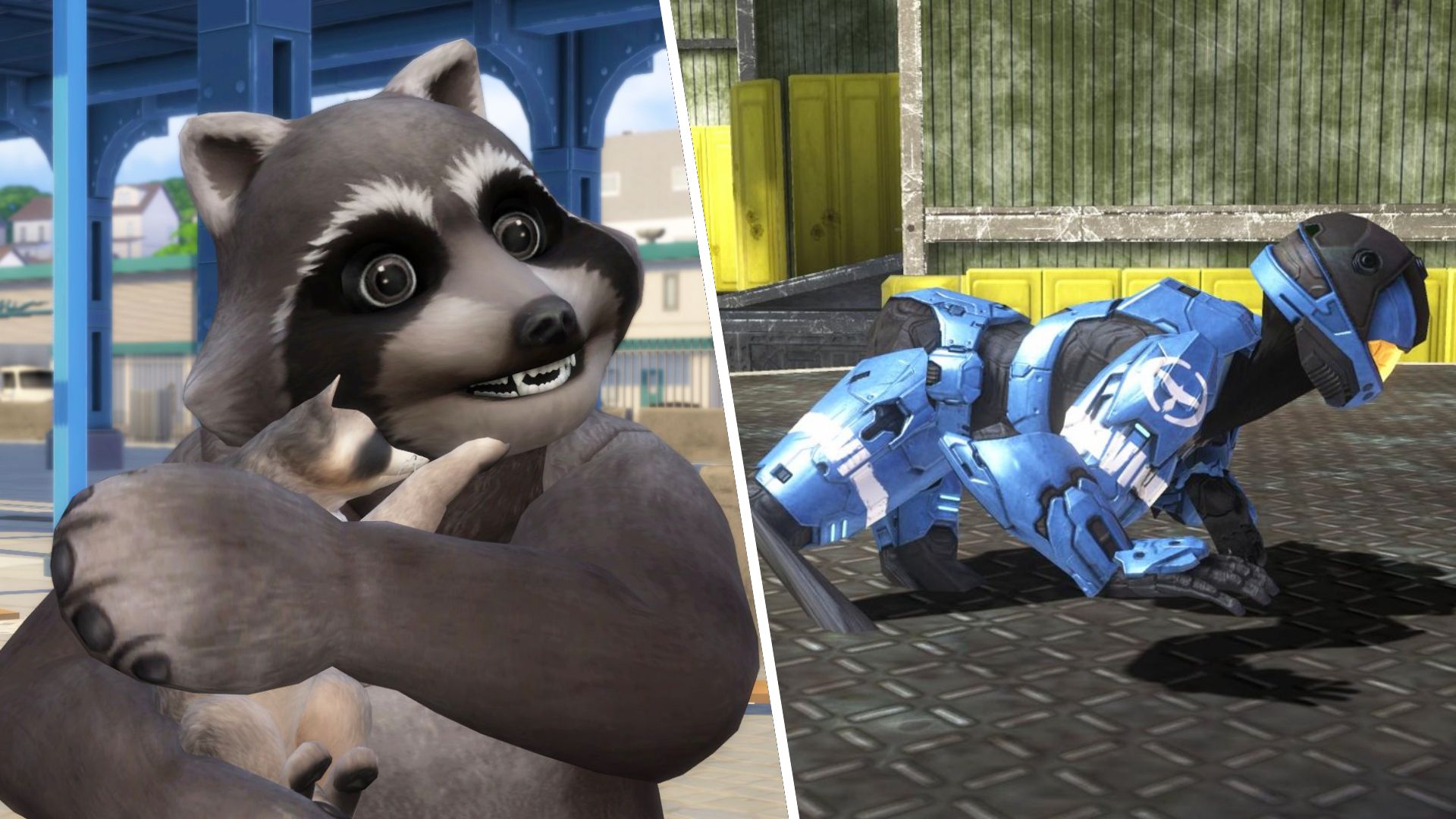
Conversely, the Halo franchise leaned into the absurdity of the situation. John Junyszek, a senior community manager at 343 Industries, shared an image of a Spartan-armored Jimothy. This image depicted a human model forced into a quadrupedal stance with unnaturally elongated limbs, mimicking the raccoon’s round, hunched posture.
The Halo team took the bit further, actually inserting Jimothy into historical game assets. Fans discovered the raccoon on the iconic crashed escape pod in the original Halo: Combat Evolved, as well as in the more detailed, updated foliage of the Campaign Evolved remake. This served as a "wink and a nod" to the long-time fanbase, bridging the gap between the modern meme culture and the game’s twenty-five-year history.
Analyzing the Implications: Why Jimothy Matters
The rapid adoption of Jimothy by corporate social media accounts is not merely a sign of bored marketing teams; it represents a fundamental shift in how brands interact with their audiences in the age of algorithmic content.
The "Speed-to-Culture" Metric
In modern marketing, the ability to capitalize on an organic meme within 24 to 48 hours is a key performance indicator. By participating in the Jimothy trend, developers like Blizzard, Jagex, and Microsoft signaled to their players that they are "in the room"—aware of the same digital conversations the players are having. This fosters a sense of community and relatability that traditional, scheduled marketing campaigns simply cannot replicate.
The Democratization of Content
Jimothy is a "blank slate" mascot. Because he is a real animal with no predetermined backstory, developers are free to project whatever tone they desire onto him. Whether it is the horror of Dead by Daylight or the whimsical nature of World of Warcraft, the raccoon serves as a canvas. This reflects a broader trend in user-generated content, where the barrier between the player-base and the developer is increasingly blurred.
The Potential for Future Crossovers
The question now is not if Jimothy will appear elsewhere, but how far the trend will go. Speculation is already mounting regarding a potential Fortnite skin. Industry insiders note that while the logistics of adding a "round raccoon" to a competitive shooter with strict hitbox requirements are difficult, the promotional value of such a move would be astronomical. It is entirely possible that we may soon see Jimothy—awkwardly crammed into a mech suit or perhaps as a "back bling" accessory—as the latest addition to the Fortnite Item Shop.
The Human Element: Protecting the Mascot
Amidst the digital frenzy, a secondary conversation has emerged regarding the ethics of the meme. While Jimothy is a source of joy for millions, the reality of his existence as a wild animal in an urban environment remains. Supporters of the "Protect Jimothy" movement have utilized the attention to advocate for better wildlife protection in Seattle, reminding fans that behind the viral images and game renders is a living creature with specific environmental needs.
The irony of the Jimothy phenomenon is that he is perhaps the most unlikely superstar in gaming history. He lacks the grit of Master Chief, the magical prowess of a World of Warcraft hero, and the artistic polish of a Mouse: P.I. For Hire protagonist. Yet, through his sheer, undeniable physical presence, he has become a unifying figure.
As we look toward the future, the Jimothy saga serves as a reminder that the gaming industry, for all its technical sophistication and corporate structure, is still deeply driven by the human impulse to share, create, and find humor in the most unexpected places. Whether Jimothy remains a fleeting internet curiosity or becomes a permanent fixture in gaming lore, he has already secured his place in the annals of digital history—one round, slightly hunched step at a time.

