

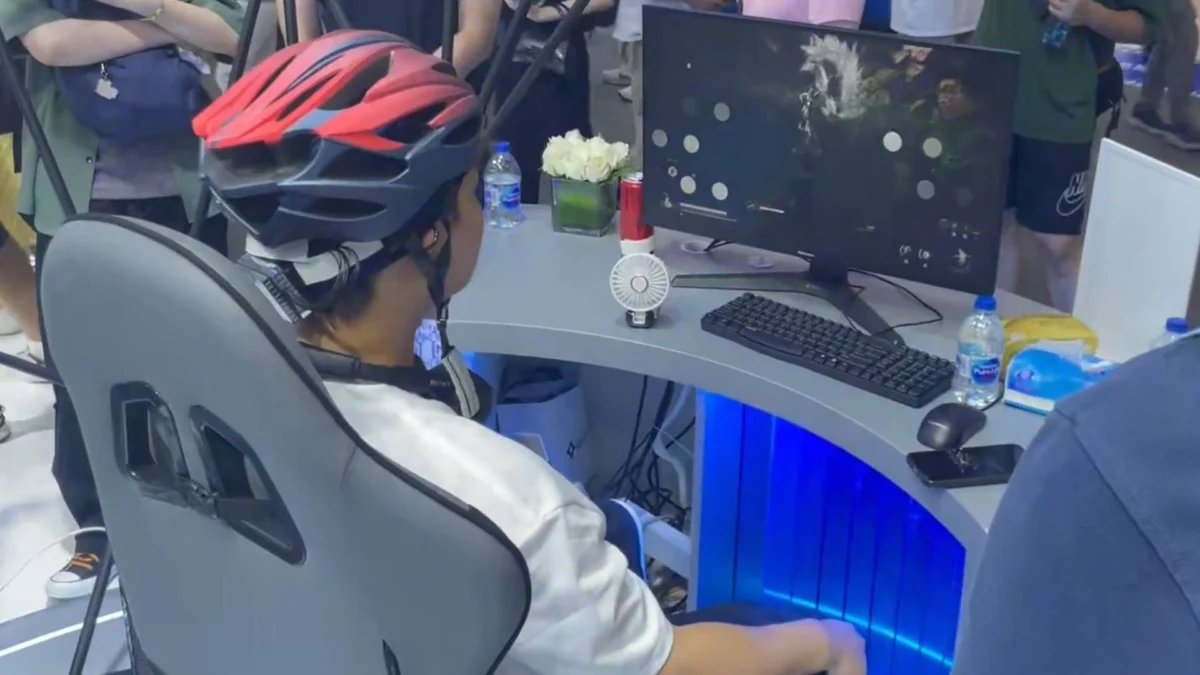
For decades, the concept of a "Brain-Computer Interface" (BCI) existed primarily in the realm of speculative fiction—a staple trope in cyberpunk literature and long-running sci-fi anime. It was the dream of seamless neural synchronization, where the barrier between human intent and machine output would dissolve entirely. However, as of the World Artificial Intelligence Conference (WAIC) in Shanghai in July 2026, that dream has transitioned from the page to the reality of the exhibition hall floor.
In a demonstration that stunned attendees, researchers showcased a non-invasive BCI capable of controlling complex, high-fidelity video games, including the demanding action RPG Black Myth: Wukong. This milestone represents more than just a novelty; it signals a tectonic shift in how we might interact with the digital world, with implications spanning from accessibility and medical rehabilitation to the future of human-robot collaboration.
The Core Innovation: Moving Beyond Mental Imagery
Historically, BCIs—such as those popularized by streamers like PerriKaryal—relied on intensive cognitive training. Users were often required to focus on specific, vivid mental imagery (such as imagining a cricket jumping) to trigger specific neural regions, which the computer would then map to a command. It was a process requiring immense concentration and stamina, making it a "high-friction" technology.
The breakthrough at WAIC 2026 represents a departure from this "active imagination" model. The system exhibited in Shanghai utilizes Steady-State Visual Evoked Potentials (SSVEP).
How SSVEP Works
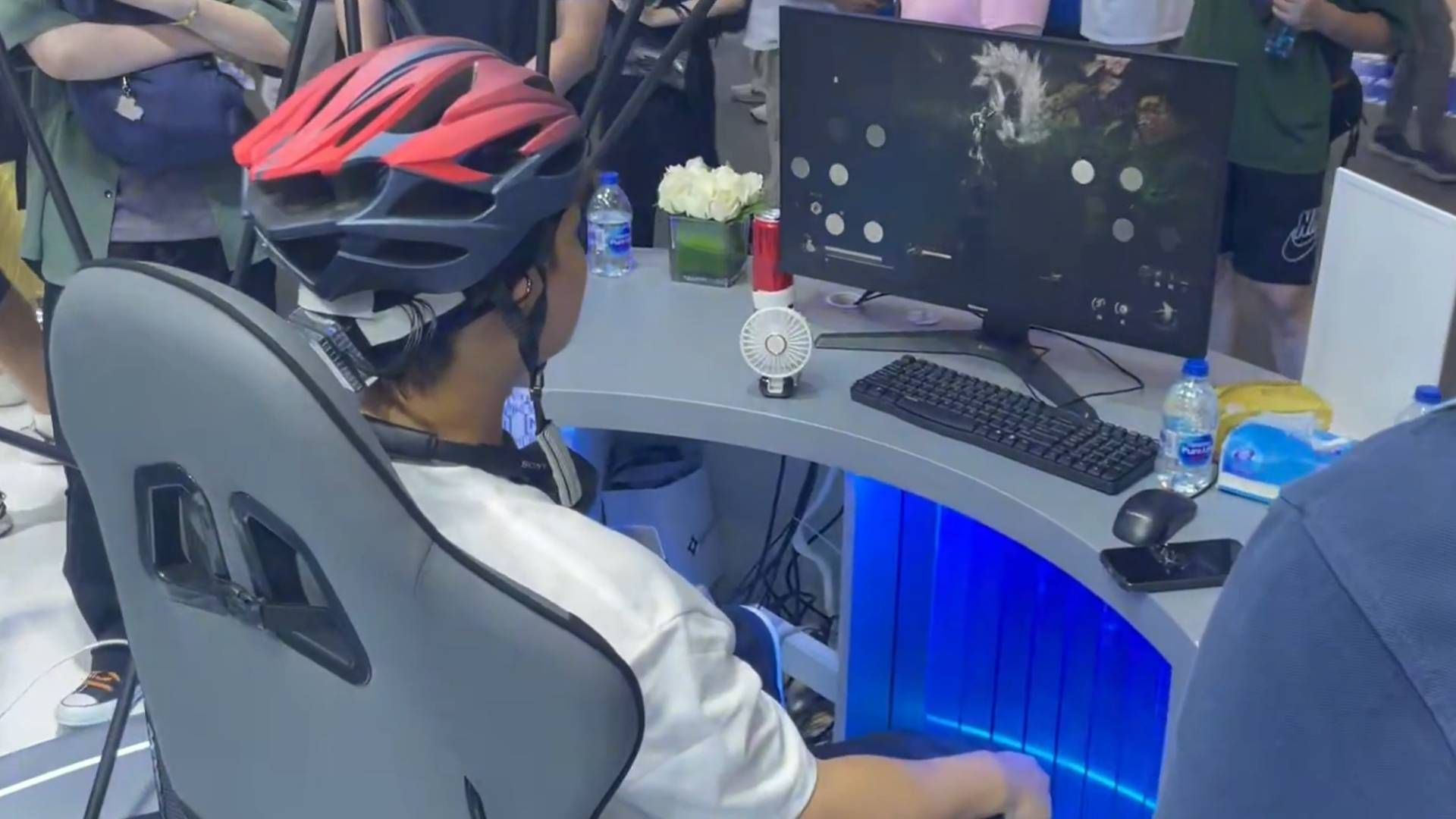
Instead of asking the user to "think" a command into existence, the system projects various visual targets over the gameplay interface. These targets flash at distinct, precise frequencies. When the user focuses their gaze on a specific target, their visual cortex responds with a corresponding electrical signature. The headset detects these unique EEG signals, which are then instantly translated into specific in-game commands.
This mechanism significantly lowers the barrier to entry. According to exhibit staff, the system requires only five minutes of calibration to sync with a new user—a monumental improvement over the hours or days of training required by earlier, more cumbersome BCI prototypes.
Chronology of the WAIC 2026 Breakthrough
The integration of gaming and neuro-technology at WAIC 2026 was part of a broader exhibition on the future of human-AI integration. The progression of the technology during the conference week can be mapped as follows:
- July 17, 2026: WAIC officially releases documentation regarding the non-invasive neural systems, highlighting their versatility. Beyond gaming, the press release emphasizes potential medical applications, including early-warning systems for epileptic seizures, anesthesia monitoring, and sleep-cycle optimization.
- July 19, 2026: AI enthusiast and researcher Huang Lu captures viral footage of a user playing Black Myth: Wukong using only the BCI headset. The video, shared via X, provides the first public look at the fluidity of the interface, showing the user navigating the game’s complex UI without traditional controllers.
- July 20, 2026: BrainCo, a key player in the neural-tech sector, demonstrates a parallel advancement: the use of EEG headsets to control humanoid robotic limbs. The company highlights a sub-200 millisecond response time, positioning the technology as a potential revolution for prosthetic limb users and industrial automation.
Supporting Data and Technical Realities
The technical hurdle that has always plagued BCI development is latency. In a high-speed gaming environment or a real-time robotic application, even a delay of 200 milliseconds (the speed demonstrated by BrainCo) can be the difference between a successful action and a catastrophic failure.
The Latency Challenge
While the WAIC demonstrations were impressive, they underscored the limitations of current hardware. In gaming, 200ms of lag is often considered unacceptable in competitive play. However, as demonstrated by the ability to defeat bosses in Black Myth: Wukong, the current software architecture is rapidly improving. By utilizing AI algorithms to "predict" user intent rather than simply reacting to raw neural input, developers are effectively masking the physical latency of the hardware.
Comparative Analysis: Traditional vs. Neural Input
| Metric | Traditional Controller | Existing BCI (2026) |
|---|---|---|
| Input Method | Physical tactile trigger | Visual/Neural Evoked Potential |
| Setup Time | Instant | ~5 Minutes |
| Cognitive Load | Low (Muscle Memory) | Moderate (Visual Focus) |
| Latency | < 5ms | ~200ms |
Official Responses and Perspectives
The scientific community and the tech industry have greeted the WAIC demonstrations with a mix of excitement and measured caution.
"The ability to decode motor intent from non-invasive EEG signals in under 200 milliseconds is a massive leap," noted an industry analyst present at the conference. "But the real story isn’t that we can play Wukong with our thoughts. The real story is the robustness of the AI-decoding layers that make these inputs readable."
However, there remain significant ethical and safety concerns. The use of SSVEP—relying on flashing visual stimuli—raises immediate red flags for the medical community. Critics have pointed out that individuals with photo-sensitive epilepsy could be at significant risk using such a system, suggesting that future iterations of the technology must find ways to achieve similar results without the use of flashing visual cues.
The Path Forward: Implications and Future Scope
Accessibility and Rehabilitation
The most immediate and profound impact of this technology lies in accessibility. For gamers or individuals with limited mobility, the ability to interact with a computer via brain waves is life-changing. It restores agency in a digital world that was previously locked behind physical barriers. As these systems move from exhibition floors to clinical settings, they offer a blueprint for a new generation of assistive devices that are non-invasive and increasingly intuitive.
Human-Robot Collaboration
The BrainCo demonstration hints at a future where we don’t just "control" robots—we "inhabit" them. If a user can trigger motor functions in a robotic limb within 200ms, the potential for remote surgery, disaster response, and hazardous environment exploration is limitless. We are moving toward a reality where the human brain acts as the primary processor for complex, remote mechanical systems.
The "Latency" Wall
Despite the progress, the industry must overcome the "latency wall." Until the processing time drops below 50ms, these interfaces will remain specialized tools rather than mainstream replacements for mice, keyboards, or gamepads. The next generation of BCI research is expected to focus on high-fidelity signal processing and hardware miniaturization to bridge this gap.
Conclusion: A New Frontier of Agency
The demonstrations at WAIC 2026 have effectively ended the era of "if" and ushered in the era of "how." We now know that the human brain can be successfully integrated into the digital input loop through non-invasive means. While we are years, perhaps decades, away from seamless, high-speed neural immersion, the foundation has been laid.
As we move forward, the challenge for developers will be to refine the accuracy of these systems while ensuring they are accessible to a wider demographic, including those with neurological sensitivities. The "stuff of sci-fi" is now our reality; the next step is ensuring that this reality is both safe and scalable for everyone.

