

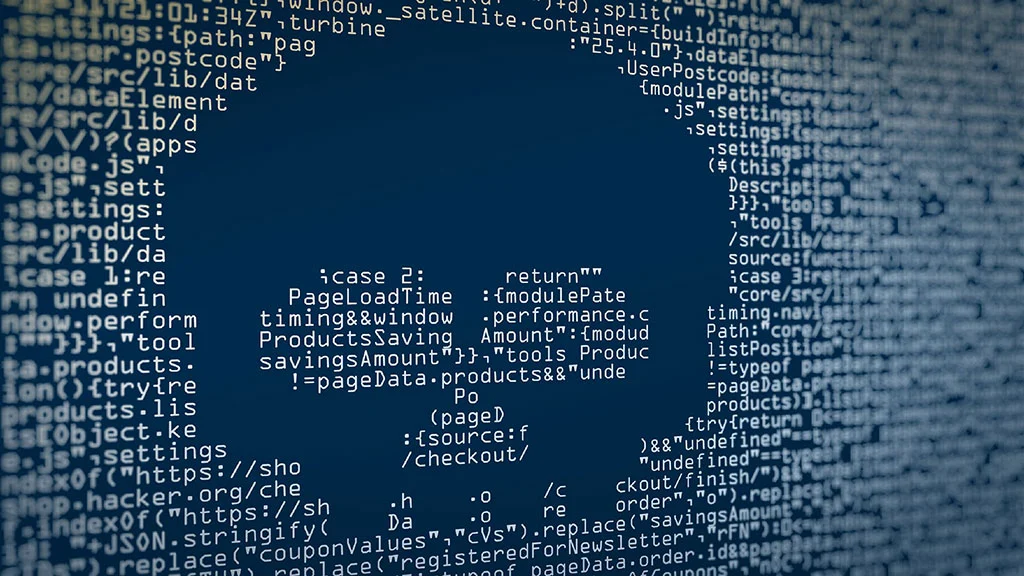
In an era where cyber warfare and digital espionage have become increasingly sophisticated, a new, highly destructive malware strain known as "GigaWiper" has emerged, raising alarms across the global cybersecurity community. First brought to light by detailed analysis from Microsoft’s security researchers, GigaWiper is not merely a conventional virus; it is a modular, high-impact backdoor designed to systematically dismantle digital storage and exfiltrate sensitive data.
While its moniker sounds almost whimsical, the reality of GigaWiper is anything but. It represents a frightening evolution in how threat actors are repurposing existing malicious code to create "Frankenstein-esque" tools designed for total infrastructure paralysis.
Main Facts: What is GigaWiper?
GigaWiper is a multi-faceted destructive malware, identified as a "backdoor" that serves as a launchpad for catastrophic data loss. Unlike typical ransomware, which encrypts files in hopes of a payout, GigaWiper is fundamentally a "wiper"—a class of malware designed specifically to destroy data and render systems unrecoverable.
According to technical documentation released by Microsoft, GigaWiper functions by stitching together several disparate malware families into a single, cohesive threat vector. Its core functionality involves:
- Raw Disk Overwriting: The malware bypasses standard file-system protections to target physical disks directly. By overwriting raw disk content and obliterating partition metadata, it renders the operating system and all stored files physically unreadable.
- Modular Destruction: It employs specialized routines, including a Windows-specific secure wiper that utilizes multiple byte-pattern overwrites, ensuring that even professional data recovery services would struggle to reconstruct the original information.
- Ransomware Mimicry: In a psychological twist, some versions of the malware mimic traditional ransomware behaviors—encrypting files—only to intentionally discard the encryption key, ensuring the victim has no path to recovery, even if they were to pay a ransom.
Chronology: The Emergence of a Digital Scourge
The discovery of GigaWiper marks a significant pivot point in the 2026 cybersecurity landscape.
- Initial Detection (July 2026): Security researchers began tracking unusual patterns of network behavior that did not align with typical data exfiltration attempts. It was noted that compromised systems were experiencing mass file corruption followed by sudden system reboots.
- Microsoft’s Technical Deep Dive (July 9, 2026): Microsoft published a comprehensive anatomy of the malware, confirming that the threat was not an isolated incident but a sophisticated, multi-stage attack sequence. The report provided the first clear evidence that GigaWiper was being deployed in targeted, enterprise-level environments.
- Industry Response: Following the disclosure, platforms like MalwareBytes corroborated the severity of the threat, highlighting the malware’s ability to "take over" a PC and strip it of all utility.
- Current Status: As of late 2026, the threat remains active. While primarily focused on large-scale IT infrastructure, the modular nature of the code means that variants could potentially be adapted for broader deployment, keeping IT security teams in a state of high alert.
Supporting Data: How the Malware Operates
The efficiency of GigaWiper lies in its "all-in-one" design. Its operational lifecycle is a testament to the dangers of modern, automated malware delivery.
The Attack Vector
GigaWiper does not typically propagate through simple email attachments. Instead, it appears to leverage existing vulnerabilities within corporate networks to gain an initial foothold. Once inside, it camouflages its presence by masquerading as a legitimate, scheduled OneDrive task—a technique that allows it to persist on a system for extended periods without raising suspicion.
The "Crucio" Influence
One of the most alarming components of the malware is the integration of "Crucio-based" wiper technology. By imitating a ransomware interface, the malware confuses administrators during the early stages of an attack. While an IT team might attempt to negotiate or look for decryption tools, the malware is actually in the background performing the final stage of its primary objective: destroying the file system entirely.
Remote Control Capabilities
Beyond its destructive capabilities, GigaWiper is a functional backdoor. It includes features for:
- Screen Capture and Streaming: Enabling the attacker to see exactly what the user or administrator is doing in real-time.
- Remote Command Execution: Using a remote TCP server, attackers can issue commands, move laterally through a network, and escalate privileges to ensure the wiper reaches the most critical servers within an organization.
Official Responses and Expert Analysis
Microsoft’s security team has been at the forefront of identifying and documenting this threat. Their official guidance emphasizes that the primary defense against GigaWiper is a robust, "Zero Trust" security architecture.
Microsoft researchers have specifically highlighted that "tenant-wide tamper protection" is essential. Because GigaWiper relies on the ability to modify system tasks and disk configurations, any security measure that limits administrative privilege—such as restricting access to the registry and system-level scheduled tasks—serves as a critical barrier.
Security analysts at MalwareBytes have further underscored that while the malware is sophisticated, it is not invisible. "The key to survival is early detection," states one report. "Because the malware must communicate with a remote TCP server to receive instructions, anomalous outbound traffic patterns are often the first sign of a GigaWiper infection."
Implications: The Shift Toward Destructive Malware
The emergence of GigaWiper signals a broader, more worrying trend in cyber-criminal activity: the move from profit-motivated attacks to pure disruption.
The End of Traditional Ransomware?
While ransomware remains a billion-dollar industry, wipers like GigaWiper suggest that some threat actors are more interested in political or psychological damage than financial gain. When a hacker discards the encryption key, they are signaling that the goal is not to negotiate, but to silence an organization.
Impact on IT Infrastructure
For IT professionals, the implications are severe. The "single-point-of-failure" architecture that many small-to-medium businesses rely on is now a massive liability. If a GigaWiper attack hits a central server, the loss of partition metadata means that traditional backups might be the only thing standing between an organization and total bankruptcy.
A Call for Defensive Rigor
The lesson for the average PC user and the enterprise admin alike is the same: security is no longer "set and forget."
- Backup Strategy: The "3-2-1" rule (three copies of data, two different media, one offsite) is now the absolute minimum standard.
- Network Hardening: Organizations must audit their network access logs regularly. If a workstation is attempting to communicate with unknown TCP servers, it should be isolated immediately.
- Patch Management: Because GigaWiper exploits existing vulnerabilities to gain its initial foothold, keeping OS and firmware updates current is the most effective preventative measure.
Final Thoughts
GigaWiper serves as a chilling reminder of the fragility of our digital lives. As we move toward a future where our most important memories, work, and communications are stored on silicon, the threat of a "wiper" that can effectively "delete" a digital existence is a reality we must confront. By understanding the anatomy of this threat, administrators and users alike can better fortify their defenses, ensuring that even if an attacker manages to knock at the door, they find a house that is too well-protected to break into.
In the high-stakes game of cyber security, GigaWiper is a reminder that the best offense is a defense that assumes the worst, prepares for the inevitable, and refuses to leave a single point of failure exposed.

