

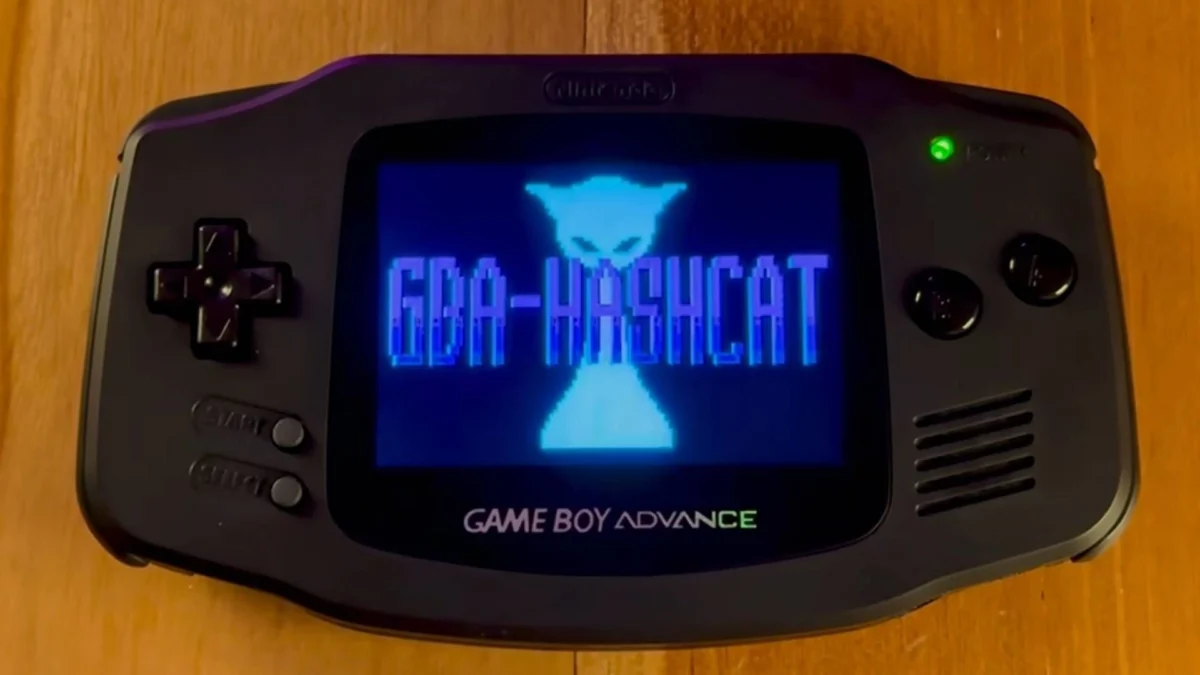
In the high-stakes world of cybersecurity, speed is everything. Modern password-cracking rigs, powered by arrays of high-end GPUs, can churn through billions of SHA-256 hashes per second, effectively turning digital locks into paperweights. However, security engineer Mark El-Khoury has taken an entirely different approach, choosing to embrace the "slow lane" by porting the world’s most famous password-recovery utility, Hashcat, to hardware that hasn’t seen a new commercial release in over two decades: the Nintendo Game Boy Advance (GBA).
While the project—drolly dubbed "GBA-Hashcat"—is a technical marvel of retro-engineering, it is also a masterclass in the absurd. With a processing speed that makes a modern machine look like a supercomputer from the future, El-Khoury’s experiment highlights both the incredible versatility of vintage hardware and the sheer, impractical joy of hobbyist coding.
The Anatomy of the Port: How the GBA Tackles Modern Encryption
At the heart of the original Hashcat software lies a sophisticated architecture capable of supporting hundreds of different hash algorithms and a variety of brute-force and dictionary-based attack methods. GBA-Hashcat, by contrast, is a stripped-down, specialized tool.
Built using the Butano engine—a robust framework that allows developers to write GBA software in C++—the project is essentially a Proof of Concept (PoC) for the limits of the GBA’s hardware. The console, released in 2001, is powered by a 16.78 MHz ARM7TDMI processor. To put that into perspective, most modern smartphones operate at clock speeds exceeding 3,000 MHz, and even entry-level microcontrollers often dwarf the GBA’s capabilities.
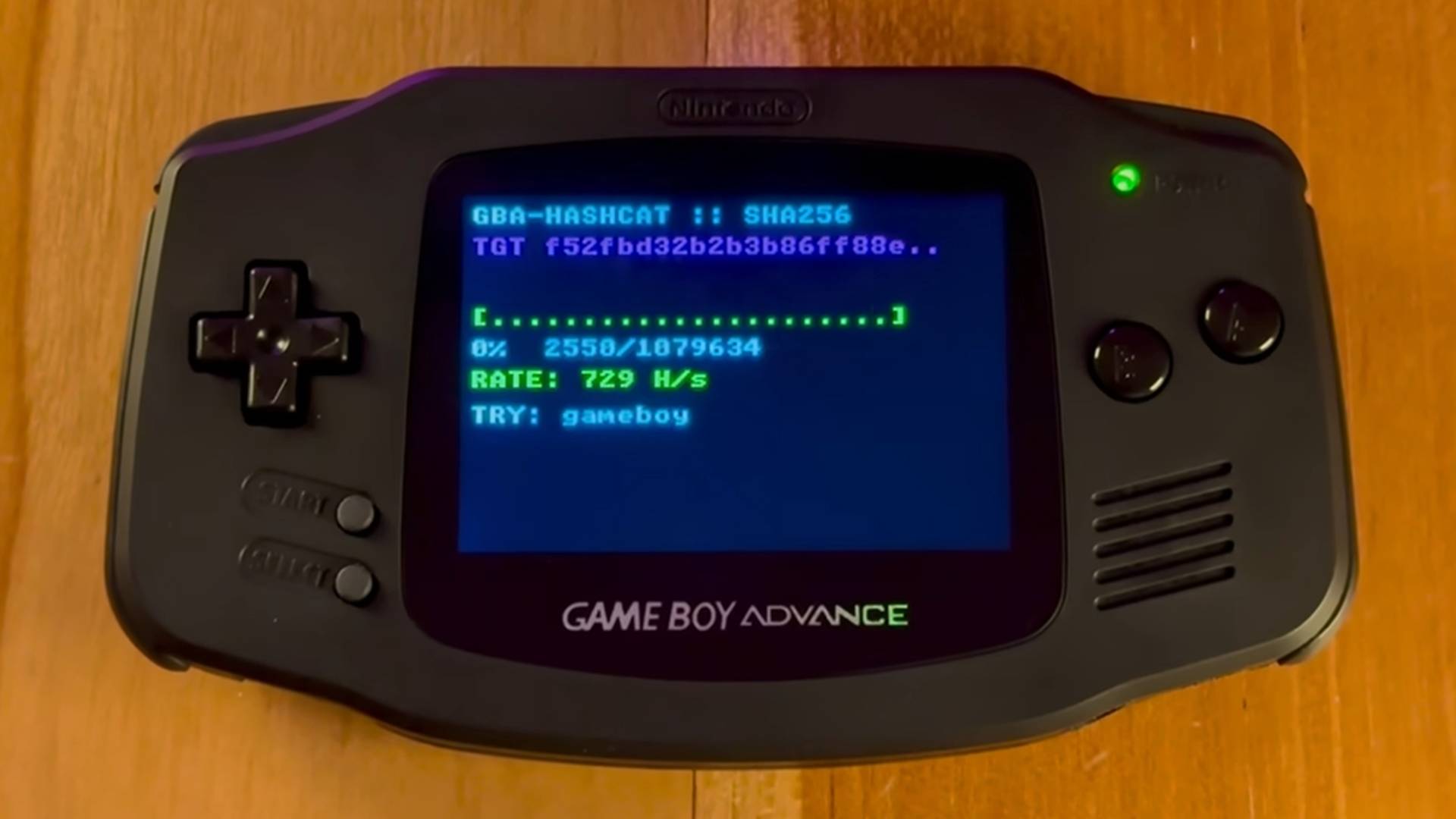
The functionality of GBA-Hashcat is intentionally limited. Rather than attempting to support the vast ecosystem of Hashcat’s features, El-Khoury narrowed the scope to a single, fixed word list and the SHA-256 algorithm. The software operates on a simple loop: it pulls a string from the hardcoded list, generates a SHA-256 hash, and compares it against a target hash. If they match, the plaintext password is revealed. It is a fundamental application of computer science, executed on hardware that predates the widespread adoption of modern, high-complexity hashing.
A Chronology of the "Dumbest App"
The project began as an off-the-cuff exploration of what could be achieved with the Butano engine and a bit of spare time.
- Initial Concept: El-Khoury identified the potential for using the GBA’s ARM architecture to perform basic cryptographic operations.
- Development Phase: Utilizing the C++ capabilities of the Butano engine, the developer spent time optimizing the code to fit within the memory and processing constraints of the 2001 handheld.
- The Launch: El-Khoury pushed the project to GitHub, labeling it as both the "greatest password cracking tool of all time" and his "dumbest app of all time."
- Public Reception: The project gained traction on LinkedIn and across developer forums, with the community reacting with a mix of awe at the technical achievement and laughter at the performance metrics.
- The "LUA" Update: Demonstrating the developer’s commitment to the bit, El-Khoury recently joked about "porting" the tool to the subset of Lua used in World of Warcraft add-ons, suggesting that he might soon be able to crack passwords while waiting for a raid group to assemble.
Supporting Data: The Cost of Retro-Computing
To understand the disparity between modern hardware and the GBA, one must look at the raw numbers. The GBA’s ARM7TDMI chip manages a staggering 727 SHA-256 hashes per second. While 727 sounds like a substantial number for a handheld console, it is rendered inconsequential by modern standards.
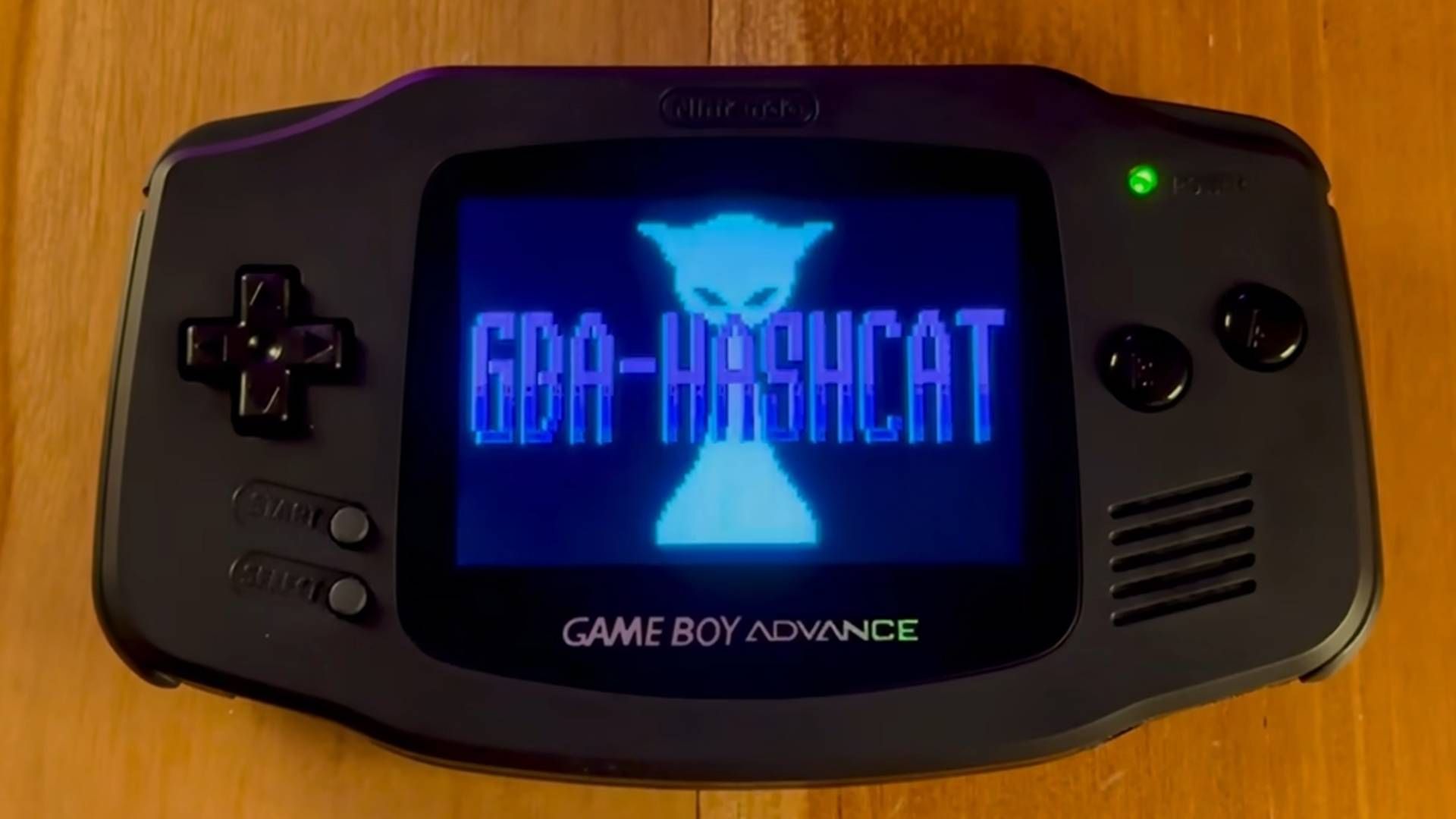
A contemporary GPU-accelerated cracking rig can perform roughly 20 to 30 billion hashes per second. When you crunch the math, the GBA is approximately thirty million times slower than a modern dedicated cracking machine. El-Khoury himself noted the comical reality of this performance: "350 days of continuous cracking on this bad boy could be done in about 1 second with a modern GPU-accelerated cracking rig."
This creates a scenario where a password that would take a modern rig a fraction of a second to guess could potentially keep a Game Boy Advance occupied for the better part of a year. It is a literal "snail’s pace," yet it perfectly illustrates the exponential growth of computational power over the last twenty-one years.
Official Responses and the "Why Not?" Culture
The response to the project has been overwhelmingly positive, rooted in the hacker ethos of "why not?" In the security community, projects like GBA-Hashcat are seen as a healthy, albeit bizarre, exercise in understanding the foundations of hardware and software. By removing the abstractions of modern operating systems, developers like El-Khoury can appreciate the raw mechanics of the code they write.
There is also a growing trend of "retro-revivalism" in the hardware scene. Over the past several months, we have seen:
- The Game Boy Watch: A modder successfully compressed the Game Boy Color into a functional, if ergonomically cursed, smartwatch.
- The E-Ink Emulator: A developer utilized an e-reader to build a low-power, high-contrast Game Boy emulator, proving that even with low refresh rates, the hardware is capable of surprising fidelity.
These projects serve as a reminder that the hardware we discarded or grew out of still holds value as a teaching tool and a canvas for creative expression.
Implications: Cybersecurity and Retro-Tech
While GBA-Hashcat poses no threat to modern enterprise security—it would likely expire from old age before it cracked a standard alphanumeric password—the implications of such projects are significant for the broader tech landscape.
1. Education and Accessibility
Projects like this act as a gateway for students and junior developers. By stripping back the complexities of modern systems, they allow for a clearer understanding of how hashes work, how memory is managed, and how software interacts with hardware at the register level.
2. The Limits of Modern Abstraction
We live in an era of massive software bloat. Modern applications often rely on heavy frameworks that consume gigabytes of RAM. Seeing a functional, albeit slow, cryptographic utility running on 32KB of internal WRAM (the GBA’s capacity) is a sobering reminder of how much can be achieved with efficient, "close-to-the-metal" code.
3. The Future of "Cursed" Hardware
The trend of porting modern utilities to ancient hardware will likely continue. As these systems become more vintage, the challenge of fitting modern, complex algorithms into tiny footprints becomes a badge of honor for engineers. It isn’t about the utility of the tool; it is about the intellectual challenge of conquering the limitations of the past.
A Heist Movie Perspective: Fiction vs. Reality
One cannot help but imagine the cinematic potential of such a device. In a heist film, the protagonist would likely be seen in a dimly lit basement, sweat beading on their forehead, while a dozen Game Boy Advances are lined up on a desk, each humming with the tiny, flickering screen of a brute-force attack.
"How much longer?" the partner asks.
"Just another six months," the hacker replies, adjusting a Game Boy Color.
While reality dictates that our data is safe from the GBA’s grasp, the imagery of retro-tech in a modern security landscape provides a unique intersection of nostalgia and technical proficiency.
Conclusion
Mark El-Khoury’s GBA-Hashcat is, by all reasonable metrics, an exercise in futility. It is slow, inefficient, and serves no practical purpose in the modern cybersecurity arsenal. Yet, it is precisely this lack of utility that makes it such a compelling project. It reminds us that technology, at its core, is meant to be explored, tinkered with, and occasionally pushed to its breaking point—even if that point is a 21-year-old handheld console.
As developers continue to bring "Why? Well, why not?" energy to their work, we can expect to see more of these bizarre, fascinating, and ultimately useless projects that enrich the culture of computing. In the race to build faster, more powerful, and more complex systems, there is a distinct beauty in the engineer who takes a step back and asks what happens if we try to do the impossible on the hardware that started it all.

