

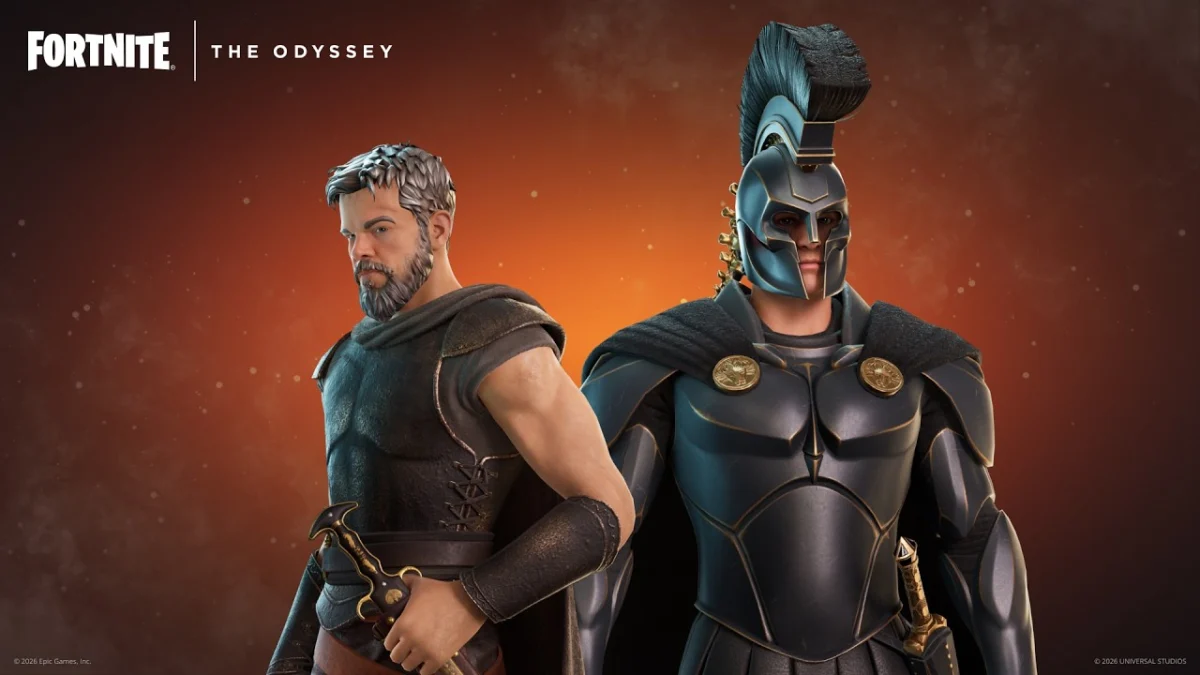
The landscape of interactive entertainment has shifted seismically over the last two decades, moving from the singular, auteur-driven experiences of the late 90s to the sprawling, hyper-connected digital ecosystems of the modern era. Perhaps no celebrity better exemplifies this evolution—and the industry’s changing appetite for star power—than Matt Damon. With the release of his latest film, Christopher Nolan’s adaptation of The Odyssey, Damon has finally made his long-awaited debut in the digital realm, not through a narrative-heavy, prestige action-adventure game, but as a purchasable cosmetic skin in Epic Games’ Fortnite.
This collaboration serves as a poignant bookmark in a career that has frequently flirted with, but ultimately remained detached from, the medium of video games. For fans, the appearance of an Odysseus skin alongside Benny Safdie’s Agamemnon is a victory; for industry observers, it is a fascinating case study in how Hollywood and the gaming industry have finally merged, albeit in ways that might surprise the actors who once hoped for something more intellectually stimulating.
A History of Missed Connections: The Bourne Rejection
To understand the irony of Damon’s current Fortnite inclusion, one must look back to 2008. At the height of the Bourne film franchise’s cultural dominance, developers approached Damon to lend his likeness and voice to The Bourne Conspiracy, a high-octane console title. It was the industry standard for a blockbuster tie-in: a third-person action game designed to capture the visceral thrills of the films.
However, Damon—a vocal fan of the puzzle-adventure genre—famously pushed back. In a 2008 interview with The Boston Globe, Damon revealed that he had lobbied the developers to abandon the "first-person shooter" template in favor of something more cerebral. He envisioned a game that captured the psychological disorientation of Jason Bourne’s amnesia, drawing direct inspiration from Myst, the 1993 landmark title that prioritized environmental storytelling and complex logic puzzles over twitch-based combat.
"I lobbied hard to not make a first-person shooter game but to make it more like Myst," Damon explained at the time. "They weren’t interested. They made the video game anyway, without my likeness."
The anecdote resurfaced during a 2021 appearance on the popular web series Hot Ones, where Damon recounted the interaction with a self-deprecating laugh. He noted that the developers offered him a substantial sum of money, but the creative misalignment was insurmountable. The resulting game, while successful in its own right, lacked the actor’s face—a decision that arguably preserved Damon’s "prestige" image while simultaneously highlighting the rigid genre expectations of the late 2000s gaming market.
The 2016 AMA: A Vision of Future Storytelling
Nearly a decade later, Damon’s interest in the medium remained, though his focus had shifted toward the technological horizon. During a 2016 Reddit "Ask Me Anything" (AMA) session, a fan asked if he would consider providing motion capture or voice acting for a video game.
Damon’s response was surprisingly forward-thinking for a mainstream movie star. He expressed a genuine curiosity about the intersection of cinematic narrative and emerging technologies like Virtual Reality (VR).
"I’ve never been approached to do that, I’d totally be into it," Damon stated. "I’m really interested to see where entertainment heads as these video games, the graphics are getting so good, and VR is getting so good… Does this morph into a new kind of storytelling, and what is that, and can I be a part of it?"
At that time, Damon viewed gaming as a potential evolution of the storyteller’s craft. He saw the medium as a way to "gather you around and tell you stories," positioning himself as a collaborator looking for a platform that respected the narrative depth of traditional cinema. However, he concluded his thought with a note of reality: "Nobody has asked me as of yet."
The Industry Shift: From Authorship to Ecosystems
Damon’s 2016 vision of being a part of a narrative-driven "new kind of storytelling" has, in many ways, been bypassed by the current state of the gaming industry. The market has moved away from the "prestige console exclusive" model that Damon envisioned—where actors like Kevin Spacey or Kit Harington were brought in to anchor high-budget linear narratives—and toward the "metaverse" model.
Today, the gaming industry is defined by user-generated content, live services, and massive, cross-media intellectual property crossovers. The "auteur" approach has taken a backseat to the "platform" approach. While games like Baldur’s Gate 3 and Clair Obscur: Expedition 33 prove that deep, narrative-heavy experiences still have a massive audience, the financial weight of the industry has shifted toward titles like Fortnite, Roblox, and Minecraft.
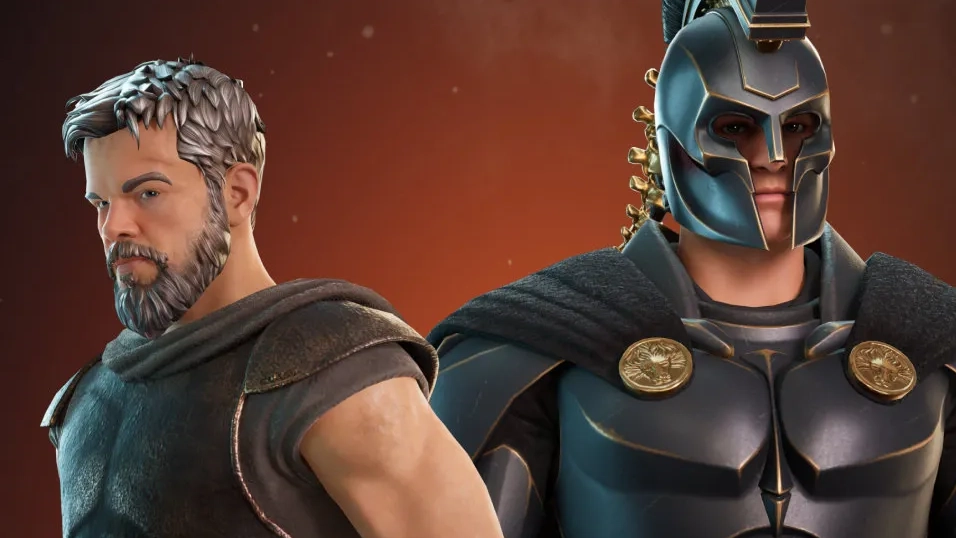
In this climate, an actor’s "likeness" is no longer a tool for telling a complex, puzzle-based story about memory and identity; it is a brand asset. The Fortnite Odysseus skin isn’t meant to explore the existential dread of Homer’s epic; it is a promotional bridge between a Hollywood release and a massive, active player base. The irony is palpable: Damon spent years waiting for a project that would treat gaming as a medium for serious storytelling, only to enter the industry as a digital avatar designed to drive hype for a traditional film.
The Implications for Celebrity Integration
The integration of Hollywood stars into video games has changed in three fundamental ways:
- Normalization of Digital Presence: Ten years ago, a star of Damon’s caliber doing a "skin" would have been seen as a move of desperation or a blatant cash grab. Today, it is a standard marketing beat for any major studio project.
- The Death of the "Tie-in" Game: The industry has largely stopped making standalone tie-in games (like the Bourne game), as they are often viewed as low-quality risks. Instead, studios prefer to integrate their films into existing, high-traffic games.
- The Passive Avatar: Celebrity involvement is increasingly passive. Actors are no longer required to commit to months of motion capture or dialogue recording for a dedicated game. A 3D model, mapped to an existing rig, allows for a global marketing presence with minimal time commitment from the star.
Looking Back at The Odyssey
While there is no massive, high-budget Odyssey game hitting consoles this year to accompany the film, the subject remains a staple of the gaming industry’s long history. Critics and historians often point to the 2012 Odyssey adventure game as a testament to why the "puzzle-adventure" genre—the very genre Damon admired—can be a difficult sell.
In that title, players were often bogged down by minute, frustrating puzzles that halted the momentum of the epic poem. It serves as a reminder that perhaps Damon’s desire to make a Myst-like game about an ancient hero might have been a commercial nightmare, even if it sounded like an artistic triumph on paper.
Conclusion: The New Reality
Matt Damon’s entry into Fortnite represents the final realization of his interest in gaming, albeit in a form that bears little resemblance to his original aspirations. He wanted to be a pioneer in a new, narrative-driven frontier; instead, he has become a marquee item in the world’s most successful digital storefront.
This evolution reflects a broader reality in entertainment: the line between "film" and "game" has blurred, but not necessarily through the high-minded, interactive storytelling many actors imagined. It has blurred through the commodification of personality and the creation of digital, persistent worlds. While Damon may never get his Myst-like Bourne experience, his presence in the digital landscape serves as a reminder that in the 21st century, every storyteller—and every hero—is eventually destined to end up in the lobby of a battle royale.

