

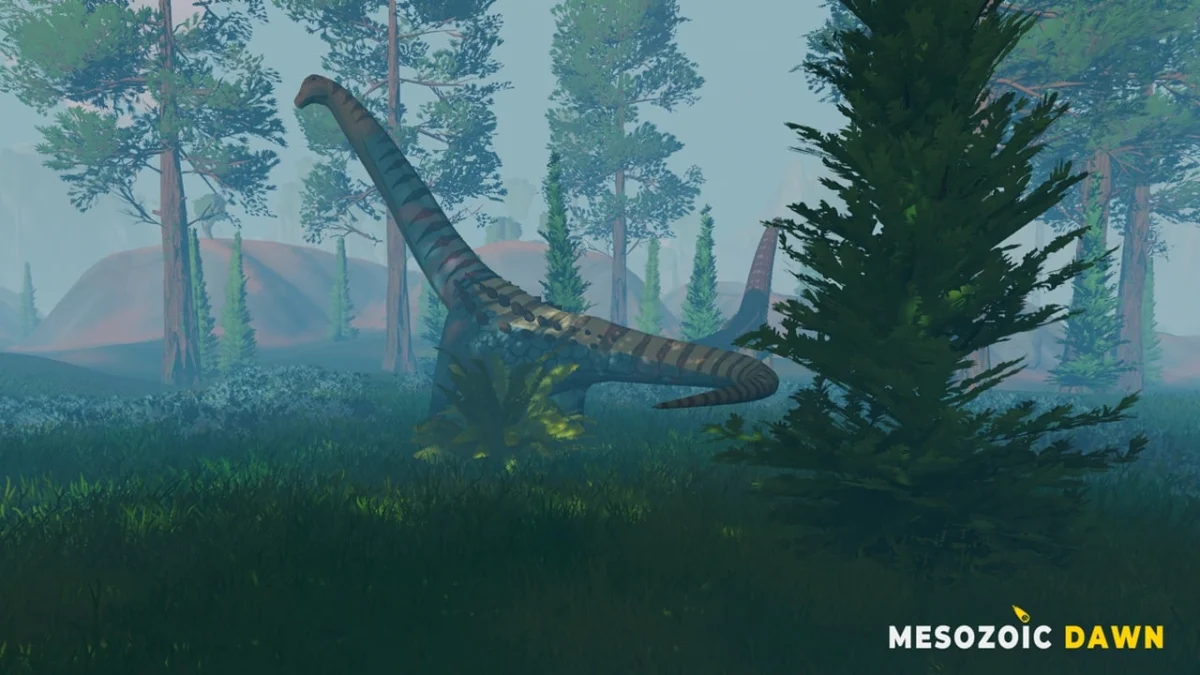
In the crowded landscape of mobile gaming, where “survival” often implies a repetitive loop of match-based combat, Mesozoic Dawn—the latest title from developer NEXTINDIE—is attempting to redefine the genre. Moving away from the arcade-style tropes that have dominated prehistoric-themed games, Mesozoic Dawn offers a persistent, living ecosystem that emphasizes biological progression over simple twitch-reflex survival.
By integrating complex organ systems, generational evolution, and a massive roster of over 70 prehistoric species, the game invites players to experience the Mesozoic Era not as an invincible titan, but as a vulnerable creature struggling to find its place in an unforgiving food chain.
The Core Concept: Life, Not Just Survival
At its heart, Mesozoic Dawn is a multiplayer online dinosaur survival simulation that prioritizes the "miracle of life" over the "match-to-match" grind. The fundamental loop of the game is governed by a simple yet profound equation: Growth + Nesting/Egg Laying = Evolution.
Unlike traditional survival titles where players might unlock new skins or tiers via a menu, progression here is biological. Players begin their journey as a juvenile or a larva—a tiny, fragile entity at the very bottom of the food chain. The early gameplay is defined by the constant, desperate search for sustenance and the avoidance of predators that view the player as a quick meal.
Through successful foraging, survival, and eventual reproduction, players contribute to a generational lineage. By passing down traits and surviving long enough to lay eggs, players unlock more powerful prehistoric species, turning the game into an ongoing saga rather than a series of disconnected sessions.
Chronology: From Larva to Apex Predator
The progression system in Mesozoic Dawn is designed to mimic the lifecycle of an organism. This journey is broken down into several distinct phases:
Phase I: The Vulnerable Beginning
Every player starts at the bottom. As a juvenile, your primary objective is to maintain your internal homeostasis. You are slow, weak, and highly susceptible to environmental stressors. During this stage, the player learns the map, identifies safe zones, and begins to understand the symbiotic relationship between their hunger, thirst, and energy levels.
Phase II: The Development Cycle
As you consume nutrient-rich foods, your dinosaur matures. This is not merely a stat increase; it is an physical transformation. You must navigate the dangers of the world to reach reproductive maturity. This stage introduces the game’s AI companion and offspring system, allowing players to protect their brood and pass on the legacy of their lineage.
Phase III: The Generational Shift
Once a player reaches maturity and successfully nests, the "Evolution" component kicks in. By laying eggs, players can shift their focus toward different prehistoric species. This creates a strategic layer to the game: do you continue as a smaller, more agile scavenger, or do you invest your accumulated biological progress into a larger, more dominant predator?
Supporting Data: Biological Complexity and Environmental Mechanics
What truly separates Mesozoic Dawn from its contemporaries is the simulation depth. NEXTINDIE has implemented a highly detailed physiological system that links the player’s internal organs to their external environment.
The Interconnected Organ System
In most games, health is a single bar. In Mesozoic Dawn, the player’s digestive system, lungs, and heart are interconnected.
- Stomach: Influences how efficiently you process food and how quickly you recover energy.
- Lungs: Directly affected by oxygen levels and exertion; damage here leads to reduced stamina and speed.
- Heart: Governs circulation and overall recovery; high stress or injury causes the heart to struggle, leading to a cascade of negative effects on other systems.
Environmental Dynamics
The world is a harsh, reactive place. Temperature, humidity, and oxygen levels are not just cosmetic; they dictate where a species can thrive. For instance, marine creatures must manage the temperature of the water, while land predators have specific heat tolerances. If a player wanders into a biome for which their species is not adapted, they face immediate physiological stress, which directly damages their internal organs.
Combat and Damage Modeling
Combat is similarly nuanced. It is not simply about who has higher stats. The game utilizes a locational damage system:
- Body Part Multipliers: Different areas of a creature have distinct defensive bonuses. Attacking a predator’s armored hide may yield minimal results, whereas targeting a weak point can cause significant trauma.
- True Damage: This specialized mechanic ignores armor entirely. It is designed to simulate internal bleeding or infection, effectively bypassing defensive stats to drain health over time.
- Tactical Buffs: Players must manage attack penetration and resilience, forcing them to consider their opponent’s anatomy before engaging in combat.
Official Perspectives: The World Beyond the Player
The world of Mesozoic Dawn is far from a static backdrop. NEXTINDIE has populated the game with a sophisticated AI ecosystem. Outside of other players, the world is filled with neutral and hostile herds that operate on independent behavioral loops.
Migration Patterns
One of the most striking features of the game is the seasonal migration system. At certain times, the map transforms as massive herds of AI-controlled dinosaurs move across the environment. For a player, these events are a double-edged sword:
- The Opportunity: Migrating herds provide a target-rich environment for predators, offering a feast for those who are skilled enough to track them.
- The Danger: The sheer volume of traffic and the unpredictability of the herd’s movement can easily trample or overwhelm a player who is not prepared.
This creates a dynamic where the environment itself dictates the pace of the game, forcing players to adapt to the changing seasons rather than relying on a static strategy.
Implications for the Survival Genre
The release of Mesozoic Dawn on the Google Play Store marks a significant shift in mobile gaming expectations. By prioritizing deep, simulation-based mechanics over the "hit-and-run" style of play, NEXTINDIE is signaling a growing appetite for "slow-burn" survival experiences on mobile devices.
A New Standard for Immersion
The low-poly art style, while aesthetically distinct, allows for the inclusion of over 70 unique species without sacrificing performance. This high volume of content, combined with the complex interaction between environmental variables and internal organ systems, sets a high bar for future competitors. The implication is clear: mobile players are no longer satisfied with shallow experiences; they want the depth of a PC-grade simulation in their pocket.
The Evolution of Multiplayer
The game’s approach to "community" is also notable. By allowing players to interact with AI herds and manage their own offspring, the game mitigates the common "griefer" problem found in many open-world survival games. Players are incentivized to maintain their own ecosystem rather than simply destroying others. This fosters a more sustainable community environment where the focus remains on the longevity of one’s lineage rather than the number of kills on a leaderboard.
Conclusion: Is It Worth the Leap?
Mesozoic Dawn is a bold experiment in biological simulation. It takes the familiar concept of dinosaurs and breathes new life into it by focusing on the "miracle" of survival rather than the carnage of the hunt. With its intricate organ systems, generational growth mechanics, and the sheer scale of its creature roster, it stands as a testament to what is possible on mobile platforms when developers prioritize depth over convenience.
For players who are tired of the repetitive nature of current survival titles, Mesozoic Dawn offers a refreshing, albeit challenging, alternative. It demands patience, strategic planning, and a deep understanding of the environment. Whether you choose to be a humble herbivore grazing in a herd or an apex predator tracking the migration, your story is yours to write—one generation at a time.
Those interested in testing their survival instincts can find the game available for download on the Google Play Store. As the genre continues to evolve, it will be fascinating to see how NEXTINDIE expands upon this foundation, perhaps adding even more biological complexity or expanding the environmental threats that make the Mesozoic era so terrifyingly beautiful.
As always, the world of gaming remains in constant flux—much like the ecosystems of the creatures we study. While we look forward to the future of Mesozoic Dawn, we also acknowledge the cycles of the industry, as seen in the recent news regarding the closure of Mario Kart Tour after seven years of service. Like all digital environments, the world of the dinosaur is one of constant change, and only those who adapt will survive.

