


By [Your Name/Journalistic Byline]
Published June 26, 2026
The ambitious, multi-faceted experiment that is Critical Role Campaign 4 has reached a pivotal juncture. Since its inception, the production has defied the traditional norms of Dungeons & Dragons actual-play shows by adopting a "West Marches" style format. By splitting its 13-member ensemble into three distinct tables—the Soldiers, the Seekers, and the Schemers—Game Master Brennan Lee Mulligan created a sprawling, interconnected narrative web that pushed the boundaries of collaborative storytelling.
However, following the conclusion of the campaign’s first major arc and the high-stakes events of Episode 31, "Trick of the Light," the production is pivoting. As the cast moves into the second arc, the rigid structure that defined the show’s opening months is evolving, signaling a more fluid, character-driven approach to the overarching conflict against the Sundered Houses.
The Evolution of the West Marches Format
When Critical Role first unveiled the structure of Campaign 4, the industry took note. The West Marches style—typically characterized by a rotating roster of players, a sandbox world, and a focus on exploration—was a bold choice for a show built on long-form, party-based character development.
The initial division was clear:
- The Soldiers: Focused on high-intensity combat and the tactical realities of the battlefield.
- The Seekers: Devoted to uncovering arcane lore, exploring the magical tapestry of the world, and deciphering ancient mysteries.
- The Schemers: A sandbox-heavy table that prioritized social maneuvering, political espionage, and complex interactions with non-player characters (NPCs).
For months, these tables operated with a degree of autonomy. While their actions rippled across the shared world of Aramán, the players largely stuck to their designated playstyles. That changed in May, when the narrative gravity of the Sundered Houses drew the three tables together, culminating in a series of chaotic, high-energy sessions that proved the strength of the ensemble cast. With "Trick of the Light," the formal separation of these three entities has effectively dissolved, replaced by a new configuration that prioritizes narrative necessity over structural symmetry.

A Chronology of Conflict: The Road to Episode 31
The transition into the second arc comes on the heels of a harrowing period for the protagonists. The narrative tension has been ratcheted up significantly as the party faces the existential threat posed by the Sundered Houses.
The recent episodes have been defined by both loss and gain. The cast has navigated the tragic deaths of beloved companions, a grim reminder of the lethality inherent in the challenges set forth by Mulligan. Enemies such as the formidable Primus and Yanessa of House Tachonis, along with the elusive Halovar, have turned their sights on specific members of the group, most notably Occtis Tachonis (Alexander Ward) and Kattigan Vale (Robbie Daymond).
Yet, these trials have been met with profound triumphs. The group successfully restored the afterlife for the orcish people—a significant world-building milestone—and engaged in a fierce ideological struggle against the rising tide of religious zealotry championed by the Candescent Creed. These victories have not only leveled the playing field but have also provided the players with a clear set of objectives moving forward. The "breakout" from the first arc has left the characters with more questions than answers, setting the stage for a second act defined by investigation and active resistance.
Realigning the Tables: Who is Going Where?
With the conclusion of the first arc, the cast has reorganized into new clusters. This restructuring reflects the evolving priorities of the characters as they look to strike back against their oppressors.
The Seekers Table
The new Seekers table is a powerhouse of investigation, tasked with trailing the machinations of the Tachonis family in Timmony. Their ultimate goal is the Golden Orchard, where they hope to rendezvous with Mara the Wing and members of her organization, the Cloak. The roster includes:
- Occtis Tachonis (Alexander Ward)
- Thimble (Laura Bailey)
- Bolaire Lathalia (Taliesin Jaffe)
- Sir Julien Davinos (Matthew Mercer)
- Kattigan Vale (Robbie Daymond)
- Vaelus (Ashley Johnson)
The Schemers Table
Remaining in the city, the Schemers are shifting their focus to internal sabotage, aiming to dismantle the influence of the Sundered Houses from within. This group features:

- Murray Magnesson (Marisha Ray)
- Tyranny (Whitney Moore)
- Wicander Halovar (Sam Riegel)
- Azune Nayar (Luis Carazo)
- Halandil Fang (Liam O’Brien)
The Solo Soldier: Thaisha Lloy
Perhaps the most significant departure from the established format is the positioning of Thaisha Lloy (Aabria Iyengar). As the sole representative of the "Soldiers" table, Thaisha is undertaking a high-stakes diplomatic mission to Dol-Rungja. Her objective is to convince the local druidic population to abandon their neutrality and join the struggle against the Sundered Houses.
Behind the Scenes: Balancing Life and Narrative
The decision to feature Thaisha Lloy as a solo operator is not merely a narrative choice; it highlights the logistical realities that Critical Role has always navigated with transparency. Aabria Iyengar’s recent transition into motherhood has necessitated a more flexible schedule, a factor the production team and DM Brennan Lee Mulligan have accommodated with grace.
This shift does not signal an end to Thaisha’s story, but rather a change in medium. It is widely expected that her journey to Dol-Rungja will be handled through "cold opens" and side-quest segments. These shorter, concentrated vignettes will allow Iyengar to continue her character’s arc without the time constraints of a full-length table session. It is a testament to the versatility of the current format that such a change can be integrated into the main plot without losing momentum.
Official Responses and Industry Implications
When reached for comment regarding the future of the Soldiers table and the potential for further restructuring, a spokesperson for Critical Role stated: "The beauty of Campaign 4 has always been its adaptability. We designed this structure to serve the story, not the other way around. As the narrative demands evolve, our tables will continue to shift to ensure the most compelling experience for both our cast and our audience."
Industry analysts observe that this move cements Critical Role’s status as a pioneer in serialized digital tabletop entertainment. By moving away from the rigid structure of the initial 13-player split, the show is demonstrating a commitment to "emergent gameplay"—allowing the story to dictate the logistics of the production, rather than forcing the players to conform to a pre-set schedule.
Implications for the Future of Campaign 4
As the second arc begins, the stakes have never been higher. The consolidation of the Schemers and Seekers suggests a movement toward a larger, more unified confrontation with the campaign’s primary antagonists.
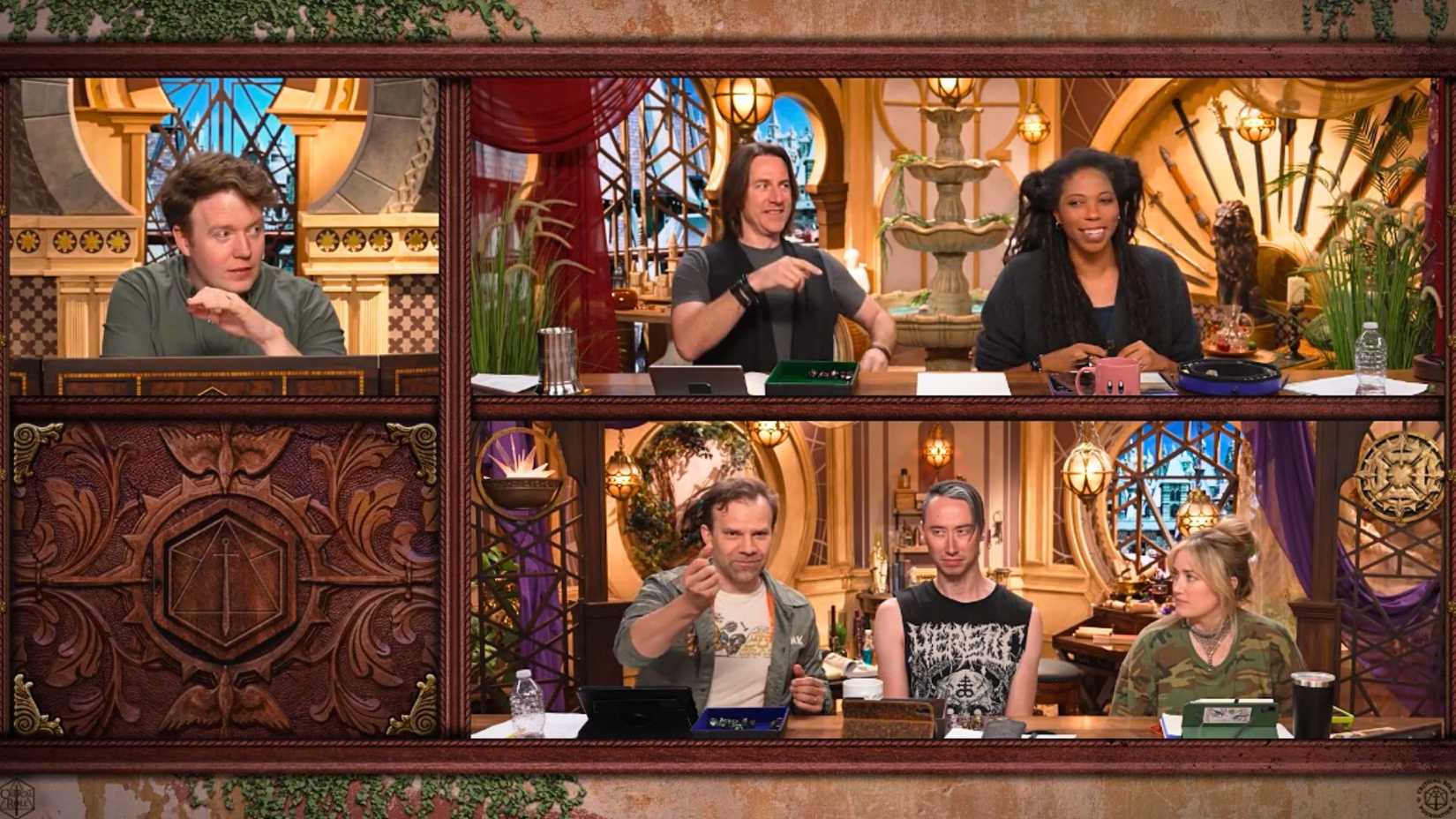
For the "Critters" watching at home, the transition offers a sense of stability while maintaining the unpredictability that makes the show a cultural phenomenon. The introduction of Matt Mercer as the DM for the upcoming Age of Umbra: Sallowlands spin-off also suggests that the Critical Role team is looking to expand their narrative reach beyond the primary campaign, ensuring that even as one story enters a more focused second act, the world of Exandria—and its new variants—continues to expand.
The journey to Dol-Rungja, the espionage in the city, and the search for the Tachonis secrets are all threads that will inevitably weave back together. While the format has shifted, the core of the show remains unchanged: a group of talented storytellers using the mechanics of Dungeons & Dragons to explore themes of power, loss, and the enduring strength of the chosen family.
Critical Role Campaign 4 streams live every Thursday at 10 p.m. PDT on Twitch, YouTube, and Beacon.tv. VODs are available the following Monday at 3 p.m. EDT/12 p.m. PDT.

