

The global creator economy is experiencing a seismic shift, yet for many talented individuals across the African continent, the path to international recognition remains obstructed by structural barriers. In a bold move to dismantle these hurdles, tech giant Google has partnered with the media powerhouse Akuna Group, led by actor and producer Idris Elba, to launch a $1 million initiative aimed at democratizing access to generative artificial intelligence (AI) tools. This collaboration represents more than just a corporate investment; it is a strategic attempt to redefine the creative landscape for over 100,000 African creators.
The Core Initiative: Empowering a New Generation
Announced at the Africa Cloud Summit in Johannesburg, the program is designed to provide creators in Nigeria, South Africa, Ghana, Kenya, and Sierra Leone with direct access to Google’s suite of generative AI tools, most notably the Gemini model. By integrating these high-level technical resources, Google and the Akuna Group aim to lower the barrier to entry for independent storytellers, filmmakers, and digital entrepreneurs.
The program seeks to address the "access gap"—a persistent disparity in infrastructure and resources that has historically limited the reach of African digital talent. Beyond mere software access, the initiative encompasses educational resources and logistical support, aiming to streamline the transition from raw vision to polished, globally marketable content.
A Legacy of Investment: The $1 Billion Milestone
The announcement in Johannesburg did not occur in a vacuum. During the summit, Google executives confirmed that the company has officially fulfilled its ambitious commitment to invest $1 billion in African economies. This investment target, which has been the cornerstone of Google’s regional strategy for several years, has facilitated the expansion of undersea internet cables, the establishment of developer hubs, and the acceleration of digital literacy programs across the continent.
This $1 million AI-focused project is a tactical evolution of that broader mandate. While the initial billion-dollar pledge focused heavily on foundational infrastructure—such as connectivity and basic digital skills—the current initiative marks a pivot toward sophisticated, high-value creative output.
Chronology: A Decade of Engagement
The relationship between YouTube and the African creator ecosystem has been a long, iterative journey.
- 2016: YouTube marks a turning point by launching its inaugural Sub-Saharan Africa Creator Awards, signaling a formal acknowledgment of the burgeoning talent pool in regions like Lagos, Nairobi, and Johannesburg.
- 2016–2022: The platform sees a steady rise in creators diversifying into complex niches. From the culinary arts and music production to high-quality filmmaking, African channels begin to establish a distinct cultural footprint.
- 2023–2024: Research begins to highlight a glaring contradiction: while African creators are producing high-quality content, they remain statistically underrepresented in the global top-tier revenue brackets.
- 2025: High-profile successes like Tanzania’s Jaymondy emerge as proof of concept, showing that African content can achieve massive global scale.
- 2026 (Present): Google and the Akuna Group launch their joint AI initiative, marking the most significant integration of generative technology into the continent’s creative sector to date.
Supporting Data: The Reality of the Access Gap
The necessity of this initiative is grounded in stark economic data. Research conducted by Communiqué and TM Global reveals a sobering reality for the continent’s creative class: a mere 4.2% of surveyed African creators have secured any form of institutional investment. This scarcity of capital creates a "talent-opportunity trap," where visionary creators are unable to compete with global counterparts who have access to high-end production suites, marketing teams, and monetization support.
The discrepancy in global visibility is further evidenced by YouTube’s own metrics. While some African creators have achieved massive success, the channels that frequently appear in the Global Top 50 are often aggregators or repurposed content from other territories. This indicates that while the audience demand for African-centric content is high, the infrastructure for original, independent African production is still catching up to the global standard.
Official Responses: Talent vs. Opportunity
At the heart of this partnership is the philosophical conviction voiced by Idris Elba. "The barrier is not a lack of vision—it’s a lack of access," Elba stated during the summit. "Talent is everywhere, opportunity is not."
This sentiment underscores the mission of the Akuna Group. Elba’s involvement is not merely symbolic; the company is actively integrating its proprietary digital wallet into the program. This serves a dual purpose: it empowers creators with the technical tools to produce content via Gemini and Veo—Google’s advanced video generation model—while simultaneously solving the complex issue of cross-border payment processing. By removing the financial friction that has plagued African creators for years, the initiative aims to build a sustainable ecosystem rather than a fleeting project.
Generative AI: A Double-Edged Sword?
While the promise of AI is immense, the initiative enters the market at a time of significant industry anxiety. YouTube has recently taken an aggressive stance against "AI slop"—low-quality, automated, or deceptive content—leading to widespread bans and demonetization of channels relying heavily on generative tools.
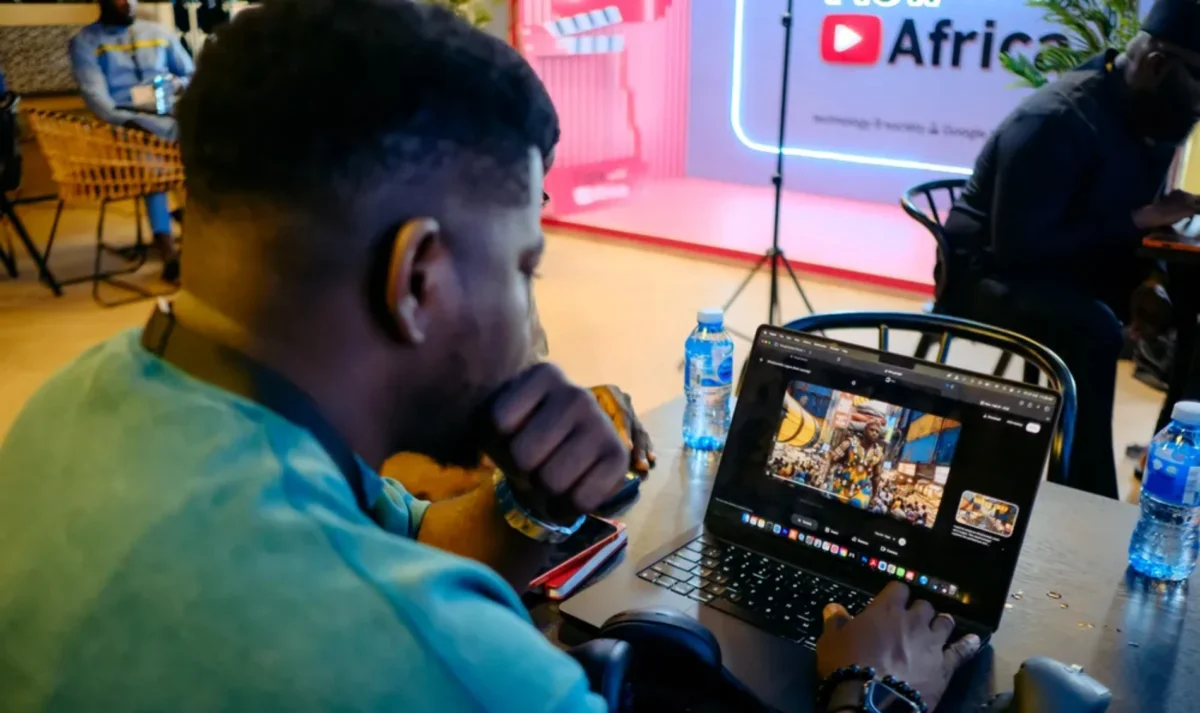
This creates a tension for the African creators participating in the new Google program. Can they build a long-term career on a foundation of generative AI when the platform rules are still in flux? Google’s answer, as demonstrated by the "Flow with Africa" event in Nigeria, is that AI should be used as a "creative co-pilot" rather than a replacement for human storytelling. By providing access to high-end tools like the Veo-powered Flow product, Google is attempting to steer creators toward sophisticated, intentional content creation that aligns with platform guidelines.
Implications: The Future of African Storytelling
The implications of this $1 million program are twofold:
1. The Professionalization of the Independent Creator
By providing the tools of a professional production studio to the individual creator, the initiative effectively flattens the playing field. If a creator in a small town in Kenya can utilize the same generative video models as a production house in Los Angeles, the value of the "original idea" increases exponentially. This could lead to a surge in high-quality, authentic African narratives hitting the global market.
2. Economic Integration
The inclusion of the Akuna digital wallet is perhaps the most critical, yet overlooked, aspect of this initiative. The creator economy is only as strong as its payment infrastructure. By facilitating seamless cross-border transactions, the program is effectively integrating African creators into the global digital marketplace, allowing them to monetize their work across borders with a level of ease that was previously non-existent.
Conclusion: A Long-Term Commitment
There is no single "silver bullet" for the challenges facing the African creator economy. Historical underinvestment, infrastructural gaps, and the volatile nature of platform algorithms present a formidable landscape. However, the combination of Google’s technical prowess and the Akuna Group’s cultural capital suggests a more holistic approach than previous attempts at digital intervention.
As the program rolls out across Nigeria, South Africa, Ghana, Kenya, and Sierra Leone, the industry will be watching closely. If this investment can successfully transition from a pilot program to a standard industry practice, it may serve as the blueprint for how tech giants engage with emerging markets—not just as consumers of technology, but as the architects of the next wave of global culture. The success of these 100,000 creators will ultimately be the measure by which this initiative is judged, potentially ushering in a new era where "African-made" becomes a dominant force in the global digital lexicon.

