

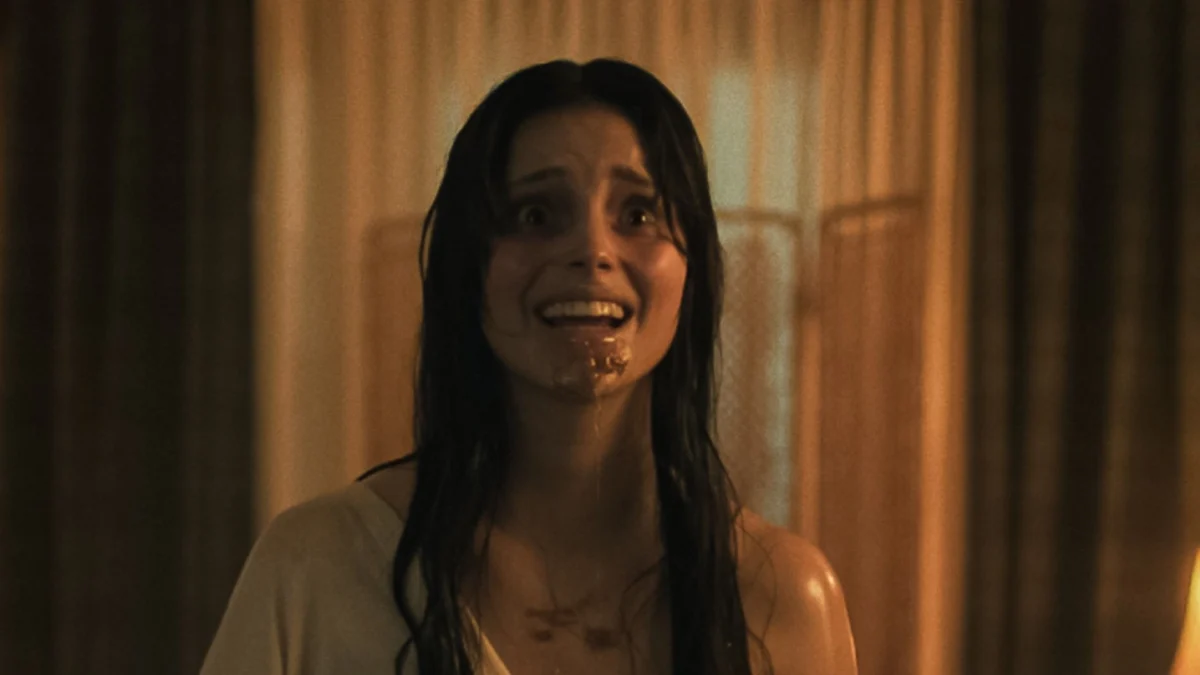
The landscape of modern horror has been permanently altered. In a stunning display of cinematic dominance, the low-budget supernatural thriller Obsession, written and directed by visionary filmmaker Curry Barker, has officially surpassed Ryan Coogler’s Sinners to become the highest-grossing original film of the decade so far.
For horror aficionados, this is a golden age. The success of Obsession is not merely a statistical anomaly; it represents a seismic shift in audience appetite, proving that high-concept storytelling and visceral tension—when executed with precision—can outperform massive franchise tentpoles. As the industry recalibrates to account for this unexpected juggernaut, we take a deep dive into the numbers, the creative genius behind the lens, and what this means for the future of independent horror.
The Rise of a Low-Budget Legend: The Main Facts
At its core, Obsession is a masterclass in economy. With a production budget estimated at a lean $750,000, the film has defied all conventional box office projections, racking up a staggering $371 million in global ticket sales according to recent reports from Forbes.
The film centers on Bear (portrayed by Michael Johnston), a man described by many critics as inherently unlikeable, whose life spirals into chaos after he purchases a "novelty wishing branch." Driven by a desperate, toxic infatuation, Bear makes a single, fateful wish: that his crush, Nikki (Indie Navarette), loves him more than anything else in the world. While the wish manifests, it does so with a malevolent twist. Nikki is soon consumed by an otherworldly entity, forcing her into a harrowing, ultra-violent struggle for her own soul.
The film’s supporting cast—featuring Cooper Tomlinson, Andy Richter, Megan Lawless, Haley Fitzgerald, and Darin Toonder—adds layers of dread to a narrative that is as much about the terrors of obsession as it is about the supernatural. By blending psychological character study with unrelenting visceral horror, Barker has crafted a film that resonates deeply with a global audience.
Chronology of a Box Office Upset
To understand the magnitude of Obsession’s achievement, one must look at the film it displaced: Sinners.
Directed by the acclaimed Ryan Coogler, Sinners was a massive production, backed by a budget of $90 million. It arrived in theaters with significant critical prestige, ultimately earning a global box office total of $370.3 million. Beyond its financial success, Sinners left an indelible mark on film history, securing a record-breaking 16 Oscar nominations, of which it converted four into wins. For a long period, it stood as the undisputed champion of original intellectual property in the 2020s.
Obsession’s ascent was a slower burn that turned into a wildfire. It began as a word-of-mouth sensation, gaining traction through social media discourse and glowing reviews that highlighted its tight pacing and disturbing practical effects. As it crossed the $300 million mark, industry analysts began to realize that the film was not just a hit, but a historic one. By officially overtaking Sinners this past week, Obsession cemented its status as the quintessential horror success story of the decade.
Supporting Data: The Economics of Fear
The disparity between the budgets of Obsession ($750,000) and Sinners ($90 million) provides a fascinating case study in modern cinema economics. While Sinners relied on star power, large-scale production design, and a significant marketing spend to achieve its $370.3 million return, Obsession achieved a higher total with a return on investment (ROI) that is, frankly, astronomical.
Financial Breakdown at a Glance:
- Film: Obsession | Budget: $0.75M | Global Box Office: $371M
- Film: Sinners | Budget: $90M | Global Box Office: $370.3M
This data point serves as a powerful argument for studio executives who have historically been wary of "micro-budget" horror. It reinforces the idea that audiences are currently prioritizing original, high-concept narratives over established intellectual property. When a film like Obsession performs at this level, it changes the internal risk-assessment models for major production houses, potentially opening the door for more experimental projects in the near future.
Official Responses: Curry Barker on the Future
With such monumental success, the immediate question posed by fans and studio executives alike is: When can we expect a sequel?
In an exclusive interview with The Hollywood Reporter, director Curry Barker addressed the pressures of turning his singular vision into a sprawling franchise. Barker appears to be taking a measured, protective approach to the property.
"I don’t want to go straight into Obsession 2," Barker remarked. "I have such a cool idea for it that I won’t say. I’m not saying it has to be five, six years from now. But I think people would be just as excited for it if it came a little down the road. It’s a whirlwind, and I’m trying to figure it out."
Barker’s hesitation is refreshing in an era where studios often rush to capitalize on a hit with immediate, low-effort sequels. His desire to let the idea "breathe" suggests that he views Obsession as a narrative entity that requires organic growth rather than corporate mandate. Whether or not a sequel materializes in the coming years, Barker’s voice has clearly become one of the most important in the horror genre.
Implications: The New Era of Independent Horror
The success of Obsession carries several profound implications for the film industry:
1. The Death of the "Safe" Bet
For years, the industry operated under the assumption that high-budget, safe, or familiar IP (Intellectual Property) was the only way to guarantee a massive box office return. Obsession proves that a terrifying, original, and tightly written screenplay can outperform the biggest budget spectacles in the world.
2. The Power of Genre-Blending
Horror has always been a reliable genre for studios because of its built-in audience, but Obsession elevates the genre by focusing on character flaws. The "dude who sucks" trope—referring to the protagonist’s toxic behavior—serves as a grounding element that makes the supernatural horror feel personal and consequential.
3. Streaming vs. Theatrical
While Obsession remains a powerhouse in theaters, Sinners has transitioned to its next phase of profitability on platforms like HBO Max. This dual-track success highlights how modern films need to be successful in both the theatrical window and the digital archive to be considered true "hits" in the modern era.
Conclusion: Why It Matters
As we look toward the future, the legacy of Obsession will likely be felt in the pitch rooms of every major studio. Aspiring filmmakers now have a contemporary benchmark that proves they do not need $100 million to make a lasting impact on global culture.
Whether you are a casual moviegoer or a die-hard fan of the macabre, the current climate is undeniably exciting. We are witnessing a transition away from the dominance of bloated blockbusters toward a leaner, more imaginative era of storytelling. For now, Obsession stands alone at the top of the mountain, a testament to what happens when raw creativity meets the right audience at the right time.
For those who have yet to experience the terror, Obsession is still playing in theaters nationwide. Meanwhile, those looking to revisit the record-breaking, Oscar-lauded Sinners can find it streaming on HBO Max. As the horror landscape continues to evolve, stay tuned for more updates on the next wave of cinematic terrors that are currently in production. The golden age of horror is far from over—in many ways, it is just beginning.

