

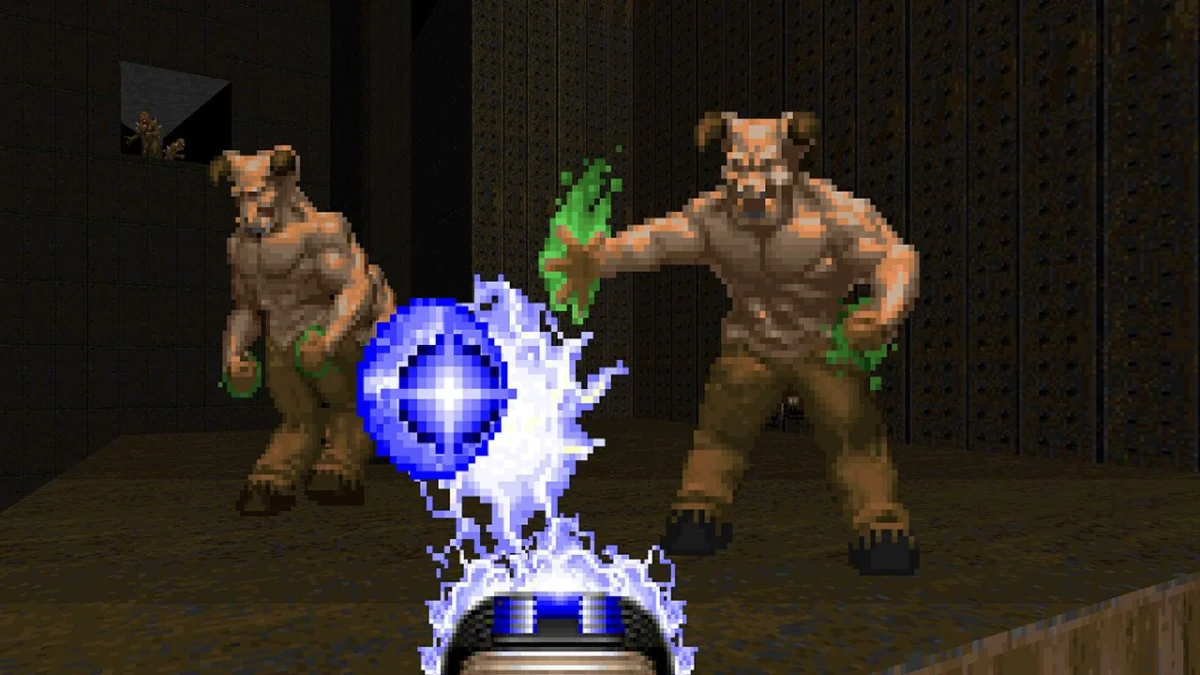
The debate over video game piracy is as old as the medium itself, but few games have been as central to that conversation as id Software’s 1993 masterpiece, Doom. Recently, a public disagreement between two legends of the industry—John Romero and Sandy Petersen—has reignited the discussion, challenging our long-held assumptions about how piracy impacted the golden age of PC gaming and whether those "lost sales" truly sounded the death knell for iconic studios of the 1990s.
The Core Contention: Did Piracy Kill the Icons?
The spark for this latest debate was a series of posts on social media by Sandy Petersen, the legendary designer who played a pivotal role in crafting the levels and mechanics of the original Doom. Petersen’s assertion was stark: he claimed that between 70% and 90% of Doom’s player base obtained the game through unauthorized means.
According to Petersen, this massive influx of pirated copies was a catastrophic blow to the industry. He argued that the revenue lost to piracy prevented studios from investing in better infrastructure and ambitious projects. In his view, the financial drain was so severe that it "gutted" id Software and served as the primary cause for the collapse of other legendary entities, such as the original Atari, the Amiga platform, and 3D Realms, the studio behind Duke Nukem.
"Damn pirates are the guys who killed game companies," Petersen wrote, painting a picture of an industry strangled by an illicit distribution culture that denied creators the resources necessary to innovate and survive.
Setting the Record Straight: The Romero Perspective
John Romero, co-founder of id Software and the primary architect of the Doom experience, responded with his signature "polite but brutal" precision. Romero, who has spent years correcting misconceptions about the studio’s history, took issue not with the spirit of supporting developers, but with the fundamental framing of the piracy statistics.
Romero’s rebuttal hinges on a crucial piece of industry context that is often lost on modern gamers: the shareware model.
In the 1990s, id Software utilized a distribution strategy that allowed users to download and play the first episode of Doom for free. This "shareware" was designed to be spread via BBS (Bulletin Board Systems), floppy disks, and word-of-mouth. The strategy was deliberate; it was a form of viral marketing that allowed the game to reach tens of millions of users without the massive overhead of traditional retail advertising.
"By the mid-90s, DOOM had something like 20 million shareware installs and more than 2 million paid copies sold," Romero clarified. "Those 20 million people were not ‘pirates’ by default. A huge number of them were playing the free episode exactly as intended."
Chronology of a Digital Revolution
To understand the scope of the disagreement, one must look at the transition of the gaming market in the 1990s.
- 1993 (The Launch): Doom is released as a shareware title. It becomes a cultural phenomenon, effectively defining the First-Person Shooter (FPS) genre.
- 1994–1995 (Mass Adoption): The game’s reach expands exponentially. As internet connectivity begins to grow, the shareware version is uploaded to countless servers.
- 1996 (The Quake Era): id Software moves toward the next generation of 3D gaming with Quake. The financial realities of the mid-90s shift, and tensions regarding profitability and development costs begin to rise.
- 2024–2026 (The Modern Re-evaluation): Veterans of the era take to social media to reflect on the legacy of their work, revealing deep-seated divisions on how the success of the 90s should be interpreted.
Romero points out that conflating the millions of people who enjoyed the "free" shareware episode with "pirates" is a logical fallacy that distorts history. The shareware model was essentially a "try-before-you-buy" system that served as the industry’s primary growth engine.
Supporting Data: Understanding the "Lost Sale" Fallacy
The central economic question in this debate is the "one-to-one" conversion myth. For decades, software lobbyists and some executives argued that every pirated copy represented a lost sale—a dollar that should have gone to the developer.
Modern analysts and industry veterans like Romero and Valve’s Gabe Newell have long pushed back against this. The argument is that piracy is often a symptom of accessibility rather than a direct replacement for legitimate purchases.
- The "Try-Before-You-Buy" Factor: Many of the 20 million shareware users were individuals who, had they not been able to play for free, would have never encountered the game at all. Their "unpaid" access did not steal a sale; it created a fan.
- Conversion Rates: A small percentage of those 20 million users converted into the 2 million paid customers. This was the specific mathematical goal of the shareware model.
- The Infrastructure Argument: While piracy was certainly prevalent, it was not the sole factor in the bankruptcy of studios like 3D Realms. Industry mismanagement, the transition to expensive 3D development, and the lack of digital storefronts were far more significant contributors to the "gutting" of mid-90s studios than the presence of bootleg floppies.
Official Responses and Industry Implications
The debate has sparked a wider conversation within the gaming community regarding the responsibilities of both developers and consumers.
"I also don’t think piracy is what ‘gutted’ id," Romero noted. "Piracy may have cost money, but it wasn’t the reason Quake was hard or why people eventually went different ways. Sometimes the same free distribution that looked like lost sales was also the thing that made the game impossible to ignore."
This sentiment echoes the long-held philosophy of Valve’s Gabe Newell, who famously stated in 2009: "People are happy to pay money for a great product delivered on their terms." Newell argued that if a company provides high-quality service, regular updates, and ease of access, the perceived value of the product outweighs the "free" alternative.
The Legacy of the Shareware Model
Looking back from the vantage point of the 2020s, the Doom story is a testament to the power of reach. The fact that the Doom franchise is still thriving today, with modern entries sold on platforms like Steam and GOG despite decades of being available via unauthorized channels, proves that quality and community engagement are the ultimate defenses against piracy.
The history of the 90s is undoubtedly "messier" than a simple narrative of "pirates versus developers." It was a chaotic, experimental era where the rules of digital property were being written in real-time. While developers undeniably deserve to be paid for their labor, it is essential to distinguish between illegal infringement and the intentional, viral distribution that built the foundation of the modern gaming industry.
As we continue to analyze the history of game development, it is clear that John Romero’s perspective offers a more nuanced view: the "pirates" of the 90s were, in many cases, the very audience that allowed the FPS genre to grow from a niche computer experiment into the most dominant force in global entertainment. To blame them for the collapse of the industry is to ignore the very mechanisms—like shareware—that made the success of Doom possible in the first place.

