

We have officially crossed the threshold into the second half of 2026, and the gaming landscape finds itself in a state of peculiar, paradoxical suspension. It is a time defined by the "limbo effect": a sense that while the year has felt relatively quiet in terms of cultural monoliths, the actual volume of high-quality software hitting the market has been overwhelming. From the breakout indie charm of Mixtape and the nostalgic, polished appeal of Lego Batman to the gargantuan, if initially jagged, ambition of Crimson Desert, the year has been anything but predictable.
However, as we pause to survey the wreckage and the triumphs of the last six months, one burning question remains: What, exactly, constitutes the Game of the Year (GOTY) in a cycle this fragmented? To answer this, we polled our readership, and the results suggest that the community is as divided as the industry itself.
The State of the Industry: A Mid-Year Reality Check
The first half of 2026 has been defined by a shift in player expectations. We have moved away from the "event-based" release schedule of previous years, where one or two titles dominated the discourse for months. Instead, 2026 has been a year of steady, consistent output across diverse genres.
While titles like Mixtape have captured hearts with their distinct creative vision and Lego Batman: Legacy of the Dark Knight has reminded us why established franchises can still feel fresh with the right execution, these games are fighting for oxygen in an increasingly crowded ecosystem. The sheer volume of releases has left many players feeling "spoiled for choice" yet unable to coalesce around a single definitive title.
The Polling Data: A Fractured Consensus
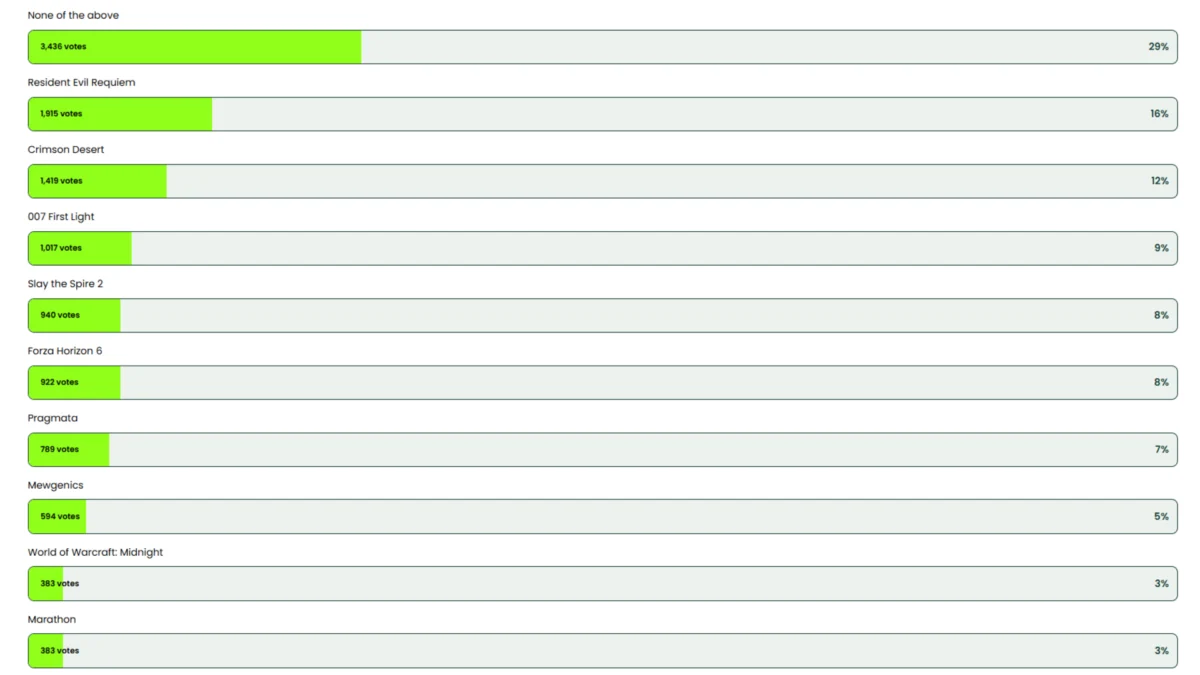
When we asked our readers to identify their current favorite, the results were telling. A significant 29% of respondents felt that none of the nine major titles presented in our survey were worthy of the "GOTY" title. This dissatisfaction—or perhaps, anticipation—suggests that for a large portion of the player base, the true champion of 2026 has either yet to arrive or has been overlooked in the current discourse.
For those who did cast a ballot, the leaders were clear, though not without caveats.
The Frontrunners: Resident Evil and Crimson Desert
Taking the top spot in our poll is Resident Evil Requiem, which secured 16% of the vote. The title has resonated deeply with fans, largely due to the compelling dynamic between Grace Ashcroft and the return of a beloved series veteran, "Uncle" Kennedy. Its ability to balance the franchise’s traditional survival-horror roots with a refreshed narrative direction has clearly struck a chord.
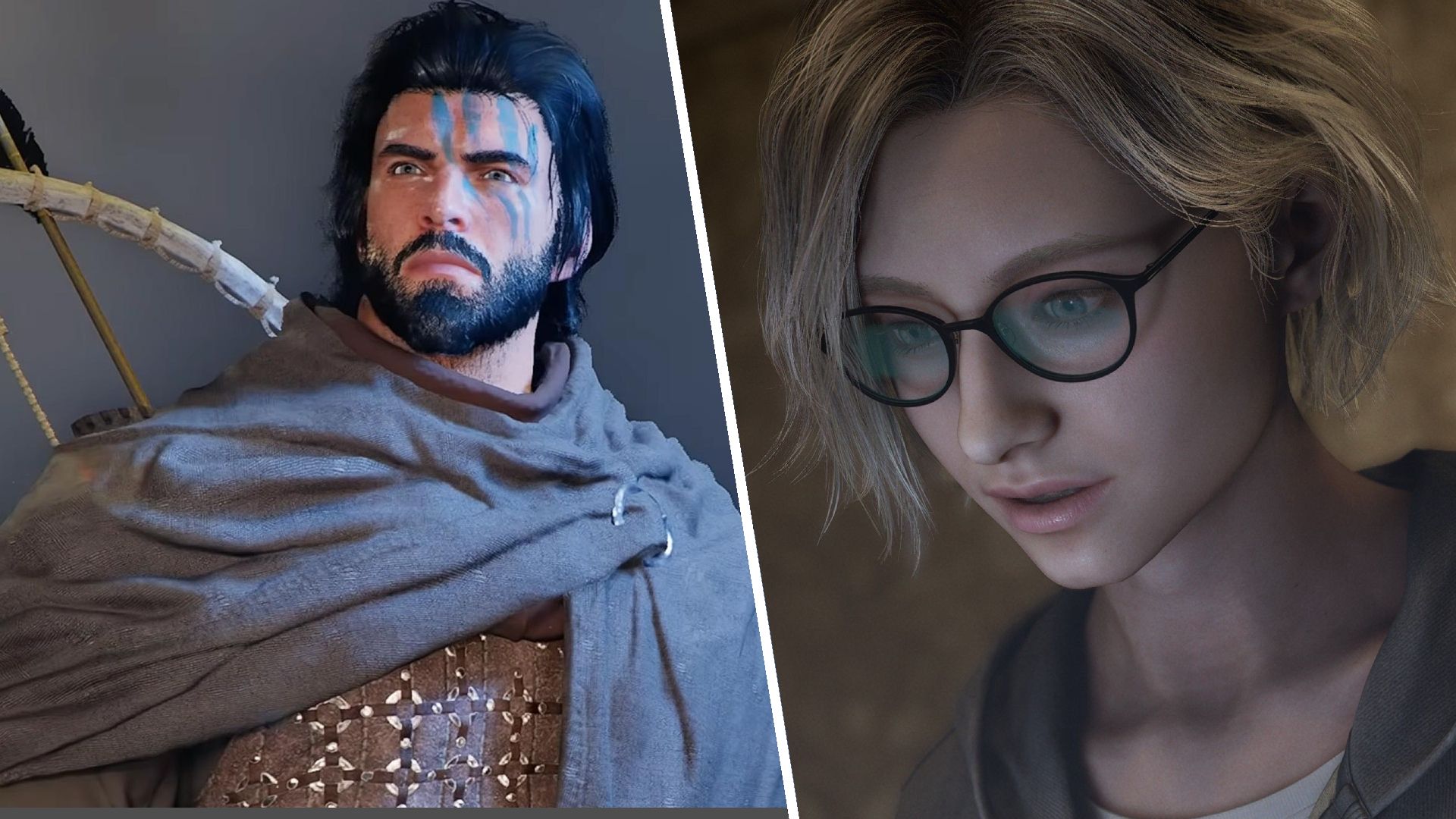
Trailing closely behind is Pearl Abyss’s Crimson Desert, claiming 12% of the vote. The title’s journey to this position is particularly fascinating. Upon its initial launch, Crimson Desert was a point of intense contention; it was a game of gargantuan scale and breathtaking ambition that struggled with a somewhat uneven, occasionally off-kilter execution.
The Evolution of Crimson Desert
The trajectory of Crimson Desert serves as a case study in modern post-launch support. Pearl Abyss has engaged in an aggressive, consistent update cadence, effectively transforming the title from its initial state into a much more refined, robust experience. While the mainstream critics were initially hesitant, the "hardcore" audience—those who have invested hundreds of hours into its world—have become its most vocal proponents. This evolution highlights a growing trend: the "live-service" philosophy applied to single-player experiences, where a game’s reputation is not fixed at launch but forged in the fires of iterative updates.
The Mid-Tier Contenders: A Crowded Field
Following the leaders, the competition becomes remarkably tight, illustrating just how diverse the 2026 gaming palette has become:
- 007: First Light (9%): Despite being one of the fresher titles on the list, the James Bond franchise continues to command loyalty, securing a solid third place.
- Slay the Spire 2 & Forza Horizon 6 (8% each): These titles demonstrate the enduring power of the sequel. Both games have successfully refined their respective formulas without losing the essence that made their predecessors hits.
- Pragmata (7%): A more enigmatic contender that has clearly found a dedicated, if smaller, audience that values its unique, high-concept approach.
- Mewgenics (5%): A testament to the power of independent developers in the current market, proving that even niche, highly specific designs can carve out a seat at the table.
The Outliers: World of Warcraft and Marathon
At the bottom of the list, we find a statistical dead heat, with 383 votes each for World of Warcraft: Midnight and Bungie’s Marathon.
The presence of World of Warcraft: Midnight is expected; as an expansion to a long-running MMO, it caters to a specific, deeply entrenched audience. However, the performance of Marathon remains one of the most surprising data points of our survey. Given the massive industry anticipation surrounding Bungie’s latest, one might have expected it to surge higher.
The "Extraction Shooter" Fatigue
The underwhelming placement of Marathon in our poll may point to a broader market trend: "Extraction shooter fatigue." The market has been saturated with similar mechanics over the past few years, and players may be becoming more discerning—or perhaps more exhausted—by the genre’s demands.
Interestingly, this sentiment contradicts the critical reception. Our own resident FPS expert, Morgan Park, awarded the game a 90% score, praising its mechanics and world-building. This creates a fascinating tension: why is there such a disconnect between high-level critical appraisal and the broader player sentiment? It suggests that in 2026, a game’s "fun factor" is increasingly being weighed against the emotional labor of its genre’s tropes.
Implications for the Second Half of 2026
What does this mean for the remainder of the year? We are currently in a transition period. As the "Game of the Year" race remains wide open, developers are clearly feeling the pressure to not just launch games, but to sustain them.
Why the Jury is Still Out
The fact that nearly one-third of our readers rejected our list of candidates speaks volumes. It indicates that the industry is currently in a state of decentralization. We are no longer waiting for one "Big Game" to save the year; instead, we are seeing the rise of a "Long Tail" of high-quality, mid-budget, and indie-adjacent titles that are slowly building their own legacies.
As we look toward the holiday season, the pressure will be on upcoming releases to provide a "definitive" experience. Whether they succeed or fail will depend on their ability to cut through the noise of a market that has already been well-fed by a steady stream of solid, if not always revolutionary, content.
Conclusion: A Call to the Community
Ultimately, the 2026 GOTY race is not a sprint; it is a marathon of sentiment. The titles that have emerged so far—Resident Evil, Crimson Desert, and 007—are merely the first chapter in a much larger story.
We invite you, the reader, to continue the conversation. Is the industry finally moving away from the "one-size-fits-all" blockbuster, or are we simply in a lull before a major industry correction? Does the success of Crimson Desert’s post-launch support validate a "ship now, fix later" strategy, or does it highlight a dangerous trend of releasing unfinished products?
The beauty of 2026 lies in the fact that there is no consensus. Whether you are still grinding through the raids of World of Warcraft, perfecting your lines in Forza Horizon 6, or waiting for that one elusive game that will define your year, your perspective is the one that matters. The finish line is six months away—and in this industry, a lot can change in six months.

