

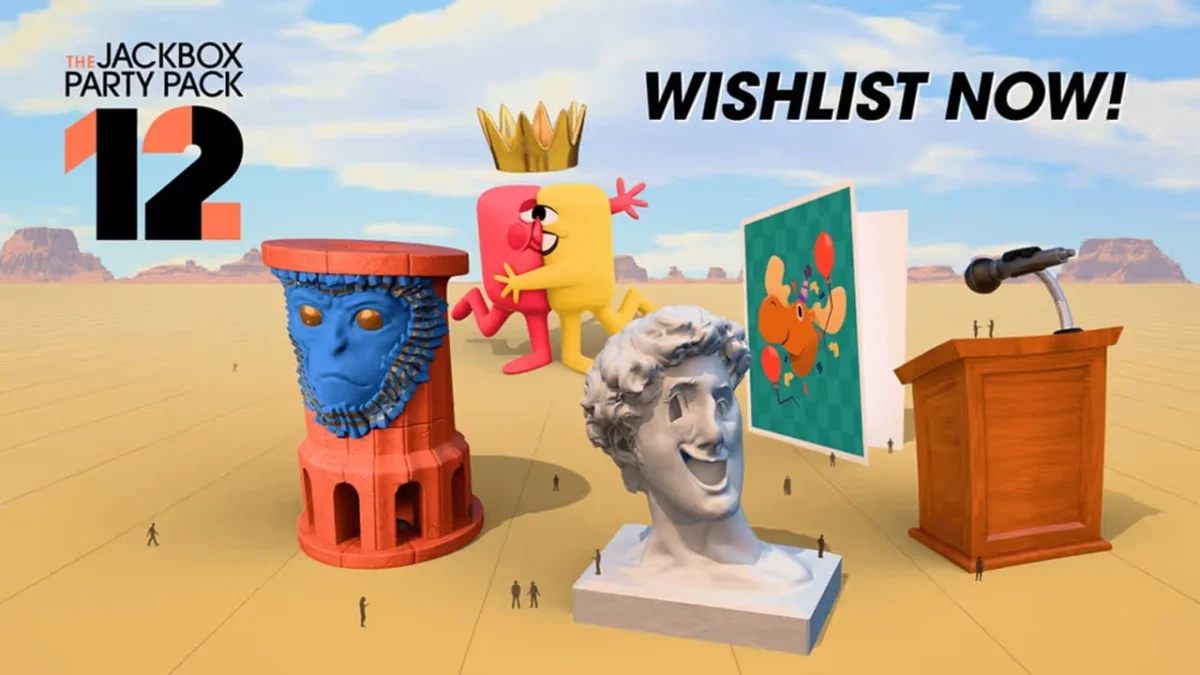
The digital landscape of social gaming has long been dominated by a single, persistent titan: Jackbox Games. Building upon the legacy of the 1990s cult-classic trivia phenomenon You Don’t Know Jack, the studio has successfully transitioned from a niche developer of computer-based quiz games to the undisputed king of remote and local multiplayer entertainment. Today, the studio officially pulled back the curtain on its latest annual offering, The Jackbox Party Pack 12, confirming the five distinct titles that will define this year’s social gatherings.
As the industry prepares for the upcoming release, fans are already analyzing the diverse mechanics of this new collection. From creative writing and rapid-fire debates to chaotic photo manipulation, The Jackbox Party Pack 12 promises to continue the series’ tradition of turning living rooms—and Zoom calls—into arenas of hilarity and competitive banter.
The Legacy of the Party Pack: A Chronology of Chaos
To understand the significance of The Jackbox Party Pack 12, one must look at the evolution of the series. Since the launch of the first Party Pack in 2014, the Chicago-based studio has pioneered the "phone-as-controller" mechanic. This innovation removed the most significant barrier to entry for couch co-op gaming: the need for expensive additional hardware. By allowing any user with a web-enabled smartphone or tablet to join a session, Jackbox transformed how people interact with games.
Over the last decade, the series has moved through several eras. Early packs were defined by experimental trivia and drawing games like Drawful and Quiplash. As the years progressed, the studio refined its UI and experimented with deeper social deduction, complex team-based strategy, and even collaborative storytelling. The Jackbox Party Pack 12 represents the culmination of this decade-long iterative process, blending the studio’s proven design philosophy with fresh, modern twists on social interaction.
Unveiling the Five Pillars: The Games of Party Pack 12
The core of every Jackbox release is the variety of its contents. This year’s collection features a spread designed to accommodate different group dynamics, ranging from the introspective to the loudly confrontational.
1. We Forgot a Card (3-8 Players)
A masterclass in improvisational humor, We Forgot a Card taps into the "last-minute panic" experience. Players are tasked with attending an important event, only to realize the only available greeting cards are wildly inappropriate or bizarre. The objective is to craft the funniest, most heartfelt, or most catastrophic cards possible. It is a design-centric experience that rewards players who can think on their feet and lean into the absurdity of the prompt.
2. MegaPals (3-8 Players)
MegaPals shifts the focus toward the "psychology of friendship." In this game, players must rapidly generate words and attempt to predict the thought patterns of their peers. It is designed to test how well you actually know the people in the room, often leading to explosive moments of realization—or total confusion—when a prediction misses the mark. It is a high-speed exercise in empathy and pattern recognition.
3. Debate and Switch (2-8 Players)
Taking the intensity of a town hall meeting and injecting it with absurdity, Debate and Switch asks players to champion ridiculous positions. Whether you are defending a nonsensical policy or arguing for a bizarre cultural stance, the goal is to sway the audience to your side. It thrives on the inherent tension of competitive debate, turning low-stakes topics into high-octane social arguments that require both persuasion and wit.
4. Idol Factions (2-8 Players)
For those who prefer team-based mechanics, Idol Factions provides a fast-paced sorting challenge. Two teams go head-to-head, racing to categorize a constant stream of answers as they appear on screen. Success hinges on split-second decision-making, clear communication, and the ability to maintain composure under pressure. As the pace quickens, the game tests the limits of team synergy.
5. Hyperface (3-8 Players)
Perhaps the most visually chaotic entry in the pack, Hyperface is a dedicated photo-editing game. Participants use either their own selfies or curated stock photos, applying digital tools to stretch, squash, smudge, and manipulate the imagery. Responding to prompts like "your face when you encounter a grizzly bear," the game turns the screen into a canvas for digital grotesque and hilarity. It is a testament to the series’ commitment to creative, player-driven content.
Supporting Data and Technical Accessibility
The technical accessibility of the Jackbox series remains its greatest strength. By leveraging the browser-based "Jackbox.tv" platform, the developer ensures that the software is platform-agnostic for the participants.
The Party Pack 12 is set to launch across a massive array of hardware, including PC (Steam and Epic Games Store), PlayStation 5, Xbox Series X|S, Nintendo Switch, and even the upcoming Nintendo Switch 2. Furthermore, the studio is embracing the living room media landscape by bringing the game to Apple TV, iPad, and the Mac App Store.
While the absence of an Android-native version at launch has caught some users’ attention, it is worth noting that the mobile-as-controller functionality remains fully intact for Android users. As long as the host runs the game on a supported platform, anyone with an Android phone can participate without issue. Historically, Android versions of the packs have arrived shortly after the initial launch, and it is highly likely this pattern will continue for Party Pack 12.
Official Stances and Community Implications
In recent interviews, the developers at Jackbox Games have emphasized that The Jackbox Party Pack 12 was designed with a focus on "high-frequency interaction." The studio notes that modern gaming groups are more diverse than ever, and this pack is aimed at closing the gap between the "loud, talkative player" and the "creative, introverted player."
The implications for the social gaming market are significant. With the rise of streaming and content creation, Jackbox games have become a primary tool for community engagement. Streamers rely on these packs to facilitate audience participation, and Party Pack 12’s inclusion of features like Debate and Switch suggests a continued effort to make the games as entertaining to watch as they are to play.
The Future of the Party: Why It Matters
Why does the release of a 12th entry in a series matter in a market saturated with battle royales and high-fidelity RPGs? The answer lies in the human element. The Jackbox Party Pack 12 does not require high-level gaming skills, expensive peripherals, or dozens of hours of practice. It requires a group of people, a shared sense of humor, and a willingness to be silly.
The continued success of the franchise proves that there is a permanent, healthy appetite for games that prioritize social connection over mechanical complexity. By providing the tools for players to create their own entertainment—through jokes, photos, and debates—Jackbox Games has carved out a unique space where the software is merely the catalyst for the real fun: the conversation happening on the couch.
As we look toward the launch later this year, the industry will undoubtedly keep a close eye on how Idol Factions and Hyperface integrate into the existing ecosystem of party games. For the fans who have been there since You Don’t Know Jack graced the CD-ROMs of the 90s, Party Pack 12 represents not just another game, but a new chapter in the history of interactive comedy.
For those eager to dive in, the official trailer has been released, providing a visual taste of the chaos to come. Fans are encouraged to wishlist the game on their preferred platforms to ensure they are ready for the next evolution of the ultimate party experience. Whether you are a veteran of the series or a newcomer looking to spice up your next game night, The Jackbox Party Pack 12 is poised to be the definitive social gaming event of the year.

