

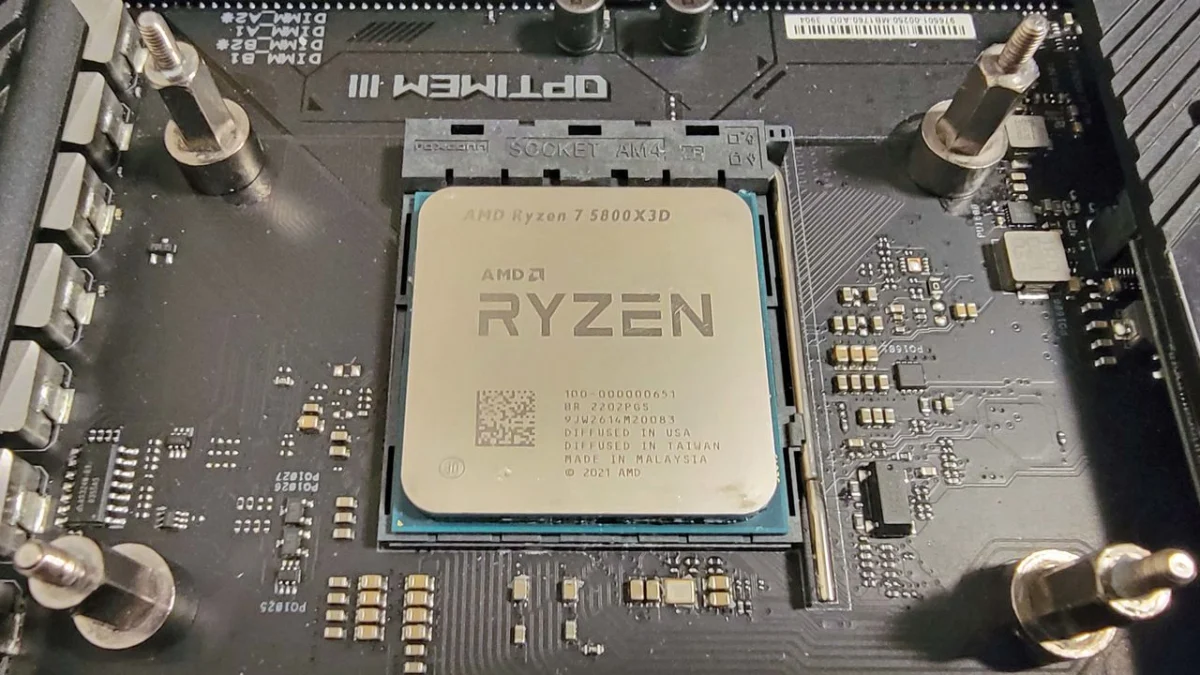
New York, NY – [Current Date] – The highly sought-after AMD Ryzen 7 5800X3D, in its 10th-anniversary re-release, has become available at its manufacturer’s suggested retail price (MSRP) via B&H Photo. This development brings welcome relief to a community of PC enthusiasts and gamers who have been eagerly anticipating its return, often encountering inflated prices from scalpers since its re-introduction. The CPU, lauded for its exceptional gaming performance on the venerable AM4 platform, is expected to see its limited stock quickly depleted given the intense demand.
The re-release of the Ryzen 7 5800X3D is a strategic move by AMD to support its extensive base of AM4 users, providing a potent upgrade path without requiring a costly transition to the newer AM5 platform and its associated DDR5 memory, which has experienced supply fluctuations and higher pricing. This chip, which leverages AMD’s innovative 3D V-Cache technology, has been re-evaluated and confirmed to maintain its status as the "gold standard" for gaming performance on DDR4-based systems.
Main Facts
The return of the AMD Ryzen 7 5800X3D is more than just a product re-launch; it’s a significant event for a large segment of the PC building community. This particular CPU holds a special place due to its unique blend of performance and platform compatibility.
The Return of a Legend
The Ryzen 7 5800X3D first burst onto the scene, immediately captivating gamers with its groundbreaking 3D V-Cache technology. This innovation, which vertically stacks an additional 64MB of L3 cache directly onto the CPU die, delivered unprecedented gaming performance for the AM4 platform. It allowed existing users to squeeze out significant performance gains from their current motherboards and DDR4 memory, extending the life and value of their systems. Its original run saw it quickly become a favorite, often outperforming even newer, more expensive CPUs in gaming benchmarks due to its massive cache advantage. The "10th-anniversary" designation for this re-release is more a nod to its continued relevance and popularity rather than indicating significant internal changes to the chip itself, though AMD did confirm minor adjustments for manufacturing.
Current Market Availability
Following an initial period marked by inconsistent stock and aggressive scalping, the Ryzen 7 5800X3D is now genuinely available at MSRP at B&H Photo. This accessibility is crucial, as reports from yesterday’s launch indicated prices soaring to twice the MSRP on secondary markets. The immediate availability at a fair price provides a much-needed opportunity for legitimate buyers. However, the nature of such high-demand components suggests that this window of availability may be brief. Consumers are also advised to check other major retailers like Newegg and Best Buy, though their stock levels have been more sporadic since the launch, reflecting the challenges of managing inventory for such a sought-after item. The fluctuating availability underscores the persistent interest in this chip and the efforts by retailers to meet demand while combating price gouging.
Pricing and Value Proposition
Priced at $350, the AMD Ryzen 7 5800X3D presents a compelling, albeit specific, value proposition. For individuals contemplating a brand-new PC build from scratch, this price point might lead them to consider newer AM5 platforms, which, while more expensive initially, offer a longer upgrade path and support for DDR5 memory. However, the 5800X3D’s true strength lies in its role as an upgrade for existing AM4 system owners. For these users, the $350 investment provides a substantial performance boost, especially in gaming, without the additional expense of a new motherboard and the often-pricier DDR5 RAM modules. This cost-effectiveness makes it an unparalleled choice for maximizing the performance of a DDR4-based setup, delivering a premium gaming experience without "breaking the bank" on an entire platform overhaul.
Chronology
Understanding the journey of the Ryzen 7 5800X3D provides crucial context for its current market impact. From its innovative inception to its strategic re-introduction, the chip’s history is intertwined with AMD’s broader CPU development and market dynamics.
The Genesis of 3D V-Cache
The story of the 5800X3D begins with AMD’s relentless pursuit of innovation in CPU design. In the early 2020s, as the industry grappled with the complexities of increasing core counts and clock speeds, AMD unveiled a novel approach: 3D V-Cache. This technology marked a significant architectural leap, allowing for the stacking of additional L3 cache memory directly on top of the CPU’s core complex die (CCD). The concept was to drastically increase the amount of accessible cache, thereby reducing memory latency for specific workloads, most notably gaming. The Ryzen 7 5800X3D was the pioneering consumer desktop processor to feature this technology, signaling a new frontier in CPU performance optimization.
The Original 5800X3D’s Impact
When the Ryzen 7 5800X3D first launched in April 2022, it immediately became a sensation. Despite having slightly lower clock speeds than its non-X3D counterpart, the massive 96MB of L3 cache (compared to the standard 32MB) propelled it to the top of gaming benchmarks. It offered gaming performance that rivaled, and often surpassed, Intel’s contemporary flagship CPUs, even those with higher core counts. This achievement was particularly remarkable as it did so on the then-aging AM4 platform, extending its relevance against the backdrop of an impending platform transition. It solidified AMD’s reputation for innovation and provided a powerful argument for the benefits of cache-centric design in gaming.
The Market Shift: DDR5 and AM5
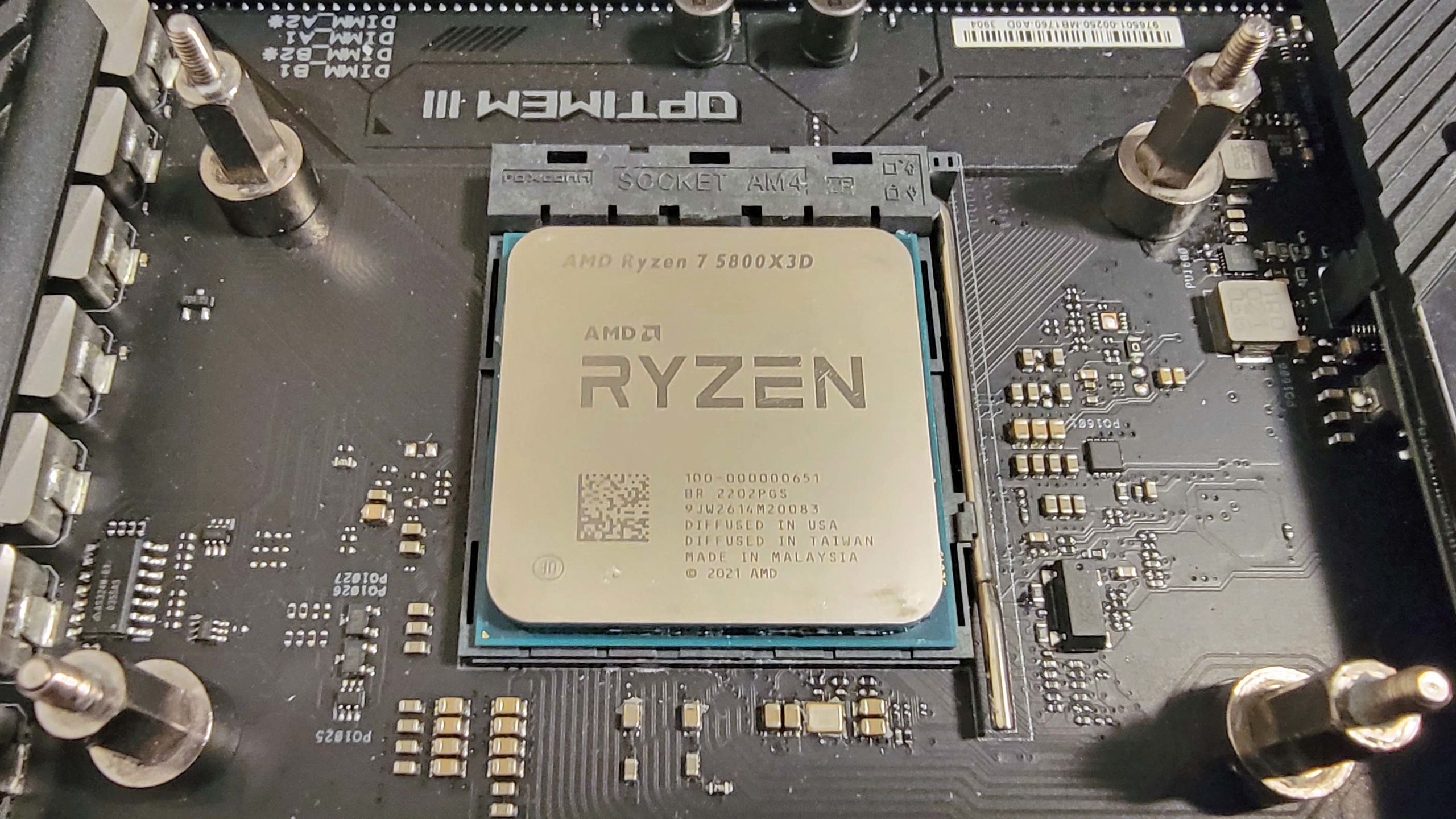
Following the immense success of AM4, AMD introduced its next-generation platform, AM5, in late 2022. This new socket brought with it support for DDR5 memory and PCIe 5.0, representing a significant technological leap. While AM5 offered future-proofing and cutting-edge performance, the transition came with its own set of challenges. DDR5 memory, initially expensive and in limited supply, made a complete platform upgrade (CPU, motherboard, and RAM) a substantial investment. This created a dilemma for many AM4 users who desired performance upgrades but were hesitant to commit to the high cost of a full AM5 system, especially those satisfied with their existing DDR4 memory and motherboards.
The Decision to Re-release
Against this backdrop of a nascent AM5 ecosystem and persistent DDR5 supply chain issues, AMD recognized an opportunity to serve its loyal AM4 user base. The decision to bring the Ryzen 7 5800X3D back into production was a calculated strategic move. It addressed the clear demand from enthusiasts who wanted to maximize their current systems without incurring the significant expense of a new platform. By re-releasing the 5800X3D, AMD not only provided a best-in-class upgrade option for AM4 but also demonstrated a commitment to supporting its older, highly successful platform, thus fostering goodwill within its community.
The "10th Anniversary" Edition
The current iteration, dubbed the "10th-anniversary" edition, is essentially a re-run of the original Ryzen 7 5800X3D. While the core specifications and performance remain functionally identical to its predecessor, AMD has indicated that minor adjustments were necessary for its return to production. These changes likely pertain to manufacturing processes, possibly optimizing for current fab capabilities or addressing material sourcing, rather than any architectural redesigns that would alter its fundamental performance profile. The moniker serves more as a marketing highlight, emphasizing the chip’s enduring appeal and celebrating its impact on the gaming CPU landscape.
Supporting Data
The efficacy of the Ryzen 7 5800X3D is not merely anecdotal; it is firmly rooted in advanced technology and validated by rigorous testing. Its continued relevance is a testament to AMD’s engineering prowess.
Technical Deep Dive into 3D V-Cache
At the heart of the 5800X3D’s prowess is its revolutionary 3D V-Cache. Unlike traditional CPU designs where cache memory is integrated horizontally, AMD’s 3D V-Cache employs a vertical stacking technique using hybrid bond technology. This involves placing an additional 64MB of L3 cache directly on top of the existing 32MB L3 cache found in the standard Ryzen 7 5800X, bringing the total L3 cache to a staggering 96MB. This stacked cache is fully accessible to the CPU cores, significantly reducing the latency for data access. In gaming, where rapid access to large datasets (like game assets, textures, and AI instructions) is critical, this massive cache acts as a high-speed buffer, minimizing bottlenecks and allowing the CPU to feed data to the GPU more efficiently. The "changes" AMD made for the re-release are likely minor manufacturing process tweaks to ensure yield and cost efficiency, given the specialized nature of 3D V-Cache production, rather than fundamental design alterations.
Performance Benchmarks
As highlighted in the re-review, the 5800X3D remains an exceptionally strong performer, especially in gaming. Tested with the latest games, drivers, firmware, and GPUs, its performance holds up remarkably well against much newer processors. In many cache-sensitive games, it can even outperform AMD’s own Ryzen 7000 series non-X3D chips and Intel’s 13th and 14th Gen counterparts, particularly at lower resolutions where CPU bottlenecks are more pronounced. While it may not lead in all productivity tasks due to its slightly lower clock speeds compared to some rivals, its singular focus on gaming excellence makes it a formidable choice. The benchmarks consistently demonstrate that for a gamer on an AM4 platform, this chip provides an upgrade experience akin to moving to a completely new generation, revitalizing older systems with modern gaming horsepower.
The DDR4 vs. DDR5 Dilemma
The current market landscape is heavily influenced by the transition from DDR4 to DDR5 memory. While DDR5 offers higher bandwidth and future potential, it has been plagued by higher prices and, at times, inconsistent availability. This creates a significant barrier to entry for many users looking to upgrade. The 5800X3D masterfully sidesteps this issue. By operating on the AM4 platform, it utilizes the more mature, readily available, and significantly more affordable DDR4 memory. This means that users can leverage their existing DDR4 RAM sticks, or purchase new ones at a fraction of the cost of DDR5, while still achieving top-tier gaming performance. This cost saving, combined with the ability to retain an existing AM4 motherboard, makes the 5800X3D a highly economical choice for a substantial gaming upgrade. It represents a practical solution for performance-minded gamers who are not yet ready to invest in an entirely new, expensive DDR5 ecosystem.
Official Responses
While direct quotes from AMD regarding this specific "10th-anniversary" re-release are scarce in the provided context, we can infer the company’s motivations and strategic positioning. Retailers, too, play a critical role in the distribution and market perception of such high-demand products.
AMD’s Stated Intentions
AMD’s decision to bring the Ryzen 7 5800X3D back into production, even after the launch of its AM5 platform, speaks volumes about its commitment to its existing customer base and its understanding of market dynamics. The company’s rationale, though not explicitly detailed in the provided article, clearly centers on extending the value proposition of the AM4 platform. By offering a high-performance gaming CPU that works with existing DDR4 infrastructure, AMD provides a crucial upgrade path for millions of users who are not yet ready for a full platform overhaul. This move also implicitly acknowledges the ongoing challenges with DDR5 adoption, including its higher cost and fluctuating availability. It positions AMD as a company that supports its product lines for the long term, offering solutions that cater to various budget and upgrade cycles, thus strengthening brand loyalty.
Retailer Perspective
Retailers like B&H Photo, Newegg, and Best Buy are on the front lines of product distribution and have a complex role in managing high-demand releases. For the Ryzen 7 5800X3D re-release, their challenge lies in securing sufficient inventory to meet overwhelming demand and implementing strategies to combat scalping. B&H Photo’s ability to offer the chip at MSRP is a significant win for consumers, indicating effective supply chain management and a commitment to fair pricing. However, the "spotty availability" reported at other outlets underscores the difficulty in maintaining consistent stock levels for such a popular item. Retailers often employ anti-bot measures and purchase limits to ensure broader access, but the sheer volume of demand can quickly overwhelm these efforts. Their role is critical in translating AMD’s production into accessible products for the end-user.
Community Reaction
The PC enthusiast and gaming communities have reacted to the 5800X3D’s re-release with a mixture of excitement, relief, and appreciation. Many AM4 users, who might have felt left behind by the AM5 transition, now have a viable, top-tier upgrade option that breathes new life into their systems. The initial frustration caused by scalpers quickly gave way to optimism as legitimate stock became available. Online forums, social media, and tech communities are abuzz with discussions about the chip, its performance, and its value. This collective positive response underscores the successful impact of AMD’s decision, reinforcing the notion that providing strong, affordable upgrade paths for older platforms is a strategy that resonates deeply with consumers.
Implications
The re-release of the AMD Ryzen 7 5800X3D carries significant implications for the PC hardware market, consumer choice, and the future trajectory of CPU technology.
Extending the Lifespan of AM4
Perhaps the most profound implication of the 5800X3D’s return is the substantial extension of the AM4 platform’s lifespan. What was once considered a platform nearing its end-of-life cycle now receives a powerful shot in the arm. Millions of users with AM4 motherboards can now upgrade to a CPU that delivers truly competitive gaming performance, often on par with or exceeding many current-generation chips, without needing to replace their motherboard or DDR4 memory. This saves consumers hundreds of dollars, making high-performance PC gaming more accessible and sustainable. It transforms AM4 from a legacy platform into a viable, cost-effective gaming powerhouse for years to come.
Impact on the CPU Market
The re-entry of the 5800X3D at MSRP introduces a compelling alternative within the mid-to-high-end CPU market. It creates a strong value proposition that could pressure pricing for some of Intel’s mainstream offerings and even AMD’s own non-X3D AM5 CPUs. For gamers prioritizing frames per second above all else, especially when upgrading an existing system, the 5800X3D becomes a difficult chip to ignore. It carves out a niche where its cache advantage, combined with the lower platform cost of DDR4, makes it highly competitive, potentially shifting purchasing decisions away from newer, more expensive platforms for a significant segment of the market.
Consumer Choice and Affordability
Ultimately, the re-release is a win for consumer choice and affordability. In an era where PC hardware costs can rapidly escalate, offering a premium gaming CPU that leverages existing, more affordable memory technology is a significant benefit. It empowers consumers to make more economical upgrade decisions without sacrificing performance. This is particularly relevant for budget-conscious gamers, students, or those who simply prefer to maximize the value of their current investments. It reinforces the idea that cutting-edge gaming performance doesn’t always necessitate buying into the absolute latest and most expensive components.
Future of 3D V-Cache
The sustained demand and positive reception of the 5800X3D further validate AMD’s 3D V-Cache technology. Its success has clearly demonstrated the tangible benefits of a large, low-latency cache for gaming workloads. This bodes well for the future, as AMD has already integrated 3D V-Cache into its newer AM5 platform with chips like the Ryzen 7 7800X3D, Ryzen 9 7900X3D, and Ryzen 9 7950X3D. The enduring appeal of the 5800X3D cements 3D V-Cache as a cornerstone of AMD’s gaming CPU strategy, indicating that this technology will continue to evolve and feature prominently in future processor generations.
The Scalping Challenge
While the current availability at MSRP is a positive development, the initial scalping frenzy surrounding the 5800X3D’s re-release highlights the persistent challenge of secondary market speculation. The ease with which high-demand tech products are bought up and resold at inflated prices remains a frustration for consumers and a logistical headache for retailers. This episode serves as a reminder of the ongoing need for manufacturers and retailers to implement robust measures to ensure fair access to products, especially those that resonate strongly with the enthusiast community. The battle against scalping is a continuous one, and successful re-releases at MSRP offer a temporary but welcome victory.
The AMD Ryzen 7 5800X3D’s return is a testament to its exceptional design and AMD’s responsive strategy. It offers a powerful, cost-effective upgrade path for AM4 users, extending the life of a beloved platform and reaffirming the importance of innovative caching technology in modern gaming. For many, this re-release isn’t just about a new CPU; it’s about renewed possibilities for their existing gaming rigs.

