


In the sprawling, chaotic digital landscape of the Steam storefront—a platform that hosts thousands of new titles every week—the challenge of discoverability has long plagued both developers and players. Valve has experimented with numerous tools over the years, from the much-maligned Discovery Queue to community-driven tags and automated algorithmic recommendations. However, a new, understated feature has recently emerged that may finally bridge the gap between endless supply and human interest: the "Personal Calendar."
This new utility, which quietly rolled out earlier this month, represents a significant shift in how Valve approaches user experience. By moving away from the "firehose" method of content delivery and toward a structured, time-based overview, Steam is offering players a way to visualize their gaming future without the sensory overload that has historically characterized the store’s homepage.
The Mechanics of the Personal Calendar
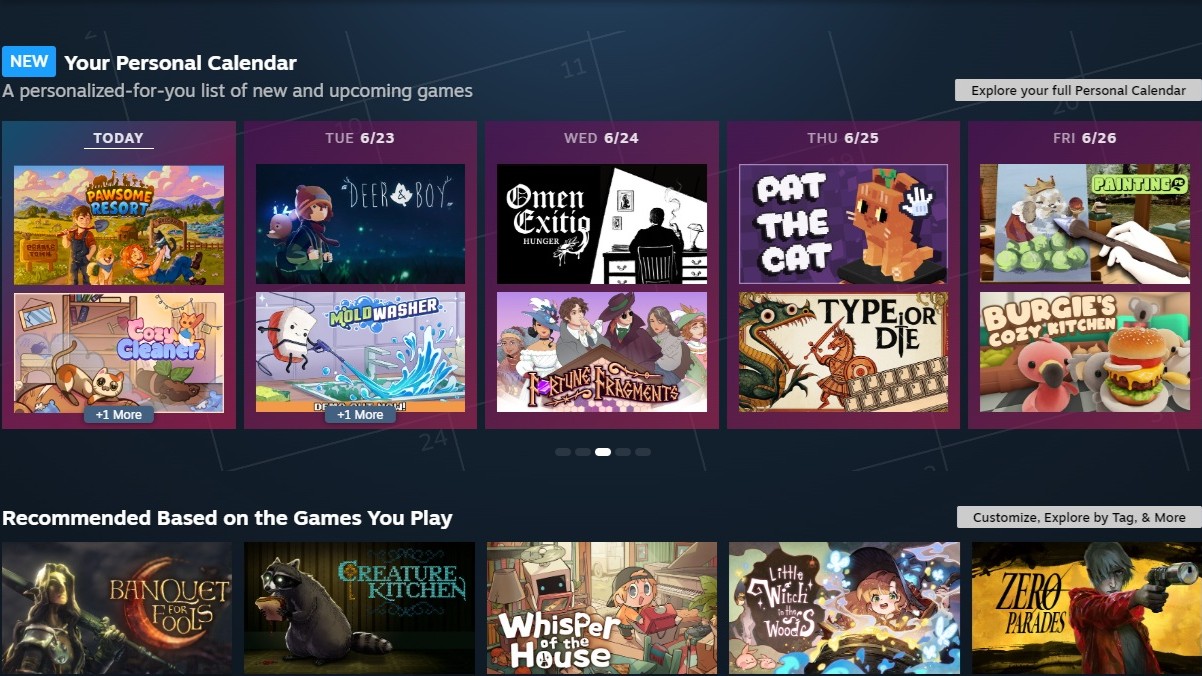
At its core, the Personal Calendar is an elegant, data-driven module integrated directly into the Steam homepage. When a user is logged in, the widget populates a five-day outlook of upcoming releases, curated specifically based on the user’s existing wishlist, their library history, and the specific tags they engage with most frequently.
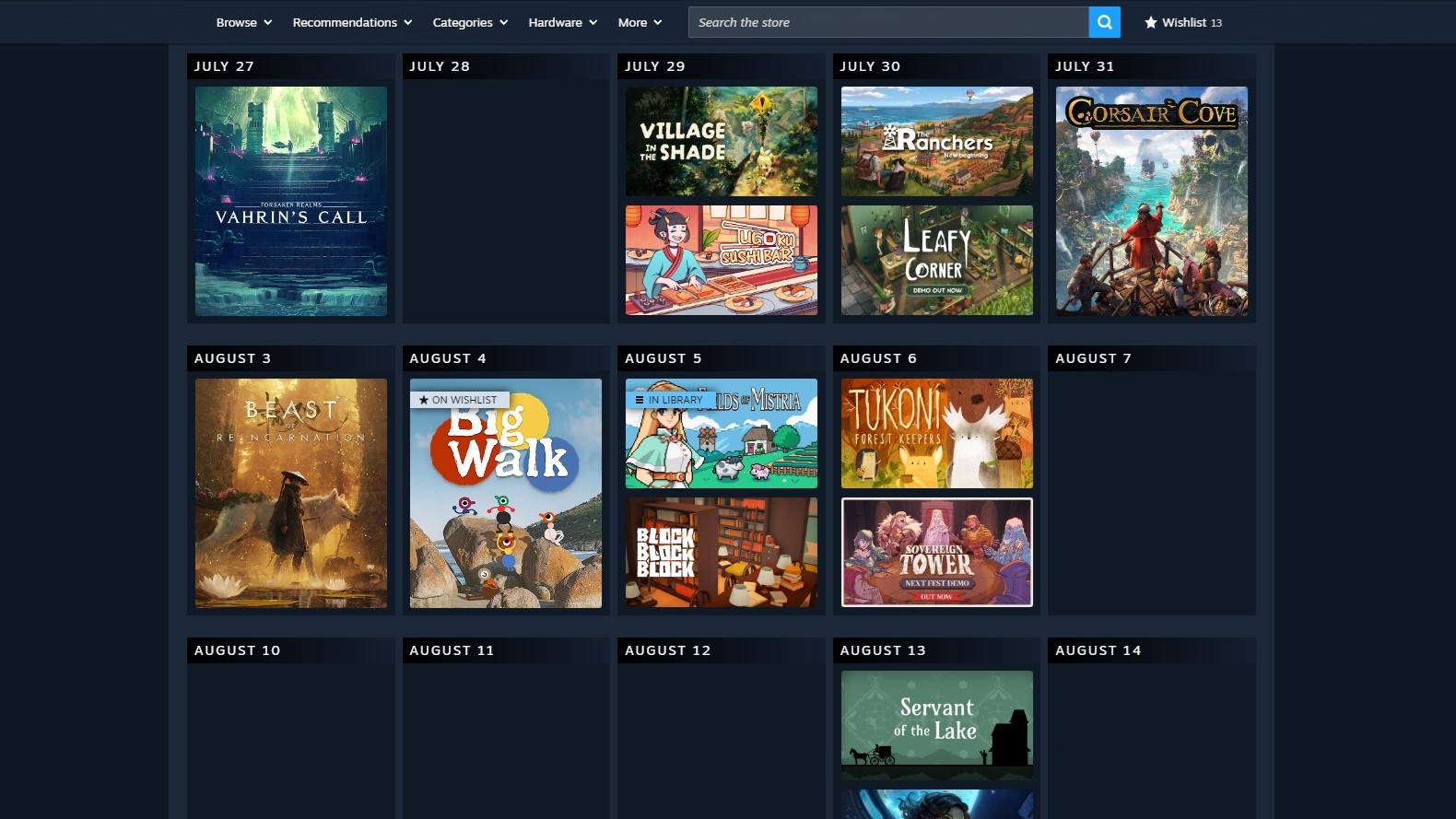
While the storefront widget serves as a teaser, the true utility of the feature lies on its dedicated landing page. Here, users are presented with a comprehensive view of the landscape, spanning the previous month, the current week, and a forward-looking forecast of the next two months. This interface is not merely a list; it is a filterable, interactive dashboard. Users can refine the view by specific tags—such as "city builder," "cozy," or "farming sim"—and toggle the visibility of games already on their wishlist or titles they have already purchased.
For the average gamer, this is a breath of fresh air. It replaces the passive, one-at-a-time nature of the Discovery Queue—which often feels like being forced to play a game of "digital roulette"—with a structured timeline that respects the user’s time and agency.

A Chronology of Discovery: From Queues to Calendars
To understand why the Personal Calendar is being hailed as a potential game-changer, one must look at the evolution of Steam’s discovery tools.
Historically, Valve relied heavily on the Discovery Queue. Introduced as a way to help users sift through the thousands of titles uploaded to Steam Direct, the queue function was essentially a binary interface: you either clicked "next" or "ignore." While it was effective for surfacing obscure titles, it lacked context. It provided no sense of when a game might be relevant or how it fit into a larger release schedule.
In the late 2010s, Valve shifted toward more robust machine learning, refining the "More Like This" sections and the "Recommended for You" carousels. While these were computationally impressive, they often felt disconnected from the reality of a player’s life. A game might be perfectly suited to a user’s tastes, but if it launched months ago or is buried under a mountain of marketing noise, the connection is never made.
The introduction of the Personal Calendar marks a return to a more "human" way of browsing. It acknowledges that players plan their gaming time. By framing releases within a calendar format, Valve is essentially turning the daunting task of curation into a logistical exercise that users can manage at a glance.
Supporting Data: Why "Time" Matters
The shift toward a time-based discovery model is backed by behavioral data regarding how gamers actually consume media. Unlike movies or music, which are often consumed in short, episodic bursts, games require a significant time investment. A player cannot simply "add" a 60-hour RPG to their routine without clearing space in their schedule.

By presenting a 60-day window of upcoming titles, the Personal Calendar allows users to identify "crunch periods" in their gaming life. For example, a user might notice that a highly anticipated 1.0 launch of a farming sim, a new indie tactical RPG, and a long-awaited expansion all land in the same week in August.
This visibility allows for:
- Budgetary Planning: Users can pace their purchases rather than being surprised by a sudden influx of releases.
- Schedule Management: Players can anticipate when they will need to commit time to new, complex titles.
- Reduced FOMO: By seeing what is coming, players feel more in control of the "glut" of releases, reducing the anxiety of missing out on the "next big thing."
The Human Element: Anecdotes from the Frontline
The utility of the calendar has already been put to the test by the editorial team at PC Gamer. In anecdotal reports, the calendar has successfully surfaced titles that would have otherwise gone unnoticed in the sea of Steam’s weekly releases.
For instance, the calendar has successfully highlighted niche titles like Cat Isle, a management sim that might have been ignored in a standard discovery feed. Other editors have reported seeing Bingle Bingle (a title described as "roulette Balatro") and the chaotic, viral-ready Cat Chess. These are not necessarily AAA blockbusters; they are the "small, weird" games that form the backbone of the indie ecosystem.
When a tool can successfully bridge the gap between a massive store and a specific user’s niche interest—and do so without feeling like an aggressive advertisement—it creates a sense of trust. Users are more likely to engage with the store when the store feels like it understands their personal gaming calendar.
Implications for Indie Developers
The introduction of any new visibility feature on Steam inevitably raises questions about the platform’s relationship with independent developers. Earlier this month, the developer community expressed mixed reactions regarding changes to the "New Releases" module. The fear is always that changes to the algorithm will consolidate power among the top-selling titles, leaving smaller indie games in the shadows.
The Personal Calendar could either be a boon or a barrier for these developers:
- The Optimistic View: The calendar rewards games that are accurately tagged and have a clear release date. If a developer effectively manages their store presence, their game is more likely to appear in the calendars of players who are already interested in that genre. It moves the conversation from "how do we get on the front page" to "how do we get into the personal feeds of our target audience."
- The Skeptical View: If the calendar becomes the primary way people discover games, the pressure on developers to maintain a "perfect" release schedule and metadata profile increases. Smaller teams with limited marketing resources may struggle to compete if their game is excluded from these personalized feeds due to minor categorization errors.
Valve has yet to release specific data on how the calendar has impacted sales or click-through rates for indie developers. However, the initial sentiment suggests that this is a more equitable way of presenting content, as it relies on user behavior rather than just paid placement or publisher spend.
Future Prospects: Where Does Steam Go From Here?
The success of the Personal Calendar suggests that the future of digital discovery is not "smarter" algorithms, but rather "clearer" interfaces. The problem with Steam was never a lack of data; it was a lack of meaningful synthesis.
Moving forward, we can expect Valve to continue refining the granularity of these tools. Potential future iterations might include:
- Integration with Review Outlets: Linking calendar entries to trusted reviews so that a user can see if an upcoming game is worth their time before it even launches.
- Social Calendar Sharing: Allowing friends to see each other’s "upcoming" lists to encourage simultaneous play for co-op or multiplayer titles.
- Dynamic Budgeting: A tool that tracks the total cost of a user’s "wishlist" based on the calendar dates.
The Steam Personal Calendar is a testament to the idea that sometimes, the most sophisticated solution is the simplest one. By acknowledging that games are a medium that requires planning, patience, and time, Valve has created a tool that feels less like a corporate storefront and more like a helpful librarian. As the industry continues to grapple with the "Sisyphean task" of content curation, this simple, five-day-to-two-month view might just be the most important feature the platform has introduced in years.

