

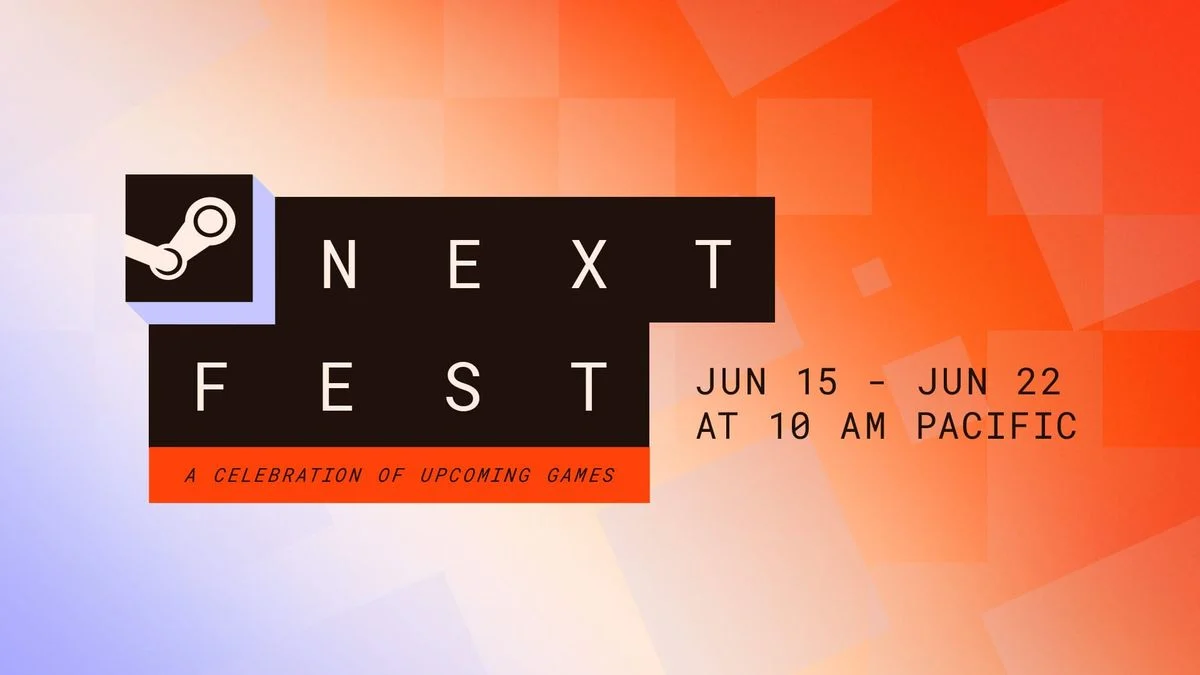
The digital gates have swung open once again. Valve’s highly anticipated Steam Next Fest has officially commenced, bringing with it a sprawling, curated collection of playable PC VR demos. Running from today through June 22, this week-long celebration serves as a vital barometer for the health and creative direction of the virtual reality industry. For enthusiasts, developers, and industry analysts alike, the festival is not merely a promotional event; it is a critical window into the mechanics, aesthetics, and technical ambitions that will define the next generation of immersive gaming.
The State of Play: Main Facts and Festival Scope
Steam Next Fest has cemented its reputation as the premier destination for discovering "the next big thing" in interactive entertainment. While the event covers the entire spectrum of PC gaming, the VR segment remains a distinct and highly scrutinized pillar. This iteration features a robust mix of titles, ranging from highly anticipated indie projects to polished ports of titles that have already established a footprint on standalone platforms like the Meta Quest or PlayStation VR2.
The event officially concludes on June 22 at 1:00 PM ET. Until that deadline, users are encouraged to explore the official Steam Next Fest portal, where hundreds of developers have uploaded time-limited demos. These demos offer a risk-free opportunity to experience high-fidelity VR experiences, test hardware compatibility, and provide feedback that often shapes the final polish of a game before its full release.
Chronology: From Submission to Public Showcase
The logistics behind an event of this scale are immense. The preparation for the June showcase began months ago, with developers submitting their builds for review and technical validation.
The Preparation Phase
Nearly two weeks prior to the public launch, Valve provided a preliminary list of participating studios. This lead time is essential for media outlets and internal QA teams to vet titles. However, the nature of indie game development is inherently fluid. In the days leading up to the launch, a subset of developers inevitably shifts timelines, pivots their marketing strategy, or encounters technical hurdles that necessitate a last-minute withdrawal from the showcase.
The Launch Window
The launch day marks the culmination of this rigorous development cycle. As the clock struck, servers saw a surge in traffic as users flocked to download high-bandwidth VR titles. Unlike traditional flat-screen games, VR demos often require significant optimization, making this public playtest a critical "stress test" for developers to observe how their games perform on diverse hardware configurations, ranging from high-end enthusiast PCs to more modest setups.
Supporting Data and The "VR-Ready" Verification Challenge
One of the most persistent challenges in the Steam ecosystem is the accuracy of metadata. In recent years, the intersection of "hybrid" gaming—titles designed for both monitor-based play and VR—has created a reporting headache for consumers.
The Hybrid Gaming Dilemma
We have observed a growing trend where developers building hybrid titles inadvertently release demos that lack functional VR support, despite being tagged as "VR-compatible." This often occurs due to technical mismatches in the Steam backend or the developer prioritizing the flat-screen build for the initial demo drop.
To ensure the integrity of the information provided to our readers, we have conducted an extensive cross-reference of the participant list. Our editorial team works to filter out titles that do not explicitly support VR head-mounted displays (HMDs). However, the community is urged to exercise caution:
- Verification: Always check the "VR Support" section on the right-hand sidebar of a game’s store page.
- Community Reports: Steam’s user-driven tag system is helpful but can be fallible. If a game is tagged as VR but contains no VR options in the settings menu, it is likely a miscategorized hybrid title.
- The "Dropped Out" Factor: Developers may, at their discretion, pull a demo without warning. If a link appears broken or a download button is missing, the developer has likely taken the title offline for patching or to pivot away from the event.
Notable Titles in the Spotlight
This year’s roster includes several high-profile projects that have generated significant pre-launch buzz:
- Loop One Done: A title that has already begun to garner praise for its unique take on puzzle-loop mechanics.
- Fixer Undercover: An escape-room-style puzzler that has been lauded for its intuitive interaction design—a crucial factor in preventing motion sickness and maintaining immersion.
- Peak Rhythm: A standout for rhythm-game enthusiasts, pushing the boundaries of spatial tracking and haptic integration.
Official Responses and Developer Perspectives
The sentiment among participating developers is one of cautious optimism. For small studios, Steam Next Fest is often the "make or break" moment for their marketing campaigns.
In correspondence with several participating studios, a common theme emerged: the necessity of the "limited-time" model. Developers note that keeping a demo available indefinitely can lead to players judging a game based on an outdated, early-stage build. By restricting the availability of the demo to the festival week, studios ensure that the feedback they receive is relevant to their current development build, and it creates a sense of urgency that drives player engagement.
"The festival is an intense period," noted one lead developer on a prominent VR project. "You’re monitoring the forums, watching Twitch streams to see where players get stuck, and pushing hotfixes in real-time. It’s exhausting, but the data we get in 48 hours is worth more than three months of internal playtesting."
The Implications: What This Means for the Future of VR
The implications of this week-long festival extend far beyond the immediate joy of playing new content. It provides a snapshot of where the PC VR market is heading in the second half of 2024 and beyond.
1. Hardware Agnosticism
We are seeing a marked increase in games designed to work across a wider variety of HMDs. The friction between SteamVR, Oculus/Meta, and OpenXR is slowly being smoothed over, with developers prioritizing cross-platform compatibility as a core feature rather than an afterthought.
2. The Rise of "Comfort-First" Design
A trend emerging from this year’s demos is the heavy emphasis on accessibility and comfort settings. Developers are increasingly aware that VR adoption relies on user retention; if a player feels nauseated in the first ten minutes, they will never purchase the full game. Consequently, we are seeing more robust locomotion options—teleportation, snap-turning, and vignette-toggling—implemented as standard features in even the most experimental demos.
3. The Shift Toward High-Fidelity Indies
The "janky indie" reputation that once haunted the early days of VR is rapidly dissipating. The quality of art assets, physics interaction, and UI design in this year’s Next Fest cohort is notably higher than in previous years. This shift suggests that the developer pool for VR is maturing, moving from hobbyists to seasoned professionals who understand the nuances of the medium.
Final Call to Action for Enthusiasts
As we emphasize: most of these demos are available for a limited time only. Once the clock hits 1:00 PM ET on June 22, the majority of these experiences will be pulled from the store.
If you are a PC VR user, we highly recommend setting aside time this week to curate your own playlist. Do not wait for the final day to begin downloading; the surge in server traffic often leads to slow download speeds as the event reaches its conclusion.
For the most up-to-date information, keep an eye on the official Steam Next Fest event page. Should any developers announce surprise additions or unexpected withdrawals, we will endeavor to provide updates to our tracking list.
The VR landscape is in a state of constant evolution, and there is no better way to participate in that progress than by engaging with the creators at the coalface of the industry. Dive in, experiment with the new mechanics, and be sure to leave your feedback—it is the fuel that drives the next wave of immersive innovation.

