

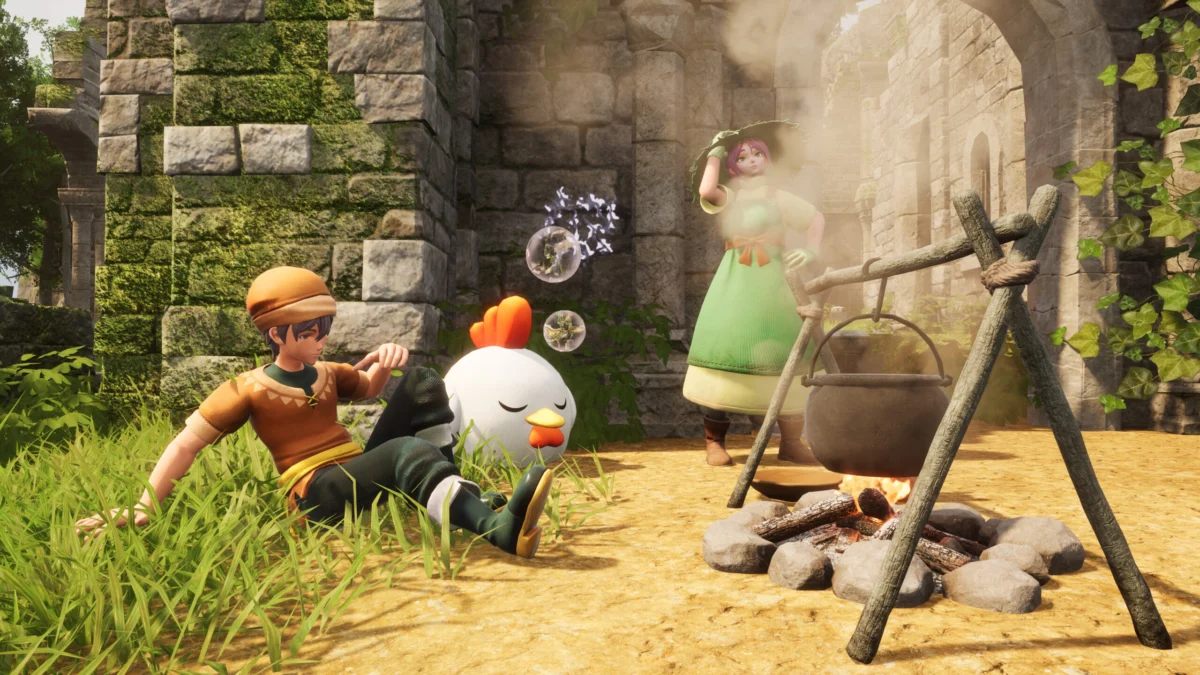
As the gaming industry enters an era of unprecedented technological upheaval, the integration of generative AI has become the most contentious issue in software development. With Steam’s storefront now regularly flooded with titles sporting "AI-disclosed" labels, a growing divide has emerged between those seeking to optimize production through automation and those—like Palworld developer Pocketpair—who view the technology as an intrusive threat to the medium’s soul.
The State of Play: AI Disclosures on Steam
The landscape of digital distribution is shifting. Recent data indicates that over 100 titles released on Steam in a single week contained disclosures regarding the use of generative AI. This surge has been met with skepticism, if not outright hostility, from the gaming community.
For developers, the inclusion of AI is often framed as a efficiency measure—a way to expedite asset creation, debugging, or world-building. However, for players, these disclosures have become red flags. High-profile instances, such as the backlash against the newly announced Crazy Taxi project, demonstrate that transparency is not a panacea for public relations disasters. When a game signals the use of generative tech, it often triggers an immediate, visceral reaction: Was this really necessary, or were you just cutting corners?
A Chronology of Conflict: From Crypto-Hype to AI Integration
To understand the current tension, one must look at the historical parallel between AI and the cryptocurrency craze that dominated gaming discourse just a few years ago.
- 2021–2022 (The Blockchain Era): Many major studios flirted with NFTs and blockchain integration, promising a new era of "digital ownership." The backlash was swift and severe, with players rejecting what they perceived as "get-rich-quick" schemes that prioritized profit over gameplay.
- 2023 (The Generative AI Boom): As LLMs and image generation models matured, the focus shifted from tokens to tensors. Early experiments in AI-assisted dialogue and procedural asset generation were initially met with curiosity.
- 2024 (The Disclosure Mandate): Steam implemented mandatory disclosure requirements for developers using AI. This brought the "shadow" development practices into the light, forcing studios to acknowledge if their game’s textures, writing, or code were machine-generated.
- The Present: We have reached an impasse. The industry is split between "AI-native" startups and established studios that view the technology as a potential destroyer of creative integrity.
The Pocketpair Stance: Quality Over Automation
In a recent interview with GamesRadar, John Buckley, the head of publishing and communication at Pocketpair, offered one of the most candid critiques of the industry’s obsession with AI. For a studio that captured the world’s imagination with Palworld, the decision to abstain from generative AI is not just a moral stance—it is a business strategy grounded in respect for the craft.
Buckley did not shy away from the comparison to the crypto boom. "It feels very intrusive," he noted. "It feels like everyone who is super gung-ho about it isn’t from the industry. They’re, dare I say, outsiders looking to get rich quick."
However, Buckley’s critique is nuanced. He acknowledges that AI as a "search tool" or a "coding assistant" is a functional utility, distinct from the creative process. The red line for Pocketpair, he argues, is the replacement of human artistry with machine-generated assets.

The Human Element
"We have a lot of artists in-house," Buckley explained. "They like doing stuff themselves. There’s no reason to get rid of them for the sake of an AI doing it. Just seems pointless."
This sentiment strikes at the heart of the "soullessness" argument often leveled at AI games. In the eyes of many developers, the friction of creation—the trial and error of an artist refining a model, the specific choices made by a writer—is exactly what gives a game its identity. When that friction is removed, the result is often a "hollowed-out" product that fails to resonate with the target audience.
Supporting Data: The Backlash Economics
The economic reality of AI in gaming is proving to be complex. While the promise of lower production costs is enticing to venture capitalists, the "backlash tax" is becoming a significant factor.
When games like Crimson Desert are found to contain undisclosed AI placeholders, the resulting PR damage requires significant investment to repair. Apology tours, social media damage control, and the potential for review-bombing create a volatile environment.
Industry figures like Epic Games CEO Tim Sweeney have expressed resistance to overly stringent AI disclosure policies, arguing that the technology should be viewed as just another tool, like a paintbrush or a compiler. Yet, the data suggests that gamers disagree. There is a distinct, measurable market preference for "hand-crafted" experiences. When a player pays $60 or $70 for a title, they are buying into the vision of a team of human creators, not an automated synthesis of internet-scraped data.
Implications: The Dystopian Future of "Certified Human" Gaming
Perhaps the most chilling prospect raised by Buckley is the potential for a market shift where "AI-free" becomes a premium marketing label.
"I think that’s going to be the attitude for quite a while," Buckley said, referring to the skeptical question players now ask: Did you need to do that? Couldn’t you just do it yourself?

If the industry continues down its current path, we may see a future where games are marketed with "Certified Human-Made" badges. This creates a dystopian bifurcation:
- Mass-market, AI-generated "content" that is cheap, fast, and formulaic, designed for quick engagement.
- "Artisanal" premium titles that pride themselves on being free of algorithmic interference.
This scenario is already being hinted at by the rise of AI "placeholders." If developers continue to sneak AI into projects, the trust gap between publishers and players will widen, potentially leading to a market where the origin of an asset becomes as important as the gameplay itself.
Conclusion: The Moral Obligation of Development
The resistance to AI in gaming is not simply a luddite rejection of progress; it is a defense of the human labor that has defined the medium for decades. As Pocketpair’s stance makes clear, the industry has a choice. Studios can continue to chase the efficiency of generative AI, effectively alienating the very audience that fuels their growth, or they can double down on the human talent that defines the "magic" of a great game.
"Gamers don’t want it," Buckley concludes. "And if the gamers don’t want it, I guess that’s it, right?"
As we look toward the next generation of console hardware and the inevitable push for more complex, expansive open worlds, the temptation to rely on AI will only grow. However, the success of titles like Palworld—which prioritizes clear, fun, and human-directed gameplay over algorithmic efficiency—serves as a powerful reminder that in the creative arts, the journey of making the game is just as important as the final product. The industry would do well to remember that the most valuable asset in any game studio is not its server capacity or its software library, but the human beings sitting in the chairs, doing the work.

