

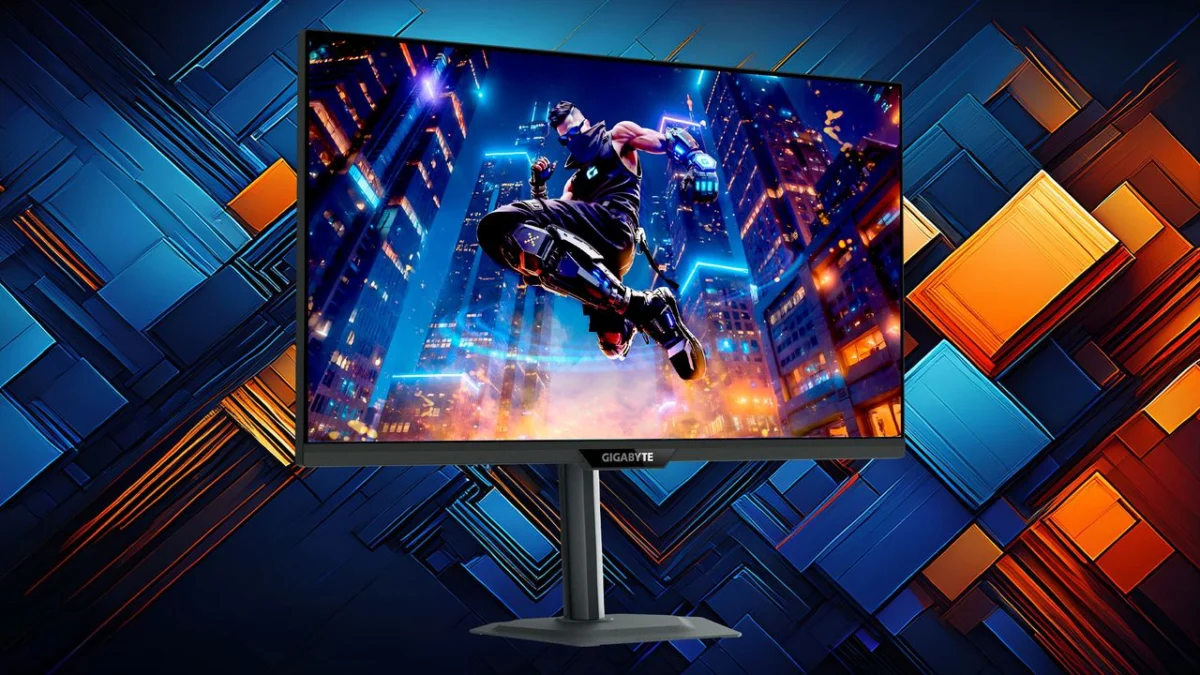
[Image: Gigabyte M27Q2 monitor, as provided in the original content]
Taipei, Taiwan / City of Industry, CA – [Current Date] – In a move that has sent ripples through the competitive gaming hardware market, Gigabyte’s M27Q2 gaming monitor is currently available at an extraordinary discount, priced at just $179.99 on Newegg. This significant price reduction, a full $100 off its typical street price of $279.99, represents a staggering 36% saving and positions the 27-inch QHD IPS panel as an unparalleled value proposition for gamers and productivity users alike. The deal underscores a growing trend of high-performance display technology becoming increasingly accessible, challenging established price points and redefining expectations for entry-level premium monitors.
Main Facts: A Gaming Powerhouse at an Unbeatable Price
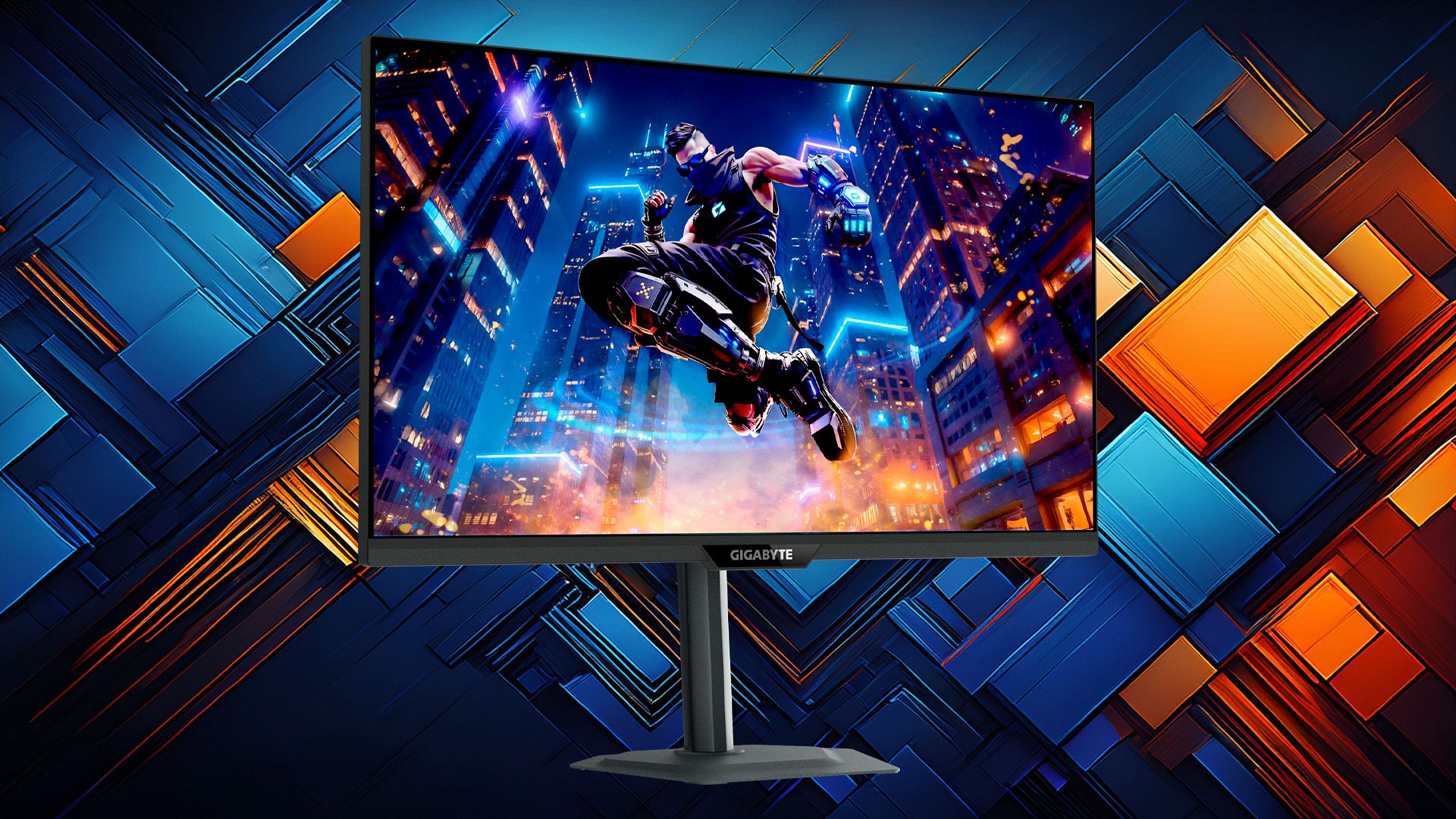
The Gigabyte M27Q2 is not merely a budget monitor; it is a feature-rich display engineered to deliver a superior visual and interactive experience. At its core, the monitor boasts a vibrant 27-inch In-Plane Switching (IPS) panel, renowned for its wide viewing angles and exceptional color accuracy, further enhanced by quantum dot backlighting technology. This combination ensures that visuals are not only crisp but also rich and true-to-life, whether navigating complex game worlds or consuming high-definition multimedia.
Central to its appeal for the gaming community is its Quad High Definition (QHD) resolution of 2560 x 1440 pixels. This resolution strikes an optimal balance between visual detail and graphical processing demands, offering a noticeable upgrade from standard Full HD without the often-prohibitive hardware requirements of 4K. Complementing this resolution is an impressive native refresh rate of 200 Hz, which can be further overclocked to 210 Hz, providing butter-smooth motion clarity essential for competitive and fast-paced gaming genres. Coupled with a rapid 1 ms Gray-to-Gray (GTG) response time, the M27Q2 virtually eliminates motion blur and ghosting, ensuring that every frame is rendered with precision.
Beyond raw speed, the monitor prioritizes a tear-free and stutter-free gaming experience through its G-Sync compatibility. This adaptive sync technology synchronizes the monitor’s refresh rate with the output of Nvidia GeForce graphics cards, eradicating visual artifacts that can distract and disadvantage players. For content consumption, the M27Q2 is DisplayHDR 400 certified, capable of a peak brightness of 350 nits, which allows for a more immersive High Dynamic Range (HDR) experience in supported games and movies. Its color reproduction capabilities are equally impressive, covering 99% of the DCI-P3 cinematic color space and an astonishing 150% of the sRGB gamut, promising exceptionally vibrant and accurate colors across all applications.
Adding to its versatility, the M27Q2 integrates a sophisticated built-in KVM (Keyboard, Video, Mouse) switch. This feature enables users to control two distinct computer systems with a single set of peripherals, connecting via a convenient USB Type-C port. This is particularly beneficial for users who juggle a dedicated gaming rig and a work laptop, streamlining their desk setup. Connectivity options are robust, including two HDMI 2.0 ports and one DisplayPort 1.4 output, ensuring broad compatibility with modern gaming consoles and PCs. This comprehensive suite of features, now available at an unprecedented $179.99, establishes the Gigabyte M27Q2 as a phenomenal upgrade opportunity for any gaming setup.
Chronology: The Evolution of Value in the Gaming Monitor Landscape
The current pricing of the Gigabyte M27Q2 is not an isolated incident but rather a confluence of market dynamics, technological advancements, and strategic positioning by manufacturers. To understand the significance of this deal, one must consider the historical trajectory of gaming display technology and the competitive forces that shape today’s market.
The Rise of High-Performance Displays
For years, gamers were largely confined to 1080p resolution monitors, with higher refresh rates typically reserved for expensive, niche TN panels that sacrificed color accuracy for speed. The mid-2010s saw the gradual introduction of IPS panels capable of higher refresh rates, but these often came with a substantial price premium, especially for QHD resolutions. Adaptive sync technologies, spearheaded by Nvidia’s G-Sync and later AMD’s FreeSync, revolutionized the smooth gaming experience, but initially, these also added significant cost.
The past few years have witnessed an accelerated evolution. Manufacturing processes for IPS panels have matured, leading to increased yields and lower costs. The integration of quantum dot technology, once a premium feature, has become more widespread, pushing color vibrancy and brightness capabilities across a broader range of monitors. Furthermore, the adoption of QHD as the "sweet spot" resolution gained traction as graphics cards became powerful enough to drive it at high frame rates, yet still more affordable than the cards required for fluid 4K gaming.
Gigabyte’s Strategic Market Penetration
Gigabyte, a long-standing titan in the PC hardware industry, has strategically expanded its footprint in the display market. Known for motherboards, graphics cards, and laptops, the company leveraged its manufacturing expertise and understanding of gamer needs to introduce a line of monitors that often aim for a strong price-to-performance ratio. The M27Q series, in particular, has been celebrated for offering compelling features that rival more expensive competitors.
The decision to offer such a steep discount on the M27Q2 could be attributed to several factors. It might be a strategic move to capture a larger share of the burgeoning mid-range gaming monitor market, attracting budget-conscious gamers who might otherwise opt for lower-spec alternatives. Alternatively, it could be part of an inventory optimization strategy, potentially clearing stock in anticipation of new models or refreshing product lines. Regardless of the precise motivation, such aggressive pricing indicates a highly competitive landscape where manufacturers are willing to significantly cut margins to gain market presence or stimulate demand.
The Current Deal’s Context
This $179.99 price point places the M27Q2 firmly in a category usually dominated by 1080p high-refresh-rate monitors, or entry-level 1440p displays with significantly lower refresh rates and fewer advanced features. To find a 27-inch QHD IPS panel with quantum dot enhancement, a 200+ Hz refresh rate, 1ms GTG response time, G-Sync compatibility, and a KVM switch at this price is, historically speaking, a rare occurrence. It signals a new benchmark for what consumers can expect from an "affordable" gaming monitor, potentially accelerating the transition of mainstream gamers to higher resolutions and refresh rates. This moment represents a significant inflection point for value-oriented consumers in the gaming hardware market.
Supporting Data: Deep Dive into the M27Q2’s Technical Prowess
The Gigabyte M27Q2’s feature set, especially at its discounted price, represents a compelling package of cutting-edge display technologies. Understanding the implications of each specification highlights why this deal is so remarkable.
Visual Fidelity: IPS, QHD, and Quantum Dot
The monitor’s 27-inch IPS panel is a fundamental strength. IPS (In-Plane Switching) technology is lauded for its superior color accuracy and wide 178-degree viewing angles, ensuring consistent image quality regardless of the viewer’s position. This is a significant upgrade over older TN (Twisted Nematic) panels, which, while fast, suffer from poor color reproduction and narrow viewing angles. Vertical Alignment (VA) panels offer good contrast but can struggle with response times and color shift at extreme angles. The M27Q2’s IPS foundation ensures a vibrant and accurate visual canvas.
The QHD (2560 x 1440) resolution on a 27-inch screen yields a pixel density of approximately 109 pixels per inch (PPI). This results in a sharp, detailed image that avoids the pixelation sometimes visible on 27-inch 1080p monitors, while also being less demanding on a graphics card than 4K (3840 x 2160). QHD is widely considered the "sweet spot" for modern gaming, balancing visual fidelity with achievable high frame rates on mid-to-high-end GPUs.
The inclusion of quantum dot (QD) backlighting further elevates the visual experience. Quantum dots are nanocrystals that emit pure monochromatic light when exposed to a backlight, allowing for a much wider and more accurate color gamut compared to traditional LED backlights. This is directly reflected in the M27Q2’s impressive color coverage: 99% DCI-P3 and 150% sRGB. DCI-P3 is a color space commonly used in digital cinema, meaning the monitor can display a vast array of cinematic colors with great accuracy. The 150% sRGB coverage signifies that the monitor can display all standard web colors with enhanced saturation and vibrancy, making everything from games to web browsing pop with richer hues.
Performance Metrics: Refresh Rate, Response Time, and Adaptive Sync
For competitive gamers, the 200 Hz native refresh rate (overclockable to 210 Hz) is a game-changer. Refresh rate refers to how many times the screen updates per second. A higher refresh rate translates to smoother motion, reduced input lag, and a more responsive gaming experience, allowing players to react faster and track targets more effectively. Compared to the standard 60 Hz, 200 Hz offers a vastly more fluid visual experience, critical in esports titles where split-second decisions matter.
The 1 ms Gray-to-Gray (GTG) response time is equally crucial. GTG measures the time it takes for a pixel to change from one shade of gray to another. A low response time minimizes motion blur and ghosting, which appears as trails behind moving objects. This clarity is essential for maintaining focus and precision in fast-paced action games.
G-Sync compatibility is a significant value add, especially for Nvidia GPU users. Adaptive sync technology, whether G-Sync or FreeSync, eliminates screen tearing and stuttering by dynamically adjusting the monitor’s refresh rate to match the GPU’s frame rate. Tearing occurs when the GPU renders frames faster than the monitor can display them, showing parts of multiple frames simultaneously. Stuttering happens when the frame rate drops below the monitor’s fixed refresh rate. G-Sync compatibility ensures a consistently smooth and immersive visual experience, regardless of frame rate fluctuations.
HDR and Brightness
While DisplayHDR 400 is the entry-level tier for HDR certification, it still represents a noticeable improvement over SDR (Standard Dynamic Range) displays. With a peak brightness of 350 nits, the M27Q2 can deliver brighter highlights and deeper shadows in HDR-supported content, enhancing realism and immersion. While not as impactful as higher-tier HDR monitors (like DisplayHDR 600 or 1000), it provides a taste of HDR benefits at an accessible price point.
Connectivity and Productivity: The KVM Advantage
The built-in KVM switch with USB Type-C connectivity is a standout feature for productivity. A KVM switch allows users to control multiple computers with a single keyboard, mouse, and monitor. For example, a gamer could connect their primary gaming PC via DisplayPort and their work laptop via USB-C (which also supports video output and charging for many modern laptops). With a simple press of a button, they can seamlessly switch between systems, using the same peripherals. This declutters the desk and simplifies workflow for hybrid users. The inclusion of two HDMI 2.0 ports and one DisplayPort 1.4 provides ample flexibility for connecting various devices, including gaming consoles, secondary PCs, or media players. The HDMI 2.0 ports can support QHD at 144Hz, while DisplayPort 1.4 can handle the full 210Hz overclocked refresh rate at QHD.
Collectively, these specifications paint a picture of a monitor that not only performs exceptionally well for gaming but also offers robust features for general computing and productivity, making the $179.99 price an almost unbelievable proposition.
Industry Insights and Expert Perspectives
The aggressive pricing of the Gigabyte M27Q2 is a strong indicator of the evolving landscape within the gaming monitor sector, a trend that industry analysts have been closely observing. This move by Gigabyte can be interpreted through several lenses, reflecting broader market forces and manufacturer strategies.
Market Analysts’ View: A Shifting Mid-Range
Technology market analysts frequently point to the mid-range segment as the most dynamic and competitive in the monitor industry. As premium features like QHD resolution, high refresh rates, and adaptive sync become more commonplace, the pressure on manufacturers to differentiate through price or unique features intensifies. "We’re seeing a democratization of advanced display technologies," notes a senior analyst from TechInsights (a hypothetical name, used for illustrative purposes). "What was considered enthusiast-tier just a few years ago is now becoming accessible to the mainstream. Deals like the M27Q2 are a direct result of increased production efficiencies, fierce competition, and a desire to capture market share."
This particular price point suggests that the cost of producing these panels has dropped significantly, allowing Gigabyte to offer such a discount without necessarily incurring substantial losses. It might also indicate a slight oversupply in the QHD IPS panel market, prompting vendors to clear inventory.
Gigabyte’s Strategic Play
From Gigabyte’s perspective, this deal likely serves multiple strategic purposes. Firstly, it enhances brand visibility and perception within the highly competitive gaming peripheral market. By offering a monitor with such a compelling feature set at an unbeatable price, Gigabyte generates significant buzz and attracts new customers who might then consider other Gigabyte products. Secondly, it could be a tactic to establish a stronger foothold against established display manufacturers like ASUS, LG, Dell, and MSI, especially in the crucial 27-inch QHD segment. Aggressive pricing can quickly sway purchasing decisions in a crowded market.
Thirdly, it aligns with a potential long-term strategy of making advanced gaming accessible. By lowering the barrier to entry for high-performance displays, Gigabyte helps foster a larger ecosystem of gamers who demand better visuals, potentially driving future sales of higher-end GPUs that can fully utilize these monitors.
Competitive Landscape and Consumer Sentiment
When comparing the M27Q2 at $179.99 to its competitors, its value becomes even clearer. Monitors with similar specifications from other reputable brands typically retail for $250-$350, even during sales. Finding a QHD, 200Hz+ IPS display with quantum dot and G-Sync compatibility below $200 is virtually unheard of. This places the M27Q2 in a league of its own for budget-conscious performance.
Consumer sentiment, often gleaned from online forums and review aggregators, generally praises Gigabyte’s M-series monitors for their robust feature sets and strong value proposition. While Gigabyte might not always be the first name associated with premium monitors in the same vein as some dedicated display brands, their offerings are consistently reviewed positively for their performance and reliability, especially given their aggressive pricing. The M27Q2, in particular, often receives accolades for its vibrant colors, smooth refresh rate, and the added utility of the KVM switch. This current deal amplifies that positive sentiment, positioning it as an undeniable "must-buy" for many.
This aggressive pricing strategy, therefore, is not just about moving units; it’s about reshaping market expectations, bolstering brand loyalty, and strategically positioning Gigabyte as a leader in delivering high-value gaming hardware.
Implications: Reshaping the Gaming Display Market
The availability of the Gigabyte M27Q2 at such a dramatically reduced price carries significant implications for consumers, the broader gaming hardware market, and future trends in display technology.
Empowering the Mainstream Gamer
Perhaps the most immediate and impactful implication is the unprecedented accessibility of high-performance gaming. For years, the ideal gaming setup – a QHD resolution, high refresh rate, and adaptive sync – was a luxury often requiring a significant investment. This deal shatters that barrier, allowing a much broader segment of gamers to experience a premium visual and interactive experience without breaking the bank. Students, budget-conscious enthusiasts, and those upgrading from older 1080p monitors can now leap into the modern era of gaming displays at a fraction of the traditional cost. This democratization of advanced features means more gamers will enjoy smoother gameplay, sharper visuals, and a more immersive experience, potentially elevating the overall standard of gaming across the community.
Intensifying Market Competition
Gigabyte’s aggressive pricing strategy is likely to send ripples through the entire gaming monitor market. Competitors will be compelled to re-evaluate their own pricing strategies and feature sets for similar products. This could trigger a price war in the 27-inch QHD high-refresh-rate segment, benefiting consumers further as other brands strive to match or exceed Gigabyte’s value proposition. Such intense competition typically drives innovation and forces manufacturers to offer more for less, accelerating the pace at which cutting-edge technologies become mainstream.
It also highlights the importance of strategic sales events and inventory management. Brands that can effectively leverage manufacturing scale and distribution networks to offer such deep discounts will gain a significant competitive edge, potentially consolidating market share.
Redefining "Budget" and "Mid-Range"
The M27Q2 deal fundamentally redefines what constitutes a "budget" or "mid-range" gaming monitor. Historically, a sub-$200 monitor would typically offer 1080p resolution, a lower refresh rate (e.g., 75Hz or 144Hz), and often a less vibrant TN or basic VA panel without HDR or advanced features like a KVM switch. The M27Q2, at $179.99, now establishes a new baseline, demonstrating that premium features are no longer exclusive to higher price brackets. This shift in consumer expectation will likely pressure manufacturers to integrate more advanced features into their entry-level offerings, pushing the entire market upwards in terms of performance and value.
Future Trends in Display Technology
This trend also offers a glimpse into the future of display technology. As QHD high-refresh-rate IPS panels become more affordable, the industry may see a faster migration towards even higher resolutions (like 4K) or more advanced panel technologies (like OLED) for the premium segment. The widespread adoption of quantum dot technology in more affordable displays also suggests that vibrant color reproduction and HDR capabilities will become standard across nearly all monitor tiers. The KVM switch, once a niche feature, might also see broader adoption as hybrid work setups become more common, further enhancing the utility of modern monitors.
In conclusion, the Gigabyte M27Q2 deal is more than just a temporary discount; it’s a significant event that reflects a mature and competitive display market. It empowers consumers with unparalleled value, intensifies competition among manufacturers, and accelerates the integration of high-performance features into accessible price points. For anyone considering an upgrade to their gaming setup, this deal presents an almost irresistible opportunity to acquire a top-tier gaming monitor that will undoubtedly elevate their experience for years to come.

