

In the landscape of 2026, the global creator economy stands as a $250 billion juggernaut, an industry defined by its scale, influence, and financial sophistication. Millions of creators across platforms like YouTube, TikTok, and Instagram have transformed from hobbyists into media moguls. Yet, the road to this professionalization was neither linear nor obvious. Central to this evolution is Uscreen, a platform that transitioned from a niche service for physical media to an indispensable operating system for the modern digital entrepreneur.
A Vision Before Its Time: The Origins of Uscreen
In 2014, the term "creator" had not yet been cemented as a legitimate career path. The industry was fragmented, and the notion that digital content could rival legacy entertainment was considered a fringe theory. It was within this environment that PJ Taei and co-founder Nikita Savrov launched Uscreen.
Their initial premise was modest but practical: provide a centralized home for creators to host, stream, and sell content. In an era where many creators were still relying on physical media, the original roadmap included a robust feature for selling DVDs alongside digital streams.
"We saw a need for an all-in-one platform," Taei recalls. "Most of the demand was driven by people selling physical DVDs, and we saw an opportunity to streamline that. Everything that existed back then was ad hoc—WordPress for your website, a separate billing provider like PayPal. There were no integrated subscription tools, and video streaming was scattered. There was no app builder; nothing was straightforward. Our goal was to bring it all under one roof."
Because they were building for an industry that hadn’t fully matured, Uscreen spent its early years in a state of quiet preparation. They were, as Taei admits, "very, very early to the market." While future powerhouses were still cutting their teeth on early YouTube monetization experiments, Uscreen focused on building a stable, scalable infrastructure that would eventually serve as the foundation for the creator-led revolution.
The Inflection Point: Pandemic and Paradigm Shifts
The transformation of the creator economy was accelerated by the convergence of two major events: the global COVID-19 pandemic and the meteoric rise of short-form video platforms like TikTok.
Lockdowns forced a global audience into their homes, creating an insatiable appetite for digital content. Simultaneously, viewers developed a newfound empathy for creators. Faced with their own economic uncertainties, audiences began to view financial support for creators—through Patreon tiers, YouTube Channel Memberships, and direct subscriptions—as an essential way to preserve the art and community they relied on during isolation.
This was the "inflection point" Uscreen had been building toward.
"COVID rapidly accelerated the adoption of memberships and community," says Taei. "In the last five years, the business began to snowball because we were ready. We had been looking so far ahead, and suddenly, the market caught up to the tools we had spent years perfecting."
Between 2021 and 2022, the company pivoted heavily toward developer-fan connection tools. They poured resources into their proprietary app builder, allowing creators to launch branded mobile and TV applications, effectively giving them a "Netflix-quality" presence on the devices their fans used most.
Scaling to $1 Billion: The New Standard for Creators
Uscreen recently crossed a major financial milestone: the platform has facilitated over $1 billion in cumulative revenue for its 4,000+ creators. This figure is not merely a testament to the platform’s growth but a reflection of the shift toward recurring, sustainable revenue models.
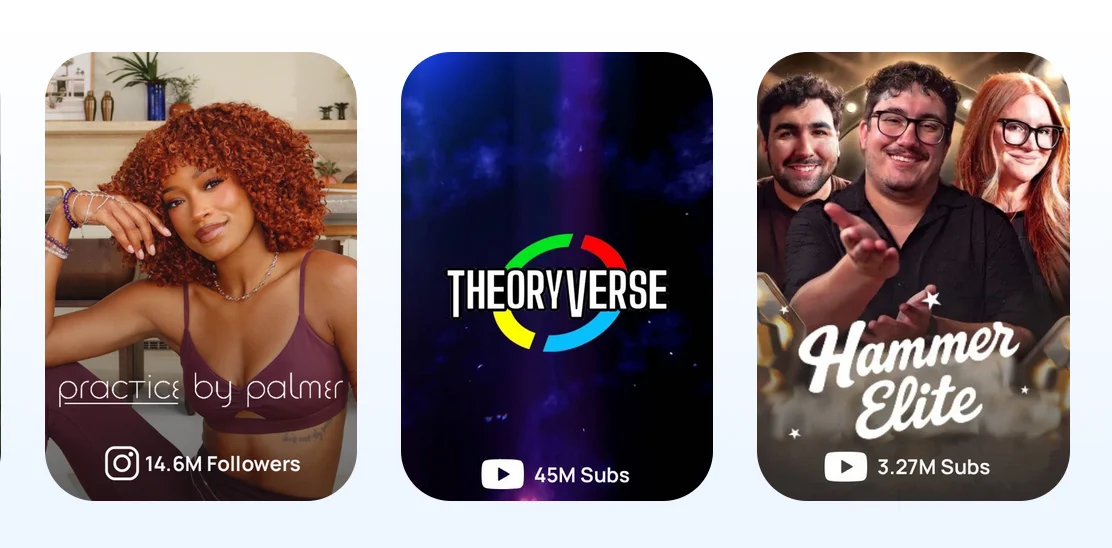
Today, the platform serves a diverse array of niches, including fitness, education, and entertainment. High-profile creators have taken notice, with recent membership launches for Caleb Hammer’s Hammer Elite, the TheoryVerse, and Keke Palmer’s Practice by Palmer. These creators are not just using Uscreen to host videos; they are using it to build ecosystems.
The Strategy Behind the Success: An Interview with CEO Allison Yazdian
In June 2025, Allison Yazdian joined Uscreen as CEO, bringing a pedigree that includes a Stanford MBA and a leadership tenure at the creator-shopping giant LTK. Her arrival marked a transition from a technical service provider to a strategic partner for creator-led businesses.
Yazdian views creators through the lens of entrepreneurship. "Creators are entrepreneurs, full stop," she asserts. "At LTK, I saw firsthand that creators have a nuanced set of challenges because they are essentially building on ‘rented land.’ They are beholden to algorithms and trapped on content treadmills. They are rightfully nervous about the future."
For Yazdian, Uscreen acts as the insurance policy against platform volatility. "Creators need to own the data, own the revenue, and own the destination," she explains. "When I started conversations with Uscreen, I realized this was the ultimate solution for creators who have built massive followings on social platforms and now need a way to build a sustainable, future-proof business."
Crucially, Yazdian rejects the narrative that Uscreen is in competition with platforms like YouTube. Instead, she positions it as a complementary layer. "We love YouTube; it is our top-of-funnel," she says. "YouTube is where you build trust and community. It is the greatest discovery engine in history. But once you have that audience, you need a different set of tools to scale that impact and drive deeper connection."
Technical Infrastructure and the "Walled Garden"
The modern Uscreen offering is bifurcated into two distinct experiences. The front end—the creator’s app or website—is designed for the viewer. It offers a premium, ad-free environment that mimics the UX of major streaming services, integrated with community-building tools that Yazdian describes as a "blend of Facebook and Discord."
"It’s a walled garden," Yazdian explains. "There are no trolls. It’s like-minded people who want to be there. We’ve seen incredible things happen—subscribers meeting up in person across the country because they’ve built these deep, authentic bonds within the creator’s community."
The back end, however, is a full-stack operating system. It allows creators to manage subscription tiers, marketing automation, and audience segmentation. "In the last year, we’ve built out a full CRM tool," Yazdian notes. "Creators are collecting rich data on their viewership, and our CRM lets them trigger specific activations based on that data."
Beyond the software, Uscreen has institutionalized a layer of human expertise. They offer coaching and consulting to help creators navigate the complexities of pricing, content strategy, and community management. "We don’t just hand them the keys," Yazdian says. "We help them develop the strategies to be successful."
The Implications for the Future of Media
The trajectory of Uscreen serves as a bellwether for the broader creator economy. We are moving away from the era of "reach-at-all-costs" and into the era of "community-as-business."
As creators realize that algorithm-dependent growth is inherently fragile, the move toward direct-to-consumer models will likely intensify. The success of the Uscreen model suggests that the future of entertainment will not be consolidated by massive, top-down studios, but distributed among thousands of independent, community-owned media houses.
For the aspiring creator, the message is clear: the technology to own your audience, monetize your expertise, and build a brand that lasts is no longer a luxury—it is the baseline. As Uscreen continues to iterate on its operating system, the barrier to entry for building a professional media company continues to lower, effectively democratizing the power once reserved for television networks and major production houses.
In the coming weeks, we will dive deeper into this shift by speaking with Caleb Hammer about how he transitioned his financial literacy content into a full-scale membership model on Hammer Elite. His experience provides a roadmap for what happens when a creator stops being just a voice on a screen and becomes a CEO of their own media empire.
Uscreen is a Tubefilter partner.

