

Published: December 20, 2021
In the crowded landscape of independent adventure games, few titles manage to capture the elusive, ethereal magic of a journey through the unknown. Scarf, a visually striking platformer that debuted in late 2021, attempts to weave a narrative tapestry that is as much about the destination as it is about the bond formed along the way. While the game draws undeniable inspiration from genre-defining classics like Journey, it manages to carve out its own identity through a unique, symbiotic mechanic: a sentient, polymorphic scarf that acts as both a tool and a companion.
The Core Premise: A Bond Beyond Words
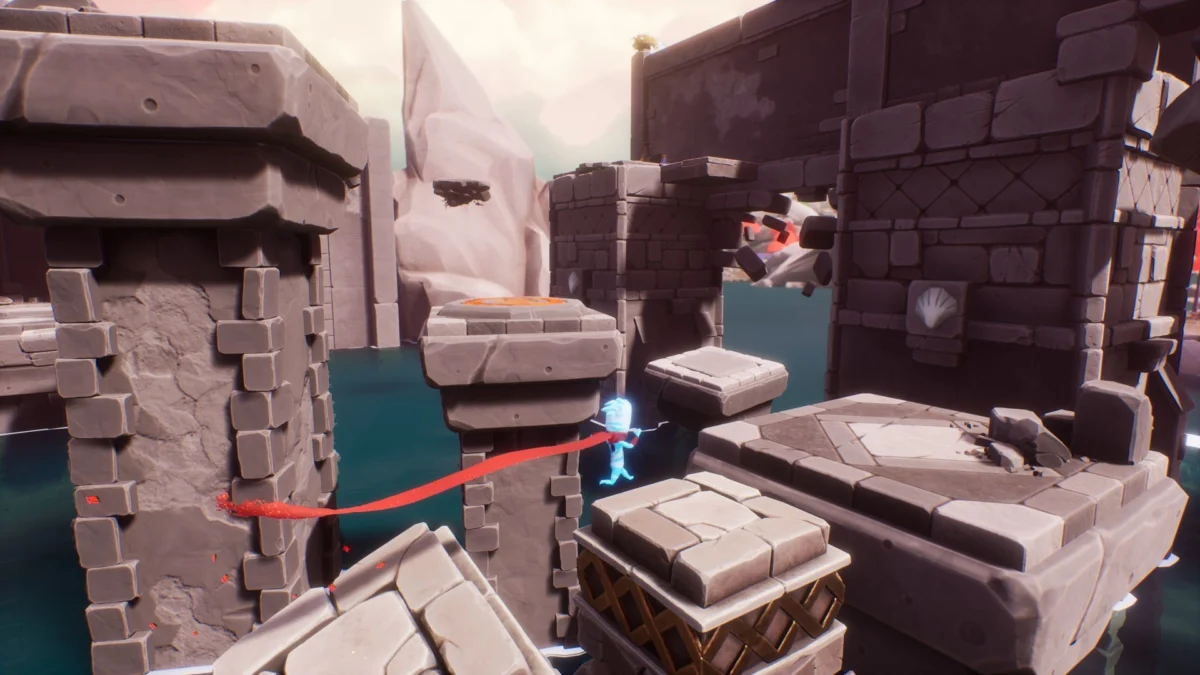
At its heart, Scarf is a tale of connection. The player assumes the role of a nameless nomad traversing a series of ancient, fractured worlds. This silent protagonist is not alone; they are accompanied by a living, dragon-shaped garment that has been cruelly separated from its mother. The overarching objective is deceptively simple: the nomad and their scarf must navigate the environment to retrieve lost fragments of a portal. Once these pieces are gathered and the portal is activated, the duo hopes to finally reunite the child with its parent.
This narrative setup serves as the emotional anchor for the entire experience. By choosing to forego traditional dialogue and instead relying on visual storytelling and atmosphere, the developers have crafted a game that invites introspection. The relationship between the player and the scarf is the central pillar of the game’s design, and it is a testament to the developers’ success that this inanimate object feels more alive than many fully voiced NPCs in contemporary gaming.
A Chronology of Discovery
The progression of Scarf is designed to be a meditative experience rather than a high-stakes gauntlet. The journey follows a deliberate, rhythmic pace:

- The Awakening: The player begins in a desolated, yet visually stunning, landscape. Here, the mechanics of movement are introduced alongside the basic premise of the scarf as a tether.
- The Exploration: As the player moves through diverse biomes—ranging from lush, verdant forests to sprawling, arid deserts—they are tasked with light puzzle-solving. The game utilizes visual signposting, such as glowing light particles, to guide the player without holding their hand too tightly.
- The Evolution: Through the progression of the story, the scarf gains the ability to shapeshift. It transforms into various tools, such as a glider or a hook, which allow the player to reach previously inaccessible areas.
- The Revelation: As the player collects lore-heavy "cutscene fragments"—rendered in the style of neolithic cave art—the deeper, more somber truth of the world begins to emerge.
- The Conclusion: The final act ties the disparate narrative threads together, culminating in a thematic exploration of ecology, freedom, and the cost of our actions.
Mechanics and Gameplay: A Refined Experience
While Scarf may not push the boundaries of platforming innovation, it excels in the polish and fluidity of its execution. The controls are remarkably responsive, allowing for a seamless transition between the nomad’s standard movement and the more complex maneuvers afforded by the scarf’s transformations.
The Absence of Combat
One of the most noteworthy design decisions in Scarf is the complete omission of a combat system. In an industry where "adventure" is often synonymous with "slaying," Scarf chooses a different path. There are no enemies to defeat, no health bars to manage, and no aggressive encounters. This decision is not merely a stylistic choice; it is fundamental to the game’s message. By removing the threat of violence, the developers ensure that the player’s focus remains on discovery and the deepening bond with their companion.
Puzzle Design and Pacing
The puzzles in Scarf are classic in their construction—weight-based switches, water physics, and platforming sequences form the core of the experience. For veteran gamers, these puzzles may appear straightforward, yet they serve their purpose well within the context of the game’s tranquil atmosphere. The game is intentionally paced to be slow, allowing players to soak in the orchestral score and the vivid, painterly aesthetics that define each environment.
Data and Observations: The "Collect-a-thon" Factor
Scarf is, by definition, a game of collection. The screen is frequently filled with items to find: portal fragments, sigils, orbs, and hidden collectibles like wood carvings and paintings.
| Feature | Design Approach | Impact on Player |
|---|---|---|
| Lore Fragments | Cave-art style cutscenes | Adds depth and mystery to the world |
| Scarf Abilities | Morphing tools (Glider, Hook) | Provides gameplay variety and rhythm |
| Navigation | Visual signposting (Light particles) | Encourages exploration without frustration |
| Collectibles | Multi-layered (Portals, Sigils, etc.) | May slow the pace for some players |
While the abundance of items encourages players to explore every nook and cranny of the map, it can occasionally lead to a sense of repetition. Some players may find the requirement to hunt for items to unlock barriers a bit tedious. However, this structure is part of the game’s deliberate attempt to ground the player in the world, forcing them to observe the environment rather than rushing to the next waypoint.

Official Stances and Developer Intent
While the developers have remained largely quiet in terms of post-launch press, their design documents and early interviews suggest a clear goal: to create a "whimsical yet sobering" experience. The decision to make the scarf a separate, responsive entity—one that occasionally investigates the world independently—was a calculated move to prevent the player from viewing the scarf as a mere "tool."
The developers aimed to evoke empathy. By stripping the player of their abilities whenever the scarf is separated from the nomad, the game creates a tangible sense of loss. This mechanic forces players to value their companion not just for what it can do for them, but for the companionship it provides. It is an elegant, organic way to reinforce the game’s emotional core without relying on dialogue.
Implications: A Mirror to Our World
Beyond the surface-level platforming, Scarf offers a surprisingly profound commentary on ecology and freedom. As the narrative unfolds through the aforementioned cave-art cutscenes, the player begins to understand that the "ancient world" is not just a stage for a game—it is a cautionary tale.
The game’s "heel turn" in the final act—a narrative shift that fundamentally changes the player’s understanding of their own actions—is perhaps its most ambitious element. It challenges the player to consider the environmental impact of their progress. In doing so, Scarf moves beyond the realm of simple entertainment and into the territory of environmental allegory.
Final Thoughts: More Than "Just Another Platformer"
It is easy to categorize Scarf as "just another platformer" if one only looks at the mechanics on the surface. However, to do so would be to miss the forest for the trees. Scarf does not seek to challenge the player’s dexterity or frustrate them with impossible platforming trials. Instead, it seeks to provide a space for introspection.

The game is best enjoyed in a single, focused sitting, allowing the player to fully immerse themselves in the unfolding narrative. Its orchestral score, which dynamically shifts to match the emotional tenor of the surroundings, works in tandem with the visual art to create a cohesive, soothing, and ultimately poignant experience.
For those who value atmosphere and narrative depth over mechanical complexity, Scarf is a worthy addition to their library. It reminds us that sometimes, the most powerful stories are not the ones told through explosive action or complex systems, but through the simple, quiet act of walking alongside someone—or something—we care about.

