

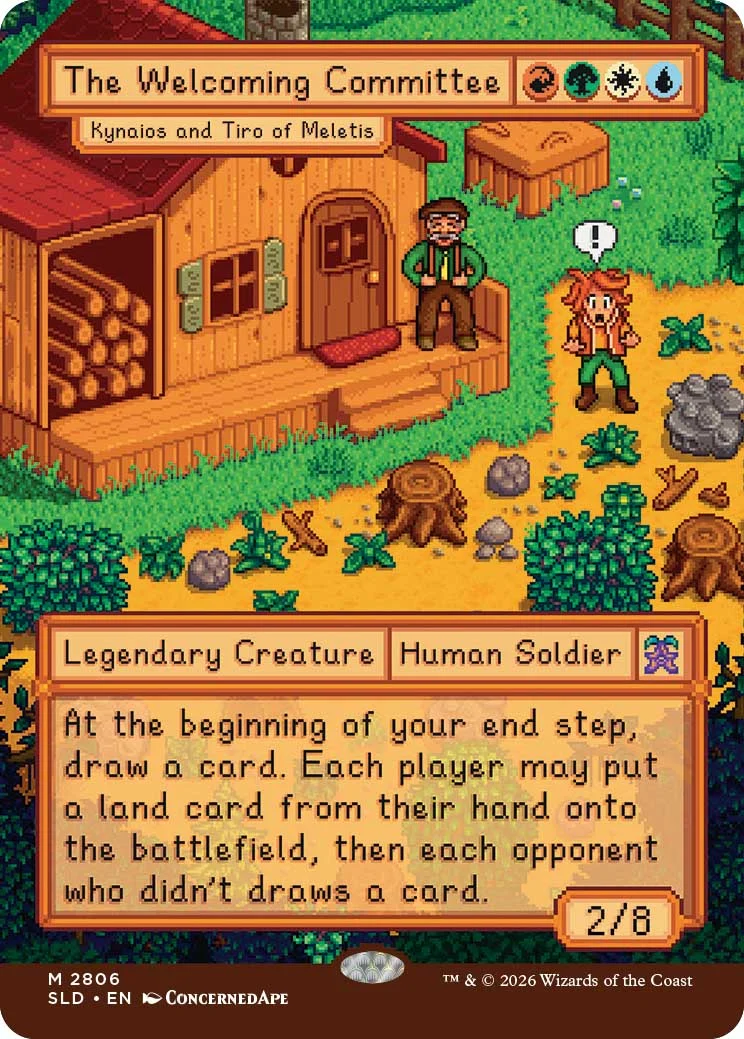
The intersection of indie gaming royalty and the world’s most venerable trading card game has reached a new, controversial milestone. Wizards of the Coast (WotC) has officially unveiled its latest Secret Lair collaboration: a thematic crossover with Eric "ConcernedApe" Barone’s global phenomenon, Stardew Valley. While these limited-edition releases—famed for their artistic reinterpretations of existing mechanics—have previously tapped into properties ranging from Monty Python to Dwarf Fortress and even Garfield, the Stardew Valley drop has ignited a uniquely fiery discourse within the community, forcing a collision between the game’s established pixel-art aesthetic and the high-fidelity expectations of its massive fanbase.
The Secret Lair Phenomenon: A Legacy of Limited Drops
To understand the gravity of this collaboration, one must first understand the Secret Lair model. These drops represent a specific slice of the Magic: The Gathering business ecosystem: high-cost, limited-run, print-on-demand, or strictly time-gated collections of cards. They rarely introduce new mechanics; instead, they serve as artistic canvases, offering "reskins" of established cards—classic staples given a fresh coat of paint to appeal to pop-culture enthusiasts.
However, the model has its detractors. Infamous for selling out at breakneck speeds and often commanding significant markups on the secondary market, Secret Lair products represent a shift in how Hasbro approaches intellectual property. By aggressively expanding the Magic brand to include external IPs, WotC has moved from being a purveyor of its own high-fantasy lore to a cultural clearinghouse for diverse franchises. This has resulted in a "dartboard" approach to partnerships, leading to the bizarre juxtaposition of a serene farming simulator card appearing alongside aggressive, high-fantasy combat spells.
Chronology of a Controversy: From Pixels to Portraits
The announcement of the Stardew Valley drop was met with immediate, visceral reactions. Unlike the Dwarf Fortress or Monty Python crossovers, which leaned into their respective visual identities, the Stardew Valley cards faced a fundamental hurdle: the transition from the game’s "programmer art" to the stylized, detailed illustrations typical of Magic artists.
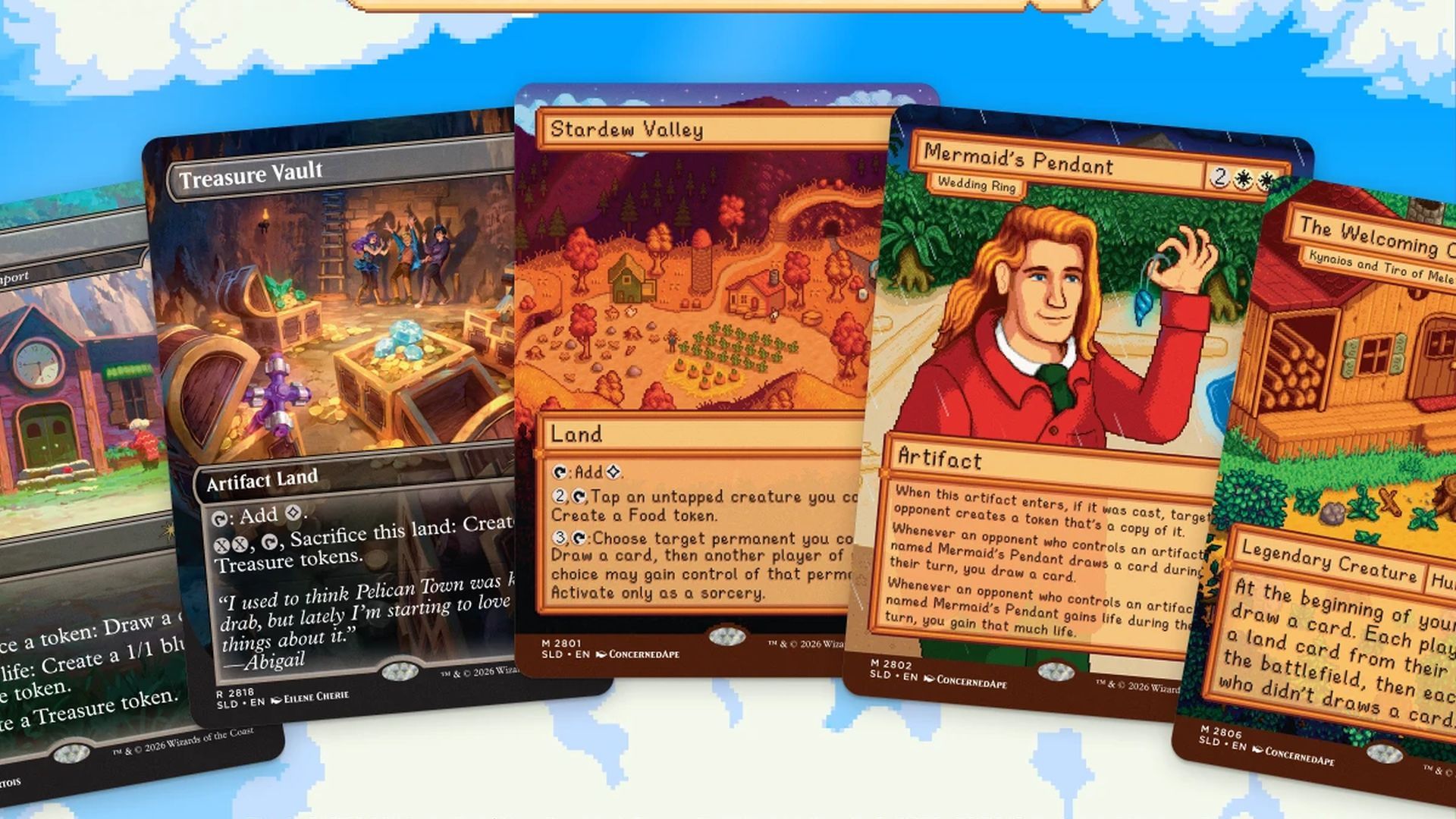
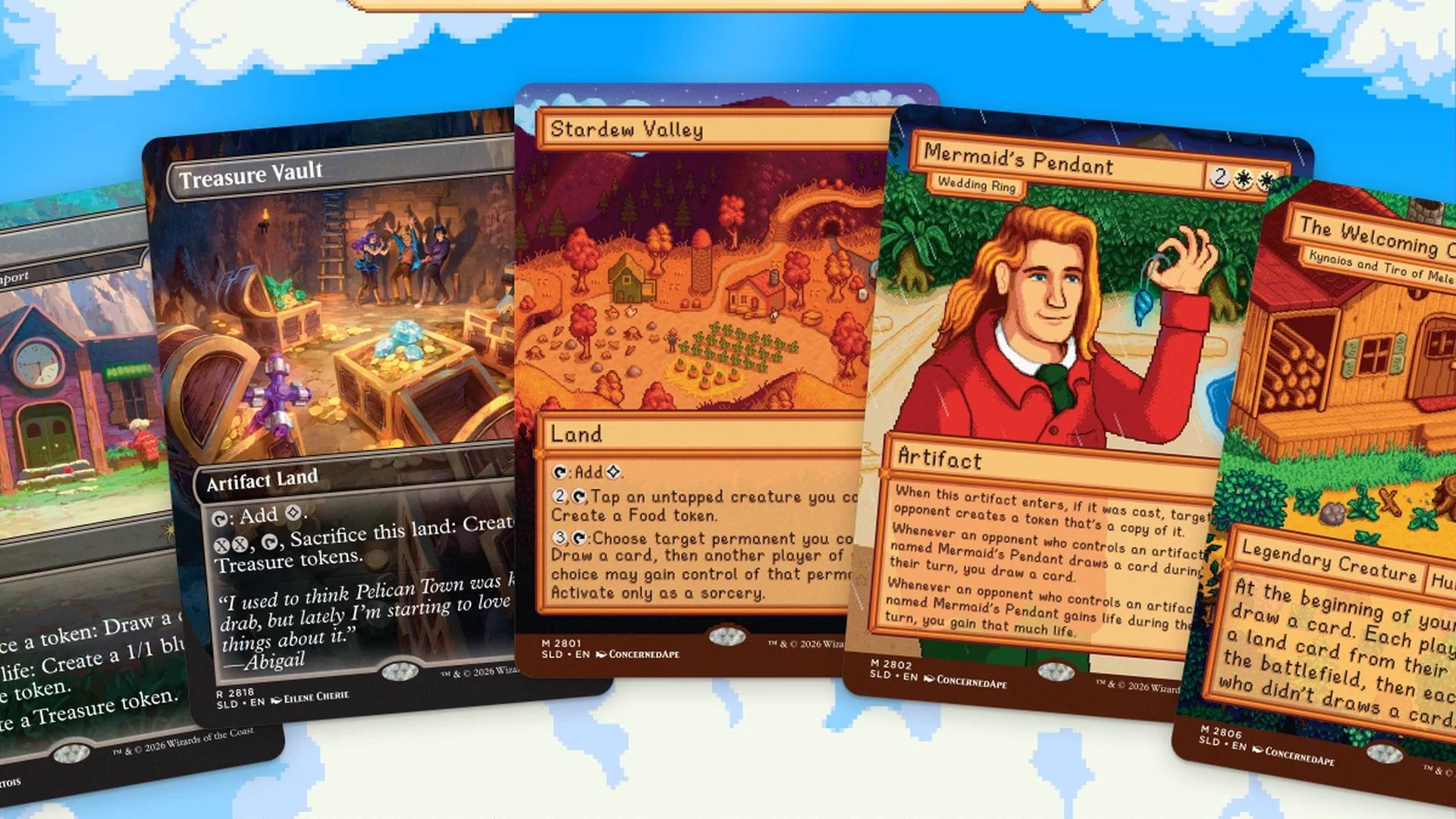
The timeline of the backlash began almost immediately upon the reveal of the card art. Central to this debate is the depiction of Elliott, one of the game’s primary romanceable NPCs. In the Stardew Valley community, fan-fiction and head-canon have solidified his image as a willowy, delicate, "bishonen-style" writer. When the Mermaid’s Pendant card—a mechanical reskin of the Wedding Ring card—revealed a square-jawed, hyper-masculine rendition of the character, the subreddit erupted.
The discourse was swift and biting. Users labeled the art as everything from "Habbo Hotel-coded" to a "Sheriff Woody lookalike." The intensity of these reactions highlights the "parasocial" nature of modern gaming fandoms, where players feel a proprietary sense of ownership over characters. When the visual representation of a character diverges from years of community-created lore, the dissonance is perceived not just as an artistic choice, but as a violation of the character’s core identity.
Supporting Data: The Anatomy of the Cards
The collection is not merely a portrait gallery; it attempts to weave the mechanics of Magic into the fabric of the Stardew Valley world. Several key cards demonstrate this integration:
- The Mermaid’s Pendant: Serving as the centerpiece for the controversy, it functions as a critical narrative tool within the card set.
- Sword to Plowshares: A staple in Magic formats, its re-imagining here is perhaps the most coherent marriage of mechanic and theme, turning a card about removing creatures from the battlefield into a literal farming metaphor.
- The Autopetter: Hidden as a "Easter egg" detail within a cavernous scene, this represents the level of attention to the game’s "deep lore" that fans of the franchise demand.
- The Mayor’s Purple Underpants: A nod to the game’s most enduring comedic quest, proving that the collaboration does not take itself entirely too seriously.
Despite the criticism regarding the character designs—including the depiction of Penny with ringlets and a more robust interpretation of Leah—there have been pockets of praise. The "glow-up" given to Clint, the local blacksmith, has been widely accepted, particularly as the community looks forward to the upcoming 1.7 update.
Official Responses and the "ConcernedApe" Factor
It is worth noting that Eric Barone’s own artistic style is rooted in the "programmer art" aesthetic—a deliberate, humble choice that has defined Stardew Valley’s visual language since its inception. The original designs for characters like Grandpa and the various NPCs are iconic precisely because of their limitations.
When a professional art house like WotC reinterprets these designs, they are essentially stripping away the ambiguity that allows players to project their own fantasies onto the characters. The professional illustrations are "final" in a way the original pixel art is not. This clash of "human imperfections" versus "professional gloss" is the heart of the current conflict.
Wizards of the Coast has maintained a standard stance on these releases, focusing on the celebration of the property rather than addressing specific criticisms of artistic direction. The goal is clearly to bridge the gap between the cozy, low-stress world of Stardew Valley and the high-stakes, competitive environment of Magic: The Gathering.
Implications for Future IP Integration
The Stardew Valley crossover serves as a case study for the risks and rewards of cross-pollinating gaming IPs. For Hasbro, the incentive is clear: massive cross-pollination drives sales and introduces Magic to new audiences who might never have picked up a booster pack otherwise. For the Stardew Valley community, the implications are more existential.
As Stardew Valley prepares for its 1.7 update—which promises to make characters like Clint and Sandy romanceable and introduce a new farm type—the community is constantly evolving. The Secret Lair drop acts as a cultural mirror, reflecting how players perceive their favorite characters when they are removed from the controlled environment of their home game.
Furthermore, this controversy signals a shift in the standard for licensed merchandise. Fans are no longer satisfied with simple logos or "skinning" of existing products; they demand an intimate understanding of the source material’s visual "vibes." The outcry over Elliott’s jawline is not a sign that the Secret Lair is a failure, but rather a sign of how deeply embedded these characters have become in the lives of their players.
Conclusion
As the launch date of July 27 approaches, the Secret Lair website is expected to see a surge in traffic, driven both by curiosity and the inevitable "collector’s FOMO." While the art choices have sparked a firestorm of memes and critiques, they have also kept the Stardew Valley community engaged in a high-level discussion about aesthetics, interpretation, and the evolution of digital characters.
Whether the cards are viewed as a triumphant melding of two worlds or an awkward aesthetic departure, they represent the modern reality of gaming: nothing is sacred, and everything is subject to the remix. For the fans who choose to purchase them, these cards will serve as a permanent, physical artifact of a moment in time where a quiet, rural farm-life simulator briefly, and quite loudly, entered the chaotic, multiverse-spanning arena of Magic: The Gathering.

