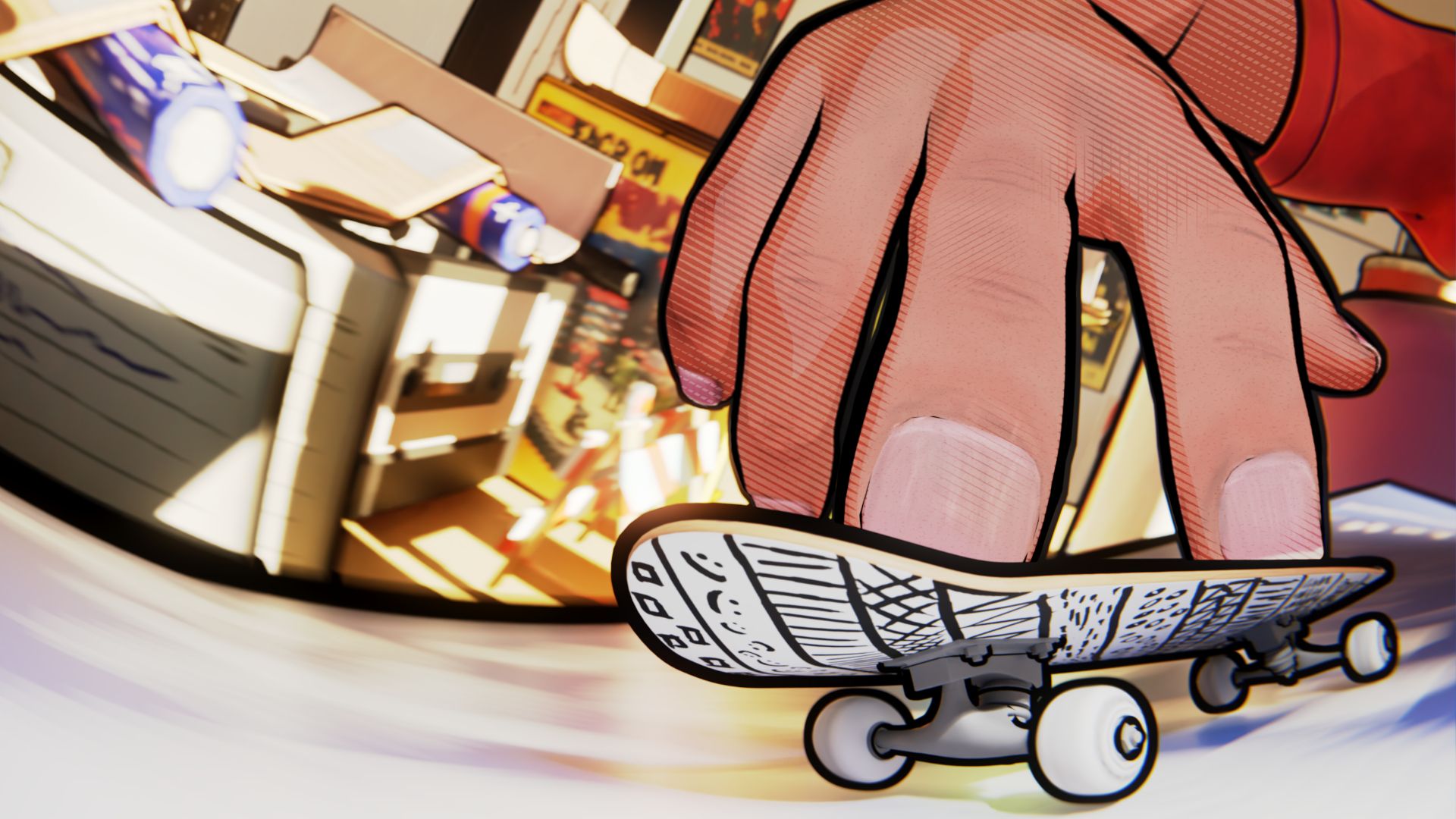
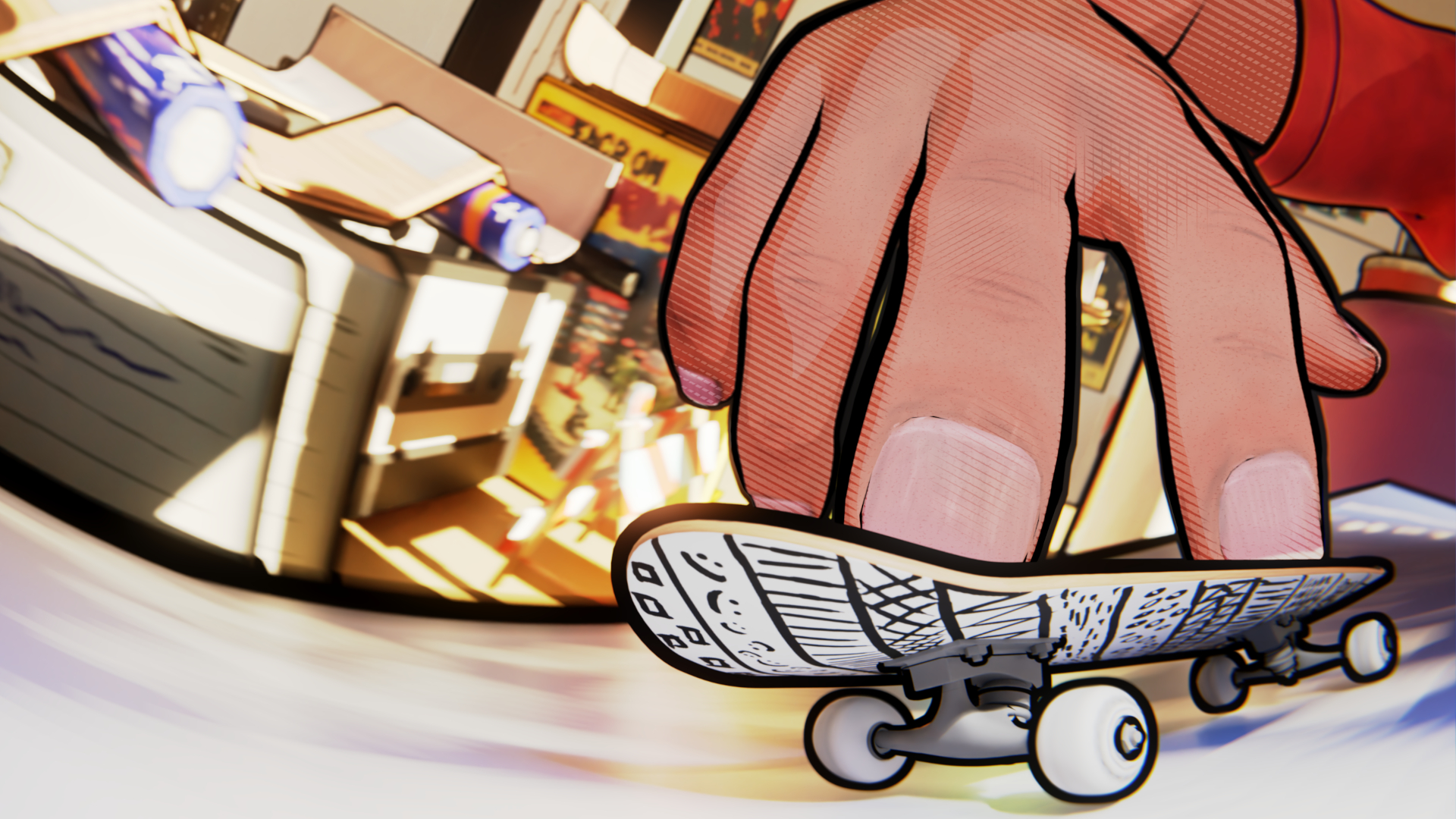
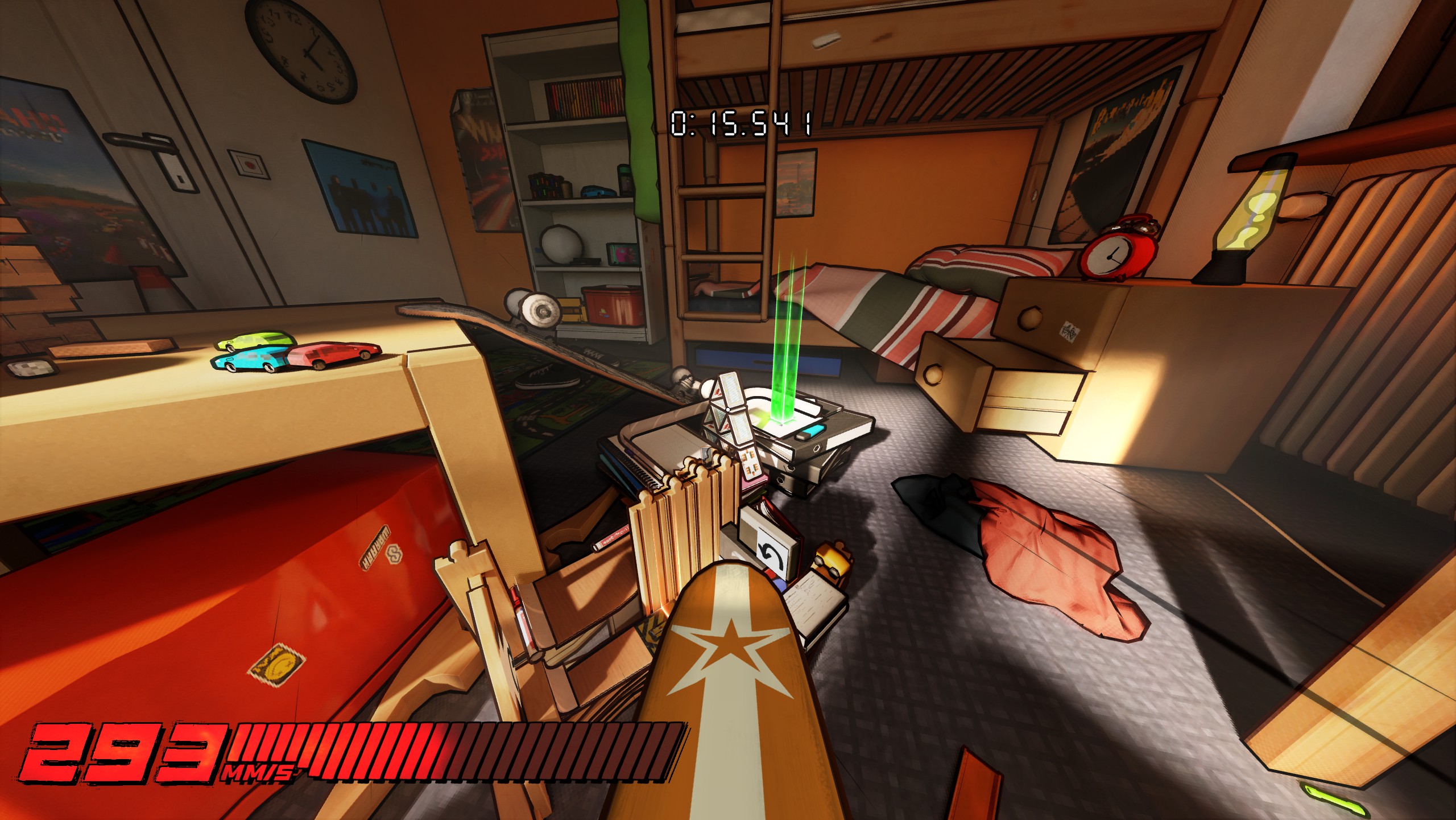
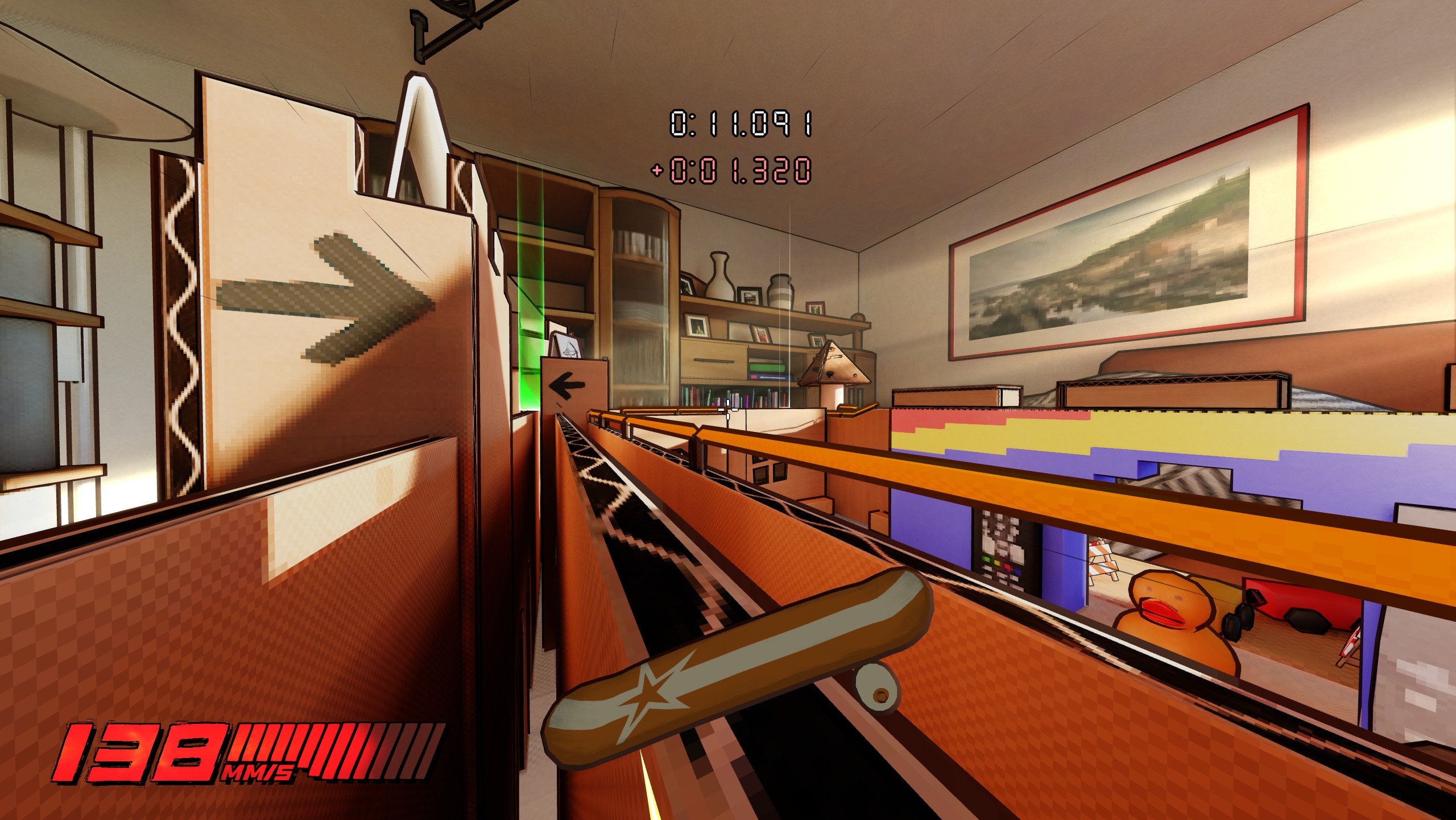
At first glance, Stuntboost looks like a charming, low-stakes novelty. Its Steam page tags list it as a fast-paced, 3D first-person platformer, parkour racer, and skateboarding game. Yet, those labels fail to capture the chaotic brilliance of what developer Byting Games has actually built. It is part skateboarding sim, part speedometer-driven physics sandbox, and a loving homage to the miniature bedroom and household maps popularized by early first-person shooter modders.
Priced at a modest $7, the game has quietly spent its first month on Steam accumulating a "Very Positive" rating across roughly 253 reviews. While it has not yet exploded into mainstream viral consciousness, it has captured the hearts of hardcore movement-shooter enthusiasts. For a growing sect of players, Stuntboost isn’t just a hidden gem—it is an early contender for the best game of 2026.
Main Facts: What is Stuntboost?
Stuntboost rejects conventional control schemes for its genre. It is quite possibly the only skateboarding game on the market that explicitly issues a warning suggesting players use a mouse and keyboard—a design choice that makes total sense the moment you launch into a level.
At its core, the game is a masterclass in first-person camera precision and momentum management. Players navigate non-linear, toy-sized obstacle courses using essentially a three-button layout: jump, crouch, and grind. The primary objective is simple to understand yet punishingly difficult to master: gain speed, maintain momentum, and cross the finish line as fast as possible.
The game features over 40 distinct levels set across various rooms of a house, scaling from tabletop fingerboard circuits to massive cardboard constructions. Beyond the standard skateboard, later worlds introduce drift-heavy cars, free-roam scooters packed with hidden collectibles, and momentum-dependent longboards. Hidden audio tapes on every level unlock a free-camera mode for scouting, contribute to bonus stage unlocks, and fuel an intense competitive ecosystem featuring global leaderboards, friend rankings, and ghost-replay sharing.
Chronology: From Word-of-Mouth Curiosity to Community Obsession
The trajectory of Stuntboost follows a classic indie sleeper-hit timeline, spreading primarily through quiet peer recommendations and digital word-of-mouth rather than multi-million-dollar marketing campaigns.
Launch and Initial Obscurity
Released quietly on Steam, Stuntboost initially flew under the radar. Its deceptive art style—reminiscent of Hot Wheels tracks and cardboard fingerboard parks—mislead casual observers into thinking it was a gentle, child-friendly arcade racer. Early players quickly realized that surviving the tracks required razor-sharp reflexes and mastery of mouse-aimed momentum.
The Discovery Phase
As players began to clear the initial campaign, the game’s depth unspooled. Through asynchronous multiplayer features like ghost racing and full-run replay viewing, the community began decoding the physics engine. Players uncovered advanced movement techniques—such as varial kickflips, grind-hopping, and high-velocity speed storage—turning standard levels into improvisational speedrunning canvases.
The Competitive Apex
Weeks after its launch, Stuntboost has transformed into a high-stakes arena for friendly rivalries. Communities on Discord and social media have formed around shaving hundredths of a second off personal bests. The integration of incremental leaderboard reveals—where global rankings remain locked until a player achieves a diamond medal—has successfully hooked perfectionists, turning the game into a daily compulsion.
Supporting Data and Technical Mechanics
To understand why Stuntboost commands such intense devotion, one must examine its mechanical underpinnings and quality-of-life features, which punch well above the game’s budget class.
The Physics Ecosystem: Every sloped surface, plate, playing card, and three-ring binder in the game functions as a potential springboard. Players do not merely drive or skate; they manipulate collisions and slopes to convert verticality into horizontal velocity.
Vehicle Diversity: While the skateboard forms the foundation of the experience, the later introduction of drift cars completely alters player routing. Drifting requires an entirely different approach to cornering, forcing veterans to unlearn muscle memory.
Asynchronous Features: Inspired in part by movement-puzzle hits like Neon White, Stuntboost handles progression and replays intelligently. Players can watch the full ghost replays of anyone on the leaderboard, provided they have already discovered the shortcuts utilized in those runs. This prevents early spoilers while teaching novices advanced routing strategies.
Content Scale: The base package includes over 40 levels, a complete speedrun mode for full-game runs, customizable board skins, a high-difficulty tower gauntlet, and daily challenges.
Official and Community Perspectives
While Byting Games has kept a relatively low public profile, allowing the game’s design to speak for itself, the reaction from the community and press has been illuminating. Critics and players frequently draw comparisons to established speedrunning giants like Trackmania and Neon White, though Stuntboost carves out a distinct identity.
The Trackmania Comparison: While Trackmania is a premier driving simulator that demands precise braking, cornering, and line discipline, Stuntboost leans in the opposite direction. It features no brake button, allows players to snap turns on a dime, and actively encourages maximum velocity at all costs.
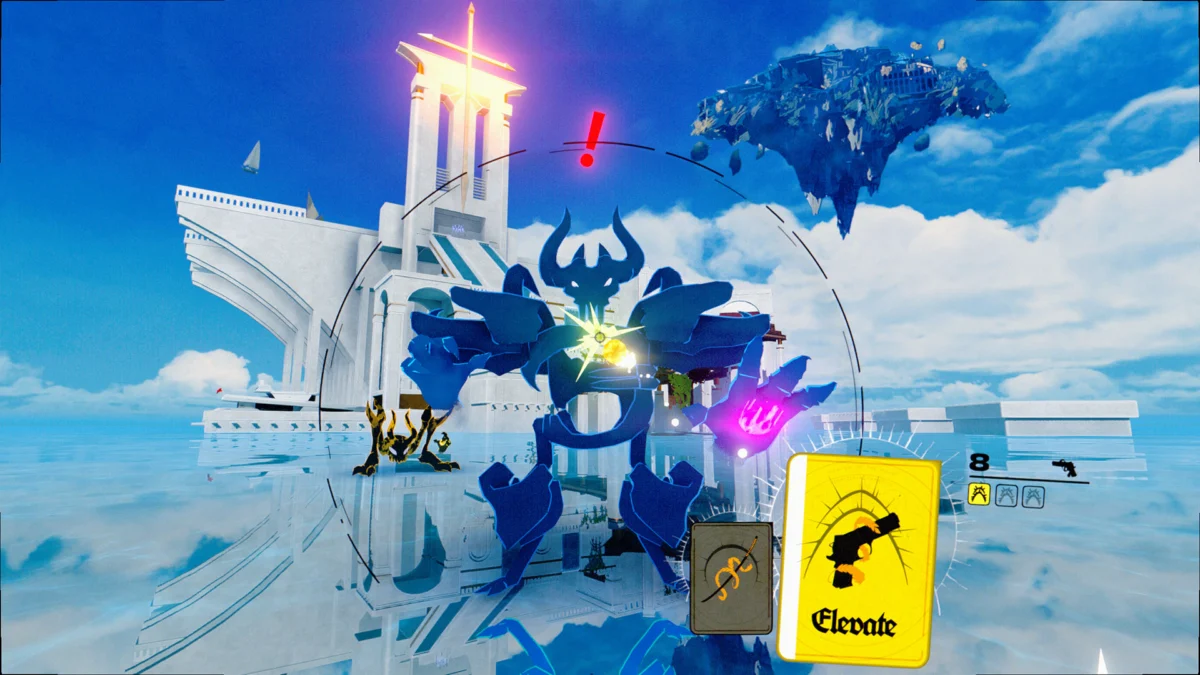
The Neon White Comparison: Where games like Neon White can occasionally feel restrictive due to mandatory target-shooting and card-juggling mechanics, Stuntboost offers a more improvisational, streamlined rush. It focuses purely on locomotion, freeing the player to flow through environments without cognitive friction.
Reviewers have praised the game’s refusal to hold hands, noting that its progressive disclosure of leaderboard data and ghost runs creates an organic learning loop that rewards curiosity and persistent failure.
Implications: The Future of Physics-Based Indie Movement Shooters
The success of Stuntboost highlights a broader trend within the PC gaming landscape. While mainstream commercial success often clusters around deckbuilders, auto-battlers, and cozy management sims, a passionate sub-market of players continually hungers for pure, high-velocity movement mechanics.
1. A Shift Toward Pure Locomotion
Games like Stuntboost and recent hit Echo Point Nova prove that players crave experiences centered around kinetic freedom. When a game makes movement feel inherently thrilling, players are willing to overlook modest art budgets and niche premises in favor of deep mastery ceilings.
2. The Power of Micro-Budgets and Focused Design
At a $7 price point, Stuntboost demonstrates the viability of hyper-focused game design. By stripping away narrative bloat, complex progression systems, and extraneous side-activities, Byting Games delivered a tight, repeatable gameplay loop that maximizes player engagement per dollar spent.
3. Cultivating Toxic-Free, High-Skill Communities
The game’s leaderboard and replay architecture foster a healthy, competitive ecosystem. By allowing players to share ghosts and study superior runs step-by-step, Stuntboost transforms competitive frustration into collaborative learning, cementing its status as a beloved cult classic among movement purists.
Ultimately, Stuntboost succeeds because it evokes a rare emotional state: raw, unfiltered adrenaline. It is a dangerous, intoxicating rush packaged in a cardboard box—and a potent reminder that the most exciting games in any given year are often the ones nobody saw coming.