

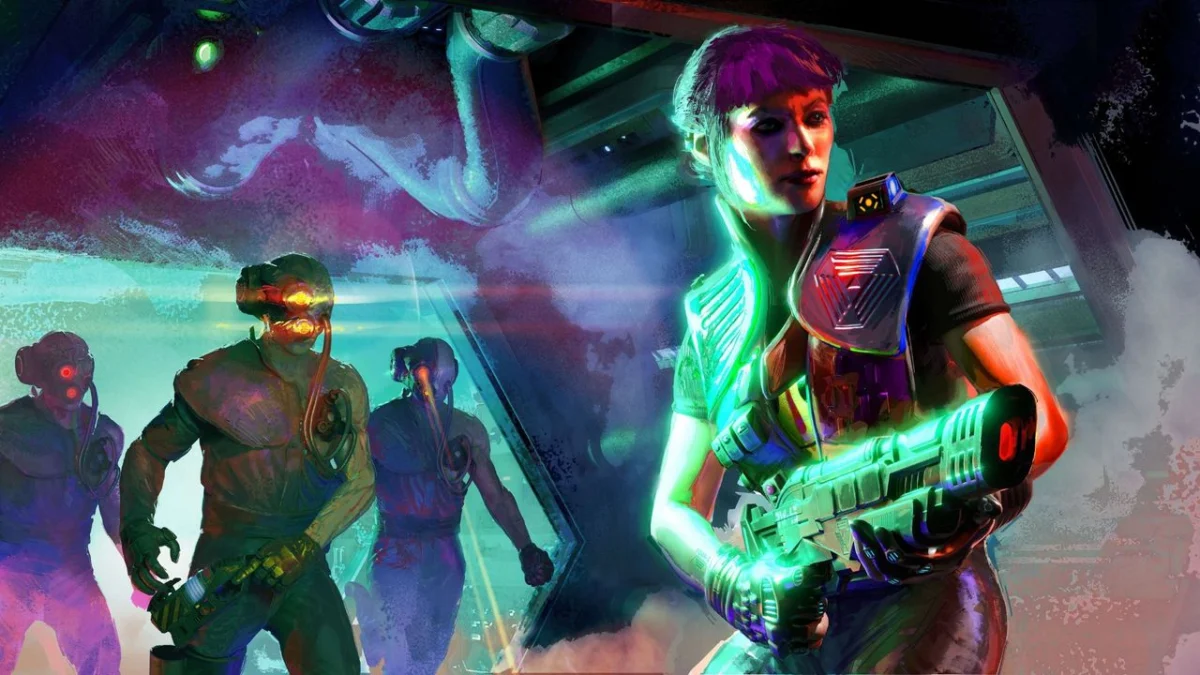
It is a testament to the enduring legacy of System Shock that its modern remake feels both timeless and inevitable. However, for those behind the scenes at Nightdive Studios, the journey to the 2023 release was anything but certain. While players now enjoy the polished, atmospheric corridors of Citadel Station, fresh details from the development trenches reveal that the project was, at several points, effectively dead.
The road to the remake was a turbulent eight-year saga of reboots, financial crises, and existential uncertainty. What began as a modest remaster project spiraled into an ambitious reimagining, eventually becoming a battle of attrition against industry realities. Today, the story of System Shock is not just about the return of SHODAN; it is a story of a small group of developers who refused to let a legendary title fade into obscurity.
A Chronology of Chaos: From Remaster to Reboot
The history of the System Shock remake is a masterclass in the volatility of modern game development. The project’s timeline is defined by a series of pivots that saw the game shift its scope, engine, and internal philosophy.
- 2015: Nightdive Studios, having successfully acquired the rights to the System Shock franchise, announces a "remaster" of the 1994 classic. The initial goal was to update the resolution and controls to make the game accessible to a new generation.
- 2016: The project gains significant momentum. A Kickstarter campaign launches, aiming to turn the remaster into a full-scale remake using the Unity engine. The campaign is a massive success, signaling a hunger for immersive sims.
- 2018: The project hits a critical wall. Scope creep and misalignment with publisher expectations lead to a "course correction." In a move that shocked the industry, Nightdive announces an indefinite hiatus for the project. Internally, the situation was far more dire: the funding had dried up completely.
- 2019–2020: The "La Résistance" era. A core group of developers continues to work on the game, often in the shadows, attempting to stabilize the architecture and prove the game’s viability to stakeholders.
- 2021: The team formally shifts development to Unreal Engine 4, a major technical undertaking that required rebuilding significant portions of the game’s geometry and systems from scratch.
- 2023: After eight years of development, System Shock finally launches to critical acclaim, successfully balancing the punishing difficulty of the original with modern mechanical standards.
The Financial Precipice and the "La Résistance" Movement
By 2018, the System Shock remake was, by all accounts, a failed project. The transition from a simple remaster to an ambitious AAA-style production had ballooned costs beyond the studio’s reach. Nightdive producer Daniel Grayshon, in an interview featured in the latest issue of PC Gamer, paints a harrowing picture of that era.
"I did feel like maybe some people—who were then with us—were trying to focus more on selling the game to a publisher to get more funding rather than actually build the game," Grayshon notes. This focus on "pitching" over "playing" created a disconnect that stalled actual development. When the money ran out, the project was effectively abandoned.
It was in this vacuum of leadership that "La Résistance" was born. This wasn’t an official company initiative, but a grassroots movement of developers who were emotionally invested in the source material. They formed a private Discord server—a digital bunker—where they continued to refine the game’s assets and mechanics, operating with the singular goal of proving the game could be finished.
Technical Hurdles: Building Citadel Station from Scratch
The decision to switch to Unreal Engine 4 was both a blessing and a monumental curse. For developers like Grayshon, the move meant abandoning years of work in Unity and starting over in a technical environment that was, at the time, foreign to him.
"I was going onto websites, finding tutorials, finding whatever I could just to get a foot in the door," Grayshon admits. The challenge wasn’t just technical; it was structural. The original 1994 System Shock relied on the architectural limitations of its era—thin walls, abstract layouts, and non-Euclidean geometry that wouldn’t hold up in a modern 3D engine.
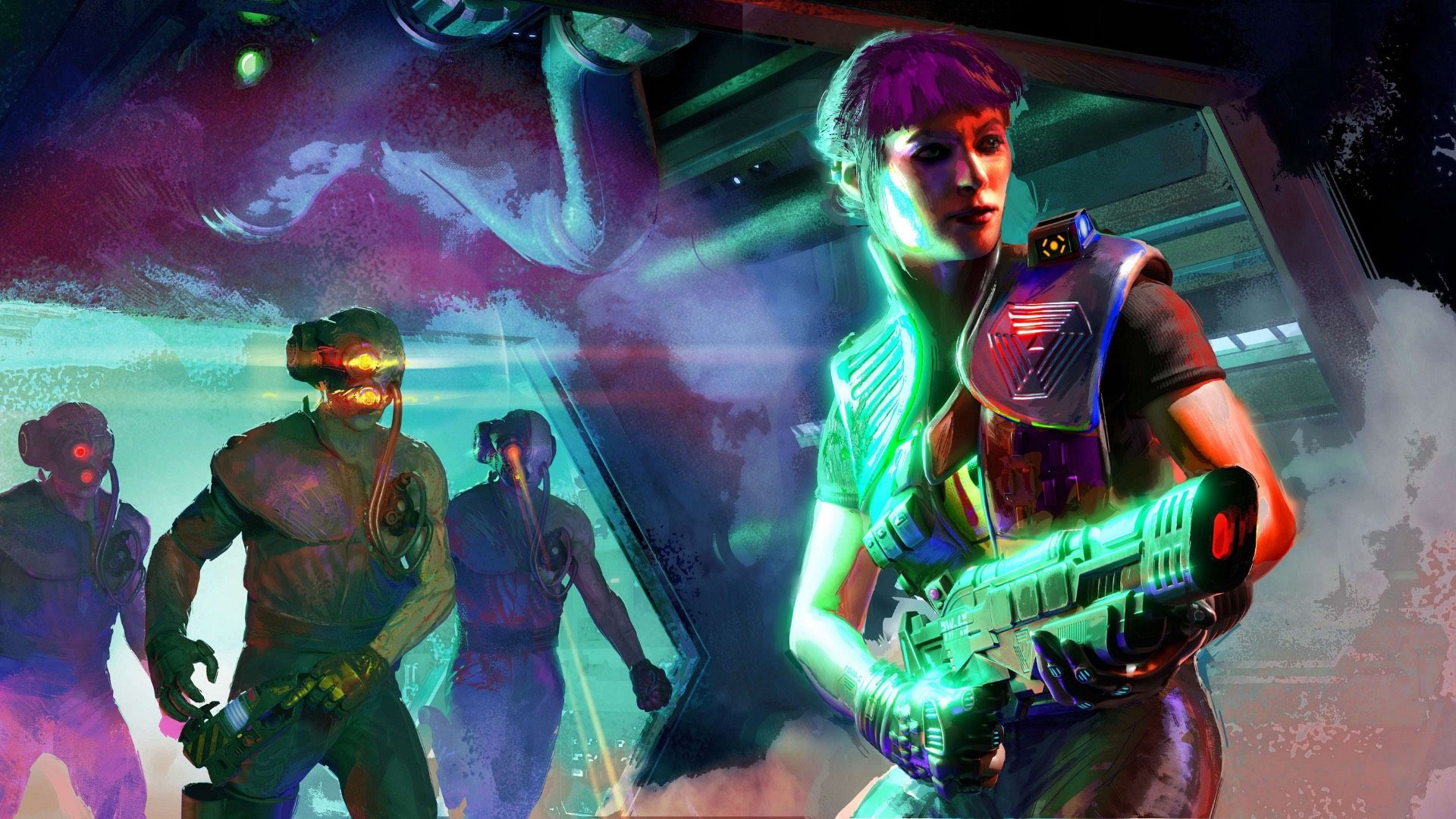
The remake team had to perform a delicate act of digital archaeology. They had to maintain the "feel" of the original Citadel Station while ensuring the environment functioned as a physical space. This led to the famous "staircase" problem. In the original, the station’s geometry was often illogical to save on rendering power. In the remake, the team had to mathematically map out the station to ensure that if you walked down a hallway, you actually ended up where you were supposed to.
"It’s still very faithful to the original game," Grayshon says, "but it has a lot more staircases in it, and a lot more of a spaced-out feel to it… because it just mathematically wouldn’t work [otherwise]."
Implications for the Immersive Sim Genre
The survival and ultimate success of the System Shock remake carries significant weight for the immersive sim genre. For years, critics have argued that the "ImSim" (a genre defined by player agency, emergent systems, and environmental storytelling) was a dying breed. Games like Prey (2017) and Deus Ex: Mankind Divided struggled to find massive commercial success despite critical adoration.
Nightdive’s achievement proves that there is a sustainable market for these high-fidelity, high-complexity experiences, provided the developers can navigate the treacherous middle-ground of development. The remake serves as a bridge between the 90s design philosophy of "giving the player tools and letting them fail" and modern quality-of-life expectations.
Furthermore, the story of System Shock highlights the "human element" of game development. While we often view games as products of massive corporations, the reality is that the best titles are often carried across the finish line by the sheer stubbornness of individuals. Without the "La Résistance" group, one of the most important games in PC history would have remained a cautionary tale of "what could have been."
Conclusion: A Triumph of Persistence
The System Shock remake is more than just a game; it is a survivor. It represents the intersection of industry ambition and the raw passion of a team that refused to let a legacy project die. While the eight-year timeline might seem excessive to the casual observer, the final product suggests that the time was not wasted—it was spent fighting for the soul of a classic.
As we look at the current landscape of gaming, where projects are canceled with increasing frequency, the System Shock story serves as a vital reminder. Behind every patch note and every glowing review, there is often a hidden history of Discord servers, late-night tutorials, and developers working in the dark to ensure that, no matter the odds, the game gets made. Citadel Station is back, and for that, we owe a debt to the guerillas of Nightdive.

