

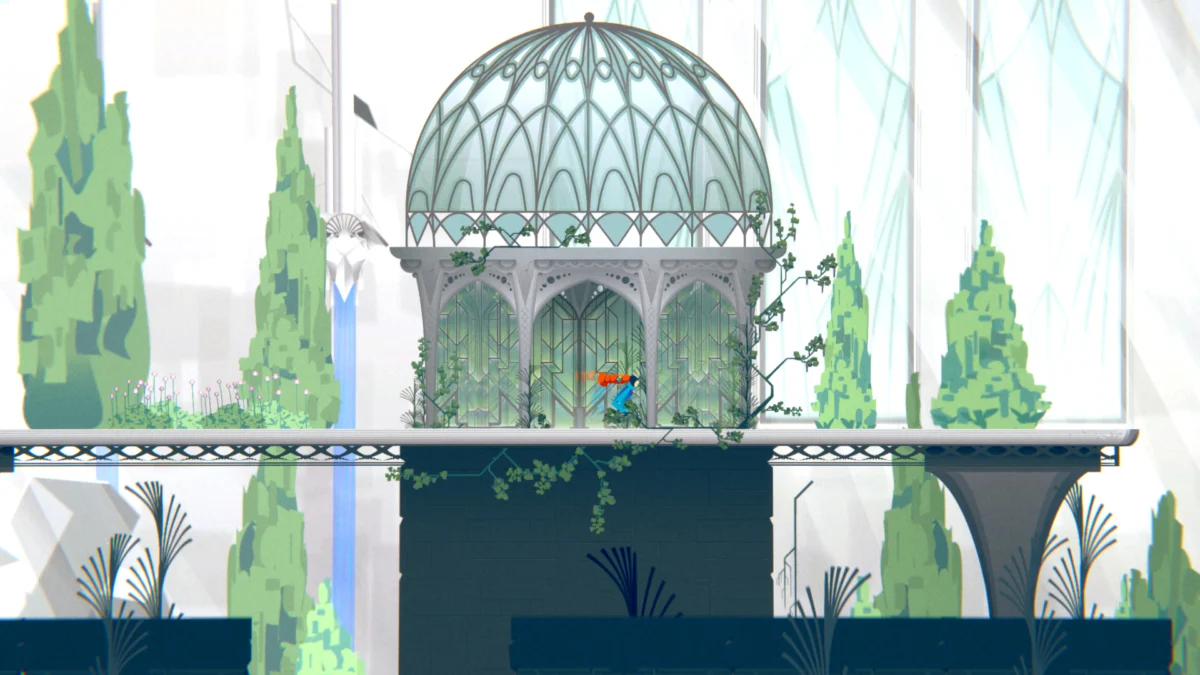
In the saturated landscape of modern indie gaming, the label "story-rich" has become a ubiquitous marketing shorthand, often applied with such frequency that it risks losing its defining weight. For titles like Wondernaut Studio’s Aspire: Ina’s Tale, the promise of a narrative-driven 2D platformer is an inviting one. Yet, beneath its polished, hand-painted aesthetic lies a structural fragility that underscores a broader issue in the genre: the struggle to balance visual artistry with genuine, innovative substance. Released in late 2021, Aspire presents a beautiful but ultimately derivative journey that asks whether aesthetic appeal is enough to sustain a player through the drudgery of familiar mechanics.
The Genesis of the Tower: Main Facts and Premise
Aspire: Ina’s Tale introduces players to Ina, a character who fits snugly into the contemporary archetype of the waifish, spindly-legged protagonist common in titles like Gris, Hoa, and Minute of Islands. Ina wakes within the confines of a sprawling, enigmatic structure known simply as the Tower.
As the "Heart of the Tower," Ina is burdened with the role of the "Keeper of Kamiura." The narrative hook is one of profound isolation: Ina must navigate the Tower’s shifting architecture to uncover her past and find a way home. However, the game quickly falls into the well-worn "chosen one" trope. The Tower, constructed by a mysterious entity known as the Architect, serves as a living ecosystem that feeds on the dreams of its inhabitants. Ina’s journey is framed as an act of maintenance, a cyclical duty that feels burdened by the weight of expectations it never quite meets.
A Chronology of Disenchantment
The experience of playing Aspire is one of diminishing returns. The early hours offer a sense of discovery that quickly erodes as the mechanics remain stagnant.
- The Opening Hours: Initial impressions are undeniably strong. The art direction is evocative, and the opening puzzles provide a gentle introduction to the game’s core loop: navigating environmental hazards and interacting with light-based power sources.
- The Mid-Game Slump: As the narrative progresses, the "story-rich" promise begins to fray. The dialogue and world-building rely heavily on tropes of amnesia and the search for "joy" in a broken world. The player begins to notice the lack of stakes. Without combat, the game relies entirely on platforming and environmental puzzle-solving.
- The Final Act: By the time players reach the climax, the initial charm of the visual fidelity is often eclipsed by the frustration of the game’s physics. The narrative payoff—which should provide a sense of closure—feels disconnected, leaving the player with a sense of resignation rather than catharsis.
Supporting Data: The Mechanics of Frustration
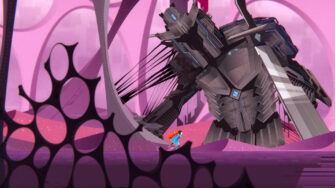
While Aspire succeeds as a visual piece, it falters significantly as a mechanical experience. The developers at Wondernaut Studio opted for a non-combat model, forcing players to rely on light-emitting sources to repel hostile entities. While this is a common trope in puzzle-platformers, the execution in Aspire leaves much to be desired.

Physics and Precision
The game demands a high degree of precision, particularly in its rope-swinging mechanics and platform-to-platform navigation. However, the input response—even on high-quality hardware like the Nintendo Switch’s Joy-Cons—is consistently stiff.
- Trial and Error: Because the movement system lacks fluidity, players are forced into a repetitive loop of failure and checkpointing. While the developers were generous with checkpoints, the necessity of these saves highlights a failure in the game’s design: the difficulty is born of mechanical friction, not thoughtful puzzle construction.
- Puzzle Variety: The puzzles cycle through common tropes: block-shifting, resizing objects, and environmental manipulation. While individual areas attempt to introduce new twists, the underlying feeling is one of "been there, done that."
Examining the "Story-Rich" Paradox
The core critique of Aspire is not that its story is simple, but that it is derivative. Minimalism can be a powerful tool in storytelling—some of the most celebrated titles in history, such as Journey or Hyper Light Drifter, convey complex emotional arcs without a single word of dialogue. Aspire attempts to walk a middle ground, providing a narrative framework that feels like a pastiche of better-known games.
The game’s focus on the Tower’s history—specifically the worship of fear versus the worship of light—is perhaps the most interesting narrative thread. Yet, this exploration is glossed over in favor of a standard "innocent hero" journey. When the game asks the player to find beauty in "broken things," it feels less like a profound commentary and more like a checklist of indie gaming tropes.
Official Responses and Developer Intent
Wondernaut Studio has positioned Aspire as a labor of love, emphasizing the technical effort required to achieve the game’s distinct hand-painted look. The attention to detail is evident in the dynamic lighting—the way light glints off armor or the reflection of Ina in passing crystals is, by all accounts, impressive.
From an official development perspective, the studio aimed to create a "zen" platforming experience. However, the disconnect between the intended atmosphere and the player’s mechanical experience is vast. For a game that prides itself on its "story-rich" designation, the reliance on boilerplate narrative structures suggests a lack of narrative risk-taking that is common in high-budget, safe-bet production cycles.
Implications for the Indie Platformer Genre
The reception of Aspire: Ina’s Tale serves as a case study for the current state of 2D platformers. The "Indie Boom" has created a standard for artistic quality that is now the baseline rather than the exception. When visual polish is no longer a differentiator, the burden of proof shifts entirely to gameplay and narrative originality.
- The "Gris" Effect: The success of titles like Gris has created a design template that many smaller studios are struggling to evolve. The "spindly-legged waif" aesthetic is becoming synonymous with "art-house platformer," potentially alienating players who are looking for mechanical innovation.
- The Perils of Stiff Physics: Precision platforming is a high-stakes genre. If the movement is not "crisp," the entire experience collapses. Developers must prioritize the "feel" of character movement before layering on complex art assets.
- Narrative Over-Saturation: The industry is reaching a point where "story-rich" is no longer a selling point, but a cautionary label. Players are becoming increasingly skeptical of games that use a thin, melancholic narrative to mask a lack of mechanical depth.
Conclusion: A Beautiful Dead End
Aspire: Ina’s Tale is a game that is easy on the eyes but difficult on the patience. It succeeds in creating a cohesive, artistic world that pays homage to the masters of the genre, but it fails to establish an identity of its own. It is a title that will undoubtedly appeal to those who prioritize aesthetic tranquility over mechanical engagement, but for those seeking a compelling story or tight, responsive platforming, Aspire is a reminder that beauty is only skin deep.
In the final analysis, Aspire is a testament to the fact that while "story-rich" may look good on a store page, it is the invisible architecture of gameplay and genuine narrative risk that determines whether a player will remember a game long after the final credits roll. For Ina’s Tale, the tower is tall, the view is lovely, but the climb is rarely worth the effort.

