

By Tom’s Hardware Tech Desk
Published: November 2024
Main Facts: The Trillion-Dollar AI Paradox
The artificial intelligence revolution has officially entered its most critical financial phase: the reckoning of return on investment (ROI). According to a striking new analysis published by Apollo’s Daily Spark, a stark and widening chasm has emerged within the modern global economy. While major technology providers are raking in historic revenues fueled by a staggering influx of capital—with cumulative Big Tech AI spending plans projected to touch a breathtaking $725 billion—the broader corporate landscape is largely left empty-handed.
For the vast majority of non-tech companies making up the S&P 500, the promised productivity booms, streamlined operational efficiencies, and fattened profit margins have simply failed to materialize.
For months, boardrooms across every traditional sector—from manufacturing and retail to finance and healthcare—have felt immense pressure to integrate generative AI tools into their workflows. Yet, Apollo’s data indicates that these corporate adopters are spending heavily on software licenses, cloud computing services, and external consultancies without seeing a corresponding lift in their bottom lines.
The financial windfall is staying remarkably concentrated at the top. The primary beneficiaries of the generative AI gold rush remain the chipmakers, hyper-scaler cloud providers, and infrastructure developers selling the picks and shovels. Meanwhile, the rest of corporate America is caught in a holding pattern, desperately trying to prove to shareholders that their aggressive capital expenditures on AI will eventually translate into tangible dollars and cents.
Chronology: How We Reached the Current AI Spending Frenzy
To understand how corporate spending reached this precarious juncture, it is necessary to retrace the timeline of the generative AI boom, which completely upended the global technology sector over the past few years.
- Late 2022 – The Catalyst: OpenAI releases ChatGPT to the public, igniting a viral cultural phenomenon and instantly demonstrating the commercial viability of large language models (LLMs). Almost overnight, enterprise boardrooms shift from cautious curiosity to aggressive experimentation.
- Throughout 2023 – The Infrastructure Race: Big Tech giants—including Microsoft, Alphabet (Google), Amazon, and Meta—pivot their corporate strategies toward AI supremacy. Capital expenditure (CapEx) budgets skyrocket. Companies begin hoarding high-end Nvidia GPUs and aggressively building out specialized data centers capable of training massive foundational models.
- Early to Mid 2024 – The Enterprise FOMO Phase: Fear of missing out (FOMO) grips the broader market. Non-tech S&P 500 companies rush to deploy enterprise AI assistants, customer service chat solutions, and internal coding tools. Wall Street rewards any company that mentions "artificial intelligence" during quarterly earnings calls, sending valuations soaring regardless of actual earnings performance.
- Late 2024 – The Reality Check: As quarterly financial reports roll in, analysts begin peeling back the marketing veneer. Reports like Apollo’s Daily Spark highlight a glaring divergence: infrastructure providers and AI platform creators are posting record quarters, while typical industrial, consumer goods, and financial firms struggle to point to measurable productivity gains that offset their soaring software and cloud bills.
Supporting Data: Following the Money and the Metrics
The numbers underpinning the AI economy paint a picture of profound economic concentration. The sheer scale of capital moving through the tech sector is unprecedented, yet it contrasts sharply with the muted financial pulse of traditional industries.

The Big Tech Spending Tsunami
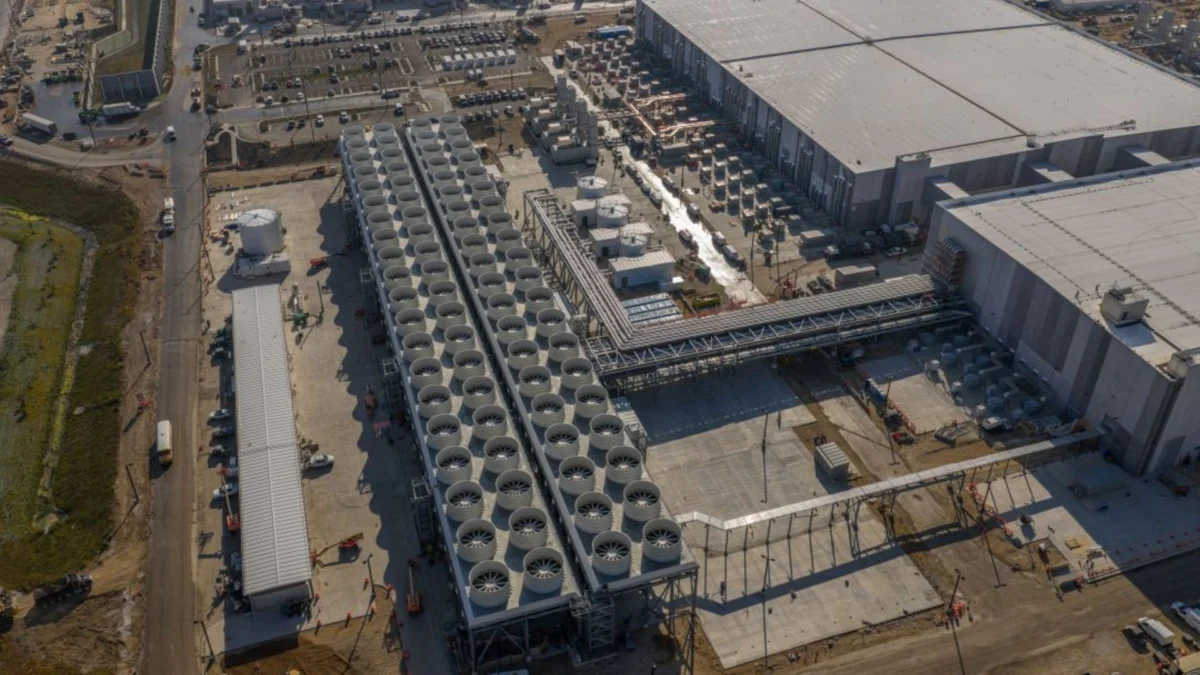
Big Tech’s collective capital expenditure plans aimed squarely at artificial intelligence infrastructure have reached a staggering $725 billion. This money is being funneled directly into:
- Data Center Construction: Millions of square feet of real estate are being converted into specialized facilities equipped for high-density computing.
- Silicon Procurement: Billions are being spent on advanced accelerators, custom ASICs, and networking gear required to train and run modern neural networks.
- Energy Infrastructure: Tech conglomerates are signing multi-decade power purchase agreements—including nuclear energy deals—to secure the vast amounts of electricity required to keep server farms operational.
The S&P 500 Productivity Gap
While technology providers enjoy hyper-growth, the rest of the S&P 500 is experiencing what economists are labeling the "AI Productivity Lag." Key metrics from financial analysts highlight this trend:
- Cost vs. Output: Enterprise software spending across non-tech S&P 500 companies rose by an estimated double-digit percentage over the last year, yet aggregate profit margins for these firms remain largely flat when adjusted for macroeconomic inflation.
- Adoption vs. Integration: Surveys show that while over 70% of Fortune 500 executives have rolled out some form of generative AI tool to their employees, fewer than 15% have been able to map those deployments directly to quantifiable reductions in labor costs or increases in revenue output.
- The Hardware-Software Bottleneck: Companies are spending aggressively on user-facing applications, but legacy IT systems, fragmented data silos, and data security concerns are preventing these tools from delivering deep, systemic workflow transformations.
Official Responses and Market Reactions
As the narrative surrounding AI shifts from unbridled optimism to pragmatic scrutiny, leaders across both Big Tech and traditional finance are offering diverging perspectives on the current market dynamics.
Silicon Valley’s Defense
Executives from major technology firms defend their monumental spending plans by framing them as necessary, long-term investments in the future of human productivity. During recent earnings calls, leadership teams at Microsoft and Alphabet emphasized that the infrastructure being built today is foundational to the next decade of economic computing.
"We are building the rails for the next industrial revolution," noted one senior cloud executive, who spoke on the condition of anonymity. "Just as companies took years to figure out how to fully optimize cloud computing after migrating away from on-premise servers, enterprises are currently in the messy learning phase of AI adoption. The value is real, but it requires patience and a fundamental redesign of business processes."
Wall Street’s Growing Skepticism
Conversely, financial analysts and institutional investors are beginning to sound notes of caution. Wall Street is increasingly pressing tech executives on when their massive data center investments will generate an acceptable return on invested capital (ROIC).
In traditional equity markets, portfolio managers are growing tired of corporate buzzwords. "CEOs love talking about how AI is transforming their business model," notes a prominent market strategist. "But when you look at the operational efficiency metrics and net margins, you struggle to find the evidence. Right now, buying enterprise AI is starting to feel less like a strategic investment and more like an expensive corporate tax just to keep pace with competitors."

Implications: What the AI Disconnect Means for the Future
The widening gap between tech sector revenue and broad S&P 500 productivity carries profound implications for the global economy, corporate governance, and the future trajectory of artificial intelligence.
1. The Consolidation of Enterprise Software Budgets
Because non-tech companies are failing to see immediate financial payoffs from generic AI tools, enterprise software budgets are likely to face tighter scrutiny. Companies will shift away from experimental, superficial AI integrations and demand hyper-specific, highly secure, and verifiably cost-effective solutions tailored to their exact industry verticals. Vendors that cannot prove direct cost savings or revenue generation will find themselves squeezed out of corporate budgets.
2. Regulatory and Compliance Pressures
As organizations spend heavily on AI without seeing productivity boosts, questions surrounding risk management, data privacy, and legal liabilities will take center stage. Companies may become more hesitant to scale up implementations if the risks of inaccurate outputs, intellectual property concerns, and regulatory fines continue to outweigh the modest efficiency gains achieved by front-line workers.
3. A Potential Reckoning for Tech Valuations
If the S&P 500 at large continues to experience a delayed payoff, the pressure will inevitably bleed back into the technology sector. Should non-tech enterprises decide to slow down their software subscriptions and cloud usage due to unproven ROI, Big Tech’s revenue growth could face a sudden deceleration. This dynamic could trigger market corrections for hardware manufacturers and cloud providers whose lofty valuations rely on uninterrupted, exponential growth in AI demand.
Conclusion
The analysis by Apollo’s Daily Spark serves as a crucial reality check for an industry intoxicated by its own hype. While artificial intelligence has firmly cemented its status as a transformative technological marvel, it remains unproven as an instant economic panacea for the broader corporate world. Until traditional enterprises learn how to successfully translate raw computing power into genuine operational efficiency, the AI boom will remain a localized storm of wealth—raining massive profits down upon Silicon Valley while leaving the rest of the S&P 500 searching for dry ground.

