

Unreal Engine has long stood as the gold standard in the gaming and film industries, providing the foundational architecture for the world’s most visually arresting digital experiences. With the official rollout of Unreal Engine 5.8, Epic Games has once again pushed the boundaries of what is possible, introducing a suite of experimental features that prioritize both massive-scale environmental generation and aggressive performance optimization. As the industry grapples with the dual pressures of rising development costs and the demand for unprecedented graphical fidelity, UE 5.8 arrives as a pivotal toolset designed to bridge the gap between creative ambition and technical feasibility.
Main Facts: The Core Pillars of UE 5.8
The release of Unreal Engine 5.8 is characterized by three primary technical advancements that aim to reshape how developers approach large-scale world-building and real-time lighting.
1. Mesh Terrain and Procedural Vegetation (PVE)
The most immediate impact for open-world developers comes via the new Mesh Terrain and Procedural Vegetation Editor (PVE). Mesh Terrain shifts the paradigm of landscape creation, allowing developers to generate full 3D meshes for massive environments rather than relying solely on traditional height-map-based terrain systems. This allows for greater geometric complexity, such as overhangs, caves, and complex geological formations that were previously difficult to achieve without significant performance overhead.
Complementing this is the PVE, which automates the placement of flora. By analyzing the existing geometry of a scene—such as a weathered ruin or a sprawling valley—PVE intelligently populates the area with trees, shrubs, and ground cover that respect environmental lighting and the presence of other assets. This is not merely a "spray-and-pray" scatter tool; it is a context-aware system that understands ecosystem density and light competition.

2. Lumen Lite and MegaLights
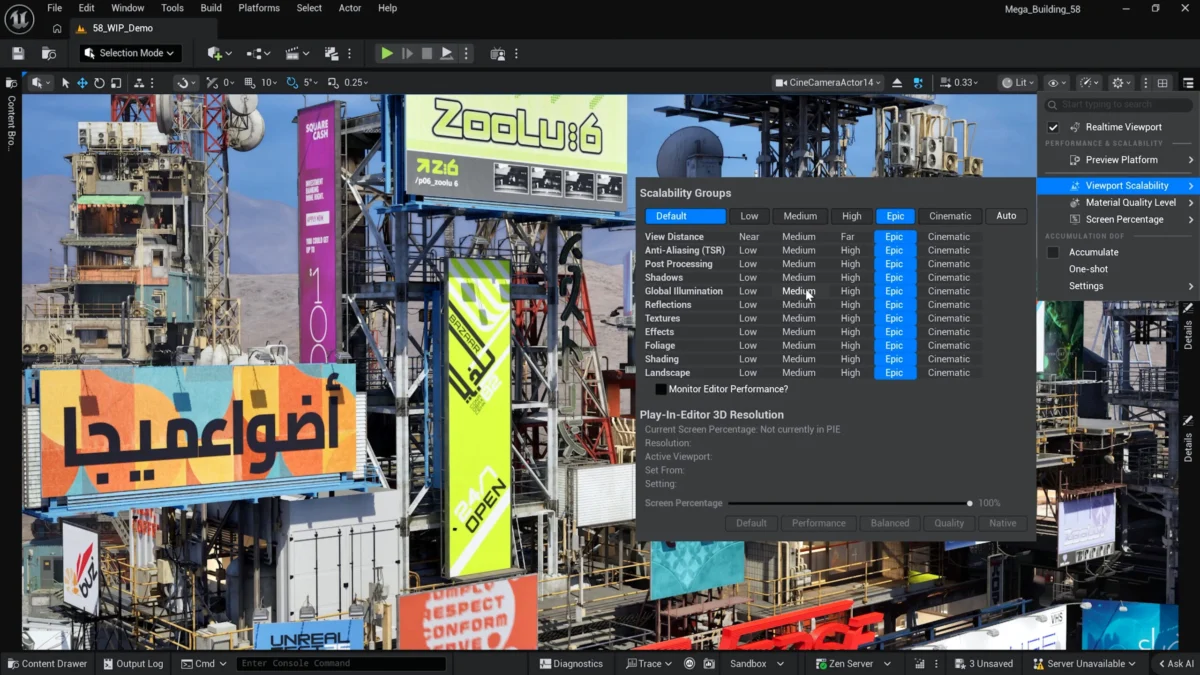
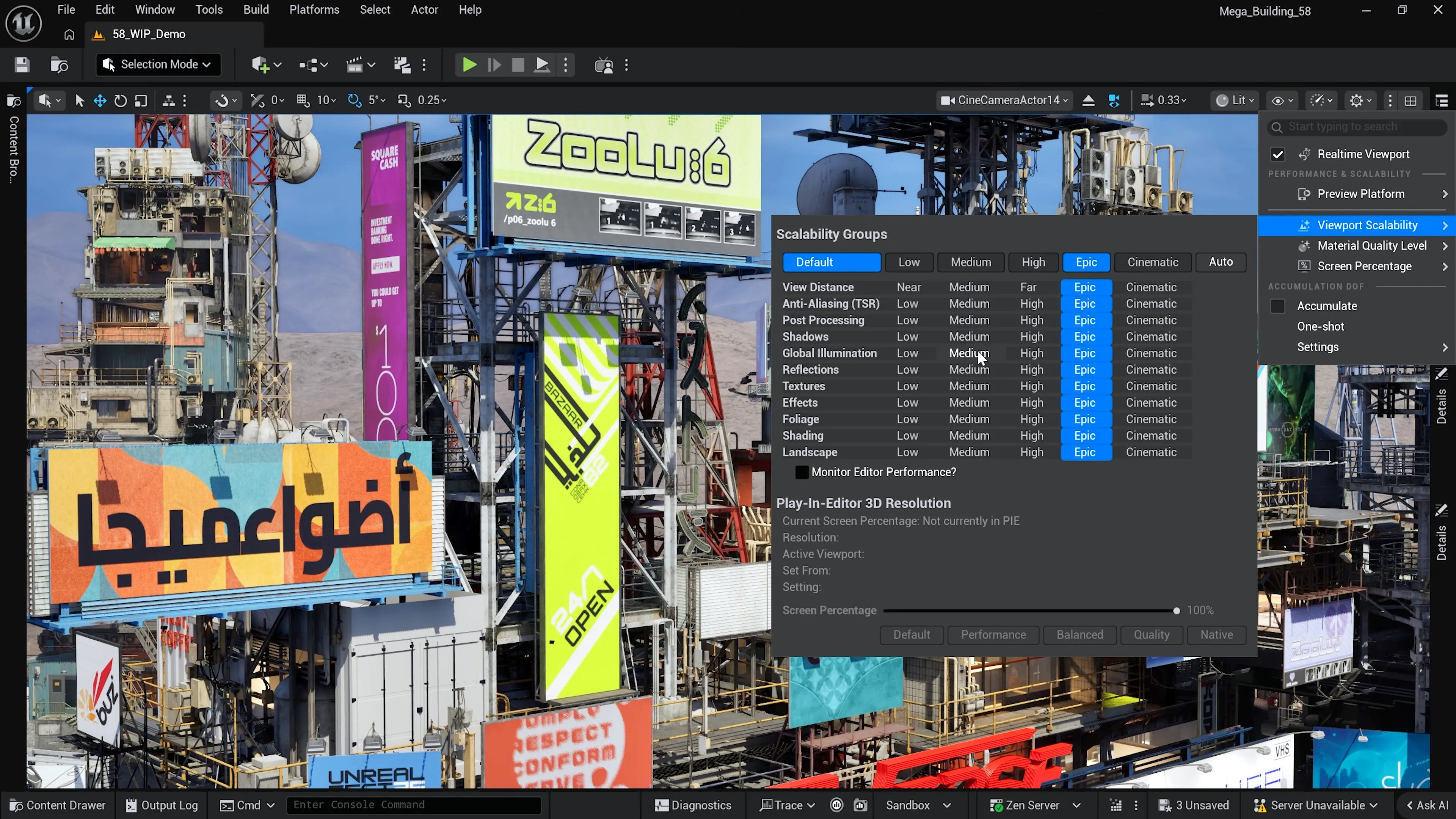
Lighting has always been the cornerstone of the "Unreal look." With 5.8, Epic has introduced Lumen Lite, a highly optimized version of their signature global illumination system. While the high-fidelity version of Lumen remains the benchmark for cinematic quality, Lumen Lite offers a significant performance boost, with Epic claiming it is twice as fast as its high-end counterpart while retaining the core visual identity of the scene.
Additionally, MegaLights, which debuted experimentally in version 5.5, has now reached a "production-ready" state. This feature allows for the inclusion of hundreds or even thousands of dynamic light sources in a single scene without the catastrophic performance penalties that traditionally accompanied such density.
3. The LLM/MCP Plugin
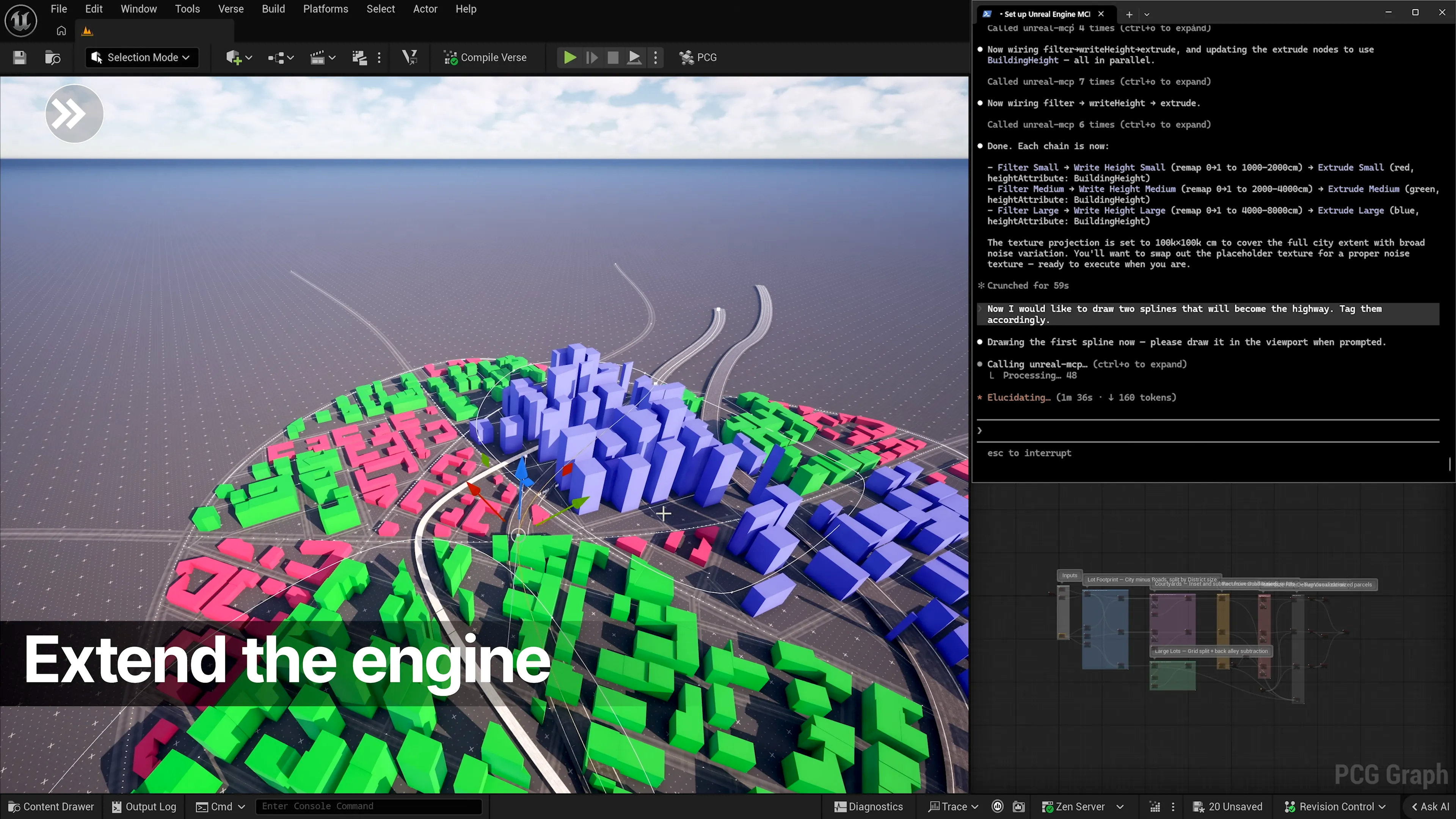
Perhaps the most controversial and forward-looking inclusion is the Model Context Protocol (MCP) plugin. This experimental addition allows developers to integrate Large Language Models (LLMs) directly into the engine workflow. The intent is to enable developers to query the engine, refactor code, generate assets, or perform automated testing through natural language interfaces.
Chronology: The Road to 5.8
The journey to Unreal Engine 5.8 is marked by a steady progression of iterative updates that have gradually democratized high-end graphical features:

- Unreal Engine 5.0 (2022): The launch of Nanite and Lumen, which changed the industry standard for geometry and lighting.
- Unreal Engine 5.4: Refined Nanite performance, allowing for even more complex cinematic scenes.
- Unreal Engine 5.5: The experimental introduction of MegaLights, signaling Epic’s move toward managing massive dynamic light counts.
- Unreal Engine 5.8 (2026): The current release, focusing on mature production workflows, performance scaling for next-gen hardware (such as the Nintendo Switch 2), and the integration of AI-assisted development tools.
Supporting Data: Performance and Hardware Scaling
The inclusion of Lumen Lite is the most telling feature in this release. Epic Games’ documentation explicitly states that games utilizing global illumination can now achieve a consistent 60 frames per second on hardware like the Nintendo Switch 2. This represents a seismic shift in the accessibility of high-end visual effects.
Previously, real-time global illumination was the exclusive domain of high-end PCs and current-generation consoles (PS5, Xbox Series X). By lowering the barrier to entry, Epic is essentially standardizing high-end lighting as a baseline for the next generation of portable and mid-tier hardware. This is not just a technical win for the Switch 2; it serves as a critical optimization path for PC developers who struggle to keep their titles performant on a wide array of GPU configurations.
Official Responses and Industry Context
While Epic Games has touted these features as "innovative" and "time-saving," the reception has been predictably mixed. The company has framed the AI-centric MCP plugin as a necessary evolution in development productivity.
"Our goal is to reduce the friction between an artist’s vision and the engine’s capability," an Epic representative noted in recent documentation. However, the decision to bury the AI-plugin announcement at the very end of the release notes suggests a recognition of the current climate. With the gaming community increasingly sensitive to the perceived over-reliance on AI in creative sectors, Epic appears to be testing the waters cautiously.
The broader industry view, however, is one of pragmatic necessity. As development costs for AAA titles continue to spiral into the hundreds of millions, studio heads are looking for every possible efficiency. AI-assisted coding and asset generation, while controversial, are being viewed by leadership as essential tools to prevent the "studio death cycle" that has claimed several notable developers over the last two years.
Implications for the Future of Development
The release of UE 5.8 signals a broader transition in game development:
The "AI-Native" Development Workflow
The MCP plugin is likely the first of many steps toward a fully AI-integrated engine. While current implementation is limited to experimental plugins, the long-term goal is clearly to have an engine that can assist in the mundane tasks of game development—debug logs, boilerplate code, and basic asset optimization. For small indie teams, this could be the difference between a project being feasible or impossible.
Hardware-Agnostic Fidelity
By pushing performance optimizations like Lumen Lite, Epic is forcing a conversation about how we define "next-gen." If a title can run at 60 fps on a portable console while maintaining dynamic, global lighting, the argument for massive GPU overhead in PC gaming may begin to shift toward efficiency rather than raw power.
The Conflict of Vision
There remains a tension between the tools Epic provides and the end-user experience. A common criticism of recent Unreal Engine titles is their perceived lack of optimization at launch. While Epic provides the tools, the burden of performance ultimately rests on the developers. As the toolset becomes more complex, the risk of "feature bloat"—where developers use every experimental technology available regardless of hardware constraints—becomes a primary concern for the consumer.
Conclusion
Unreal Engine 5.8 is more than just a performance patch; it is a declaration of intent. By focusing on procedural generation, optimized lighting, and AI-assisted workflows, Epic Games is betting that the future of the industry lies in efficiency and scalability. Whether these tools will lead to more polished, performant experiences or simply enable more massive, unoptimized projects remains to be seen. What is certain, however, is that as of 2026, the barrier between the imagination of the developer and the screen of the player has become thinner than ever before.
For developers interested in exploring these new capabilities, the update is available now through the Epic Games Launcher. Whether you are building an indie passion project or a sprawling open-world epic, the landscape of game development has officially changed once again.

