

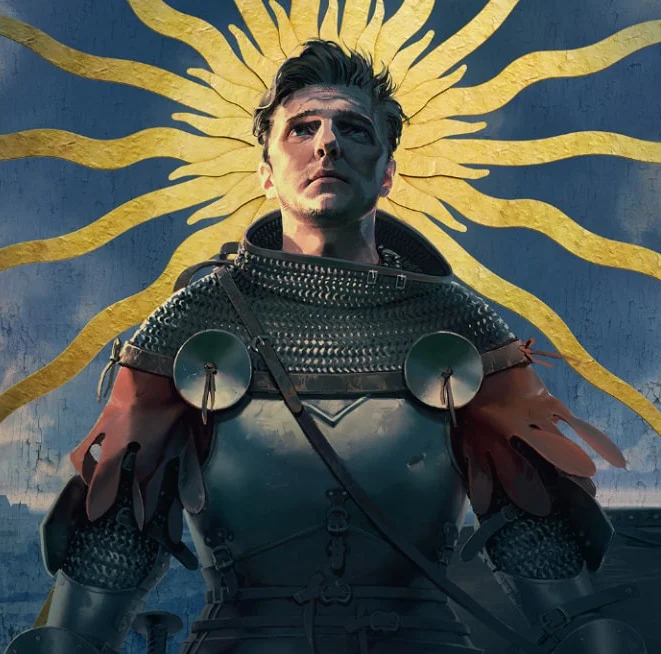
The gaming industry is currently navigating a volatile transition. As major publishers and hardware manufacturers pivot toward a "digital-first" ecosystem, the traditional physical disc—once the gold standard for game ownership—is increasingly viewed as an expensive relic. Sony’s recent hardware shifts toward discless consoles have ignited a fierce debate regarding consumer rights, price control, and the long-term preservation of software.
This tension has reached a boiling point with the upcoming release of Final Fantasy 7 Revelation. Despite Square Enix’s commitment to providing a physical disc version of the highly anticipated title, it has been confirmed that the game will require a mandatory digital download to function in its entirety. This "hybrid" approach has left fans divided, raising critical questions about what it truly means to own a game in the modern era.
The Shrinking Physical Footprint: A Chronology of Change
To understand the frustration surrounding Final Fantasy 7 Revelation, one must look at the broader trajectory of the gaming market over the last decade.
- The Early 2010s: Digital stores like Steam, the PlayStation Store, and Xbox Live began as convenient alternatives to brick-and-mortar retail. Physical discs remained the primary vehicle for high-fidelity gaming.
- The Mid-2010s: The rise of "Day One patches" began to erode the "complete-on-disc" philosophy. Players became accustomed to buying a disc only to be met with massive mandatory downloads upon insertion.
- The 2020 Launch: With the release of the PlayStation 5 and Xbox Series X, the industry began aggressively pushing digital ecosystems. Sony, in particular, introduced the "Digital Edition" console, signaling an intent to bypass retailers entirely.
- The Present Day: We have arrived at a juncture where "physical" media often acts merely as a physical license key rather than a complete repository of data. The announcement that Final Fantasy 7 Revelation will follow this trend highlights that even marquee, triple-A titles are no longer exempt from the limitations of disc capacity.
The Technical Justification: Why the Download is Mandatory
In a recent interview with IGN, Final Fantasy 7 Revelation Director Naoki Hamaguchi addressed the elephant in the room. He emphasized that the decision to require a download was not made out of malice or a desire to curb second-hand sales, but rather out of a commitment to uncompromising quality.
"Personally, I’m very happy that we are able to release a physical disc version of FFVII Revelation considering how the entire gaming market is veering towards the disc-less direction," Hamaguchi stated. However, he clarified that the development team faced a stark choice regarding the sheer scale of the game’s assets.
According to Hamaguchi, the team explored the possibility of using the same disc specifications utilized for Final Fantasy 7 Rebirth. However, the team realized that limiting the game to the capacity of the current physical media would force them to compress textures, sacrifice audio fidelity, or cut content. "If we were to do that, it would mean that we would have to make a compromise in terms of the fidelity and the quality of the game," Hamaguchi explained. "As a development team, we didn’t want to do that."
For Square Enix, the mandatory digital download is framed as a technical necessity to preserve the artistic vision of the game, ensuring that players receive the high-fidelity experience they expect from the franchise.
The Implications for Consumer Rights and Ownership
While the technical explanation provides clarity, it does little to alleviate the structural concerns of the gaming community. The shift toward hybrid physical-digital releases creates several significant implications for the consumer.
1. The Perishability of "Ownership"
The most profound risk is the "perishability" of modern games. If a game requires a digital component to function, it is effectively tied to the longevity of the publisher’s servers. While Square Enix is a stable industry giant, the precedent is troubling. Should the company’s digital infrastructure ever be shuttered or should a specific update become inaccessible, a physical disc containing only half the game becomes a decorative coaster. Unlike the cartridges of the 1990s, which could function independently for decades, the "modern disc" is a tethered product.

2. The Impact on the Second-Hand Market
The second-hand market has long served as a safety net for gamers, allowing them to recoup costs by trading in titles or purchasing games at a lower price point. When a game requires a digital download, it often necessitates a one-time-use activation code included in the box. If this code is redeemed by the first owner, the second-hand buyer is left with an incomplete product. While this protects the publisher’s revenue, it effectively destroys the resale value of physical media, rendering the "physical" aspect of the purchase moot for many collectors.
3. Economic Autonomy
One of the primary benefits of physical media has historically been competition. When games are sold in retail stores, pricing is dictated by the market, resulting in sales, discounts, and competitive pricing between retailers. When the digital component becomes mandatory, the publisher gains total control over the price of the game. If the "physical" version is essentially just a key for the digital version, the publisher can effectively force the consumer into a walled garden where discounts are controlled entirely by the platform holder’s storefront.
The PC Gamer Perspective: A Different Landscape
Interestingly, the PC gaming community—often the pioneer of digital distribution—has found a way to navigate this transition more gracefully than console players. On PC, the existence of multiple storefronts (Steam, Epic Games Store, GOG, etc.) ensures that there is at least some level of competition, even if the ownership model remains digital.
However, the "disc-pocalypse" looming over console gaming feels more restrictive because of the lack of choice. On a console, you are beholden to the manufacturer’s store. If that store decides to remove a game, or if the publisher decides to revoke access, the player has no recourse. The PC ecosystem, while not perfect, at least allows for a broader range of options for purchasing and library management, which is significantly healthier for the consumer in the long term.
Balancing Vision and Accessibility
Square Enix is caught between two worlds. On one hand, they have a massive, passionate fanbase that values the tangible history of the Final Fantasy series. On the other, they have a modern audience that demands cutting-edge visual fidelity and massive, seamless open worlds that simply cannot fit onto a single Blu-ray disc.
The path forward for the industry appears to be one of "distributed ownership." Companies will likely continue to use physical discs as a marketing tool and a collector’s item, while the actual software experience will be increasingly delivered through the cloud or high-speed downloads.
For the consumer, the takeaway is clear: the era of the "complete" physical game is fading. While titles like Final Fantasy 7 Revelation are technically impressive, the mandatory digital download marks another step toward a future where our game libraries are leased rather than owned. As we move further into this "ever-evolving future," gamers will need to remain vigilant about what these changes mean for the preservation, affordability, and true accessibility of the medium we love.
Whether this transition is a necessary evolution for the sake of art or a cynical erosion of consumer rights remains the defining debate of this console generation. For now, players will have to decide if the trade-off—a beautiful, massive, high-fidelity experience—is worth the price of losing their autonomy over the software they purchase.

