

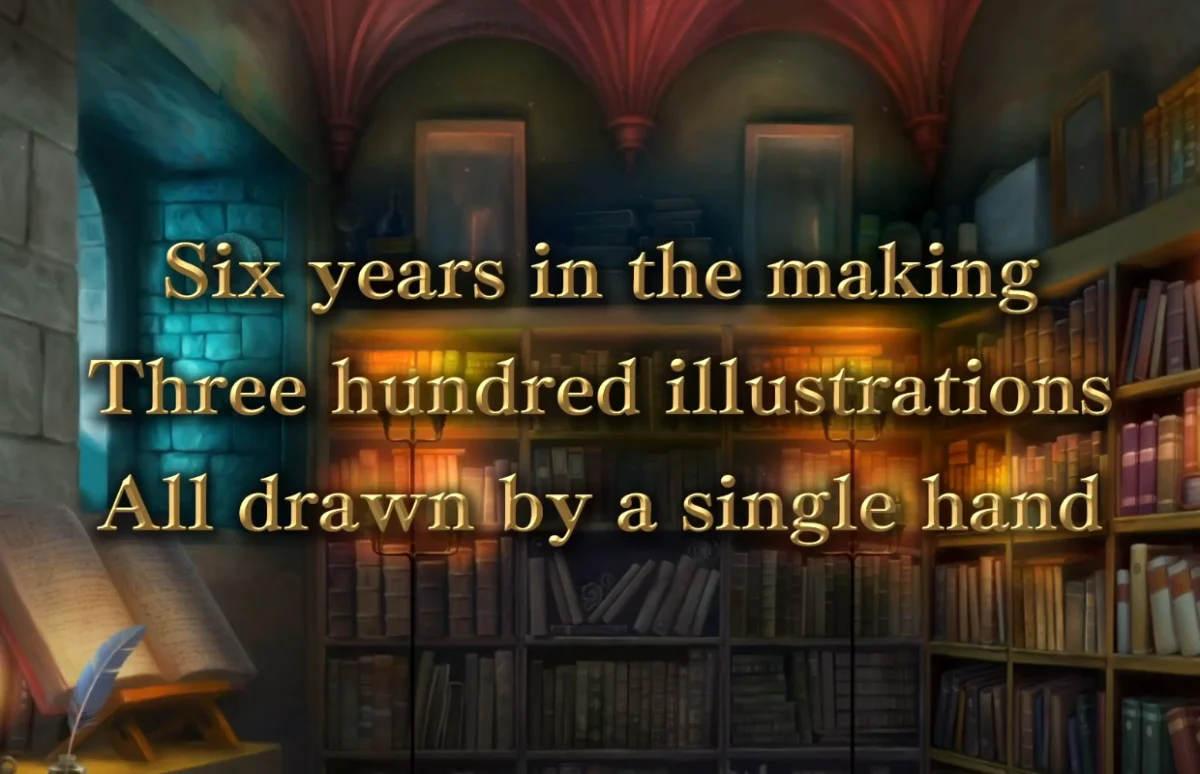
The independent gaming landscape is bracing for a significant addition to its roster this summer as 15 Industry and Digitalis Publishing officially announce the final trailer for Veritas Tales: Witch of the Dark Castle. Scheduled for a worldwide PC release via Steam on July 9, the title has garnered substantial attention not merely for its aesthetic allure, but for the pedigree of its lead developer, Yoshio Nishimura. As the industry looks toward the next wave of side-scrolling action-RPGs, Veritas Tales represents a convergence of classic design philosophies and modern narrative depth.
Main Facts: A New Chapter in Action-RPG Design
Veritas Tales: Witch of the Dark Castle is a meticulously crafted action-RPG that draws heavily from the “golden age” of 2D gaming while integrating contemporary quality-of-life mechanics. The game casts players into a dark, atmospheric world governed by mystery and high-stakes combat.
The core premise centers on a narrative-driven journey through a cursed domain, where players must navigate treacherous environments, engage in tactical combat, and uncover the secrets of the titular Witch. With the launch date set for July 9, the developers have focused on refining the “feel” of the gameplay—an aspect that remains paramount in a genre dominated by high-precision inputs and timing-based mechanics.
The final trailer, released this week, serves as a capstone to a lengthy development cycle. It offers a closer look at the game’s combat mechanics, showcasing a variety of weapons, magical abilities, and enemy encounters that emphasize the dual-protagonist system. By offering two distinct perspectives on the unfolding story, the developers aim to increase replayability and provide a deeper context to the game’s lore.
Chronology: From Capcom and Vanillaware to Independent Vision
To understand the significance of Veritas Tales, one must examine the career trajectory of its lead developer, Yoshio Nishimura. His journey is a testament to the evolution of the Japanese gaming industry over the past two decades.
The Foundation at Capcom
Nishimura’s career began in the trenches of major studio development. Most notably, he contributed to the inaugural Monster Hunter entry. Working at Capcom during the early 2000s, an era defined by the transition from 2D sprites to 3D polygons, provided Nishimura with a foundational understanding of "game feel"—the subtle interplay between player input and on-screen response. This experience would later become the bedrock of his design philosophy.
The Vanillaware Influence
Following his tenure at Capcom, Nishimura joined the ranks of Vanillaware, a studio renowned for its artistic integrity and commitment to high-fidelity 2D art. His involvement in iconic titles such as Odin Sphere, Dragon’s Crown, and 13 Sentinels: Aegis Rim solidified his reputation as a developer who prioritizes visual storytelling and fluid combat. During his time at Vanillaware, he was immersed in the company’s unique approach to “painterly” graphics, which clearly informs the aesthetic direction of Veritas Tales.
The Road to ‘Veritas Tales’
The transition from a major studio collaborator to an independent creator was a multi-year endeavor. Following his departure from Vanillaware, Nishimura sought to synthesize the lessons learned from both the raw, mechanical challenge of early Monster Hunter and the narrative-rich, art-forward approach of his later projects. Veritas Tales is the culmination of this synthesis. Development updates have been sparse but consistent, reflecting a "quality over quantity" approach that has become a hallmark of the independent scene.
Supporting Data: The Mechanics of the Demo
For those eager to experience the game ahead of the July 9 launch, 15 Industry has made a demo available on Steam. This demo is not merely a "vertical slice" designed for marketing; it is a carefully curated introduction to the game’s core loops.
The 30-Minute Experience
The demo encompasses the first 30 minutes of the main narrative. This segment is crucial because it introduces the two playable protagonists, allowing players to test the distinct combat styles associated with each character. Data gathered from the demo suggests that players are responding positively to the game’s “weighty” combat and the environmental storytelling found within the Dark Castle.
Performance and Accessibility
- Engine Optimization: The game is built to run smoothly on a wide variety of hardware configurations, a nod to the accessibility requirements of modern PC gaming.
- Control Schemes: Recognizing the importance of precision in side-scrolling combat, the demo includes full controller support, which is widely considered the optimal way to play the title.
- Player Feedback Loop: Digitalis Publishing has utilized the demo period to gather telemetry data regarding player difficulty curves and UI navigation, ensuring that the final build launching in July is as polished as possible.
Official Responses: Insights from the Development Team
In recent correspondence regarding the final trailer, the development team emphasized the emotional core of the project. Yoshio Nishimura noted that Veritas Tales was designed to evoke a sense of "lost wonder"—a feeling he believes has been absent in many modern, hyper-realistic titles.
"We wanted to build a world that feels dangerous but beautiful," Nishimura stated. "When working on games like Dragon’s Crown, I learned that the player’s connection to the screen is defined by the quality of the art and the responsiveness of the action. With Veritas Tales, we are taking that same philosophy but applying it to a more intimate, darker narrative structure."
Digitalis Publishing has also been vocal about their commitment to supporting independent creators with a specific artistic vision. Their partnership with 15 Industry is built on the shared belief that mid-sized, high-quality 2D action games occupy a vital niche in the current market, providing a necessary alternative to the massive, open-world bloat often found in AAA titles.
Implications: The Future of the 2D Action-RPG
The release of Veritas Tales: Witch of the Dark Castle carries broader implications for the gaming industry.
The "Auteur" Renaissance
As the gaming industry faces increasing consolidation, the rise of independent projects led by industry veterans—like Nishimura—marks a significant shift. These "auteur-led" projects allow for design risks that larger studios might avoid. If Veritas Tales succeeds, it may encourage other veteran developers to strike out on their own, further diversifying the market.
Sustained Interest in 2D Aesthetics
Despite the push for 4K textures and ray-tracing, there remains a massive, underserved audience that prioritizes artistic direction over raw graphical fidelity. The visual style of Veritas Tales serves as a reminder that a well-defined art style is timeless. By channeling the lessons learned from Vanillaware’s legendary catalog, Nishimura is betting that players will continue to choose substance and style over the pursuit of photorealism.
The Importance of the PC Ecosystem
The decision to focus the initial release on the Steam platform highlights the continued dominance of the PC as the premier destination for independent gaming. Steam’s infrastructure—from the ease of distributing demos to the platform’s robust community hubs—has allowed Veritas Tales to build a dedicated following well before its official release.
Final Thoughts
As we approach the July 9 launch date, the excitement surrounding Veritas Tales: Witch of the Dark Castle is palpable. It represents a rare opportunity to play a game built by a creator with a deep understanding of the genre’s history, unencumbered by the constraints of a massive corporate entity. Whether it becomes a defining title for the year remains to be seen, but the craftsmanship on display in the final trailer suggests that Veritas Tales is a title that should not be overlooked by any fan of the action-RPG genre.
Players are encouraged to download the current demo on Steam to familiarize themselves with the mechanics and prepare for the descent into the Dark Castle. The witch is waiting, and the gates are set to open in just a few short weeks.

