

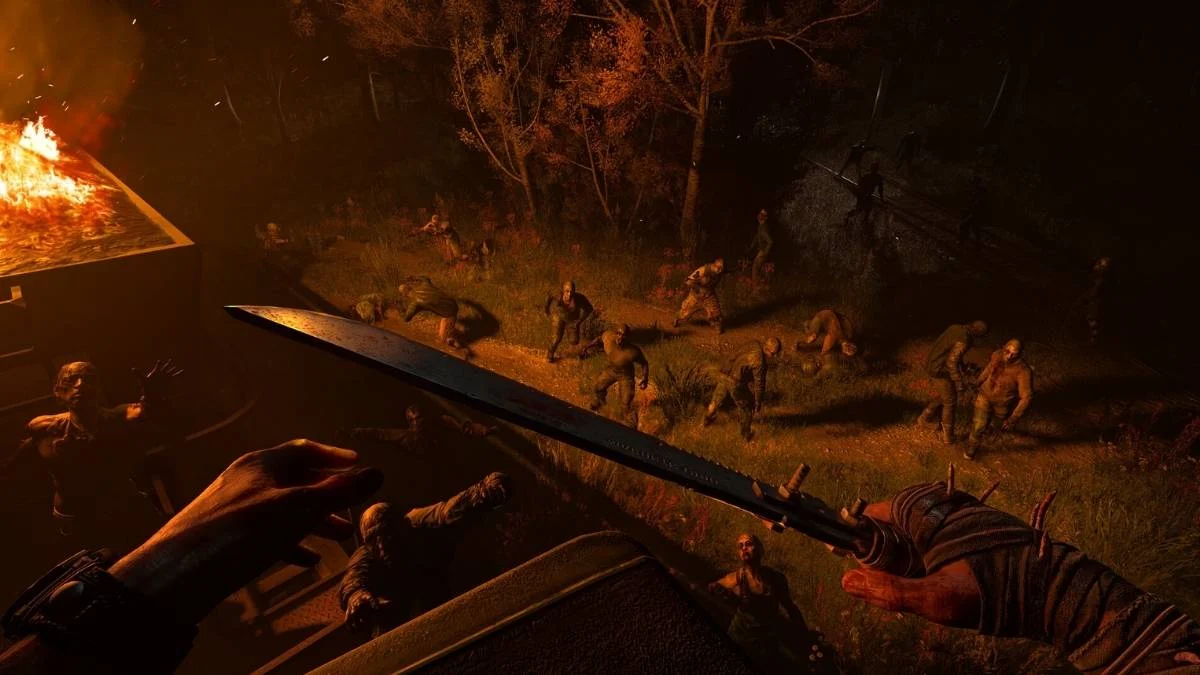
In a move that highlights the widening chasm between current-generation hardware and legacy systems, developer Techland has officially announced the cancellation of Dying Light: The Beast for PlayStation 4 and Xbox One. The highly anticipated survival horror title, which was initially touted to span both console generations, will now be exclusive to PlayStation 5, Xbox Series X|S, and PC. This decision marks a significant turning point in the development cycle of the project, prioritizing technical ambition over platform accessibility.
The Core Conflict: Technical Reality vs. Legacy Expectations
The announcement, delivered via the official Dying Light social media channels, serves as a stark reminder of the limitations inherent in hardware that is now over a decade old. Techland’s decision was not framed as a marketing pivot, but rather as an unavoidable technical necessity. According to the studio, the vision for The Beast—which promises a sprawling open world, high-fidelity environmental rendering, and complex traversal mechanics—cannot be adequately translated to the architecture of the PlayStation 4 or Xbox One.
"Dying Light: The Beast was built from the ground up to take full advantage of current-generation hardware," the statement read. "Its open world, advanced visuals, and fluid combat and traversal all depend on processing power and memory that previous-generation consoles simply cannot provide."
For developers, this "bottlenecking" effect is a familiar adversary. As game engines evolve to utilize features like hardware-accelerated ray tracing, rapid asset streaming via NVMe SSDs, and advanced physics simulations, the mechanical spinning hard drives and limited RAM pools of the last generation become insurmountable hurdles. Attempting to force The Beast onto these platforms would have necessitated massive compromises in density, draw distance, and overall system stability.
Chronology: From Initial Promise to Technical Pivot
The road to this announcement has been marked by a gradual shift in the industry’s approach to cross-generation releases.
The Early Planning Phase
When Dying Light: The Beast was first conceived, the industry was still grappling with the lingering supply chain shortages that defined the first few years of the current console cycle. Consequently, developers were largely expected to maintain support for PS4 and Xbox One to ensure maximum player reach. Techland’s initial development roadmap included these legacy consoles, operating under the assumption that optimization could bridge the gap between hardware tiers.
The Mid-Development Realization
As the game moved into full production throughout 2025, the internal teams began to stress-test the engine’s capability on varying hardware profiles. It was during this phase that the "technical reality" mentioned in the statement became unavoidable. The vertical slices of gameplay, featuring high-speed traversal and dynamic combat, revealed that the memory overhead on older consoles was causing the game to break down during high-intensity sequences.
The Decision Point
By early 2026, the studio faced a binary choice: release a stripped-down, inferior version of the game that risked the franchise’s reputation, or cut the cord on legacy support. After months of internal testing and attempts to optimize, the leadership team at Techland finalized the decision to move forward as a current-gen exclusive, officially confirming the cancellation of the last-gen versions in mid-2026.
Supporting Data: Why Last-Gen Hardware Struggles
To understand the scope of Techland’s decision, one must look at the specific hardware constraints that differentiate the PS4/Xbox One era from the current PS5/Xbox Series generation.
Memory Bandwidth and Latency
Current-gen consoles utilize high-speed GDDR6 memory, allowing for near-instantaneous asset loading. The PS4, by comparison, relies on GDDR5 memory with significantly lower bandwidth. In a game like Dying Light: The Beast, where the player is expected to move rapidly across a map, the inability to stream assets quickly enough results in "pop-in" or, more severely, the engine hanging as it waits for data to move from the storage drive to the GPU.
The Storage Bottleneck
The transition from mechanical Hard Disk Drives (HDD) to Solid State Drives (SSD) is perhaps the most critical change in modern gaming. Last-gen consoles are limited by the mechanical speed of their hard drives, which struggle to keep up with the data-hungry environments found in modern titles. Dying Light: The Beast utilizes procedural generation and complex AI spawning that requires the near-instantaneous read/write speeds of a modern SSD. Without this, the game’s open-world encounters would likely feel static or unresponsive.
Computational Complexity
Modern game design has moved toward more complex "systems-based" gameplay. In The Beast, the interaction between the player, the environment, and the AI is designed to be reactive. Processing these systems requires significant CPU overhead. The Jaguar-based CPUs found in the PS4 and Xbox One are now considered obsolete, lacking the multi-threaded performance required to handle the dense, systemic simulation that Techland has implemented.
Official Responses and Studio Philosophy
Techland has been transparent about the "difficult nature" of this decision. In their official statement, the studio emphasized that this was not a choice made for financial gain or a desire to alienate a portion of their fanbase, but rather a commitment to the "best possible experience."
"This was not a matter of choosing to leave those platforms behind," the developer noted. "Rather, it reflected the technical realities of development and our commitment to delivering the best possible experience."
Industry analysts have praised the studio for this transparency. By owning the decision early, Techland avoids the "Cyberpunk 2077 scenario"—a notorious historical instance where a studio released a game on legacy hardware that was functionally unplayable, leading to massive backlash and legal repercussions. By choosing to cut support, Techland is signaling that it would rather deliver a high-quality product to a smaller audience than a broken product to a wider one.
The Broader Implications for the Gaming Industry
The cancellation of Dying Light: The Beast for older consoles is a microcosm of a larger trend: the slow, inevitable sunsetting of the PS4 and Xbox One generation.
The End of the Cross-Gen Era
For the better part of five years, "cross-gen" has been the industry standard. This strategy allowed developers to mitigate the risks associated with the high cost of game development by targeting the largest possible install base. However, we are now reaching a point where the performance gap is too wide to ignore. As Unreal Engine 5 and other modern tools become the industry standard, supporting legacy hardware is becoming a financial and creative burden that many developers are no longer willing to bear.
Setting a New Benchmark for Survival Horror
By focusing exclusively on current-gen hardware, Techland is effectively setting a new bar for the survival horror genre. The ability to render a more expansive, reactive, and detailed world without the limitations of 2013-era hardware suggests that The Beast will be a significant technological showcase for the series.
What This Means for Consumers
For the consumer, this news is undoubtedly disappointing for those who have yet to upgrade their hardware. However, it also serves as a final signal that the transition to the current generation is complete. The market is shifting; as titles like Dying Light: The Beast pivot toward hardware exclusivity, the incentive for players to upgrade their consoles has never been higher.
Conclusion: A Difficult but Necessary Evolution
The cancellation of Dying Light: The Beast for PlayStation 4 and Xbox One is a bittersweet milestone. While it leaves a segment of the loyal Dying Light community behind, it ensures that the game can reach its full potential without being shackled by outdated technology. Techland’s decision to prioritize the integrity of the project over the convenience of a wider install base is a testament to their commitment to quality.
As we look toward the future of the Dying Light franchise, this pivot represents a move toward a more immersive, technically ambitious era of gaming. Players who make the jump to modern hardware will likely find a game that is not only a sequel to a beloved series but a true evolution of the survival horror experience—one that would have been impossible to realize just a few short years ago. The industry is moving forward, and in this instance, Techland has decided that they would rather be at the vanguard of that progress than anchored to the past.

