

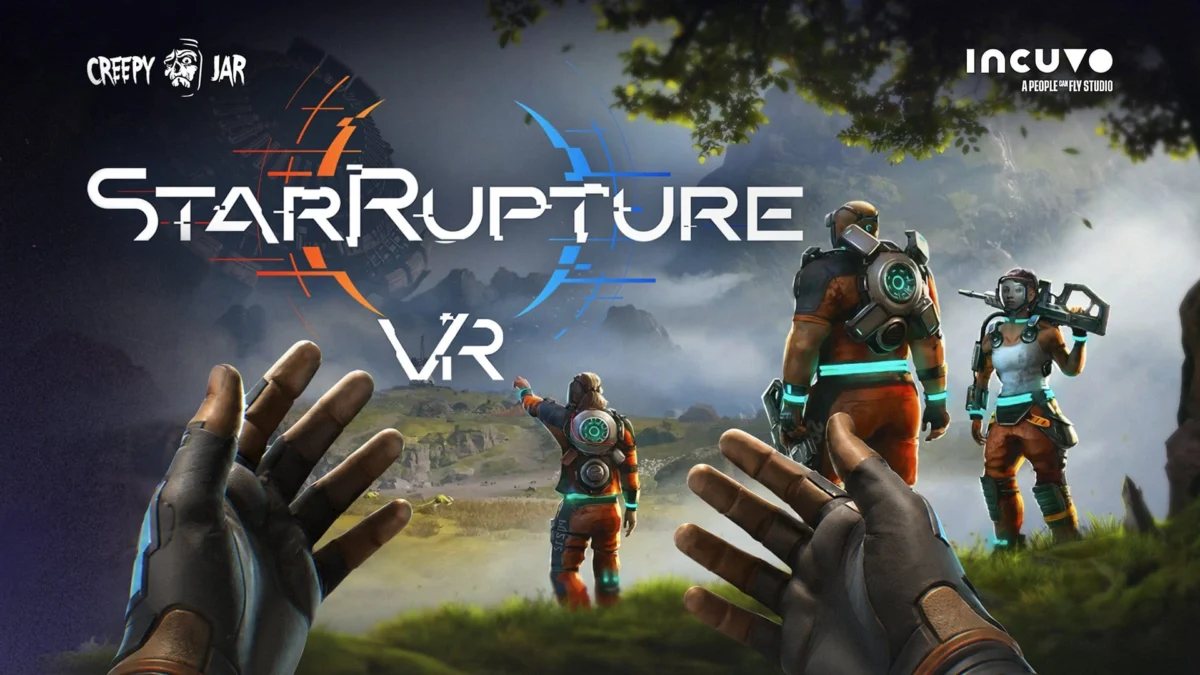
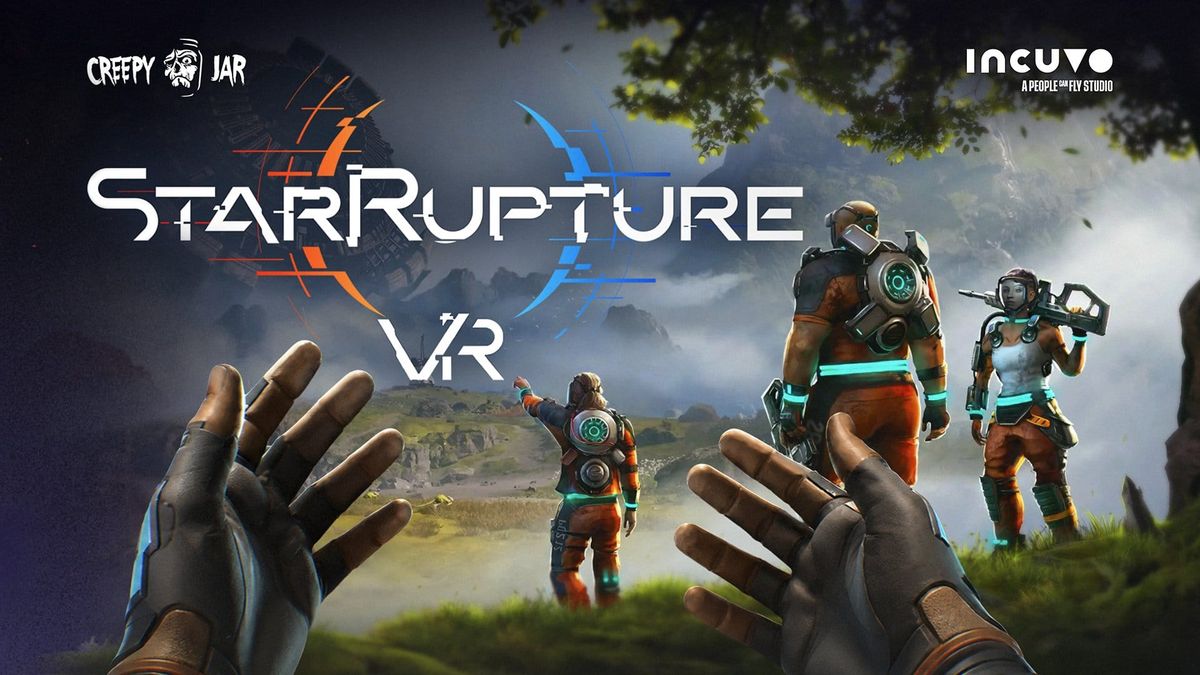
In a significant development for the standalone virtual reality ecosystem, Incuvo Games—the studio behind the VR adaptations of Green Hell and Bulletstorm—has officially announced that it is bringing Creepy Jar’s ambitious survival-exploration title, StarRupture, to the Meta Quest 3.
The announcement, delivered via a succinct post on X (formerly Twitter), confirms that the open-world base-building experience will be making the transition from desktop PC to mobile VR hardware. While the prospect of exploring alien worlds and constructing intricate bases in a fully immersive environment is an enticing one for VR enthusiasts, the news also brings with it significant questions regarding technical optimization, environmental scale, and the inevitable trade-offs required to translate an Unreal Engine 5 title to standalone mobile chipsets.
The Genesis of the Port: Bridging Worlds
StarRupture, developed by Creepy Jar, first burst onto the scene via Steam Early Access in January 2026. Since its debut, the title has garnered a "Very Positive" reception, boasting over 6,600 reviews from a dedicated player base. The game offers a compelling loop of first-person exploration, resource gathering, and base construction, all set against a backdrop of dynamic alien environments. Crucially, the title features support for cooperative multiplayer, allowing groups of up to four friends to survive the elements together.
Incuvo Games, a studio that has carved out a niche for itself in the challenging world of VR porting, is taking the lead on this adaptation. Having previously tackled the survival mechanics of Green Hell and the high-octane shooter gameplay of Bulletstorm, Incuvo is arguably one of the most experienced teams currently operating in the VR space when it comes to "translating" desktop experiences for the Meta Quest architecture.
A Chronology of Development
The trajectory of StarRupture began with its highly anticipated Early Access launch earlier this year. The game was built from the ground up on Unreal Engine 5, utilizing the engine’s advanced lighting, physics, and world-generation capabilities to create a dense, reactive planet.
- January 2026: StarRupture launches into Early Access on Steam, receiving praise for its atmosphere, base-building depth, and combat mechanics.
- July 2026: Incuvo Games makes the surprise announcement that it will port the title to Meta Quest 3, signaling a major expansion of the game’s reach.
- 2027 (Expected): Creepy Jar anticipates a full 1.0 release for the PC version of the game.
Currently, the Meta Horizon store does not yet list the title, and Incuvo has remained tight-lipped regarding an official release window. Given the complexity of porting a modern survival game to the Snapdragon-based architecture of the Quest 3, it is likely that development is still in its early stages.
Technical Implications: The Unreal Engine 5 Hurdle
The transition from PC to standalone VR is fraught with technical peril. StarRupture is a visually dense, UE5-powered experience. Even on PC, the game has been noted in community discussions for its demanding performance requirements, with players on lower-end hardware reporting frame drops and stability issues in complex areas.
The primary concern for the VR community is "graphical fidelity dilution." When a game is ported to the Quest, the developer must balance the visual fidelity of the original with the strict thermal and power envelopes of a mobile headset.
Lessons from Green Hell VR
To understand what we might expect from StarRupture, we need only look at Incuvo’s past work on Green Hell VR. When that title was brought to the Meta Quest 2, the team had to make drastic changes to the game’s architecture. The vast, seamless map of the PC version was segmented into smaller, more manageable "instances" to accommodate the limited memory of the headset. While the core survival mechanics remained intact, the sense of a truly sprawling, continuous open world was curtailed.
However, the subsequent release of the Quest 3 and Incuvo’s proactive approach to visual updates for the new hardware showed that the studio is capable of iterating. The visual fidelity gap between the early Quest 2 release and the current Quest 3 iteration of Green Hell is immense. With the Quest 3’s superior GPU and more capable processing power, StarRupture may benefit from a more optimized development cycle than its predecessors.
The Market Landscape: A Gap in the VR Catalog
One of the most compelling reasons for this port is the lack of "native" open-world survival games on the Quest platform. While the Quest library is rich with rhythm games, shooters, and social experiences, the "Satisfactory-meets-No-Man’s-Sky" genre is severely underrepresented.
- No Man’s Sky: While it offers a massive, procedurally generated universe, its VR support remains tied to PC VR or the PSVR2, leaving a void for those who want a truly wire-free, standalone experience.
- The Modding Alternative: For PC VR users who are currently frustrated by the focus on the Quest platform, the Universal Unreal Engine VR (UEVR) tool has already provided a lifeline. Because StarRupture is built on Unreal Engine 5, tech-savvy users have already created functional VR profiles for the game, allowing it to be played in a "native-like" fashion on high-end PC VR setups today.
However, the general consumer—the target audience for the Meta Quest 3—cannot rely on complex modding tools. For them, a native, optimized port is the difference between a game being playable and a game being a niche curiosity. If Incuvo can deliver a stable, feature-complete version of StarRupture that preserves the co-op experience and the base-building depth, it could easily become a "system seller" for the Quest 3, filling a glaring gap in the platform’s software lineup.
Official Stance and Community Reaction
Incuvo Games has stated clearly in their public communications that they are bringing the "newest Creepy Jar game" to VR. The community response has been largely optimistic but cautious. Veteran VR players, familiar with the limitations of mobile chipsets, are eager to see if the physics-heavy nature of StarRupture—which involves crafting, object placement, and combat—will translate well to the Quest’s controller tracking and performance constraints.
The studio has not yet addressed how it will handle the multiplayer aspects of the game on a mobile platform, but given that games like Gorilla Tag and Ghosts of Tabor have proven that multiplayer survival and interaction are possible on the Quest, there is significant precedent for a successful implementation.
Implications for the Future of VR
The announcement of StarRupture for Quest 3 is a bellwether for the industry. As the line between "mobile" VR and "PC" VR continues to blur, studios are increasingly looking at ways to bring their high-fidelity, high-complexity PC projects to the mass market of standalone headsets.
If this port succeeds, it proves that the Quest 3 is capable of handling complex simulation-heavy titles that were once deemed "too heavy" for standalone hardware. It also highlights the importance of developers like Incuvo, who act as the bridge between traditional desktop development and the growing, mobile-first VR user base.
However, if the port suffers from the same issues that plagued the initial launch of Green Hell VR—namely, excessive visual compromises and a loss of the "open world" feel—it may reinforce the narrative that standalone VR is fundamentally limited.
Final Thoughts
The journey of StarRupture from a PC Early Access title to a marquee Quest 3 port is a testament to the growth and maturation of the VR industry. While the technical hurdles are undeniable, the potential reward for both the developers and the players is massive.
For the average consumer, a successful port would mean access to one of the most exciting survival games of the year, right on their living room floor, with no cables and no expensive gaming PC required. For the industry, it represents another milestone in the ongoing quest to make high-fidelity VR accessible to everyone.
As we await further details regarding the release window and potential visual previews, the community will be watching closely. Whether StarRupture on Quest 3 becomes a benchmark for technical achievement or a cautionary tale about the limits of porting, its arrival will undoubtedly be one of the most significant events for the platform in the coming year.

